
3D Printing
Is 3D Printing Redefining Sculpture?
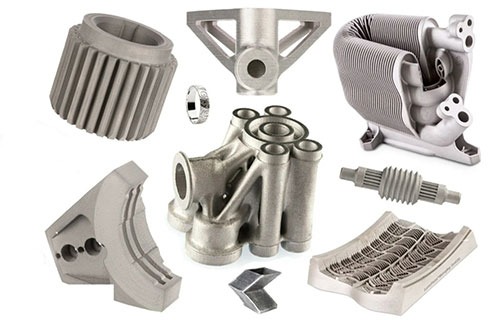
For centuries, sculpture was defined by the hand, the chisel, and the limits of physical material. Today, a quiet revolution is reshaping the art form. 3D printed sculpture is not merely a new tool; it is a fundamental shift in the creative act itself. It merges the artist’s vision with the precision of the digital world, unlocking forms once deemed impossible.
How Does 3D Printing Physically Transform Creation?
The core shift is from subtractive or formative methods to additive manufacturing. Traditional carving removes material. Casting requires molds. 3D printing builds form layer by layer directly from a digital file. This change breaks two major chains that have bound sculptors for millennia.
First, it obliterates geometric constraints. An artist can now design a mathematically perfect lattice, a twisting form with internal cavities, or interlocking parts that could never be assembled by hand. The printer executes these commands with impartial precision.
Second, it separates the act of design from the challenge of physical execution. The artist’s focus shifts to pure form and intent within the 3D software. The machine handles the arduous task of realizing it. This allows for radical experimentation without the fear of a single mistake destroying weeks of manual labor.
A Concrete Case Study: “The Eternal Knot”
A studio artist envisioned a large-scale piece symbolizing interconnectedness: a continuous, unbroken knot with a square-meter footprint and incredibly thin, ribbon-like strands. In wood or stone, it would splinter. In clay, it would collapse under its own weight. Using Fused Deposition Modeling (FDM) with a flexible TPU filament, the artist printed the sculpture in four interlocking sections. Each section’s overhang and bridging were managed by the slicer software’s automatic support structures, which were dissolved away post-print. The final piece, strong yet delicate, would be physically impossible to create through any other means. This is the liberation 3D printing provides.
What New Forms of Artistic Expression Are Emerging?
The technology is a catalyst for new visual languages and narratives. Artists are leveraging its capabilities to explore themes of digital identity, ecological fragility, and the hybridization of nature and tech.
Material as Message: The choice of filament becomes part of the story. An artist commenting on consumerism might use recycled PETG from plastic bottles. Another exploring bio-mimicry might print with a PLA composite blended with wood or bamboo fibers, creating a piece that feels organic yet is digitally born.
Scale and Reproduction: Artists can easily create a piece at multiple scales—from a miniature maquette to a monumental public installation—from the same digital file. They can also produce limited edition series where each piece is physically identical, a claim traditional sculptors could never make.
Example: The “Vanishing Point” Series
An artist created a series of sculptures depicting endangered animals. Each form was digitally designed to appear solid from the front but, as the viewer walked around it, revealed a dissolving, pixelated structure from the side. This was achieved through careful internal geometry design within the 3D model, creating voids that only align from specific angles. The pieces were printed in a translucent resin, enhancing the eerie effect of digital decay. The series powerfully commented on species loss in the information age, using the tool of that age to make its point.
Why Is This Culturally Significant?
3D printing is more than a studio tool; it reflects and influences our contemporary culture. It democratizes creation, preserves heritage, and fosters global dialogue.
Democratization of Art-Making: High-quality resin printers are now accessible for under $500. Online repositories like Thingiverse and Cults3D offer millions of free models. This breaks down historic barriers of cost, studio space, and specialized manual skill, allowing a more diverse range of voices to participate in sculptural art.
Digital Heritage Preservation: Institutions are using 3D scanning and printing to preserve fragile artifacts. They can create perfect tactile replicas for handling in education or to reconstruct damaged historical pieces.
Collaborative Project: “The Ancestral Bridge”
A museum partnered with a diaspora community to recreate sacred cultural objects lost to history. Using historical descriptions and drawings, digital artists created 3D models. Community elders provided feedback on the designs. The final sculptures were printed in a sandstone-like composite material. This project did not just replicate artifacts; it used digital sculpting and additive manufacturing to heal cultural memory, making the intangible tangible again. It showcased 3D printing as a tool for social resonance, not just technical display.
How is 3D Printing Used in Art Education?
In classrooms, 3D printing bridges the gap between conceptual design and physical reality, teaching a new, integrated creative process.
| Educational Application | Core Learning Objectives | Student Outcome |
|---|---|---|
| From Sketch to Object | Teaches 3D spatial reasoning, basic CAD software skills, and the iterative design process. | Students learn that failure is a fixable step; they can redesign and reprint, building resilience. |
| Material Studies | Students print the same model in PLA, resin, and nylon to compare surface finish, strength, and flexibility. | They gain a practical understanding of how material choice is an artistic decision, not just a technical one. |
| Art History Interaction | Students download 3D scans of famous works (e.g., from the Smithsonian Open Access) and print, examine, or remix them. | They engage with historical art tactically, understanding form in a way photos cannot provide. |
Data Point: A university sculpture program reported a 40% increase in enrollment after integrating a digital fabrication lab with 3D printers and scanners. Students felt they were gaining relevant, future-facing skills.
What Are the Practical Steps for an Artist to Start?
The journey from idea to object is a clear, step-by-step pipeline.
- Digital Sculpting: This is the new “clay.” Options range from beginner-friendly Tinkercad to professional tools like ZBrush, Blender (free), or Fusion 360.
- Slicing: Software like Chitubox (for resin) or PrusaSlicer converts the 3D model into printer instructions. Here, you optimize layer height, support structures, and infill density.
- Printing: Choice depends on need: FDM/FFF Printers: Best for larger, more durable, or composite-material works. Resin (SLA/DLP) Printers: Unmatched for fine detail, smooth surfaces, and small, intricate sculptures.
- Post-Processing: This is where the digital becomes tactile. Steps include: Removing supports. Sanding and priming (FDM). Washing and UV curing (Resin). Painting, patinating, or sealing.
Resource Model: The Community Makerspace
For artists without upfront investment, local makerspaces are invaluable. For example, FactoryXYZ in Brooklyn offers artist memberships providing access to professional-grade FDM and resin printers, along with expert technicians. Emerging artists have launched entire careers from such hubs, leveraging shared resources to produce gallery-ready work.
What Does the Future Hold for 3D Printed Art?
The horizon is marked by smarter machines, new materials, and hybrid experiences.
- Advanced Multi-Material Printing: Printers that can seamlessly blend rigid, flexible, transparent, and colored materials in a single print run will allow for unprecedented complexity in a single, unified object.
- Large-Scale Additive Manufacturing: Companies are developing gantry-style printers capable of printing sculptures several meters tall in concrete, polymers, or composite materials, directly enabling monumental public art.
- The “Phygital” Art Object: Every 3D print begins as a digital file. This creates a native link to the digital realm. Future sculptures may be sold with an NFT that verifies authenticity or includes an AR layer that activates when viewed through a phone, adding narrative or animation.
Trend Analysis: Biodegradable Art
A growing movement uses algae-based filaments or other fully biodegradable polymers. Artists create installations meant to be placed in nature, where they will gracefully erode over time. This trend uses 3D printing’s precision to create objects that comment on impermanence and ecological integration, challenging the notion of art as a permanent artifact.
3D printing is not replacing the sculptor’s soul; it is providing a new set of hands. It redefines sculpture by expanding the possible, democratizing the process, and deeply integrating art with the digital consciousness of our time. The technology invites artists to ask “what if?” without being halted by “how to.” From preserving the past to prototyping the future, 3D printed sculpture stands at a vibrant intersection. It proves that the most human of impulses—to create form and meaning—continually evolves, embracing new tools to express timeless visions.
How to write a spec that gets priced correctly
A drawing is a contract. If it leaves a number open, the shop fills that number in with its own default. The default is rarely the one you had in mind. Put these five lines on every RFQ and most of the back-and-forth disappears before it starts.
- File format and units, with the model exported in millimetres
- Process and material grade, not a trade name
- Critical features and the tolerance each one needs
- Surface finish and the faces it applies to
- Quantity for the pilot build and for the year
The point is not paperwork. Each line removes a decision the shop would otherwise make for you. A complete RFQ comes back priced. An incomplete one comes back guessed.
What actually drives the price
Buyers usually push on material because it is the line they can see. In practice the material is rarely the biggest number on a quote. These five lines decide most of it:
- build volume and orientation
- layer height and support structure
- material grade and colour
- post-processing and hand finishing
- quantity per build plate
Ask for the quote split by line. A supplier who cannot break it down is guessing, and you will pay for the guess. The line you can usually renegotiate is the tolerance band, not the raw material.
Problems you will meet, and the fix
Every process has a failure mode it prefers. The same four show up again and again on this kind of work, and none of them are mysteries once you know what to look for.
- Warping on long flat faces where the part lifts off the plate
- Layer lines showing through a cosmetic surface
- Support scars on a mating face nobody flagged
- Dimensional drift on thin walls after cooling
Catch the fault on the first part, not the hundredth. A first-article check costs an hour. A bad batch costs the whole order. Write the check into the purchase order so nobody has to remember it.
What to check on the first article
The first article is the cheapest inspection you will ever buy. Use it properly and the rest of the run becomes boring, which is exactly what you want.
- Every dimension on the drawing, with the measured value written beside it.
- The material certificate, matched to the heat or lot number on the parts.
- The finish against the sample you approved, under the same light.
- Fit against the mating part, assembled rather than measured.
- Packaging, because parts that arrive damaged were never in tolerance.
Check in this order: datums, then mating features, then cosmetic faces. If the datums are wrong, every number after them is noise. Keep the report on file. When a problem shows up in month six, that document is the only thing that tells you what changed.
How to compare two quotes fairly
Two numbers are not comparable unless the scope matches. Line them up before you decide, because a low number with three gaps is not a low number.
Same drawing, same material, same finish, same inspection. Anything else is a different job wearing the same part number. Then look at what each quote leaves out. Freight, packaging, certificates and tooling are the usual gaps.
Ask each supplier to state their assumptions in writing. The one who does is usually the one who has run the process before.
Scaling from one part to a batch
The first part teaches you the process. The hundredth teaches you the process cost.
Watch three things as volume grows: setup amortisation, tool wear, and how much hand work the finish still needs. If the unit price barely moves between ten and a hundred, the cost sits in material or in hand work, not in setup. Ask which, because only one of them is negotiable.
Lead time behaves the same way. A one-off is scheduled around other jobs. A repeat order is scheduled around your forecast. Give the shop a forecast and the lead time gets shorter, not longer.
How to read a supplier's quote
A quote is a short document with a long shadow. Four things in it decide whether the job runs smoothly, and only one of them is the price.
- The scope line. It should name the process, the material and the finish, not just the part.
- The tolerance basis. General tolerance or the drawing, and which standard it follows.
- The exclusions. Tooling, freight, certificates and inspection are the usual omissions.
- The validity date. Material prices move, and an open-ended quote is a promise nobody can keep.
Read the exclusions before you read the total. A quote that leaves out tooling is not cheaper. It is a quote for a different job.
What to send with the first order
The first order sets the pattern for every order after it. Send a complete package once and the shop files it, and the second order takes a fraction of the time.
- A STEP or native model plus a PDF drawing carrying the same revision letter.
- The material callout by standard number, not by trade name.
- The finish and the exact faces it applies to.
- Any test the part must pass: fit, seal, drop, salt spray, dielectric.
- A contact who can answer a question inside one working day.
Then write down what was agreed. An email that confirms the material, the finish and the date is worth more than a longer purchase order that leaves them open.
When this is the wrong choice
A good supplier tells you when the process does not fit. These are the cases where we say so.
- The volume is so low that setup costs more than the parts are worth.
- The tolerance is tighter than the process can hold without a second operation.
- The geometry cannot be made without a tool feature that will not pay back.
- The material you need is not available in the form the process requires.
- The schedule is shorter than the tooling or setup time, and nobody has said so yet.
None of these are refusals. They are reasons to look at a different route, and the earlier that conversation happens the cheaper it is. The most expensive mistake in manufacturing is a process chosen before the question was understood.
Our solution for 3D Printing Redefining Sculpture
YiguProto runs 3D printing in house, from a single prototype to a production batch. We quote the process, the material and the finish as separate lines, so you can see where the money goes instead of arguing with one number.
Send a STEP file or a drawing and you get a DFM report in one to two business days. It flags the features that add cost and the features that will not hold tolerance on the process you picked.
Every order ships with an inspection report on the features you call out. If a part misses, we make it again. Ready to price a part? Start with a free quote and DFM review, or read more about our 3D printing. You can also talk to an engineer before you commit to a drawing.
FAQ about 3D Printing Redefining Sculpture
Does the process work for prototypes as well as production?
Yes, and that is usually the point. Running the prototype on the production process removes a whole class of surprises, because the part you test is made the same way as the part you sell.
What is 3D Printing Redefining Sculpture used for?
3D Printing Redefining Sculpture turns up wherever the part has to do a real job at a predictable cost: brackets, housings, fixtures, covers and the fittings that hold them together. The honest test is whether the properties match the load and the environment, not whether the material is fashionable.
What files do you need in order to quote?
A STEP file plus a PDF drawing that carries the same revision letter. The model carries the geometry and the drawing carries the intent. When the two disagree, the shop picks one, and it is never the one you meant.
Can 3D Printing Redefining Sculpture be made in small quantities?
Yes, and small quantities are where a good supplier earns the next order. Setup dominates the price at low volume, so the cheapest route is usually the one with the fewest operations, not the cheapest material.
How much does 3D Printing Redefining Sculpture cost?
Price comes from five lines: material, machine or tool time, setup, finishing and inspection. The material itself is usually the smallest of them. Send a drawing and we will split the quote so you can see which line is doing the damage.
How long does a first article take?
Usually a few business days once the drawing is frozen, and longer if tooling is involved. The date we give you is the date we confirm in writing, not the date we hope for.
The short version
3D Printing Redefining Sculpture rewards the buyer who reads the data sheet and the drawing together. Pick the option for the property that matters, not for the price per kilo.
Tighten only what mates. Test a sample before the run. Then let the process do the rest.