
3D Printing
Is 3D Printing Future of Building Everything from Ship Models to Full-Sized Boats?
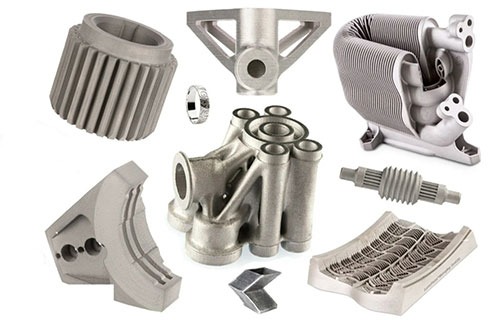
The maritime world is in the midst of a quiet revolution, moving far beyond plastic hobby kits. 3D printing technology is now bridging the gap between creating detailed scale models and manufacturing functional, full-sized vessels.
Key takeaways
- The journey of a modern vessel now begins not on a drawing board, but inside a generative AI system.
- Choosing the right material is critical, whether for a museum-quality display model or a boat that must withstand the open sea.
- The progression from tabletop models to seaworthy vessels is no longer theoretical. It’s a proven, step-by-step reality.
- The use cases for 3D printing in maritime contexts are vast and growing, offering tangible advantages.
How Is AI and Advanced Tech Supercharging Ship Design?
The journey of a modern vessel now begins not on a drawing board, but inside a generative AI system. These tools are solving complex design puzzles at speeds impossible for humans alone.
Can AI Generate Better Hull Designs?
Absolutely. Projects like GenDSOM are leading this change. This UK consortium, involving specialists like Rapid Fusion and the University of Southampton, uses generative AI to create and evaluate thousands of novel hull designs. The system integrates real-world manufacturing limits and simulation data from the start. This method can cut design costs by 10% and speed up design cycles by 20%. The AI explores radical, efficient shapes a human designer might not consider, all while ensuring the design can actually be built.
However, experts agree AI is a partner, not a replacement. “The role of the naval architect shifts to guiding the models, applying judgement and ensuring safety,” notes Shahroz Khan of Compute Maritime. The future lies in this human-AI partnership, where repetitive calculations are automated, freeing designers for greater creativity.
What Role Does Large-Format 3D Printing Play?
Once a design is finalized, large-format 3D printing brings it to life. This is crucial for moving beyond small models. Companies like CEAD have opened dedicated Maritime Application Centres, aiming to produce over 100 boat hulls annually. Their automated, extrusion-based systems can print hulls up to 12 meters long for patrol or fishing boats.
Similarly, Massivit’s large printers can create full-scale boat prototypes or end-use parts like dashboards and radar masts in hours, bypassing traditional mold-making entirely. The key benefits are stark when compared to traditional methods:
| Aspect | Traditional Manufacturing | Large-Format 3D Printing |
|---|---|---|
| Lead Time for Tooling/Molds | Weeks to months | Days (print directly) |
| Customization Cost | Very high (new molds needed) | Low (digital file change) |
| Material Waste | High (subtractive processes) | Significantly reduced |
| Labor Intensity | High (skilled manual work) | Automated, less dependent on scarce skills |
What Materials Work Best for Durability and Detail?
Choosing the right material is critical, whether for a museum-quality display model or a boat that must withstand the open sea.
- PLA (Polylactic Acid): Perfect for static display models and education. It’s biodegradable, easy to print, and comes in many colors. It’s safe for classroom use but lacks the strength and heat resistance for functional parts.
- ABS (Acrylonitrile Butadiene Styrene): A strong choice for functional models that need to endure impact or heat. It’s better than PLA for parts like propellers or models with small motors.
- PETG & Specialty Blends: PETG is excellent for models that need to float or get wet, as it is strong and waterproof. For industrial tooling, composites are key. Thermwood, for instance, printed a master hull pattern using 20% carbon fiber-filled ABS, creating a light and incredibly strong tool.
Can 3D Printing Truly Scale from Models to Real Boats?
The progression from tabletop models to seaworthy vessels is no longer theoretical. It’s a proven, step-by-step reality.
Are We Really Printing Full-Sized Boats?
Yes, and they are sailing. A landmark project by Caracol and V2 Boats produced a fully functional, 6-meter-long monolithic catamaran using robotic 3D printing. This wasn’t just a one-off stunt. The project meticulously analyzed every step—design, material selection, printing, and post-processing—to create a blueprint for industrial-scale production. The goal is a scalable, sustainable model for the nautical sector.
How Is It Changing Professional Boat Building?
The impact is profound in professional manufacturing. TAHOE Boats made history by using Thermwood’s Large Scale Additive Manufacturing (LSAM) to 3D print the master pattern for its T16 boat hull. This advanced tooling process was completed in just ten days, a fraction of the time required for traditional methods. With newer “Vertical Layer Printing” tech, such a tool could now be printed as a single piece in just over two days. This dramatic reduction in tooling cost and time is a game-changer, allowing for faster design iterations and more affordable, customized boats.
What Are the Real-World Applications and Benefits?
The use cases for 3D printing in maritime contexts are vast and growing, offering tangible advantages.
How Does It Accelerate Research and Education?
In academia, 3D printing is invaluable for rapid prototyping and hands-on learning. Research in Ocean Engineering confirms that a modular 3D printing approach for scale models is a cost-effective and time-saving method for hydrodynamic testing. This allows university labs to test hull designs quickly and reliably before any full-scale commitment. For students, printing different hull shapes to test buoyancy or efficiency makes complex engineering principles tangible.
What Are the Commercial and Environmental Advantages?
For businesses, the benefits are operational and ecological. Massivit notes that printing custom marine parts on-demand keeps vessels out of repair bays and in the water faster, saving money. From an environmental standpoint, the Clean Maritime Demonstration Competition backs projects like GenDSOM that support the UK’s goal of cutting domestic maritime emissions by 30% by 2030. 3D printing aids this by enabling more hydrodynamic hull designs (which burn less fuel) and by dramatically reducing material waste during production.
How to write a spec that gets priced correctly
A drawing is a contract. If it leaves a number open, the shop fills that number in with its own default. The default is rarely the one you had in mind. Put these five lines on every RFQ and most of the back-and-forth disappears before it starts.
- File format and units, with the model exported in millimetres
- Process and material grade, not a trade name
- Critical features and the tolerance each one needs
- Surface finish and the faces it applies to
- Quantity for the pilot build and for the year
The point is not paperwork. Each line removes a decision the shop would otherwise make for you. A complete RFQ comes back priced. An incomplete one comes back guessed.
What actually drives the price
Buyers usually push on material because it is the line they can see. In practice the material is rarely the biggest number on a quote. These five lines decide most of it:
- build volume and orientation
- layer height and support structure
- material grade and colour
- post-processing and hand finishing
- quantity per build plate
Ask for the quote split by line. A supplier who cannot break it down is guessing, and you will pay for the guess. The line you can usually renegotiate is the tolerance band, not the raw material.
Problems you will meet, and the fix
Every process has a failure mode it prefers. The same four show up again and again on this kind of work, and none of them are mysteries once you know what to look for.
- Warping on long flat faces where the part lifts off the plate
- Layer lines showing through a cosmetic surface
- Support scars on a mating face nobody flagged
- Dimensional drift on thin walls after cooling
Catch the fault on the first part, not the hundredth. A first-article check costs an hour. A bad batch costs the whole order. Write the check into the purchase order so nobody has to remember it.
What to check on the first article
The first article is the cheapest inspection you will ever buy. Use it properly and the rest of the run becomes boring, which is exactly what you want.
- Every dimension on the drawing, with the measured value written beside it.
- The material certificate, matched to the heat or lot number on the parts.
- The finish against the sample you approved, under the same light.
- Fit against the mating part, assembled rather than measured.
- Packaging, because parts that arrive damaged were never in tolerance.
Check in this order: datums, then mating features, then cosmetic faces. If the datums are wrong, every number after them is noise. Keep the report on file. When a problem shows up in month six, that document is the only thing that tells you what changed.
How to compare two quotes fairly
Two numbers are not comparable unless the scope matches. Line them up before you decide, because a low number with three gaps is not a low number.
Same drawing, same material, same finish, same inspection. Anything else is a different job wearing the same part number. Then look at what each quote leaves out. Freight, packaging, certificates and tooling are the usual gaps.
Ask each supplier to state their assumptions in writing. The one who does is usually the one who has run the process before.
Scaling from one part to a batch
The first part teaches you the process. The hundredth teaches you the process cost.
Watch three things as volume grows: setup amortisation, tool wear, and how much hand work the finish still needs. If the unit price barely moves between ten and a hundred, the cost sits in material or in hand work, not in setup. Ask which, because only one of them is negotiable.
Lead time behaves the same way. A one-off is scheduled around other jobs. A repeat order is scheduled around your forecast. Give the shop a forecast and the lead time gets shorter, not longer.
How to read a supplier's quote
A quote is a short document with a long shadow. Four things in it decide whether the job runs smoothly, and only one of them is the price.
- The scope line. It should name the process, the material and the finish, not just the part.
- The tolerance basis. General tolerance or the drawing, and which standard it follows.
- The exclusions. Tooling, freight, certificates and inspection are the usual omissions.
- The validity date. Material prices move, and an open-ended quote is a promise nobody can keep.
Read the exclusions before you read the total. A quote that leaves out tooling is not cheaper. It is a quote for a different job.
What to send with the first order
The first order sets the pattern for every order after it. Send a complete package once and the shop files it, and the second order takes a fraction of the time.
- A STEP or native model plus a PDF drawing carrying the same revision letter.
- The material callout by standard number, not by trade name.
- The finish and the exact faces it applies to.
- Any test the part must pass: fit, seal, drop, salt spray, dielectric.
- A contact who can answer a question inside one working day.
Then write down what was agreed. An email that confirms the material, the finish and the date is worth more than a longer purchase order that leaves them open.
When this is the wrong choice
A good supplier tells you when the process does not fit. These are the cases where we say so.
- The volume is so low that setup costs more than the parts are worth.
- The tolerance is tighter than the process can hold without a second operation.
- The geometry cannot be made without a tool feature that will not pay back.
- The material you need is not available in the form the process requires.
- The schedule is shorter than the tooling or setup time, and nobody has said so yet.
None of these are refusals. They are reasons to look at a different route, and the earlier that conversation happens the cheaper it is. The most expensive mistake in manufacturing is a process chosen before the question was understood.
Planning the ramp from prototype to production
The gap between one good part and a thousand identical ones is a plan, not a machine. Three decisions close it.
First, freeze the design. Every change after tooling starts is a re-cut, and re-cuts are where schedules go. Second, decide the inspection level. A prototype is checked by eye; a production part is checked against a report. Third, agree the change process in writing, including who pays for it.
Write the ramp down as dates and owners, not as intentions. A ramp plan with three names and three dates is worth more than a page of good intentions.
Where Are the Current Limits and Future Opportunities?
While transformative, the technology still faces hurdles on its path to widespread adoption.
What Challenges Remain?
Two significant barriers are scale and economics. Even large-format printers have limits, though they are constantly expanding. For producing vast numbers of identical items (like 10,000 toy boats), traditional injection molding is still more cost-effective per unit. Furthermore, as noted in AI research, high-fidelity simulation for ship design is computationally expensive, and integrating AI tools seamlessly into existing design workflows requires careful development and training.
What Exciting Trends Are on the Horizon?
The future is focused on integration, accessibility, and new materials. The vision of “microfactories“—compact, automated production sites based on 3D printing that can be replicated near ports worldwide—is being pioneered by centers like CEAD’s MAC. We will also see more hybrid manufacturing processes, where 3D-printed forms are combined with traditional composites or finishes to optimize strength, weight, and surface quality. As materials science advances, expect more recycled and bio-based filaments that maintain high performance while boosting sustainability.
3D printing has evolved from a niche prototyping tool into a cornerstone of modern maritime innovation. It creates a seamless pipeline from AI-optimized design concepts to tangible results, whether that’s a detailed historical model for a museum or a rugged hull for a workboat. The technology delivers unmatched flexibility, speed, and a path to greener production. For hobbyists, educators, naval engineers, and boat builders, mastering 3D printing is no longer just an interesting skill—it’s becoming an essential part of navigating the future of maritime creation. The question is no longer if this technology will reshape the industry, but how quickly and profoundly it will do so.
Our solution for 3D Printing Future
YiguProto runs 3D printing in house, from a single prototype to a production batch. We quote the process, the material and the finish as separate lines, so you can see where the money goes instead of arguing with one number.
Send a STEP file or a drawing and you get a DFM report in one to two business days. It flags the features that add cost and the features that will not hold tolerance on the process you picked.
Every order ships with an inspection report on the features you call out. If a part misses, we make it again. Ready to price a part? Start with a free quote and DFM review, or read more about our 3D printing. You can also talk to an engineer before you commit to a drawing.
FAQ about 3D Printing Future
Can 3D Printing Future be made in small quantities?
Yes, and small quantities are where a good supplier earns the next order. Setup dominates the price at low volume, so the cheapest route is usually the one with the fewest operations, not the cheapest material.
What tolerance can you hold on 3D Printing Future?
The working default is ±0.1 mm on small features, ±0.3% on long spans. Tighter than that the process changes and so does the price, because every step tighter adds inspection time. Call out only the faces that mate with something else and leave the rest on the general tolerance.
What material should I specify?
Specify by standard, not by trade name. A trade name can change under you between two orders; a standard number cannot. Then add the one property that actually decides the part, whether that is strength, heat resistance or chemical exposure.
Is there a minimum order quantity?
No hard minimum. One part is fine. What changes with volume is which costs dominate, so a single unit is priced mostly on setup and a thousand units are priced mostly on cycle time and material.
What is 3D Printing Future used for?
3D Printing Future turns up wherever the part has to do a real job at a predictable cost: brackets, housings, fixtures, covers and the fittings that hold them together. The honest test is whether the properties match the load and the environment, not whether the material is fashionable.
What should I check before approving the parts?
Datums first, then the features that mate, then the cosmetic faces. Ask for a dimensional report, a material certificate and a finish sample. A part can be inside every tolerance and still not fit, so assemble one before you sign.
The short version
3D Printing Future rewards the buyer who reads the data sheet and the drawing together. Pick the option for the property that matters, not for the price per kilo.
Tighten only what mates. Test a sample before the run. Then let the process do the rest.