
3D Printing
What Is 3D Printing and How Does It Actually Work?
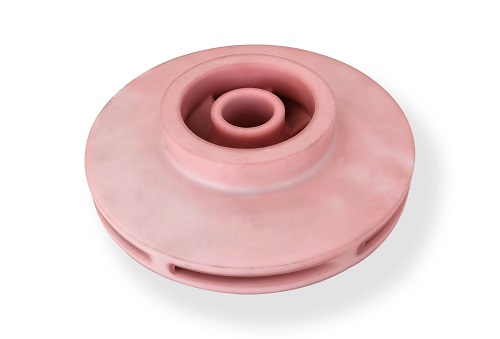
You’ve likely seen the headlines: 3D printed houses, custom medical implants, and even rocket engine parts. But what exactly is this technology, and how can you practically use it to solve your design, prototyping, or production challenges? At its core, 3D printing (Additive Manufacturing) is a revolutionary process that builds physical objects directly from a digital file by adding material layer by layer.
Key takeaways
- Every successful 3D print is the result of four interdependent technical domains working in perfect harmony.
- The applications are no longer futuristic—they are delivering measurable ROI today.
- The trajectory points toward greater integration, intelligence, and sustainability:
- 3D printing technology has evolved from a niche rapid prototyping tool into a mainstream, industrial manufacturing powerhouse.
What Are the Four Foundational Pillars of 3D Printing?
Every successful 3D print is the result of four interdependent technical domains working in perfect harmony. Weakness in any one pillar leads to print failure or subpar results.
1. Digital Design & CAD: The Digital Blueprint
This is where every project begins. Computer-Aided Design (CAD) software is used to create a precise 3D model, which serves as the digital twin of the final object. The critical step that follows is slicing, where specialized software (a slicer) cuts the 3D model into hundreds or thousands of horizontal layers and generates the toolpath instructions (G-code) for the printer. Mastery here involves more than just modeling; it requires Design for Additive Manufacturing (DfAM)—thinking in terms of self-supporting angles, optimal orientation for strength, and leveraging geometries (like lattices) that are only possible with 3D printing.
2. Materials Science: The Building Blocks
The physical substance of your print is defined here. Materials are not passive; their properties dictate the suitable printing process and the final part’s performance. The landscape is vast:
- Polymers: Includes common thermoplastics (PLA, ABS, Nylon) for FDM, photopolymer resins for SLA, and powdered nylons for SLS. Advanced grades offer high-temperature resistance, biocompatibility, or electrostatic dissipation.
- Metals: Powders like stainless steel, aluminum, titanium (Ti-6Al-4V), and Inconel are used in processes like DMLS/SLM, enabling production-grade aerospace and medical parts.
- Composites & Ceramics: Materials infused with carbon fiber, fiberglass, or ceramic particles enhance strength, stiffness, or thermal properties.
Expert Insight: Choosing a material is a trade-off. An ABS-like resin offers great detail and moderate strength for a prototype housing, while annealed 17-4PH stainless steel is chosen for a high-stress, corrosion-resistant end-use part. The wrong material choice is a root cause of project failure.
3. Precision Mechatronics: The Physical Executor
This pillar encompasses the printer’s hardware—the electromechanical system that executes the G-code with high fidelity. Key components include:
- Motion Control System: High-precision stepper motors, linear guides, and belts or lead screws that position the print head or build platform within microns.
- Energy Delivery System: This varies by technology: a hot end and extruder for FDM, a high-power laser or UV light source for SLA/DMLS, or a fusing lamp for SLS.
- Environmental Control: Heated build chambers (for warping prevention in FDM), inert gas atmospheres (for metal printing to prevent oxidation), and temperature-regulated material bays.
The reliability and precision of these components directly determine print accuracy, repeatability, and the ability to handle advanced materials.
4. Process Software & Intelligence: The Orchestrator
This is the “brain” that manages the complex interaction between the other pillars. It goes beyond basic slicing to include:
- Print Preparation & Simulation: Software that predicts thermal stresses, simulates support structure efficacy, and optimizes packing of multiple parts on a build plate.
- In-Process Monitoring: Using cameras, lasers, and thermal sensors to monitor the print in real-time, detecting anomalies like layer shifts or delamination.
- Workflow & Data Management: MES (Manufacturing Execution Systems) for production environments, tracking part history, material batches, and machine performance for quality assurance and certification.
Which 3D Printing Technology Should You Choose?
With dozens of methods available, selecting the right one is crucial. Here’s a focused comparison of the four most transformative and accessible technologies.
| Technology (Acronym) | Core Process Principle | Best For | Key Limitations | Typical Starting Machine Cost |
|---|---|---|---|---|
| Fused Deposition Modeling (FDM/FFF) | Extrudes heated thermoplastic filament through a nozzle, layer by layer. | Low-cost prototyping, functional jigs & fixtures, hobbyist projects, educational models. | Visible layer lines, anisotropic strength, limited detail for small features. | $200 – $5,000 |
| Stereolithography (SLA) / Digital Light Processing (DLP) | Cures liquid photopolymer resin with a UV laser (SLA) or projector (DLP). | High-detail prototypes, jewelry casting patterns, dental & medical models, intricate miniatures. | Brittle materials (standard resins), requires post-processing (washing/curing), resin handling. | $500 – $10,000 |
| Selective Laser Sintering (SLS) | Uses a laser to sinter (fuse) powdered polymer (typically Nylon) into a solid structure. | Complex, durable functional prototypes; end-use parts; components with integrated moving hinges. | Grained surface finish, high machine cost, powder handling required. | $5,000 – $100,000+ |
| Direct Metal Laser Sintering (DMLS/SLM) | Uses a high-power laser to fully melt and fuse fine metal powder into a dense part. | High-strength, complex metal parts for aerospace, medical implants, automotive, and tooling. | Very high machine & material cost, extensive safety & post-processing (HIP, machining). | $100,000 – $1,000,000+ |
Decision-Making Case Study: A startup designing a new wearable device needs prototypes for investor demos (looks-like) and for drop-testing (works-like).
- For the “looks-like” model: They use SLA with a matte gray resin. This produces a smooth, high-fidelity part that perfectly represents the final product’s aesthetics.
- For the “works-like” model: They use FDM with PETG filament. This provides a tough, durable part that can survive functional testing, at a lower cost per iteration.
How Is 3D Printing Transforming Key Industries Today?
The applications are no longer futuristic—they are delivering measurable ROI today.
1. Aerospace & Defense: Lightweighting and Part Consolidation
The primary driver is weight reduction for fuel efficiency. Companies like SpaceX and Airbus use metal 3D printing (DMLS) to produce engine components and cabin brackets that are 30-50% lighter while maintaining strength. A single printed part often consolidates an assembly of dozens of components, simplifying supply chains and improving reliability.
2. Healthcare & Medical: The Era of Personalization
This is perhaps the most life-altering application. Patient-specific surgical guides from CT scans improve surgical accuracy. Custom titanium implants (e.g., for skull or joint reconstruction) offer perfect anatomical fit. Bioprinting research is advancing toward printing with living cells and biocompatible scaffolds for tissue engineering.
3. Automotive: Accelerating Innovation and Customization
From rapid prototyping of interior components to tooling for assembly lines, 3D printing cuts development time. High-performance sectors use it for custom, low-volume parts like bespoke intake manifolds or cooling ducts. A major German automaker reported shortening prototyping cycles for certain components by over 70%.
4. Consumer Products & Industrial Manufacturing
The technology enables mass customization (e.g., custom-fit eyewear, orthotics) and on-demand manufacturing, reducing inventory costs. It’s also revolutionizing manufacturing tooling, with 3D printed jigs, fixtures, and conformal cooling molds that significantly improve production line efficiency and part quality.
How to write a spec that gets priced correctly
A drawing is a contract. If it leaves a number open, the shop fills that number in with its own default. The default is rarely the one you had in mind. Put these five lines on every RFQ and most of the back-and-forth disappears before it starts.
- File format and units, with the model exported in millimetres
- Process and material grade, not a trade name
- Critical features and the tolerance each one needs
- Surface finish and the faces it applies to
- Quantity for the pilot build and for the year
The point is not paperwork. Each line removes a decision the shop would otherwise make for you. A complete RFQ comes back priced. An incomplete one comes back guessed.
What actually drives the price
Buyers usually push on material because it is the line they can see. In practice the material is rarely the biggest number on a quote. These five lines decide most of it:
- build volume and orientation
- layer height and support structure
- material grade and colour
- post-processing and hand finishing
- quantity per build plate
Ask for the quote split by line. A supplier who cannot break it down is guessing, and you will pay for the guess. The line you can usually renegotiate is the tolerance band, not the raw material.
Problems you will meet, and the fix
Every process has a failure mode it prefers. The same four show up again and again on this kind of work, and none of them are mysteries once you know what to look for.
- Warping on long flat faces where the part lifts off the plate
- Layer lines showing through a cosmetic surface
- Support scars on a mating face nobody flagged
- Dimensional drift on thin walls after cooling
Catch the fault on the first part, not the hundredth. A first-article check costs an hour. A bad batch costs the whole order. Write the check into the purchase order so nobody has to remember it.
What to check on the first article
The first article is the cheapest inspection you will ever buy. Use it properly and the rest of the run becomes boring, which is exactly what you want.
- Every dimension on the drawing, with the measured value written beside it.
- The material certificate, matched to the heat or lot number on the parts.
- The finish against the sample you approved, under the same light.
- Fit against the mating part, assembled rather than measured.
- Packaging, because parts that arrive damaged were never in tolerance.
Check in this order: datums, then mating features, then cosmetic faces. If the datums are wrong, every number after them is noise. Keep the report on file. When a problem shows up in month six, that document is the only thing that tells you what changed.
How to compare two quotes fairly
Two numbers are not comparable unless the scope matches. Line them up before you decide, because a low number with three gaps is not a low number.
Same drawing, same material, same finish, same inspection. Anything else is a different job wearing the same part number. Then look at what each quote leaves out. Freight, packaging, certificates and tooling are the usual gaps.
Ask each supplier to state their assumptions in writing. The one who does is usually the one who has run the process before.
Scaling from one part to a batch
The first part teaches you the process. The hundredth teaches you the process cost.
Watch three things as volume grows: setup amortisation, tool wear, and how much hand work the finish still needs. If the unit price barely moves between ten and a hundred, the cost sits in material or in hand work, not in setup. Ask which, because only one of them is negotiable.
Lead time behaves the same way. A one-off is scheduled around other jobs. A repeat order is scheduled around your forecast. Give the shop a forecast and the lead time gets shorter, not longer.
How to read a supplier's quote
A quote is a short document with a long shadow. Four things in it decide whether the job runs smoothly, and only one of them is the price.
- The scope line. It should name the process, the material and the finish, not just the part.
- The tolerance basis. General tolerance or the drawing, and which standard it follows.
- The exclusions. Tooling, freight, certificates and inspection are the usual omissions.
- The validity date. Material prices move, and an open-ended quote is a promise nobody can keep.
Read the exclusions before you read the total. A quote that leaves out tooling is not cheaper. It is a quote for a different job.
What to send with the first order
The first order sets the pattern for every order after it. Send a complete package once and the shop files it, and the second order takes a fraction of the time.
- A STEP or native model plus a PDF drawing carrying the same revision letter.
- The material callout by standard number, not by trade name.
- The finish and the exact faces it applies to.
- Any test the part must pass: fit, seal, drop, salt spray, dielectric.
- A contact who can answer a question inside one working day.
Then write down what was agreed. An email that confirms the material, the finish and the date is worth more than a longer purchase order that leaves them open.
When this is the wrong choice
A good supplier tells you when the process does not fit. These are the cases where we say so.
- The volume is so low that setup costs more than the parts are worth.
- The tolerance is tighter than the process can hold without a second operation.
- The geometry cannot be made without a tool feature that will not pay back.
- The material you need is not available in the form the process requires.
- The schedule is shorter than the tooling or setup time, and nobody has said so yet.
None of these are refusals. They are reasons to look at a different route, and the earlier that conversation happens the cheaper it is. The most expensive mistake in manufacturing is a process chosen before the question was understood.
What Does the Future of 3D Printing Look Like?
The trajectory points toward greater integration, intelligence, and sustainability:
- Hybrid Manufacturing: Systems that combine additive and subtractive (CNC) processes in one machine, allowing for a printed “near-net shape” to be finished to tight tolerances in a single setup.
- AI-Powered Process Control: Machine learning algorithms that analyze sensor data in real-time to predict and correct defects, moving toward “first-time-right” printing for critical components.
- Sustainable Materials & Processes: Increased use of recycled and bio-based polymers, and processes designed for higher material yield and energy efficiency, aligning with circular economy goals.
3D printing technology has evolved from a niche rapid prototyping tool into a mainstream, industrial manufacturing powerhouse. Its true power lies in the seamless integration of its four pillars: digital design, advanced materials, precision hardware, and intelligent software. This synergy unlocks capabilities—geometric complexity, mass customization, and agile production—that are simply unattainable with traditional methods. While challenges around cost, speed for mass production, and material properties remain, the trend is undeniable. For businesses and innovators, the question is no longer if 3D printing will impact their field, but when and how. By understanding its core principles and applications, you can strategically leverage this technology to solve complex problems, reduce costs, and drive meaningful innovation in your projects.
Our solution for 3D Printing
YiguProto runs 3D printing in house, from a single prototype to a production batch. We quote the process, the material and the finish as separate lines, so you can see where the money goes instead of arguing with one number.
Send a STEP file or a drawing and you get a DFM report in one to two business days. It flags the features that add cost and the features that will not hold tolerance on the process you picked.
Every order ships with an inspection report on the features you call out. If a part misses, we make it again. Ready to price a part? Start with a free quote and DFM review, or read more about our 3D printing. You can also talk to an engineer before you commit to a drawing.
FAQ about 3D Printing
Does the process work for prototypes as well as production?
Yes, and that is usually the point. Running the prototype on the production process removes a whole class of surprises, because the part you test is made the same way as the part you sell.
How much does 3D Printing cost?
Price comes from five lines: material, machine or tool time, setup, finishing and inspection. The material itself is usually the smallest of them. Send a drawing and we will split the quote so you can see which line is doing the damage.
What is the lead time for 3D Printing?
Expect 2 to 5 business days for a first batch. Tooling, material stock and the finishing queue all move that number, so we confirm the date in writing before the run starts rather than after.
What happens if a part is out of specification?
We measure it against the same drawing you approved and, if it misses, we make it again. What matters is that the report exists, because a disagreement without data is just an opinion.
How long does a first article take?
Usually a few business days once the drawing is frozen, and longer if tooling is involved. The date we give you is the date we confirm in writing, not the date we hope for.
What is 3D Printing used for?
3D Printing turns up wherever the part has to do a real job at a predictable cost: brackets, housings, fixtures, covers and the fittings that hold them together. The honest test is whether the properties match the load and the environment, not whether the material is fashionable.
The short version
3D Printing rewards the buyer who reads the data sheet and the drawing together. Pick the option for the property that matters, not for the price per kilo.
Tighten only what mates. Test a sample before the run. Then let the process do the rest.