
3D Printing
SLA vs. FDM: How Do You Choose Your 3D Printing Path?
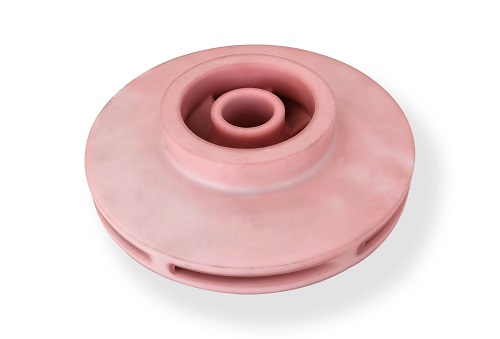
For anyone stepping into the world of 3D printing, the first major fork in the road is choosing a technology. Stereolithography (SLA) and Fused Deposition Modeling (FDM) are the two most accessible and widely used methods, yet they could not be more different. SLA uses a laser to cure liquid resin into solid parts, while FDM heats and extrudes plastic filament.
Key takeaways
- The fundamental difference lies in the state of the starting material and the method of fusion.
- The choice often comes down to a trade-off between detail and durability, or surface finish and material options.
- The debate between SLA and FDM is not about which technology is superior, but about which is the right tool for your specific job.
How Do Their Core Technologies Differ?
The fundamental difference lies in the state of the starting material and the method of fusion.
SLA: Precision Through Photopolymerization
SLA is a vat polymerization process. A build platform sits inside a tank filled with liquid photopolymer resin. An ultraviolet laser, guided by mirrors, traces the cross-section of the part onto the resin surface, curing it into a solid layer. The platform lifts, and the process repeats. After printing, parts require washing in solvent to remove excess resin and post-curing under UV light to achieve final strength. This process yields parts with extremely fine details and smooth surfaces, but the resin materials have distinct mechanical properties.
FDM: Versatility Through Extrusion
FDM is a material extrusion process. A solid thermoplastic filament is fed to a heated nozzle, where it melts. The nozzle moves along a programmed path, depositing the molten material onto a build plate where it cools and solidifies. The platform lowers, and the next layer is deposited on top. FDM parts are built up from visible extruded roads, resulting in a characteristic layered appearance. The technology is prized for its material versatility, strength, and simplicity.
What Are the Key Performance Comparisons?
The choice often comes down to a trade-off between detail and durability, or surface finish and material options.
| Factor | SLA (Resin) | FDM (Filament) | Practical Implication |
|---|---|---|---|
| Resolution & Detail | Exceptional. XY resolution down to ~25-140 microns. Can produce fine features, sharp edges, and smooth surfaces directly. | Moderate. Limited by nozzle diameter (typically 0.4mm) and layer height. Fine details and small text may be lost or rough. | Choose SLA for miniatures, intricate jewelry, molds, and parts with small, precise features. |
| Surface Finish | Smooth, often glossy straight off the printer. Minimal visible layer lines. | Layered texture is inherent. Requires significant post-processing (sanding, filling) for a smooth finish. | SLA wins for visual prototypes, master patterns, and parts where aesthetics are critical without post-processing. |
| Mechanical Properties | Isotropic (uniform in all directions) but often brittle. Standard resins have low elongation at break. Tough and Durable resin formulations exist but are specialty materials. | Anisotropic. Stronger in the X-Y plane than the Z-axis (layer adhesion). Materials like ABS, PETG, Nylon offer good toughness, impact resistance, and fatigue strength. | Choose FDM for functional prototypes, jigs, fixtures, and end-use parts that must withstand stress, strain, or impact. |
| Material Range & Properties | Limited to photopolymer resins. Wide variety within: Standard, Tough, Durable, Flexible, High-Temp, Castable, Dental/Bio-compatible. Cannot match the thermal or chemical resistance of engineering thermoplastics. | Very wide range of thermoplastic filaments. Includes PLA, ABS, ASA, PETG, TPU (flexible), Nylon, PC, PEEK, and composites (carbon fiber, glass fiber filled). | Choose FDM if you need specific engineering plastic properties (e.g., high HDT, UV stability, chemical resistance) or true elastomers. |
| Build Volume & Speed | Desktop printers often have smaller build volumes (e.g., 145x145x175 mm). Speed is less dependent on part count but more on height and laser speed. | Desktop printers commonly offer larger volumes (e.g., 300x300x300 mm). Speed is highly dependent on part size and settings (layer height, infill). | FDM is often better for single, large parts. For a batch of many small, detailed parts, a single SLA build can be very efficient. |
| Post-Processing & Handling | Mandatory and messy. Requires isopropyl alcohol (IPA) washing, support removal, and UV post-curing. Liquid resin requires careful handling (gloves, ventilation). | Generally simpler. Involves part removal and support removal. Solvents are not required. Some materials need a heated chamber or bed to prevent warping. | FDM has a lower operational overhead and is more beginner-friendly. SLA requires more dedicated space and safety precautions. |
| Cost Structure | Higher material cost per volume. Resin is more expensive than filament by weight/volume. Consumables include resin, IPA, and replacement vat films. | Lower material cost. Filament is relatively inexpensive. Printer maintenance focuses on nozzles and extruders. | For high-volume printing of functional parts, FDM has a clear cost advantage. For low-volume, high-detail parts, SLA’s value is in its precision. |
Which Process for Which Application?
Your project’s goal is the ultimate decider.
When is SLA the Clear Winner?
SLA excels where detail, accuracy, and surface finish are paramount.
- Investment Casting Patterns: Castable wax resin burns out cleanly, making SLA ideal for creating detailed jewelry and metal part molds.
- Dental and Medical Models: Bio-compatible resins are used for surgical guides, dental models, and anatomical replicas from MRI/CT scans with high anatomical accuracy.
- Fluid Flow and Microfluidic Devices: Smooth, sealed internal channels can be printed directly, essential for lab-on-a-chip prototypes.
- Detailed Masters for Molding: A smooth SLA print can serve as a master for silicone molding, reproducing fine textures and details.
- Visual and Aesthetic Prototypes: For models that need to look like a final product for marketing or design reviews.
Case Study: Hearing Aid Shells
The hearing aid industry was revolutionized by SLA. Each shell must be custom-fit to the patient’s ear canal with sub-millimeter accuracy. SLA’s high resolution and smooth finish allow for the direct printing of these custom shells from a digital ear scan, a task impossible for FDM at the required quality.
When is FDM the Better Choice?
FDM dominates when function, material performance, and larger size are key.
- Functional Prototypes and R&D: Test the form, fit, and function of a design using materials like ABS or PETG that mimic production plastics.
- Manufacturing Aids: Print jigs, fixtures, tool handles, and custom assembly guides that are tough enough for the shop floor.
- End-Use Parts: For low-volume production or custom parts, especially with engineering-grade materials like ASA (UV resistant) or PC (high strength).
- Large, Simple Parts: Single-piece prototypes for housings, brackets, or form factors that exceed typical SLA build volumes.
- Education and Maker Projects: The simplicity, safety, and low cost of PLA make FDM ideal for classrooms and hobbyists.
Case Study: Automotive Factory Tooling
A major auto manufacturer needed a custom brake line routing guide for assembly. Using FDM with ABS, they designed and printed a tool that clipped onto the chassis. It was tough, heat-resistant, and lightweight. The tool cost 90% less and was produced 4 weeks faster than a traditionally machined alternative, demonstrating FDM’s strength in functional, on-demand tooling.
How to Decide: A Step-by-Step Framework
Follow this logic to make a confident choice:
- Start with the End Use. Is the part visual/detailed or functional/structural? This is the primary filter.
- Evaluate Material Needs. Does the application require high-temperature resistance, flexibility, or specific engineering properties (FDM likely)? Or does it need optical clarity, bio-compatibility, or castability (SLA likely)?
- Assess Detail and Finish Requirements. Are you printing a miniature with 0.2mm text (SLA) or a bracket with 1mm tolerances (FDM is fine)?
- Consider Operational Factors. Do you have ventilation and space for resin handling? Is this a one-off project or ongoing production? FDM generally has a lower operational footprint.
- Run a Total Cost Analysis. Factor in printer cost, material cost per part, and labor for post-processing. For a single detailed prototype, SLA service bureau costs may be justified. For 50 functional clips, FDM in-house is likely cheaper.
How to write a spec that gets priced correctly
A drawing is a contract. If it leaves a number open, the shop fills that number in with its own default. The default is rarely the one you had in mind. Put these five lines on every RFQ and most of the back-and-forth disappears before it starts.
- File format and units, with the model exported in millimetres
- Process and material grade, not a trade name
- Critical features and the tolerance each one needs
- Surface finish and the faces it applies to
- Quantity for the pilot build and for the year
The point is not paperwork. Each line removes a decision the shop would otherwise make for you. A complete RFQ comes back priced. An incomplete one comes back guessed.
What actually drives the price
Buyers usually push on material because it is the line they can see. In practice the material is rarely the biggest number on a quote. These five lines decide most of it:
- build volume and orientation
- layer height and support structure
- material grade and colour
- post-processing and hand finishing
- quantity per build plate
Ask for the quote split by line. A supplier who cannot break it down is guessing, and you will pay for the guess. The line you can usually renegotiate is the tolerance band, not the raw material.
Problems you will meet, and the fix
Every process has a failure mode it prefers. The same four show up again and again on this kind of work, and none of them are mysteries once you know what to look for.
- Warping on long flat faces where the part lifts off the plate
- Layer lines showing through a cosmetic surface
- Support scars on a mating face nobody flagged
- Dimensional drift on thin walls after cooling
Catch the fault on the first part, not the hundredth. A first-article check costs an hour. A bad batch costs the whole order. Write the check into the purchase order so nobody has to remember it.
What to check on the first article
The first article is the cheapest inspection you will ever buy. Use it properly and the rest of the run becomes boring, which is exactly what you want.
- Every dimension on the drawing, with the measured value written beside it.
- The material certificate, matched to the heat or lot number on the parts.
- The finish against the sample you approved, under the same light.
- Fit against the mating part, assembled rather than measured.
- Packaging, because parts that arrive damaged were never in tolerance.
Check in this order: datums, then mating features, then cosmetic faces. If the datums are wrong, every number after them is noise. Keep the report on file. When a problem shows up in month six, that document is the only thing that tells you what changed.
How to compare two quotes fairly
Two numbers are not comparable unless the scope matches. Line them up before you decide, because a low number with three gaps is not a low number.
Same drawing, same material, same finish, same inspection. Anything else is a different job wearing the same part number. Then look at what each quote leaves out. Freight, packaging, certificates and tooling are the usual gaps.
Ask each supplier to state their assumptions in writing. The one who does is usually the one who has run the process before.
Scaling from one part to a batch
The first part teaches you the process. The hundredth teaches you the process cost.
Watch three things as volume grows: setup amortisation, tool wear, and how much hand work the finish still needs. If the unit price barely moves between ten and a hundred, the cost sits in material or in hand work, not in setup. Ask which, because only one of them is negotiable.
Lead time behaves the same way. A one-off is scheduled around other jobs. A repeat order is scheduled around your forecast. Give the shop a forecast and the lead time gets shorter, not longer.
How to read a supplier's quote
A quote is a short document with a long shadow. Four things in it decide whether the job runs smoothly, and only one of them is the price.
- The scope line. It should name the process, the material and the finish, not just the part.
- The tolerance basis. General tolerance or the drawing, and which standard it follows.
- The exclusions. Tooling, freight, certificates and inspection are the usual omissions.
- The validity date. Material prices move, and an open-ended quote is a promise nobody can keep.
Read the exclusions before you read the total. A quote that leaves out tooling is not cheaper. It is a quote for a different job.
What to send with the first order
The first order sets the pattern for every order after it. Send a complete package once and the shop files it, and the second order takes a fraction of the time.
- A STEP or native model plus a PDF drawing carrying the same revision letter.
- The material callout by standard number, not by trade name.
- The finish and the exact faces it applies to.
- Any test the part must pass: fit, seal, drop, salt spray, dielectric.
- A contact who can answer a question inside one working day.
Then write down what was agreed. An email that confirms the material, the finish and the date is worth more than a longer purchase order that leaves them open.
What Are Common Pitfalls to Avoid?
- Using SLA for Functional, Load-Bearing Parts: Standard resin is brittle. A “Tough” resin may work, but it’s costly and still can’t match the toughness of FDM nylon or PC.
- Using FDM for High-Resolution Details: Expecting FDM to replicate fine jewelry or micro-features will lead to disappointment and a fuzzy, inaccurate result.
- Underestimating SLA Post-Processing: It’s not a “click print and walk away” technology. The washing and curing steps are essential and add time.
- Overlooking Material Shrinkage/Warping: Both processes have them. SLA resins shrink during curing. FDM materials like ABS warp during cooling. Design and process settings must account for this.
The debate between SLA and FDM is not about which technology is superior, but about which is the right tool for your specific job. SLA is the master of detail, offering unparalleled precision and surface quality for applications where aesthetics and fine features are non-negotiable. FDM is the champion of function, providing robust, durable parts from a wide array of practical engineering materials at a lower operational cost. The most effective makers and engineers understand both, letting the requirements of the part—not the allure of the technology—guide the selection. By applying this comparative framework, you can confidently navigate this fundamental choice, ensuring your 3D printing investments yield the highest quality and most fit-for-purpose results.
Our solution for SLA vs. FDM: How
YiguProto runs 3D printing in house, from a single prototype to a production batch. We quote the process, the material and the finish as separate lines, so you can see where the money goes instead of arguing with one number.
Send a STEP file or a drawing and you get a DFM report in one to two business days. It flags the features that add cost and the features that will not hold tolerance on the process you picked.
Every order ships with an inspection report on the features you call out. If a part misses, we make it again. Ready to price a part? Start with a free quote and DFM review, or read more about our 3D printing. You can also talk to an engineer before you commit to a drawing.
FAQ about SLA vs. FDM: How
What should I check before approving the parts?
Datums first, then the features that mate, then the cosmetic faces. Ask for a dimensional report, a material certificate and a finish sample. A part can be inside every tolerance and still not fit, so assemble one before you sign.
How long does a first article take?
Usually a few business days once the drawing is frozen, and longer if tooling is involved. The date we give you is the date we confirm in writing, not the date we hope for.
What is SLA vs. FDM: How used for?
SLA vs. FDM: How turns up wherever the part has to do a real job at a predictable cost: brackets, housings, fixtures, covers and the fittings that hold them together. The honest test is whether the properties match the load and the environment, not whether the material is fashionable.
What material should I specify?
Specify by standard, not by trade name. A trade name can change under you between two orders; a standard number cannot. Then add the one property that actually decides the part, whether that is strength, heat resistance or chemical exposure.
What files do you need in order to quote?
A STEP file plus a PDF drawing that carries the same revision letter. The model carries the geometry and the drawing carries the intent. When the two disagree, the shop picks one, and it is never the one you meant.
How much does SLA vs. FDM: How cost?
Price comes from five lines: material, machine or tool time, setup, finishing and inspection. The material itself is usually the smallest of them. Send a drawing and we will split the quote so you can see which line is doing the damage.
The short version
SLA vs. FDM: How rewards the buyer who reads the data sheet and the drawing together. Pick the option for the property that matters, not for the price per kilo.
Tighten only what mates. Test a sample before the run. Then let the process do the rest.