
Sheet Metal
Is a 3mm Stainless Steel Sheet Right for Your Project?
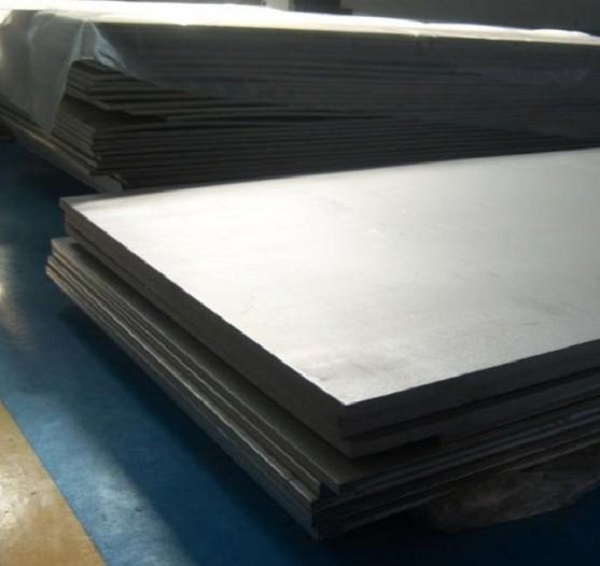
If you’re searching for information on 3mm stainless steel sheets, you likely want to know if this thickness fits your project needs, what makes it stand out, and how to choose the right one. Simply put, a 3mm stainless steel sheet is a versatile, durable material with a thickness of 3 millimeters (about 0.118 inches) that works for everything from home renovations to industrial projects.
What Is a 3mm Stainless Steel Sheet? Key Properties to Know
Before diving into uses, let’s start with the basics: what makes a 3mm stainless steel sheet unique, and why it’s a go-to choice for many professionals. Stainless steel itself is an alloy of iron, chromium (at least 10.5%), and often other elements like nickel or molybdenum. The 3mm thickness adds specific benefits that tailor it to certain tasks.
Core physical and mechanical properties
The 3mm thickness strikes a sweet spot between strength and workability. Here’s a breakdown of its key properties:
| Property | Typical Value | Why It Matters |
|---|---|---|
| Tensile strength | 500–700 MPa (depending on grade) | Withstands significant pulling force without breaking—critical for structural parts |
| Corrosion resistance | Excellent (chromium oxide layer) | Protects against rust and staining; varies by grade |
| Ductility | Bendable to ~15mm radius (304 grade) | Can be bent, cut, or formed without cracking |
| Weight | ~23.7 kg per square meter | Light enough for two people to carry a 1m x 2m sheet, heavy enough to feel sturdy |
Common grades for 3mm sheets
Not all 3mm stainless steel sheets are the same—grade matters. Here are the three most popular grades:
| Grade | Key Alloy Elements | Corrosion Resistance | Best Uses |
|---|---|---|---|
| 304 | Chromium (18%), Nickel (8%) | Good (resists most household/industrial chemicals; not ideal for saltwater) | Kitchen backsplashes, appliances, indoor decor, mild industrial parts |
| 316 | Chromium (16%), Nickel (10%), Molybdenum (2%) | Excellent (resists saltwater, acids, harsh environments) | Marine parts, outdoor furniture, chemical tanks, coastal building exteriors |
| 430 | Chromium (17%) | Moderate (prone to rust in wet/salty conditions) | Budget-friendly indoor uses: decorative panels, non-food-contact appliances |
Real-world example
A restaurant owner in Chicago chose 3mm 304 stainless steel sheets for their kitchen backsplash. The material resisted stains from oil and food spills, and its 3mm thickness meant it didn’t dent when pots were accidentally knocked against it—something thinner 2mm sheets had done in their previous kitchen.
What Are the Top Applications?
The 3mm thickness is one of the most versatile options, thanks to its balance of strength and workability.
Construction and architecture
In construction, 3mm stainless steel sheets serve both functional and decorative purposes.
- Exterior cladding: For modern buildings, 3mm sheets (often 316 grade) are used as cladding. A hotel in Miami used 3mm 316 sheets for its facade—they’ve withstood coastal salt air for 5 years without rusting, and the 3mm thickness prevented warping in high winds.
- Handrails and balustrades: 3mm sheets are cut and formed into handrails for stairs or balconies. A residential builder in Toronto used 3mm 304 sheets for balcony balustrades; the thickness made them sturdy enough to meet local safety codes (requiring handrails to withstand 500 N of force), and they were easy to weld into custom designs.
Kitchen and food industry
Stainless steel is a staple in kitchens because it’s non-porous (prevents bacteria growth) and easy to clean. The 3mm thickness is perfect here—thick enough to resist dents, thin enough to fit into tight spaces.
- Countertops and backsplashes: Homeowners and restaurants love 3mm 304 sheets for countertops. A bakery in Seattle used 3mm 304 sheets for their preparation counters; the material didn’t absorb flour or water, and when a heavy mixer was dropped on it, the 3mm thickness prevented a dent (unlike the 2mm sheet they’d used before).
- Food processing equipment: 3mm sheets are used for parts like conveyor belts and storage bins. A dairy plant in Wisconsin uses 3mm 316 sheets for milk storage tanks—the grade’s corrosion resistance protects against milk acids, and the 3mm thickness ensures the tanks don’t flex under the weight of liquid.
Industrial and manufacturing
In industrial settings, 3mm stainless steel sheets handle wear and tear from machinery and chemicals.
- Machine guards: Factories use 3mm sheets to make guards for moving parts (like conveyor belts). A car manufacturing plant in Detroit uses 3mm 430 sheets for machine guards—they’re budget-friendly, and the 3mm thickness stops debris from damaging the machines inside.
- Chemical containers: For storing mild chemicals, 3mm 316 sheets are ideal. A laboratory supply company in Boston makes 50-liter chemical drums from 3mm 316 sheets; the material resists spills of acids like vinegar and bleach, and the 3mm thickness keeps the drums from leaking.
Automotive and marine
The automotive and marine industries rely on 3mm stainless steel for its durability and corrosion resistance.
- Automotive parts: 3mm sheets are used for parts like exhaust shields and trim. A custom car shop in Los Angeles used 3mm 304 sheets for a vintage car’s exhaust shield—the 3mm thickness withstands high temperatures (up to 800°C for 304 grade) without warping, and it didn’t rust from road salt.
- Marine components: 3mm 316 sheets are a must here. A boat builder in Florida used 3mm 316 sheets for a small fishing boat’s hull panels—they’ve resisted saltwater corrosion for 3 years, and the 3mm thickness keeps the boat light enough for easy maneuvering.
How Do You Choose the Right 3mm Stainless Steel Sheet?
Step 1: Define your project’s environment
First, think about where the sheet will be used—this determines the required corrosion resistance.
- Indoor, dry areas (decor, indoor railings): 304 or 430 grade works. 430 is cheaper, but 304 is more durable if there’s occasional moisture.
- Indoor, wet areas (kitchen backsplashes, bathroom counters): 304 grade is best—it resists water and food stains.
- Outdoor or coastal areas (outdoor furniture, marine parts): 316 grade is non-negotiable. Its molybdenum content fights saltwater and humidity.
- Chemical-exposed areas (labs, chemical tanks): 316 grade—it resists acids and harsh chemicals better than 304.
Step 2: Choose the right finish
Stainless steel sheets come in different finishes, affecting both look and functionality.
- Brushed (satin) finish: Matte, textured surface that hides fingerprints and scratches. Great for kitchen backsplashes and furniture. A homeowner in Austin chose brushed 3mm 304 for their kitchen island—they love that it doesn’t show smudges from cooking.
- Mirror finish: Shiny, reflective surface for decorative use (wall panels, restaurant decor). Note: Mirror finishes scratch more easily, so avoid high-traffic areas.
- Mill finish: Raw, unpolished surface from the factory. Durable but not aesthetic—used for industrial parts like machine guards where looks don’t matter.
Step 3: Check thickness consistency
Even if a sheet is labeled “3mm,” thickness can vary slightly (industry tolerance is ±0.1mm). For projects where precision matters (welding, fitting into tight spaces), ask the supplier for a thickness test report. A metal fabricator in Denver once had to rework a project because a “3mm” sheet was actually 2.8mm—too thin to weld properly to a 3mm frame.
Step 4: Verify quality certifications
Look for certifications to ensure high quality:
- ASTM A240: The U.S. standard for stainless steel sheets—ensures the sheet meets tensile strength and corrosion resistance requirements.
- ISO 9001: Shows the supplier follows quality management practices.
- Material Test Report (MTR): Provided by the manufacturer, lists the sheet’s grade, thickness, and chemical composition. Always ask for an MTR for structural or safety-critical projects (handrails, machine guards).
Step 5: Compare suppliers
- Reputation: Check reviews—a supplier with 4.5+ stars on Google or industry sites (like Thomasnet) is more reliable.
- Lead time: Local suppliers often deliver in 1–3 days; overseas may take 2–4 weeks.
- Cutting services: Many suppliers offer custom cutting (e.g., cutting a 1m x 2m sheet into smaller pieces). This saves time and money—a contractor in Phoenix saved 8 hours of work by having their supplier cut 3mm 304 sheets to exact sizes.
How to write a spec that gets priced correctly
A drawing is a contract. If it leaves a number open, the shop fills that number in with its own default. The default is rarely the one you had in mind. Put these five lines on every RFQ and most of the back-and-forth disappears before it starts.
- Flat pattern or STEP file plus a dimensioned drawing
- Material grade and thickness with the standard number
- Bend radii, K-factor and the direction of the grain
- Finish, masking and which faces stay bare
- Quantity and the assembly sequence
The point is not paperwork. Each line removes a decision the shop would otherwise make for you. A complete RFQ comes back priced. An incomplete one comes back guessed.
What actually drives the price
Buyers usually push on material because it is the line they can see. In practice the material is rarely the biggest number on a quote. These five lines decide most of it:
- blank size and nesting efficiency
- number of bends and weld joints
- material grade and thickness
- finish and masking
- batch quantity
Ask for the quote split by line. A supplier who cannot break it down is guessing, and you will pay for the guess. The line you can usually renegotiate is the tolerance band, not the raw material.
Problems you will meet, and the fix
Every process has a failure mode it prefers. The same four show up again and again on this kind of work, and none of them are mysteries once you know what to look for.
- Stretching at a bend that is tighter than the material allows
- Hole distortion when a hole sits too close to a bend line
- Weld draw on a visible face
- Springback that pulls a formed angle out of tolerance
Catch the fault on the first part, not the hundredth. A first-article check costs an hour. A bad batch costs the whole order. Write the check into the purchase order so nobody has to remember it.
What to check on the first article
The first article is the cheapest inspection you will ever buy. Use it properly and the rest of the run becomes boring, which is exactly what you want.
- Every dimension on the drawing, with the measured value written beside it.
- The material certificate, matched to the heat or lot number on the parts.
- The finish against the sample you approved, under the same light.
- Fit against the mating part, assembled rather than measured.
- Packaging, because parts that arrive damaged were never in tolerance.
Check in this order: datums, then mating features, then cosmetic faces. If the datums are wrong, every number after them is noise. Keep the report on file. When a problem shows up in month six, that document is the only thing that tells you what changed.
How to compare two quotes fairly
Two numbers are not comparable unless the scope matches. Line them up before you decide, because a low number with three gaps is not a low number.
Same drawing, same material, same finish, same inspection. Anything else is a different job wearing the same part number. Then look at what each quote leaves out. Freight, packaging, certificates and tooling are the usual gaps.
Ask each supplier to state their assumptions in writing. The one who does is usually the one who has run the process before.
Scaling from one part to a batch
The first part teaches you the process. The hundredth teaches you the process cost.
Watch three things as volume grows: setup amortisation, tool wear, and how much hand work the finish still needs. If the unit price barely moves between ten and a hundred, the cost sits in material or in hand work, not in setup. Ask which, because only one of them is negotiable.
Lead time behaves the same way. A one-off is scheduled around other jobs. A repeat order is scheduled around your forecast. Give the shop a forecast and the lead time gets shorter, not longer.
How to read a supplier's quote
A quote is a short document with a long shadow. Four things in it decide whether the job runs smoothly, and only one of them is the price.
- The scope line. It should name the process, the material and the finish, not just the part.
- The tolerance basis. General tolerance or the drawing, and which standard it follows.
- The exclusions. Tooling, freight, certificates and inspection are the usual omissions.
- The validity date. Material prices move, and an open-ended quote is a promise nobody can keep.
Read the exclusions before you read the total. A quote that leaves out tooling is not cheaper. It is a quote for a different job.
How Do You Install and Maintain 3mm Stainless Steel Sheets?
Installation best practices
Handle with care: Even though 3mm sheets are sturdy, they can scratch. Wear gloves and lay the sheet on a soft surface (like a foam pad) to avoid scratches.
Use the right fasteners: For indoor projects (backsplashes), use stainless steel screws or epoxy. For outdoor projects (furniture), use 316-grade fasteners—they’ll match the sheet’s corrosion resistance. Avoid carbon steel fasteners—they can cause rust stains.
Allow for expansion: Stainless steel expands and contracts with temperature changes. For large sheets (e.g., 2m x 3m), leave a 1–2mm gap between sheets to prevent warping. A builder in Las Vegas learned this the hard way—they installed 3mm 304 sheets for an outdoor patio without gaps, and the sheets buckled in summer heat.
Weld properly (if needed): For structural projects (handrails), use a TIG welder for clean, strong welds. Use filler metal matching the sheet’s grade (e.g., ER308 for 304 sheets). Practice on scrap 3mm sheets first—the thickness is easy to weld, but control heat to avoid burning through.
Maintenance tips
Clean regularly: Wipe indoor sheets (countertops) with a soft cloth and mild soap. For outdoor sheets, rinse with water every few months to remove salt or dirt. Avoid abrasive cleaners (like steel wool)—they’ll scratch the finish.
Remove stains promptly: If you see a rust spot (common on 430 grade), mix equal parts white vinegar and water, apply with a cloth, and scrub gently. For tough stains (oil on kitchen sheets), use a stainless steel cleaner (like Bar Keepers Friend).
Protect from harsh chemicals: Keep strong acids (hydrochloric acid) or bases (bleach) away from 304 grade sheets—they can damage the oxide layer. If a spill happens, rinse immediately with water.
Inspect annually: For outdoor or industrial sheets, check for dents or rust once a year. Small dents can be fixed with a rubber mallet (tap gently from the back); small rust spots can be cleaned as above.
Our solution for 3mm Stainless Steel Sheet
YiguProto runs sheet metal fabrication in house, from a single prototype to a production batch. We quote the process, the material and the finish as separate lines, so you can see where the money goes instead of arguing with one number.
Send a STEP file or a drawing and you get a DFM report in one to two business days. It flags the features that add cost and the features that will not hold tolerance on the process you picked.
Every order ships with an inspection report on the features you call out. If a part misses, we make it again. Ready to price a part? Start with a free quote and DFM review, or read more about our sheet metal fabrication. You can also talk to an engineer before you commit to a drawing.
FAQ about 3mm Stainless Steel Sheet
What should I check before approving the parts?
Datums first, then the features that mate, then the cosmetic faces. Ask for a dimensional report, a material certificate and a finish sample. A part can be inside every tolerance and still not fit, so assemble one before you sign.
How much does 3mm Stainless Steel Sheet cost?
Price comes from five lines: material, machine or tool time, setup, finishing and inspection. The material itself is usually the smallest of them. Send a drawing and we will split the quote so you can see which line is doing the damage.
How do I compare two quotes fairly?
Match the scope first: same drawing, same material, same finish, same inspection. Then read the exclusions. Freight, tooling and certificates are the usual gaps, and a low number with three gaps is not a low number.
What happens if a part is out of specification?
We measure it against the same drawing you approved and, if it misses, we make it again. What matters is that the report exists, because a disagreement without data is just an opinion.
Is there a minimum order quantity?
No hard minimum. One part is fine. What changes with volume is which costs dominate, so a single unit is priced mostly on setup and a thousand units are priced mostly on cycle time and material.
Can 3mm Stainless Steel Sheet be made in small quantities?
Yes, and small quantities are where a good supplier earns the next order. Setup dominates the price at low volume, so the cheapest route is usually the one with the fewest operations, not the cheapest material.
The short version
3mm Stainless Steel Sheet rewards the buyer who reads the data sheet and the drawing together. Pick the option for the property that matters, not for the price per kilo.
Tighten only what mates. Test a sample before the run. Then let the process do the rest.