
3D Printing
Is Additive Manufacturing the Future of Consumer Goods?
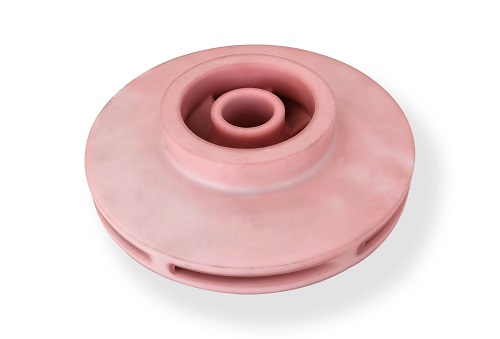
Additive manufacturing (AM), or 3D printing, is fundamentally transforming the consumer goods industry by shifting the paradigm from mass production to mass customization, enabling products that are personalized, on-demand, and created with unprecedented design freedom.
Key takeaways
- The journey of a typical consumer product—design, tooling, mass production, distribution—has remained largely unchanged for over a century.
- The impact of AM extends across the entire product lifecycle, offering strategic advantages that solve core business and consumer problems.
- Additive manufacturing is no longer a future concept; it’s present in products you can buy today.
- Different AM technologies are suited to different applications, balancing material properties, detail, and cost.
Introduction: From Factory Floor to Living Room
The journey of a typical consumer product—design, tooling, mass production, distribution—has remained largely unchanged for over a century. This model excels at producing millions of identical items but struggles with personalization, rapid iteration, and inventory risk. Additive manufacturing disrupts this chain by using digital files to build objects layer by layer. For consumers, this means products tailored to their unique anatomy and preferences. For companies, it means agile product development, digital inventories, and sustainable production. This guide explores how AM is not just a novel prototyping tool but a core technology driving the next wave of consumer innovation, detailing its applications, benefits, and practical ways to engage with it.
How Is Additive Manufacturing Redefining Product Development and Delivery?
The impact of AM extends across the entire product lifecycle, offering strategic advantages that solve core business and consumer problems.
- Democratized Design and Rapid Prototyping: The barrier between idea and physical object has never been lower. Designers and entrepreneurs can iterate prototypes in hours or days, not weeks, using affordable desktop printers (FDM for form, SLA for detail). This drastically reduces upfront costs and allows for user-centered co-creation, where consumer feedback is integrated into the design loop almost in real-time.
- The Rise of Digital Inventory and On-Demand Manufacturing: Instead of forecasting demand and filling warehouses with physical stock, companies can maintain digital inventories of product designs. Items are printed only when an order is placed. This model eliminates overproduction, reduces warehousing costs, and minimizes waste, aligning with circular economy principles. It also enables endless variety without the complexity of traditional logistics.
- Complexity for Free and Lightweighting: A core tenet of AM is that geometric complexity adds little to no cost. This allows for the creation of integrated assemblies, lattice structures for lightweight strength, and conformal features impossible to mold or machine. For consumer goods, this means stronger, lighter products—from bicycle frames to athletic equipment—that perform better.
What Are the Key Consumer-Facing Applications Today?
Additive manufacturing is no longer a future concept; it’s present in products you can buy today. The applications fall into distinct categories based on the value they deliver.
1. Personalization and Perfect Fit
This is the most direct benefit for consumers, leveraging 3D scanning and printing to create products tailored to individual physiology.
- Footwear & Orthotics: Companies like Adidas (Futurecraft 4D) and Dr. Scholl’s use 3D scanning (via smartphone apps or in-store kiosks) to map foot contours and pressure points. They then print midsoles (using Digital Light Synthesis or FDM) or custom orthotics with variable density and cushioning precisely where needed.
- Eyewear & Audiology: Brands such as Specsy and Monoqool create frames that fit the unique width, bridge, and temple measurements of a customer’s face, scanned via an app. Similarly, hearing aid shells are almost universally 3D printed from ear scans for a perfect, comfortable fit.
- Apparel & Wearables: While limited, 3D-printed textiles and flexible meshes are emerging for custom-fit bras, protective gear, and even haute couture fashion items that conform exactly to a wearer’s body.
2. Functional Performance Enhancement
AM allows for designs that optimize product function beyond what’s possible with traditional materials.
- Beauty & Grooming: Gillette has launched razor handles with lattice-style grips printed via SLA, designed from aggregated data on how people hold razors for better control and comfort. Chanel prints mascara brushes (using SLS) with complex micro-cavities to hold more product and apply it evenly.
- Sports Equipment: Cycling helmets (e.g., Hexr) are printed via SLS using polyamide to create a honeycomb structure scanned to the rider’s head, offering superior impact protection and ventilation. Custom golf club grips and bike saddle designs are also being personalized for performance.
3. Customization and Emotional Connection
Beyond fit, AM enables aesthetic and functional customization that fosters a deeper product-owner bond.
- Consumer Electronics: Customizable phone cases, controller grips, and speaker housings allow users to express individuality. Companies offer online platforms where users can select patterns, embed text, or even upload their own designs for printing.
- Home Décor & Lighting: From personalized lampshades with your name integrated into the lattice to unique vases and sculptures, AM turns the home into a gallery of owner-created or co-designed items. Platforms like Shapeways and i.materialise act as marketplaces for these designer-maker-consumer ecosystems.
What Technologies Power These Consumer Goods?
Different AM technologies are suited to different applications, balancing material properties, detail, and cost.
| Technology | Process | Common Materials | Ideal Consumer Applications |
|---|---|---|---|
| Fused Deposition Modeling (FDM) | Extrudes thermoplastic filament. | PLA, ABS, PETG, TPU | Functional prototypes, tooling, home goods (vases, organizers), customizable cases, educational kits. |
| Stereolithography (SLA) / Digital Light Processing (DLP) | Cures liquid resin with UV light. | Standard, Tough, Flexible, Castable Resins | High-detail jewelry prototypes, dental models, smooth cosmetic parts, miniatures, grooming tools. |
| Selective Laser Sintering (SLS) | Uses laser to fuse polymer powder. | Nylon (PA11/PA12), TPU | Fully functional, durable end-use parts with complex geometries; eyewear frames, helmet liners, wearable tech housings. |
| Multi-Jet Fusion (MJF) | Fuses powder with fusing and detailing agents. | Nylon (PA12) | Small-batch production of functional parts; excellent for custom orthotics, dental aligners, and mechanical components. |
| Binder Jetting & Material Jetting | Binds powder or jets photopolymer. | Sandstone (full color), Multi-material resins | Full-color figurines, architectural models, product prototypes with aesthetic finishes. |
How Can Consumers and Makers Engage with AM?
The barrier to entry is lower than ever, with multiple pathways to participation.
- As a Consumer of AM Products: You can purchase customized goods directly from brands using AM (e.g., custom insoles, eyewear). No technical knowledge is required.
- As a Maker with a Desktop Printer: Affordable FDM (<$500) and SLA (<$1000) printers are readily available. Users can download millions of free designs from repositories like Thingiverse or Cults3D, or learn basic 3D modeling with free software like Tinkercad to create simple custom items.
- As a Designer Using Service Bureaus: For those who design but don’t want to own a printer, online 3D printing services (e.g., Xometry, Protolabs, Craftcloud) allow you to upload a design, choose from dozens of professional-grade materials and technologies, and have high-quality parts shipped to your door.
What Are the Challenges and Future Trends?
While transformative, AM in consumer goods still faces hurdles that are actively being addressed.
- Current Limitations: Speed and Cost at Scale: For very high-volume items (e.g., disposable water bottles), traditional molding is still vastly faster and cheaper. Material Limitations: The range of consumer-friendly, durable, and sustainable materials, while growing, is not yet as vast as for traditional manufacturing. Design for AM Literacy: Both professionals and consumers need to develop new skills to truly leverage “complexity for free” and design for additive processes.
- Future Outlook: Sustainable Materials: Growth in bio-based polymers (PLA derivatives), recycled filaments, and closed-loop powder recycling will enhance AM’s green credentials. AI-Driven Generative Design: Software will not just enable customization but automatically generate optimal product forms based on user constraints (weight, strength, cost). Hybrid Manufacturing: Combining AM for complex features with subtractive (CNC) finishing for critical tolerances will become more seamless, offering the best of both worlds.
How to write a spec that gets priced correctly
A drawing is a contract. If it leaves a number open, the shop fills that number in with its own default. The default is rarely the one you had in mind. Put these five lines on every RFQ and most of the back-and-forth disappears before it starts.
- File format and units, with the model exported in millimetres
- Process and material grade, not a trade name
- Critical features and the tolerance each one needs
- Surface finish and the faces it applies to
- Quantity for the pilot build and for the year
The point is not paperwork. Each line removes a decision the shop would otherwise make for you. A complete RFQ comes back priced. An incomplete one comes back guessed.
What actually drives the price
Buyers usually push on material because it is the line they can see. In practice the material is rarely the biggest number on a quote. These five lines decide most of it:
- build volume and orientation
- layer height and support structure
- material grade and colour
- post-processing and hand finishing
- quantity per build plate
Ask for the quote split by line. A supplier who cannot break it down is guessing, and you will pay for the guess. The line you can usually renegotiate is the tolerance band, not the raw material.
Problems you will meet, and the fix
Every process has a failure mode it prefers. The same four show up again and again on this kind of work, and none of them are mysteries once you know what to look for.
- Warping on long flat faces where the part lifts off the plate
- Layer lines showing through a cosmetic surface
- Support scars on a mating face nobody flagged
- Dimensional drift on thin walls after cooling
Catch the fault on the first part, not the hundredth. A first-article check costs an hour. A bad batch costs the whole order. Write the check into the purchase order so nobody has to remember it.
What to check on the first article
The first article is the cheapest inspection you will ever buy. Use it properly and the rest of the run becomes boring, which is exactly what you want.
- Every dimension on the drawing, with the measured value written beside it.
- The material certificate, matched to the heat or lot number on the parts.
- The finish against the sample you approved, under the same light.
- Fit against the mating part, assembled rather than measured.
- Packaging, because parts that arrive damaged were never in tolerance.
Check in this order: datums, then mating features, then cosmetic faces. If the datums are wrong, every number after them is noise. Keep the report on file. When a problem shows up in month six, that document is the only thing that tells you what changed.
How to compare two quotes fairly
Two numbers are not comparable unless the scope matches. Line them up before you decide, because a low number with three gaps is not a low number.
Same drawing, same material, same finish, same inspection. Anything else is a different job wearing the same part number. Then look at what each quote leaves out. Freight, packaging, certificates and tooling are the usual gaps.
Ask each supplier to state their assumptions in writing. The one who does is usually the one who has run the process before.
Scaling from one part to a batch
The first part teaches you the process. The hundredth teaches you the process cost.
Watch three things as volume grows: setup amortisation, tool wear, and how much hand work the finish still needs. If the unit price barely moves between ten and a hundred, the cost sits in material or in hand work, not in setup. Ask which, because only one of them is negotiable.
Lead time behaves the same way. A one-off is scheduled around other jobs. A repeat order is scheduled around your forecast. Give the shop a forecast and the lead time gets shorter, not longer.
How to read a supplier's quote
A quote is a short document with a long shadow. Four things in it decide whether the job runs smoothly, and only one of them is the price.
- The scope line. It should name the process, the material and the finish, not just the part.
- The tolerance basis. General tolerance or the drawing, and which standard it follows.
- The exclusions. Tooling, freight, certificates and inspection are the usual omissions.
- The validity date. Material prices move, and an open-ended quote is a promise nobody can keep.
Read the exclusions before you read the total. A quote that leaves out tooling is not cheaper. It is a quote for a different job.
What to send with the first order
The first order sets the pattern for every order after it. Send a complete package once and the shop files it, and the second order takes a fraction of the time.
- A STEP or native model plus a PDF drawing carrying the same revision letter.
- The material callout by standard number, not by trade name.
- The finish and the exact faces it applies to.
- Any test the part must pass: fit, seal, drop, salt spray, dielectric.
- A contact who can answer a question inside one working day.
Then write down what was agreed. An email that confirms the material, the finish and the date is worth more than a longer purchase order that leaves them open.
When this is the wrong choice
A good supplier tells you when the process does not fit. These are the cases where we say so.
- The volume is so low that setup costs more than the parts are worth.
- The tolerance is tighter than the process can hold without a second operation.
- The geometry cannot be made without a tool feature that will not pay back.
- The material you need is not available in the form the process requires.
- The schedule is shorter than the tooling or setup time, and nobody has said so yet.
None of these are refusals. They are reasons to look at a different route, and the earlier that conversation happens the cheaper it is. The most expensive mistake in manufacturing is a process chosen before the question was understood.
Conclusion: A Personalized, Sustainable, and Creative Future
Additive manufacturing is not merely changing how consumer goods are made; it’s reshaping the relationship between people and the products they own. It empowers individual expression through customization, promotes sustainability through on-demand production, and democratizes innovation by putting manufacturing capability in the hands of creators and consumers alike. While challenges in scaling and materials persist, the trajectory is clear. The future of consumer goods is shifting from a focus on standardization and volume to one of personalization, functionality, and meaning. For businesses, adopting AM is a strategic move toward resilience and customer intimacy. For consumers, it’s an invitation to participate in the creation of their own material world.
Our solution for Additive Manufacturing
YiguProto runs 3D printing in house, from a single prototype to a production batch. We quote the process, the material and the finish as separate lines, so you can see where the money goes instead of arguing with one number.
Send a STEP file or a drawing and you get a DFM report in one to two business days. It flags the features that add cost and the features that will not hold tolerance on the process you picked.
Every order ships with an inspection report on the features you call out. If a part misses, we make it again. Ready to price a part? Start with a free quote and DFM review, or read more about our 3D printing. You can also talk to an engineer before you commit to a drawing.
FAQ about Additive Manufacturing
What happens if a part is out of specification?
We measure it against the same drawing you approved and, if it misses, we make it again. What matters is that the report exists, because a disagreement without data is just an opinion.
What is Additive Manufacturing used for?
Additive Manufacturing turns up wherever the part has to do a real job at a predictable cost: brackets, housings, fixtures, covers and the fittings that hold them together. The honest test is whether the properties match the load and the environment, not whether the material is fashionable.
How much does Additive Manufacturing cost?
Price comes from five lines: material, machine or tool time, setup, finishing and inspection. The material itself is usually the smallest of them. Send a drawing and we will split the quote so you can see which line is doing the damage.
How long does a first article take?
Usually a few business days once the drawing is frozen, and longer if tooling is involved. The date we give you is the date we confirm in writing, not the date we hope for.
Does the process work for prototypes as well as production?
Yes, and that is usually the point. Running the prototype on the production process removes a whole class of surprises, because the part you test is made the same way as the part you sell.
What tolerance can you hold on Additive Manufacturing?
The working default is ±0.1 mm on small features, ±0.3% on long spans. Tighter than that the process changes and so does the price, because every step tighter adds inspection time. Call out only the faces that mate with something else and leave the rest on the general tolerance.
The short version
Additive Manufacturing rewards the buyer who reads the data sheet and the drawing together. Pick the option for the property that matters, not for the price per kilo.
Tighten only what mates. Test a sample before the run. Then let the process do the rest.