
3D Printing
How Is 3D Printed Film Changing Science and Medicine?
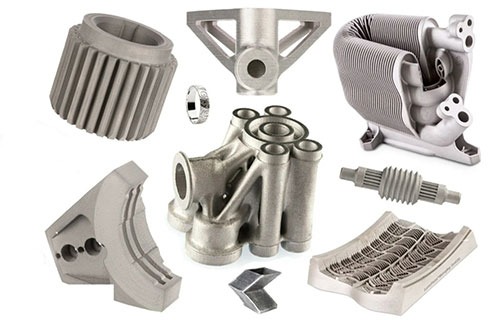
3D printed film is moving beyond prototyping to become a transformative manufacturing platform, enabling the creation of highly engineered, functional thin films impossible with traditional methods. By depositing materials with micron-scale precision, this technology allows for unprecedented control over film architecture, material composition, and functional properties.
Key takeaways
- The power of 3D printed film lies in its spatial control and material versatility. It transcends the limitations of traditional film production.
- In the lab, 3D printed film is a playground for creating novel materials with tailored properties.
- The ability to create biocompatible, structurally complex, and drug-loaded films on demand is transforming medicine.
- For procurement and production managers, the benefits extend beyond performance.
What Makes 3D Printed Film Unique?
The power of 3D printed film lies in its spatial control and material versatility. It transcends the limitations of traditional film production.
- Architectural Control at the Micro-Scale: Traditional films are homogeneous in the Z-axis (thickness). 3D printing enables functional gradation. You can design a film with a dense, impermeable base layer, a middle layer with a specific porosity for fluid wicking or cell growth, and a top layer with a bioactive coating—all printed as one continuous part. Techniques like Electrohydrodynamic (EHD) Printing can create fibrous mats with fiber diameters down to 100 nanometers, creating films with enormous surface area for filtration or catalysis.
- Multi-Material Integration in a Single Process: A single print head, or more commonly, multiple print heads, can deposit different “inks” with precision. This allows for the direct printing of embedded sensors, conductive traces, or drug reservoirs within a structural polymer film. For instance, a wearable patch can be printed with insulating layers, silver nanowire circuits, and a hydrogel drug pocket simultaneously.
- Digital Fabrication & Mass Customization: The film’s design exists as a digital file. Changing its structure—like altering pore size, circuit pattern, or drug concentration—requires only a software edit, not new tooling. This makes one-off, patient-specific medical devices or small-batch, specialized industrial films economically viable.
Comparison to Traditional Methods:
| Feature | Traditional Film (Casting/Extrusion) | 3D Printed Film |
|---|---|---|
| Internal Structure | Homogeneous or simple laminates. | Engineered gradients, lattices, channels. |
| Material Composition | Limited to compatible blends; layers glued or laminated. | True multi-material integration; seamless interfaces. |
| Customization Cost | High for small batches (tooling costs). | Low to zero retooling cost; digital design change. |
| Minimum Feature Size | Limited by die or mold precision (millimeters to microns). | Can achieve sub-micron features with advanced methods. |
| Waste | Significant from trimming and startup/shutdown. | Additive process; material used only where needed. |
How Is It Advancing Materials Science?
In the lab, 3D printed film is a playground for creating novel materials with tailored properties.
- Functional Composites and Gradients: Researchers at the University of Stuttgart used multiphoton lithography (an ultra-high-resolution 3D printing technique) to create polymer-ceramic hybrid films. By varying the laser’s exposure, they controlled the ceramic nanoparticle density across the film’s thickness, creating a gradient from flexible polymer on one side to hard, scratch-resistant ceramic on the other. This single film could replace a multi-layer laminate in protective coatings.
- Porous Structures for Catalysis and Filtration: Creating films with uniform, tunable pore sizes is critical. A team at MIT utilized direct ink writing to print a photocatalytic film with a gyroid lattice structure. This complex, continuous 3D channel network maximized surface area for chemical reactions and light absorption, achieving a 40% higher catalytic efficiency than a traditional slurry-coated film for breaking down water pollutants.
- Flexible and Stretchable Electronics: The field of soft robotics and wearable tech demands electronics that bend. 3D printing allows conductive inks (like silver nanoparticle or PEDOT:PSS inks) to be deposited in meandering, “horseshoe” patterns on elastic substrates. These patterns stretch without breaking the conductive pathways. A notable project printed a fully functional, flexible strain sensor film that could be applied directly to joints to monitor movement in physical therapy.
What Revolutionary Medical Applications Exist?
The ability to create biocompatible, structurally complex, and drug-loaded films on demand is transforming medicine.
Personalized Drug Delivery Systems:
The Australian research on liver cancer films is a prime example. Using a drop-on-demand inkjet printing method, they created a film loaded with the chemotherapy drug 5-fluorouracil (5-FU) and a biodegradable polymer.
- Spatial Control: The drug concentration could be varied across the film, allowing a higher dose to be targeted at the center of a tumor resection site.
- Temporal Control: The polymer matrix was engineered to degrade over 23 days, providing a steady, localized release that maintained effective drug levels while minimizing the toxic systemic “peak” of IV chemotherapy. In vivo studies showed this reduced tumor recurrence by over 50% compared to conventional post-surgery treatment.
Advanced Wound Care and Tissue Engineering:
Beyond drugs, films can deliver cells and growth factors. Bioprinting techniques are used to create living films.
- Case Study: Skin Grafts: A company like Poietis uses laser-assisted bioprinting to create stratified films containing layers of fibroblasts and keratinocytes—the key cells of human skin. These living films can be placed on severe burns, accelerating healing and reducing scarring. The precision of printing allows the creation of a more natural skin structure than traditional sheet grafts.
- Barrier Films and Patches: 3D printing can create mucoadhesive films for oral drug delivery that stick to the gum or cheek, or corneal bandages with a curvature perfectly matching a patient’s eye, printed from their optical scan data.
What Are the Operational and Economic Advantages?
For procurement and production managers, the benefits extend beyond performance.
- Dramatic Waste Reduction: As an additive process, material is only deposited where needed. In contrast, producing a patterned film via traditional photolithography and etching can waste over 90% of the starting material. For expensive materials like certain biologics or rare polymers, this is a decisive cost factor.
- Supply Chain Simplification and Digital Inventory: A medical device company can move from stocking dozens of sizes of generic wound films to keeping a digital library of designs. A specific, sized film for a patient can be printed on-site at a hospital, eliminating shipping delays, inventory costs, and the risk of stockouts. This “print-on-demand” model is particularly powerful for orphan drugs and personalized medical devices.
- Rapid Prototyping to Production: The same machine that prints a single prototype film for testing can be scaled to small-batch production. This shortens the development cycle from years to months. A materials company can rapidly iterate through dozens of film architectures to find the one with optimal permeability or strength.
What Are the Current Challenges?
The technology is powerful but not without its hurdles.
- Speed and Scale: While perfect for high-value, small-batch production, the print speed for large-area films (square meters) is still slower than roll-to-roll manufacturing. Scaling up while maintaining resolution is an active area of R&D.
- Material Development: The performance of a printed film is only as good as its “ink.” Developing stable, printable inks with the desired electrical, mechanical, or biological properties—especially for multi-material printing—is a major scientific challenge. Ink rheology (flow behavior) is critical.
- Process Standardization and Qualification: For medical use, every batch must be identical and sterile. Qualifying a 3D printing process for Good Manufacturing Practice (GMP) is complex, as it involves validating not just the final product, but the digital file, software, printer calibration, and post-processing steps.
How to write a spec that gets priced correctly
A drawing is a contract. If it leaves a number open, the shop fills that number in with its own default. The default is rarely the one you had in mind. Put these five lines on every RFQ and most of the back-and-forth disappears before it starts.
- File format and units, with the model exported in millimetres
- Process and material grade, not a trade name
- Critical features and the tolerance each one needs
- Surface finish and the faces it applies to
- Quantity for the pilot build and for the year
The point is not paperwork. Each line removes a decision the shop would otherwise make for you. A complete RFQ comes back priced. An incomplete one comes back guessed.
What actually drives the price
Buyers usually push on material because it is the line they can see. In practice the material is rarely the biggest number on a quote. These five lines decide most of it:
- build volume and orientation
- layer height and support structure
- material grade and colour
- post-processing and hand finishing
- quantity per build plate
Ask for the quote split by line. A supplier who cannot break it down is guessing, and you will pay for the guess. The line you can usually renegotiate is the tolerance band, not the raw material.
Problems you will meet, and the fix
Every process has a failure mode it prefers. The same four show up again and again on this kind of work, and none of them are mysteries once you know what to look for.
- Warping on long flat faces where the part lifts off the plate
- Layer lines showing through a cosmetic surface
- Support scars on a mating face nobody flagged
- Dimensional drift on thin walls after cooling
Catch the fault on the first part, not the hundredth. A first-article check costs an hour. A bad batch costs the whole order. Write the check into the purchase order so nobody has to remember it.
What to check on the first article
The first article is the cheapest inspection you will ever buy. Use it properly and the rest of the run becomes boring, which is exactly what you want.
- Every dimension on the drawing, with the measured value written beside it.
- The material certificate, matched to the heat or lot number on the parts.
- The finish against the sample you approved, under the same light.
- Fit against the mating part, assembled rather than measured.
- Packaging, because parts that arrive damaged were never in tolerance.
Check in this order: datums, then mating features, then cosmetic faces. If the datums are wrong, every number after them is noise. Keep the report on file. When a problem shows up in month six, that document is the only thing that tells you what changed.
How to compare two quotes fairly
Two numbers are not comparable unless the scope matches. Line them up before you decide, because a low number with three gaps is not a low number.
Same drawing, same material, same finish, same inspection. Anything else is a different job wearing the same part number. Then look at what each quote leaves out. Freight, packaging, certificates and tooling are the usual gaps.
Ask each supplier to state their assumptions in writing. The one who does is usually the one who has run the process before.
Scaling from one part to a batch
The first part teaches you the process. The hundredth teaches you the process cost.
Watch three things as volume grows: setup amortisation, tool wear, and how much hand work the finish still needs. If the unit price barely moves between ten and a hundred, the cost sits in material or in hand work, not in setup. Ask which, because only one of them is negotiable.
Lead time behaves the same way. A one-off is scheduled around other jobs. A repeat order is scheduled around your forecast. Give the shop a forecast and the lead time gets shorter, not longer.
How to read a supplier's quote
A quote is a short document with a long shadow. Four things in it decide whether the job runs smoothly, and only one of them is the price.
- The scope line. It should name the process, the material and the finish, not just the part.
- The tolerance basis. General tolerance or the drawing, and which standard it follows.
- The exclusions. Tooling, freight, certificates and inspection are the usual omissions.
- The validity date. Material prices move, and an open-ended quote is a promise nobody can keep.
Read the exclusions before you read the total. A quote that leaves out tooling is not cheaper. It is a quote for a different job.
What to send with the first order
The first order sets the pattern for every order after it. Send a complete package once and the shop files it, and the second order takes a fraction of the time.
- A STEP or native model plus a PDF drawing carrying the same revision letter.
- The material callout by standard number, not by trade name.
- The finish and the exact faces it applies to.
- Any test the part must pass: fit, seal, drop, salt spray, dielectric.
- A contact who can answer a question inside one working day.
Then write down what was agreed. An email that confirms the material, the finish and the date is worth more than a longer purchase order that leaves them open.
What Does the Future Hold?
The trajectory points toward greater integration and intelligence.
- 4D Printing: This involves printing films with stimuli-responsive materials. A film could be printed flat but curl into a tube when heated (for a stent) or change permeability in response to moisture (for smart packaging).
- Convergence with AI: Machine learning algorithms are being used to optimize print parameters automatically and to design novel film architectures that maximize a desired property, such as toughness or drug release profile, in ways humans might not conceive.
- Fully Integrated Systems: The future may see bedside bioprinters in hospitals that take a patient’s cells and print a personalized therapeutic film in the operating room, or factory-floor systems that print a complete, functional electronic device—circuitry, battery, and case—as a single multi-material film object.
3D printed film is far more than a novel way to make a sheet of plastic. It is a foundational shift in how we design and fabricate functional interfaces between the world and our technology—and between medicine and the human body. By granting unparalleled control over microstructure, composition, and form, it solves intractable problems in traditional manufacturing and opens doors to applications that were previously science fiction. For innovators in materials science, it’s a tool for discovery. For the medical field, it’s a pathway to personalized, more effective care. While challenges in speed and standardization remain, the unique advantages of customization, complexity, and waste reduction make 3D printed film a critical and growing technology set to redefine the capabilities of thin materials across the industrial and healthcare landscapes.
Our solution for 3D Printed Film Changing Science
YiguProto runs 3D printing in house, from a single prototype to a production batch. We quote the process, the material and the finish as separate lines, so you can see where the money goes instead of arguing with one number.
Send a STEP file or a drawing and you get a DFM report in one to two business days. It flags the features that add cost and the features that will not hold tolerance on the process you picked.
Every order ships with an inspection report on the features you call out. If a part misses, we make it again. Ready to price a part? Start with a free quote and DFM review, or read more about our 3D printing. You can also talk to an engineer before you commit to a drawing.
FAQ about 3D Printed Film Changing Science
What is the lead time for 3D Printed Film Changing Science?
Expect 2 to 5 business days for a first batch. Tooling, material stock and the finishing queue all move that number, so we confirm the date in writing before the run starts rather than after.
What files do you need in order to quote?
A STEP file plus a PDF drawing that carries the same revision letter. The model carries the geometry and the drawing carries the intent. When the two disagree, the shop picks one, and it is never the one you meant.
What should I check before approving the parts?
Datums first, then the features that mate, then the cosmetic faces. Ask for a dimensional report, a material certificate and a finish sample. A part can be inside every tolerance and still not fit, so assemble one before you sign.
How long does a first article take?
Usually a few business days once the drawing is frozen, and longer if tooling is involved. The date we give you is the date we confirm in writing, not the date we hope for.
What happens if a part is out of specification?
We measure it against the same drawing you approved and, if it misses, we make it again. What matters is that the report exists, because a disagreement without data is just an opinion.
How much does 3D Printed Film Changing Science cost?
Price comes from five lines: material, machine or tool time, setup, finishing and inspection. The material itself is usually the smallest of them. Send a drawing and we will split the quote so you can see which line is doing the damage.
The short version
3D Printed Film Changing Science rewards the buyer who reads the data sheet and the drawing together. Pick the option for the property that matters, not for the price per kilo.
Tighten only what mates. Test a sample before the run. Then let the process do the rest.