
3D Printing
Can 3D Printing Reshape Electronics Manufacturing?
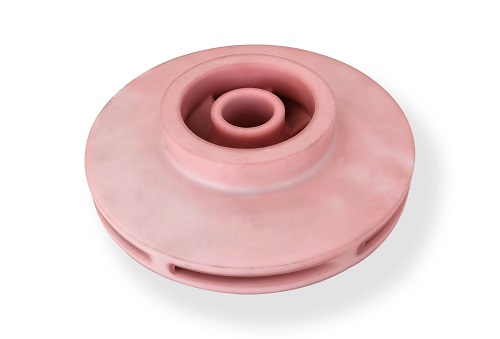
The electronics industry is defined by speed, miniaturization, and the constant demand for innovation. Traditional manufacturing methods often struggle to keep pace, creating bottlenecks in prototyping, customization, and low-volume production. This is where additive manufacturing (AM), or 3D printing, is becoming a game-changer.
Key takeaways
- The shift to AM is driven by its ability to solve specific, high-value problems that subtractive methods cannot.
- 3D printing is moving beyond prototyping to enable entirely new product categories and enhance existing ones.
- Choosing the right process is critical, as each has unique strengths for electronic applications.
- Success hinges on selecting the right material and designing for the additive process.
Why Consider 3D Printing for Electronics?
The shift to AM is driven by its ability to solve specific, high-value problems that subtractive methods cannot.
- Complexity Without Cost: Traditional methods like CNC machining or injection molding charge a premium for complex geometry. With AM, intricate internal channels, lattice structures, and organic shapes are no harder to print than simple blocks. This allows for optimal thermal management and lightweighting without extra cost.
- Mass Customization: AM makes it economically viable to produce small batches or even one-off devices tailored to individual users, such as custom-fit wearable sensors or bespoke medical monitoring equipment.
- Consolidated Assembly: AM can integrate multiple components into a single, monolithic part. Think of a device housing with built-in cable guides, mounting points, and snap-fits, printed as one piece. This reduces assembly time, part count, and potential failure points.
What Are the Key Application Areas?
3D printing is moving beyond prototyping to enable entirely new product categories and enhance existing ones.
Can You 3D Print Functional Circuits?
Yes, 3D printed electronics (3DPE) is a rapidly advancing frontier. It involves printing conductive traces directly onto substrates.
- Methods: Technologies like Aerosol Jet Printing and Material Jetting can deposit nano-particle silver or copper inks with high precision, creating embedded circuits.
- Advantages: This allows for circuits on non-planar surfaces, such as the inside curve of a helmet or a drone’s wing. It also enables the creation of conformal antennas that are printed directly onto a device’s housing, saving space and improving signal performance. A notable project from MIT Lincoln Laboratory demonstrated a 3D printed phased-array radar antenna embedded into a small satellite structure, showcasing extreme integration.
- Limitations: Current conductive inks generally have higher resistivity than bulk copper and may not yet be suitable for high-power applications, but they are ideal for sensors, low-power RF components, and interconnects.
How Does AM Improve Enclosures and Housings?
This is a mature but evolving application. AM allows for enclosures that are smarter and more functional.
- Integrated Cooling: Designs can include conformal cooling channels that snake directly behind heat-generating components, following their exact shape for maximum efficiency. This is far superior to attaching a simple, flat heat sink.
- Embedded Components: Cavities and mounts for PCBs, batteries, and connectors can be designed and printed with perfect fit. Some processes allow for multi-material printing, where a rigid housing is printed with soft, flexible gaskets in a single build, ensuring a perfect seal.
- Case Study: A company designing a ruggedized field sensor used Selective Laser Sintering (SLS) to print its housing. The design included an internal lattice to absorb impact, integrated mounting points, and channels to route and protect external cables—all printed as one part. This reduced assembly from 12 steps to 3 and cut the part’s weight by 40%.
Is Prototyping Truly Faster?
AM fundamentally changes the prototyping workflow, especially for form, fit, and function testing.
- Iterative Design: Engineers can test a design, modify the CAD file overnight, and have a new, improved version in hand the next morning. This rapid iteration cycle accelerates development and leads to better-optimized final products.
- Functional Prototypes: With the right materials, prototypes can be thermally, mechanically, and electrically tested. For example, printing a prototype heatsink in a metal AM process like Direct Metal Laser Sintering (DMLS) allows for real-world thermal validation before committing to costly production tooling.
- Cost Savings: A European automotive electronics supplier reported reducing their prototyping costs by over 60% by switching from CNC-machined aluminum housings to 3D printed nylon ones for early-stage testing.
Which AM Technologies Are Best Suited?
Choosing the right process is critical, as each has unique strengths for electronic applications.
| Technology | Process | Key Strengths for Electronics | Ideal Applications |
|---|---|---|---|
| Fused Deposition Modeling (FDM) | Extrudes thermoplastic filament. | Low cost, wide material choice (including conductive/static-dissipative), good for large parts. | Prototype enclosures, jigs/fixtures for assembly, large structural parts. |
| Stereolithography (SLA) | Cures liquid resin with UV laser. | High detail, smooth surface finish, excellent for small features, watertight parts. | Detailed housings, lenses/light pipes, microfluidic channels, master patterns. |
| Selective Laser Sintering (SLS) | Fuses polymer powder with a laser. | High strength, no support structures needed, good thermal/chemical resistance. | Durable end-use enclosures, snap-fits, hinges, complex ducting. |
| Multi-Jet Fusion (MJF) | Fuses powder with detailing/fusing agents. | Fast build speed, excellent dimensional accuracy, consistent mechanical properties. | Small-to-medium batch production of functional parts, complex lattices. |
| Direct Metal Laser Sintering (DMLS) | Fuses metal powder with a laser. | High strength/thermal conductivity, complex internal geometry. | EMI/RFI shields, heatsinks, structural brackets, custom connectors. |
What About Materials and Design?
Success hinges on selecting the right material and designing for the additive process.
What Materials Are Available?
The material palette extends far beyond standard plastics:
- Engineering Thermoplastics: PEEK, ULTEM (PEI) offer high heat resistance and strength for demanding environments.
- Specialized Polymers: ESD-safe materials protect sensitive components from electrostatic discharge. RF-transparent materials are ideal for antenna covers.
- Composites: Filaments filled with carbon fiber or glass fiber offer enhanced stiffness and strength for structural parts.
- Conductive Inks: As mentioned, silver and copper inks enable printed circuits and sensors.
How Do You Design for Additive Electronics?
Design for Additive Manufacturing (DfAM) is a specialized skill set.
- Embrace Topology Optimization: Use software to algorithmically design parts that use material only where needed for strength, resulting in organic, lightweight shapes impossible to machine.
- Consolidate Parts: Actively look for assemblies that can be combined into a single printed part to reduce assembly and weight.
- Consider Orientation and Supports: Part orientation on the build plate affects strength (due to layer adhesion) and surface finish. Design to minimize support structures on critical surfaces.
- Account for Tolerances and Shrinkage: Each AM process has its own dimensional accuracy. Understand the tolerances of your chosen technology and design critical interfaces (e.g., for a press-fit bearing) accordingly.
What Are the Main Challenges?
Despite its promise, AM in electronics faces hurdles.
- Surface Finish and Resolution: Layer lines or powder-based surface texture may not be suitable for consumer-facing parts without post-processing (sanding, painting).
- Material Limitations: While growing, the range of materials with certified long-term stability, UV resistance, and flame-retardant ratings is smaller than for traditional plastics.
- Production Speed and Cost at Scale: For volumes in the tens or hundreds of thousands, injection molding remains significantly faster and cheaper per part. AM excels at low-to-medium volume production.
- Skill Gap: Effective use of AM requires expertise in CAD, DfAM, materials science, and process knowledge, which can be a barrier to adoption.
How to write a spec that gets priced correctly
A drawing is a contract. If it leaves a number open, the shop fills that number in with its own default. The default is rarely the one you had in mind. Put these five lines on every RFQ and most of the back-and-forth disappears before it starts.
- File format and units, with the model exported in millimetres
- Process and material grade, not a trade name
- Critical features and the tolerance each one needs
- Surface finish and the faces it applies to
- Quantity for the pilot build and for the year
The point is not paperwork. Each line removes a decision the shop would otherwise make for you. A complete RFQ comes back priced. An incomplete one comes back guessed.
What actually drives the price
Buyers usually push on material because it is the line they can see. In practice the material is rarely the biggest number on a quote. These five lines decide most of it:
- build volume and orientation
- layer height and support structure
- material grade and colour
- post-processing and hand finishing
- quantity per build plate
Ask for the quote split by line. A supplier who cannot break it down is guessing, and you will pay for the guess. The line you can usually renegotiate is the tolerance band, not the raw material.
Problems you will meet, and the fix
Every process has a failure mode it prefers. The same four show up again and again on this kind of work, and none of them are mysteries once you know what to look for.
- Warping on long flat faces where the part lifts off the plate
- Layer lines showing through a cosmetic surface
- Support scars on a mating face nobody flagged
- Dimensional drift on thin walls after cooling
Catch the fault on the first part, not the hundredth. A first-article check costs an hour. A bad batch costs the whole order. Write the check into the purchase order so nobody has to remember it.
What to check on the first article
The first article is the cheapest inspection you will ever buy. Use it properly and the rest of the run becomes boring, which is exactly what you want.
- Every dimension on the drawing, with the measured value written beside it.
- The material certificate, matched to the heat or lot number on the parts.
- The finish against the sample you approved, under the same light.
- Fit against the mating part, assembled rather than measured.
- Packaging, because parts that arrive damaged were never in tolerance.
Check in this order: datums, then mating features, then cosmetic faces. If the datums are wrong, every number after them is noise. Keep the report on file. When a problem shows up in month six, that document is the only thing that tells you what changed.
How to compare two quotes fairly
Two numbers are not comparable unless the scope matches. Line them up before you decide, because a low number with three gaps is not a low number.
Same drawing, same material, same finish, same inspection. Anything else is a different job wearing the same part number. Then look at what each quote leaves out. Freight, packaging, certificates and tooling are the usual gaps.
Ask each supplier to state their assumptions in writing. The one who does is usually the one who has run the process before.
Scaling from one part to a batch
The first part teaches you the process. The hundredth teaches you the process cost.
Watch three things as volume grows: setup amortisation, tool wear, and how much hand work the finish still needs. If the unit price barely moves between ten and a hundred, the cost sits in material or in hand work, not in setup. Ask which, because only one of them is negotiable.
Lead time behaves the same way. A one-off is scheduled around other jobs. A repeat order is scheduled around your forecast. Give the shop a forecast and the lead time gets shorter, not longer.
How to read a supplier's quote
A quote is a short document with a long shadow. Four things in it decide whether the job runs smoothly, and only one of them is the price.
- The scope line. It should name the process, the material and the finish, not just the part.
- The tolerance basis. General tolerance or the drawing, and which standard it follows.
- The exclusions. Tooling, freight, certificates and inspection are the usual omissions.
- The validity date. Material prices move, and an open-ended quote is a promise nobody can keep.
Read the exclusions before you read the total. A quote that leaves out tooling is not cheaper. It is a quote for a different job.
What to send with the first order
The first order sets the pattern for every order after it. Send a complete package once and the shop files it, and the second order takes a fraction of the time.
- A STEP or native model plus a PDF drawing carrying the same revision letter.
- The material callout by standard number, not by trade name.
- The finish and the exact faces it applies to.
- Any test the part must pass: fit, seal, drop, salt spray, dielectric.
- A contact who can answer a question inside one working day.
Then write down what was agreed. An email that confirms the material, the finish and the date is worth more than a longer purchase order that leaves them open.
When this is the wrong choice
A good supplier tells you when the process does not fit. These are the cases where we say so.
- The volume is so low that setup costs more than the parts are worth.
- The tolerance is tighter than the process can hold without a second operation.
- The geometry cannot be made without a tool feature that will not pay back.
- The material you need is not available in the form the process requires.
- The schedule is shorter than the tooling or setup time, and nobody has said so yet.
None of these are refusals. They are reasons to look at a different route, and the earlier that conversation happens the cheaper it is. The most expensive mistake in manufacturing is a process chosen before the question was understood.
What Is the Future Outlook?
The trajectory points toward deeper integration and new capabilities.
- Multi-Material & Hybrid Printing: Systems that can seamlessly print conductive, insulating, and structural materials in a single build will enable fully integrated electronic devices straight from the printer.
- Embedded Components: Advanced systems are being developed to pause the print, place a pre-fabricated component (like a microchip), and resume printing, fully encapsulating it within the structure.
- Sustainable Manufacturing: AM’s material efficiency and potential for localized production reduce waste and logistics emissions, aligning with global sustainability goals.
Additive manufacturing is not a wholesale replacement for traditional electronics manufacturing. Instead, it is a powerful complementary tool that excels where conventional methods fall short: in complexity, customization, speed for prototyping, and low-volume production. By enabling embedded functionality, unprecedented design forms, and simplified assembly, 3D printing empowers engineers to innovate faster and create smarter, more integrated electronic products. The strategic adoption of AM is becoming a key differentiator for companies looking to lead in the fast-paced electronics sector. The question is no longer if AM will be used, but how and where to apply it for maximum competitive advantage.
Our solution for 3D Printing Reshape Electronics Manufacturing
YiguProto runs 3D printing in house, from a single prototype to a production batch. We quote the process, the material and the finish as separate lines, so you can see where the money goes instead of arguing with one number.
Send a STEP file or a drawing and you get a DFM report in one to two business days. It flags the features that add cost and the features that will not hold tolerance on the process you picked.
Every order ships with an inspection report on the features you call out. If a part misses, we make it again. Ready to price a part? Start with a free quote and DFM review, or read more about our 3D printing. You can also talk to an engineer before you commit to a drawing.
FAQ about 3D Printing Reshape Electronics Manufacturing
What files do you need in order to quote?
A STEP file plus a PDF drawing that carries the same revision letter. The model carries the geometry and the drawing carries the intent. When the two disagree, the shop picks one, and it is never the one you meant.
How do I compare two quotes fairly?
Match the scope first: same drawing, same material, same finish, same inspection. Then read the exclusions. Freight, tooling and certificates are the usual gaps, and a low number with three gaps is not a low number.
What should I check before approving the parts?
Datums first, then the features that mate, then the cosmetic faces. Ask for a dimensional report, a material certificate and a finish sample. A part can be inside every tolerance and still not fit, so assemble one before you sign.
How much does 3D Printing Reshape Electronics Manufacturing cost?
Price comes from five lines: material, machine or tool time, setup, finishing and inspection. The material itself is usually the smallest of them. Send a drawing and we will split the quote so you can see which line is doing the damage.
Does the process work for prototypes as well as production?
Yes, and that is usually the point. Running the prototype on the production process removes a whole class of surprises, because the part you test is made the same way as the part you sell.
What is 3D Printing Reshape Electronics Manufacturing used for?
3D Printing Reshape Electronics Manufacturing turns up wherever the part has to do a real job at a predictable cost: brackets, housings, fixtures, covers and the fittings that hold them together. The honest test is whether the properties match the load and the environment, not whether the material is fashionable.
The short version
3D Printing Reshape Electronics Manufacturing rewards the buyer who reads the data sheet and the drawing together. Pick the option for the property that matters, not for the price per kilo.
Tighten only what mates. Test a sample before the run. Then let the process do the rest.