
Blogs
Bronze 3D Printing Services
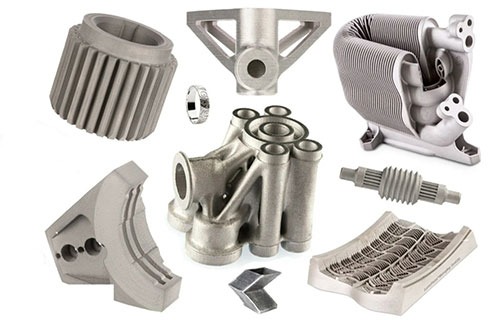
Elevate your projects with Bronze 3D Printing—the perfect fusion of bronze’s timeless patina, durability, and cutting-edge additive manufacturing technology. From intricate art sculptures to high-performance industrial parts, our solutions deliver unmatched customization, intricate complexity, and faster production.
Key takeaways
- At our shop, our Bronze 3D Printing capabilities are engineered to meet the diverse demands of creative, industrial, and architectural industries.
- The definition of Bronze 3D Printing centers on an advanced metal 3D printing process that transforms bronze feedstock (primarily powder) into functional or decorative parts through layer-by-layer fabrication.
- Bronze’s natural beauty can be elevated with surface treatment to boost durability, patina control, and visual appeal.
- Bronze 3D Printing offers a range of advantages that make it superior to traditional bronzeworking (e.g., casting, machining):

Our Capabilities: Delivering Bronze 3D Printing Excellence
At our shop, our Bronze 3D Printing capabilities are engineered to meet the diverse demands of creative, industrial, and architectural industries. We combine cutting-edge equipment with deep expertise to deliver exceptional results:
- Technical Skills: Our engineers have 5+ years of specialized experience in bronze additive manufacturing, understanding how to handle bronze’s unique properties (e.g., melting point: 950–1,050°C) to minimize defects and maximize precision.
- Custom Solutions: Whether you need a one-of-a-kind bronze sculpture, a custom architectural accent, or a high-volume automotive component, we tailor every step (material selection, post-processing) to your unique design.
- Wide Service Range: We handle projects of all sizes—from 1-off art prototypes (ready in 4–6 days) to 8,000+ high-volume industrial parts—with consistent quality across every batch.
- Artistic & Industrial Expertise: Unlike providers that specialize in only one sector, we excel in both creative (art, architecture) and industrial (automotive, aerospace) bronze applications, ensuring the same level of precision for every project.
Table: Our Bronze 3D Printing Capabilities vs. Industry Averages
| Capability | our shop Performance | Industry Average |
| Max Build Volume | 450mm × 450mm × 500mm | 350mm × 350mm × 400mm |
| Prototyping Lead Time | 4–6 days | 8–12 days |
| Production Capacity | Up to 8,000 parts/week | Up to 3,500 parts/week |
| Part Density (Standard Bronze) | 99.3–99.6% | 95–98% |
| Material Waste | <8% | 12–18% |
What Is Bronze 3D Printing?
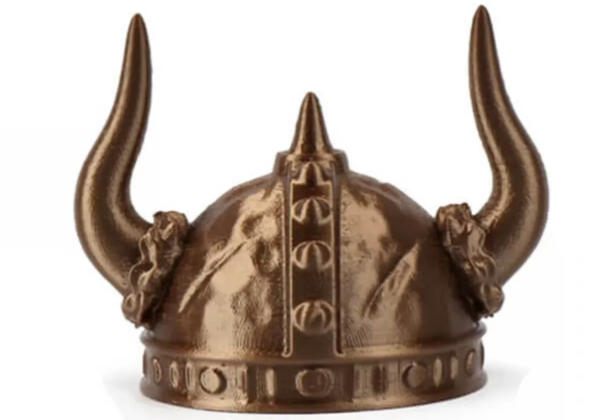
The definition of Bronze 3D Printing centers on an advanced metal 3D printing process that transforms bronze feedstock (primarily powder) into functional or decorative parts through layer-by-layer fabrication. As a subset of additive manufacturing, it differs from traditional bronzeworking (e.g., casting, forging) by using digital designs to guide machines that melt or bind bronze into precise, three-dimensional objects.
At its core, this technology leverages bronze’s unique properties—including its warm, reddish-gold hue, natural patina development, and high corrosion resistance—to solve challenges in industries ranging from art to aerospace. The process explanation of Bronze 3D Printing involves various bronze alloys (copper-tin blends with optional additives) and specialized techniques to preserve the material’s aesthetic and functional traits.
Key Basics of Bronze 3D Printing:
| Term | Description | Role in the Process |
| Bronze Alloys | Copper-tin blends (typically 85–95% Cu, 5–15% Sn) with additives like phosphorus (for strength) or zinc (for castability) | Deliver balanced durability, aesthetics, and performance for different applications |
| Layer-by-Layer Printing | Building parts one thin layer (0.05–0.2mm) at a time | Enables intricate geometries (e.g., filigree art, internal channels) impossible with traditional methods |
| Additive vs. Traditional | Adds material only where needed (vs. removing material in machining) | Reduces bronze waste (from 50–60% in machining to <10% in 3D printing) |
Surface Treatment: Enhancing Bronze Parts’ Aesthetics and Durability
Bronze’s natural beauty can be elevated with surface treatment to boost durability, patina control, and visual appeal. Our services are tailored to bronze’s properties:
- Polishing: Creates a mirror-like finish (surface roughness Ra <0.1μm) for luxury decorative parts (e.g., furniture accents, jewelry)—our polishers use diamond pastes to achieve unmatched luster.
- Sandblasting: Creates a uniform matte finish (Ra 1–3μm) that enhances patina development—ideal for art sculptures and architectural pieces.
- Patina Treatment: Chemically induces controlled oxidation to create vintage hues (e.g., green, brown, blue)—popular for art and historical replicas (e.g., museum artifacts).
- Coating: Applies clear lacquer or epoxy coatings to preserve the desired finish (e.g., prevent further patina for decorative parts, boost corrosion resistance for marine components).
- Anodizing: Forms a protective oxide layer that enhances corrosion resistance and allows for color customization—ideal for industrial parts requiring both functionality and aesthetics.
Table: Impact of Surface Treatment on Bronze Part Performance
| Treatment | Surface Roughness (Ra) | Patina Development Speed | Corrosion Resistance (Salt Spray Test) |
| As-Printed | 1–3μm | Moderate (6–12 months) | 200+ hours (no rust) |
| Polished | <0.1μm | Slow (12–24 months) | 300+ hours (no rust) |
| Sandblasted | 1–3μm | Fast (3–6 months) | 250+ hours (no rust) |
| Lacquered | 0.5–2μm | None (coating protects) | 500+ hours (no rust) |
Advantages: Why Bronze 3D Printing Outperforms Traditional Methods
Bronze 3D Printing offers a range of advantages that make it superior to traditional bronzeworking (e.g., casting, machining):
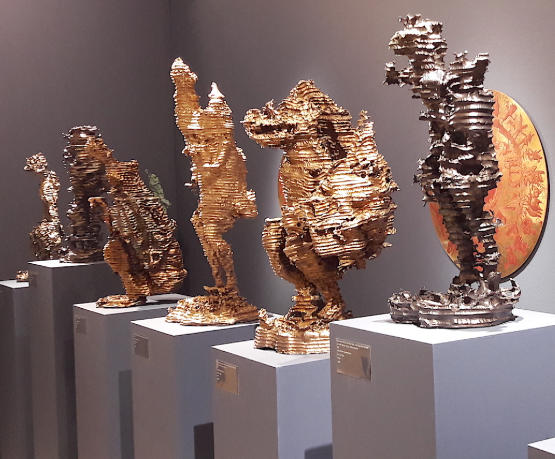
- Design Freedom: Print intricate geometries (e.g., hollow sculptures with internal details, lattice structures in industrial parts) that are impossible to handcraft or cast—unlocking new creative possibilities for artists and engineers.
- Cost-Effectiveness: Reduce bronze waste to <8% (vs. 50–60% in machining) and eliminate tooling costs—critical for high-value bronze materials. For small batches (1–100 parts), 3D printing is 35–45% cheaper than traditional methods.
- Speed: Prototypes are ready in 4–6 days (vs. 3–4 weeks for traditional casting), and production lead times are cut by 50%—ideal for time-sensitive projects (e.g., art exhibitions, automotive prototype launches).
- Customization: Easily tweak designs for one-of-a-kind pieces (e.g., personalized art sculptures) or small batches (e.g., limited-edition architectural accents) without extra costs—traditional methods require new tooling for every design change.
- Sustainability: Recycle 90% of unused bronze powder, reducing environmental impact and lowering material costs—traditional casting generates non-recyclable bronze scrap.
- Aesthetic Versatility: Achieve diverse finishes (polished, sandblasted, patinated) in a single process—traditional methods require separate steps for each finish, increasing costs and lead times.
How to write a spec that gets priced correctly
A drawing is a contract. If it leaves a number open, the shop fills that number in with its own default. The default is rarely the one you had in mind. Put these five lines on every RFQ and most of the back-and-forth disappears before it starts.
- A model and a drawing that agree
- Material by standard number
- Tolerance only where it mates
- Finish and the faces it applies to
- Quantity and required date
The point is not paperwork. Each line removes a decision the shop would otherwise make for you. A complete RFQ comes back priced. An incomplete one comes back guessed.
What actually drives the price
Buyers usually push on material because it is the line they can see. In practice the material is rarely the biggest number on a quote. These five lines decide most of it:
- process choice
- material
- tolerance band
- finish
- volume
Ask for the quote split by line. A supplier who cannot break it down is guessing, and you will pay for the guess. The line you can usually renegotiate is the tolerance band, not the raw material.
Problems you will meet, and the fix
Every process has a failure mode it prefers. The same four show up again and again on this kind of work, and none of them are mysteries once you know what to look for.
- A drawing that contradicts the model
- A tolerance with no datum
- A cosmetic callout with no approved sample
- A quote compared against a different scope
Catch the fault on the first part, not the hundredth. A first-article check costs an hour. A bad batch costs the whole order. Write the check into the purchase order so nobody has to remember it.
What to check on the first article
The first article is the cheapest inspection you will ever buy. Use it properly and the rest of the run becomes boring, which is exactly what you want.
- Every dimension on the drawing, with the measured value written beside it.
- The material certificate, matched to the heat or lot number on the parts.
- The finish against the sample you approved, under the same light.
- Fit against the mating part, assembled rather than measured.
- Packaging, because parts that arrive damaged were never in tolerance.
Check in this order: datums, then mating features, then cosmetic faces. If the datums are wrong, every number after them is noise. Keep the report on file. When a problem shows up in month six, that document is the only thing that tells you what changed.
How to compare two quotes fairly
Two numbers are not comparable unless the scope matches. Line them up before you decide, because a low number with three gaps is not a low number.
Same drawing, same material, same finish, same inspection. Anything else is a different job wearing the same part number. Then look at what each quote leaves out. Freight, packaging, certificates and tooling are the usual gaps.
Ask each supplier to state their assumptions in writing. The one who does is usually the one who has run the process before.
Scaling from one part to a batch
The first part teaches you the process. The hundredth teaches you the process cost.
Watch three things as volume grows: setup amortisation, tool wear, and how much hand work the finish still needs. If the unit price barely moves between ten and a hundred, the cost sits in material or in hand work, not in setup. Ask which, because only one of them is negotiable.
Lead time behaves the same way. A one-off is scheduled around other jobs. A repeat order is scheduled around your forecast. Give the shop a forecast and the lead time gets shorter, not longer.
How to read a supplier's quote
A quote is a short document with a long shadow. Four things in it decide whether the job runs smoothly, and only one of them is the price.
- The scope line. It should name the process, the material and the finish, not just the part.
- The tolerance basis. General tolerance or the drawing, and which standard it follows.
- The exclusions. Tooling, freight, certificates and inspection are the usual omissions.
- The validity date. Material prices move, and an open-ended quote is a promise nobody can keep.
Read the exclusions before you read the total. A quote that leaves out tooling is not cheaper. It is a quote for a different job.
What to send with the first order
The first order sets the pattern for every order after it. Send a complete package once and the shop files it, and the second order takes a fraction of the time.
- A STEP or native model plus a PDF drawing carrying the same revision letter.
- The material callout by standard number, not by trade name.
- The finish and the exact faces it applies to.
- Any test the part must pass: fit, seal, drop, salt spray, dielectric.
- A contact who can answer a question inside one working day.
Then write down what was agreed. An email that confirms the material, the finish and the date is worth more than a longer purchase order that leaves them open.
When this is the wrong choice
A good supplier tells you when the process does not fit. These are the cases where we say so.
- The volume is so low that setup costs more than the parts are worth.
- The tolerance is tighter than the process can hold without a second operation.
- The geometry cannot be made without a tool feature that will not pay back.
- The material you need is not available in the form the process requires.
- The schedule is shorter than the tooling or setup time, and nobody has said so yet.
None of these are refusals. They are reasons to look at a different route, and the earlier that conversation happens the cheaper it is. The most expensive mistake in manufacturing is a process chosen before the question was understood.
Planning the ramp from prototype to production
The gap between one good part and a thousand identical ones is a plan, not a machine. Three decisions close it.
First, freeze the design. Every change after tooling starts is a re-cut, and re-cuts are where schedules go. Second, decide the inspection level. A prototype is checked by eye; a production part is checked against a report. Third, agree the change process in writing, including who pays for it.
Write the ramp down as dates and owners, not as intentions. A ramp plan with three names and three dates is worth more than a page of good intentions.
What documentation to expect
Paperwork is not bureaucracy when a part fails at the customer. It is the only record of what was agreed. A normal shipment should carry four documents.
- A dimensional report covering every callout on the drawing.
- A material certificate traceable to the heat or lot number.
- A finish or coating certificate where the specification requires one.
- A packing list that matches the carton labels.
If a supplier cannot produce these on request, they are not running a controlled process. Ask for one sample set before you place the first order and you will know exactly what you are buying.
How to handle a change after the order
Changes happen. What matters is whether the change is priced, scheduled and recorded, or absorbed quietly and discovered later.
Send the change as a new revision, not as a note in an email. Ask for three answers in writing: what it costs, what it does to the date, and what happens to material or tooling already committed. Then decide.
A change without a revision number is a rumour. The shop will build what it has on file, and both sides will be right and unhappy at the same time.
Applications Industry: Where Bronze 3D Printing Shines
Bronze’s unique blend of aesthetics, durability, and corrosion resistance makes it versatile across industries. Here’s how we’re using Bronze 3D Printing to solve real-world challenges:
| Industry | Key Applications | Why Bronze? |
| Art & Sculpture | Custom sculptures, limited-edition art pieces, museum replicas | Natural patina, malleability for intricate details, timeless aesthetic |
| Architecture | Decorative facades, railings, column capitals, custom light fixtures | Weather resistance (with coating), aesthetic versatility, historical compatibility (for heritage projects) |
| Automotive | Springs, electrical contacts, interior trim (luxury vehicles), sensor components | High fatigue resistance, corrosion resistance, aesthetic appeal |
| Aerospace | Valve components, electrical connectors, small structural parts | Lightweight (vs. steel), corrosion resistance to extreme environments |
| Marine | Propeller parts, hull fittings, navigation equipment housings | Superior corrosion resistance to saltwater, durability |
| Industrial | Gears, bearings, pumps, electrical contacts | High strength, wear resistance, corrosion resistance to oils/chemicals |
Our solution for Bronze 3D Printing Services
YiguProto runs custom manufacturing in house, from a single prototype to a production batch. We quote the process, the material and the finish as separate lines, so you can see where the money goes instead of arguing with one number.
Send a STEP file or a drawing and you get a DFM report in one to two business days. It flags the features that add cost and the features that will not hold tolerance on the process you picked.
Every order ships with an inspection report on the features you call out. If a part misses, we make it again. Ready to price a part? Start with a free quote and DFM review, or read more about our custom manufacturing. You can also talk to an engineer before you commit to a drawing.
FAQ about Bronze 3D Printing Services
Can 3D-printed bronze be used for heritage restoration projects (e.g., repairing ancient bronze artifacts)?
Yes! 3D-printed bronze is ideal for heritage restoration due to its compatibility with traditional bronze’s composition and aesthetic. We work with museums and restoration experts to:Scan damaged artifacts to create precise 3D models of missing parts (e.g., a broken bronze statue’s hand).Print replacement parts using low-tin bronze (95% Cu, 5% Sn) that matches the artifact’s original material.Apply aged patina treatments to blend the new part with the artifact’s existing surface (e.g., matching a 200-year-old green patina).We recently helped restore a 19th-century bronze fountain by 3D-printing missing decorative spouts—museum curators noted the replacements were indistinguishable from the original parts.
What is the difference between 3D-printed bronze and cast bronze in terms of strength and durability?
3D-printed bronze (especially via SLM) often outperforms cast bronze in key areas:Strength: SLM-printed aluminum bronze has a tensile strength of 550 MPa (vs. 480 MPa for cast aluminum bronze) due to its uniform grain structure.Durability: 3D-printed bronze has <0.1% internal porosity (vs. 2–3% for cast bronze), reducing the risk of cracks or leaks in high-pressure applications (e.g., marine valves).Wear Resistance: Phosphor bronze printed via SLM has 25% better fatigue resistance than cast phosphor bronze, making it ideal for automotive springs or industrial gears that undergo repeated stress.
Is it possible to 3D print bronze parts with embedded components (e.g., sensors in marine valves or LEDs in art sculptures)?
Absolutely! We offer multi-material 3D printing for bronze parts to embed components:For industrial parts (e.g., marine valves), we embed small pressure sensors during printing—positioning them in internal channels where traditional machining couldn’t reach, enabling real-time performance monitoring.For art sculptures, we embed low-voltage LEDs in 3D-printed bronze structures, creating illuminated pieces without visible wiring (we use heat-resistant, corrosion-proof LED modules compatible with bronze’s printing temperature).Our team works with you to design the embedding process, ensuring components are securely held and don’t compromise the bronze part’s strength or aesthetics.
What files do you need in order to quote?
A STEP file plus a PDF drawing that carries the same revision letter. The model carries the geometry and the drawing carries the intent. When the two disagree, the shop picks one, and it is never the one you meant.
How do I compare two quotes fairly?
Match the scope first: same drawing, same material, same finish, same inspection. Then read the exclusions. Freight, tooling and certificates are the usual gaps, and a low number with three gaps is not a low number.
Can Bronze 3D Printing Services be made in small quantities?
Yes, and small quantities are where a good supplier earns the next order. Setup dominates the price at low volume, so the cheapest route is usually the one with the fewest operations, not the cheapest material.
The short version
Bronze 3D Printing Services rewards the buyer who reads the data sheet and the drawing together. Pick the option for the property that matters, not for the price per kilo.
Tighten only what mates. Test a sample before the run. Then let the process do the rest.