
3D Printing
Should You Use Chinese Red Wax for 3D Printing Handboards?
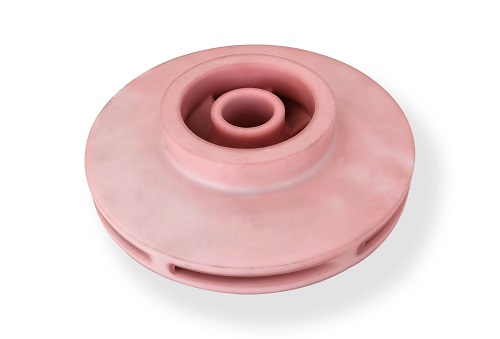
If you’re sourcing materials for a presentation model or a casting master, “Chinese red wax” has likely appeared on your radar as a cost-effective option. But in a market saturated with photopolymer resins, what truly distinguishes this material? Is it merely a budget alternative, or does it offer legitimate technical advantages for specific handboard applications?
Key takeaways
- Its benefits are real and address common pain points in product development.
- A professional assessment requires acknowledging and planning for potential drawbacks.
- Chinese red wax is a fantastic tool, but not the right one for every job.
- So, should you use Chinese red wax for your 3D printing handboards? The answer is a qualified “yes” for a well-defined set of applications.
What Exactly is “Chinese Red Wax” in Technical Terms?
Let’s define it precisely. “Chinese red wax” is a category of photopolymer resin, formulated primarily for vat photopolymerization 3D printing (SLA/DLP/LCD), distinguished by its distinctive red color and its development and production by manufacturers in China. Its core value proposition is achieving a balance between high-resolution printing capability and competitive pricing.
Think of it as the automotive industry’s “global platform” strategy. Manufacturers leverage shared engineering and localized supply chains to produce a vehicle that offers 90% of the performance of a premium brand at 70% of the cost. Similarly, Chinese red wax resins are engineered to deliver near-premium print quality—critical for handboards used as visual masters or casting patterns—while avoiding the premium price tag associated with R&D-heavy brands from North America or Europe.
How Does Its Performance Stack Up Against Other Resins?
The decision hinges on measurable criteria. The following table provides a clear, technical comparison to benchmark Chinese red wax against common alternatives.
| Performance Criteria | Chinese Red Wax (Typical Spec) | Standard Castable Resin (e.g., Generic) | Premium Imported Casting Wax Resin | Practical Implication for Your Handboard |
|---|---|---|---|---|
| Primary Use Case | Visual masters, prototyping, & light-duty casting patterns. | General-purpose casting patterns. | High-integrity masters for precision casting (jewelry, dental). | Best for prototypes where appearance and moderate accuracy are key. |
| As-Printed Surface Finish (Ra) | 0.8 – 1.5 µm. Good, often with a slightly matte finish. | 1.5 – 3.0 µm. Typically requires post-processing. | < 0.6 µm. Exceptional, near-polished finish. | Can significantly reduce sanding time compared to standard resins, but may not achieve a flawless “as-cast” look without work. |
| Dimensional Accuracy | ±0.1% (min. ±50 µm). Reliable for most prototyping needs. | ±0.15 – 0.2%. Less predictable for fine features. | ±0.05% (min. ±25 µm). Benchmark for micro-details. | Suitable for handboards with features > 0.5mm. For sub-0.3mm details like ultra-fine text, precision may drift. |
| Burnout & Casting Performance | Good, but requires validation. Formulations vary; ash residue can be 0.03 – 0.08%. | Adequate. Higher ash risk; may require slower burnout cycles. | Excellent & predictable. Ultra-low ash (<0.02%); optimized burnout profiles. | Must test with your specific foundry’s process. Not all “red wax” is equal; a trial burnout is non-negotiable for critical castings. |
| Mechanical “Green Strength” | Moderate. Can be somewhat brittle before final curing; thin features may snap during support removal. | Variable, often lower. | High. Formulated for robustness during handling and support removal. | Requires careful support design and gentle post-processing. Not ideal for handboards with extremely delicate, unsupported protrusions. |
| Cost per Liter | $$ (Low-Mid Range). Significant cost advantage. | $ (Lowest). | $$$ (Premium). | The strongest value proposition: high value-for-money for non-mission-critical applications. |
What Are Its Most Compelling Advantages?
Its benefits are real and address common pain points in product development.
How Does it Deliver Exceptional Value for Money?
For startups, small businesses, or projects with tight budgets, this is the primary advantage. The cost savings of 30-50% compared to premium imported resins can be redirected into additional design iterations or other project phases. For example, a design studio creating concept models for a line of consumer kitchen gadgets can produce twice as many color-variant handboards for client review within the same budget, accelerating decision-making.
Is the Surface Quality Good Enough for Client Presentations?
Often, yes. The inherently smooth finish out of the printer is a major time-saver. A case in point: an industrial design firm used a Chinese red wax resin to produce handboards for a new Bluetooth speaker enclosure. After standard washing and curing, the parts required only a light manual polish with a soft cloth to achieve a presentable, uniform matte finish suitable for stakeholder meetings, saving an estimated 1.5 hours of labor per model compared to sanding a standard gray resin.
How Reliable is it for Prototype and Bridge Tooling?
In silicone molding workflows, a 3D printed handboard is used to create a soft mold for producing multiple urethane copies. Chinese red wax, with its good surface finish and dimensional stability, is frequently a cost-optimal master model for this step. Its rigidity allows it to withstand the molding process, and its surface detail is sufficient to be transferred to the silicone and, subsequently, the urethane parts.
What Are the Key Limitations and How to Mitigate Them?
A professional assessment requires acknowledging and planning for potential drawbacks.
Why is Casting Performance a “Test-First” Scenario?
The term “wax-like” does not guarantee flawless casting performance. The chemical composition, including the photoinitiator package and filler materials, varies between manufacturers and affects burnout.
- Mitigation Strategy: Before committing to a full production run of casting patterns, conduct a small-batch validation. Print several test pieces (e.g., a calibration ring with thin and thick sections) and have your casting partner process them using their standard investment and burnout cycle. Inspect the final metal parts for surface pitting, inclusions, or dimensional shifts. This step is crucial and non-negotiable.
How Do You Handle Potential Brittleness and Support Strategy?
Some formulations can be prone to cracking, especially at sharp internal corners or where supports meet the model.
- Mitigation Strategy: Design for Additive Manufacturing (DfAM): Incorporate small fillets (0.3-0.5mm) at sharp internal corners to reduce stress concentration. Optimize Supports: Use light-touch supports with a smaller contact point diameter. Consider orienting the model to place critical aesthetic surfaces away from heavy support structures. Post-Cure Carefully: Follow the manufacturer’s recommended UV post-curing time precisely. Over-curing can increase brittleness.
Is Color Consistency Guaranteed?
Batch-to-batch color variance can occur, which may be problematic if you are producing parts for an assembly over time or need precise color matching for brand reasons.
- Mitigation Strategy: Purchase sufficient resin for an entire project run from a single batch lot. For color-critical applications, be prepared to apply a primer and paint, treating the resin as a neutral substrate.
How to write a spec that gets priced correctly
A drawing is a contract. If it leaves a number open, the shop fills that number in with its own default. The default is rarely the one you had in mind. Put these five lines on every RFQ and most of the back-and-forth disappears before it starts.
- File format and units, with the model exported in millimetres
- Process and material grade, not a trade name
- Critical features and the tolerance each one needs
- Surface finish and the faces it applies to
- Quantity for the pilot build and for the year
The point is not paperwork. Each line removes a decision the shop would otherwise make for you. A complete RFQ comes back priced. An incomplete one comes back guessed.
What actually drives the price
Buyers usually push on material because it is the line they can see. In practice the material is rarely the biggest number on a quote. These five lines decide most of it:
- build volume and orientation
- layer height and support structure
- material grade and colour
- post-processing and hand finishing
- quantity per build plate
Ask for the quote split by line. A supplier who cannot break it down is guessing, and you will pay for the guess. The line you can usually renegotiate is the tolerance band, not the raw material.
Problems you will meet, and the fix
Every process has a failure mode it prefers. The same four show up again and again on this kind of work, and none of them are mysteries once you know what to look for.
- Warping on long flat faces where the part lifts off the plate
- Layer lines showing through a cosmetic surface
- Support scars on a mating face nobody flagged
- Dimensional drift on thin walls after cooling
Catch the fault on the first part, not the hundredth. A first-article check costs an hour. A bad batch costs the whole order. Write the check into the purchase order so nobody has to remember it.
What to check on the first article
The first article is the cheapest inspection you will ever buy. Use it properly and the rest of the run becomes boring, which is exactly what you want.
- Every dimension on the drawing, with the measured value written beside it.
- The material certificate, matched to the heat or lot number on the parts.
- The finish against the sample you approved, under the same light.
- Fit against the mating part, assembled rather than measured.
- Packaging, because parts that arrive damaged were never in tolerance.
Check in this order: datums, then mating features, then cosmetic faces. If the datums are wrong, every number after them is noise. Keep the report on file. When a problem shows up in month six, that document is the only thing that tells you what changed.
How to compare two quotes fairly
Two numbers are not comparable unless the scope matches. Line them up before you decide, because a low number with three gaps is not a low number.
Same drawing, same material, same finish, same inspection. Anything else is a different job wearing the same part number. Then look at what each quote leaves out. Freight, packaging, certificates and tooling are the usual gaps.
Ask each supplier to state their assumptions in writing. The one who does is usually the one who has run the process before.
Scaling from one part to a batch
The first part teaches you the process. The hundredth teaches you the process cost.
Watch three things as volume grows: setup amortisation, tool wear, and how much hand work the finish still needs. If the unit price barely moves between ten and a hundred, the cost sits in material or in hand work, not in setup. Ask which, because only one of them is negotiable.
Lead time behaves the same way. A one-off is scheduled around other jobs. A repeat order is scheduled around your forecast. Give the shop a forecast and the lead time gets shorter, not longer.
How to read a supplier's quote
A quote is a short document with a long shadow. Four things in it decide whether the job runs smoothly, and only one of them is the price.
- The scope line. It should name the process, the material and the finish, not just the part.
- The tolerance basis. General tolerance or the drawing, and which standard it follows.
- The exclusions. Tooling, freight, certificates and inspection are the usual omissions.
- The validity date. Material prices move, and an open-ended quote is a promise nobody can keep.
Read the exclusions before you read the total. A quote that leaves out tooling is not cheaper. It is a quote for a different job.
When Should You Absolutely Choose Another Material?
Chinese red wax is a fantastic tool, but not the right one for every job.
- For Medical or Dental Guides/Patterns: Unless the resin has specific ISO 10993 or USP Class VI biocompatibility certifications (rare for this category), it is not suitable for patterns that will contact tissues or be used in regulated medical device prototyping.
- For Extreme-Detail Masters (< 0.2mm features): If your project involves micro-mechanical parts or jewelry with hair-thin details, the superior accuracy and edge sharpness of a premium resin are worth the investment.
- For High-Temperature or Functional Testing: This resin is not engineered for thermal or mechanical load. For parts undergoing thermal cycling or stress tests, use engineering thermoplastics (like Nylon or ABS) via FDM or SLS, or actual castable wax for direct thermal testing.
So, should you use Chinese red wax for your 3D printing handboards? The answer is a qualified “yes” for a well-defined set of applications. It excels as a high-value material for visual prototypes, presentation models, and master patterns for silicone molding, where its excellent surface finish-to-cost ratio is a decisive advantage. However, it demands a cautious, test-first approach for investment casting and may not be suitable for projects requiring ultimate precision, certified biocompatibility, or mechanical performance. By understanding its strengths as a cost-effective workhorse and respecting its limitations through prudent validation, you can leverage Chinese red wax to produce impressive handboards that advance your project without straining your budget.
FAQ: Chinese Red Wax for 3D Printing
Q: Can I use Chinese red wax in any MSLA/LCD resin printer?
A: Compatibility is high, but calibration is essential. Most Chinese red wax resins are formulated for 405nm wavelength light, which is standard. However, you must calibrate exposure times. The resin’s opacity and cure speed differ from standard resins. Start with the manufacturer’s recommended settings for a printer with similar light source power, and print exposure calibration tests (like the XP2 Validation Matrix or AmeraLabs Town) to fine-tune for perfect layer adhesion and dimensional accuracy.
Q: How do I post-process a handboard printed with this material?
A: Follow a standard resin workflow with gentle handling. Wash thoroughly in ≥ 90% isopropyl alcohol (IPA), preferably using a two-stage wash for a cleaner result. Cure under 405nm UV light. For a smoother finish, light sanding with 600+ grit sandpaper or a brief vapor smoothing process (if the resin’s chemical composition allows) can be used. Always wear appropriate PPE (gloves, mask) when sanding to avoid inhaling particles.
Q: Is it truly “water-washable”?
A: Be very cautious of this claim. While some formulations may be marketed as water-washable, IPA washing typically yields more reliable and cleaner results. If attempting water wash, use warm water and ensure it is disposed of properly, as it will contain uncured resin contaminants. Residual water can also inhibit complete curing.
Q: What’s the best way to store it, and what is the shelf life?
A: Treat it like any quality photopolymer resin. Store in its original, opaque container in a cool (18-25°C), dark place. Shelf life is typically 6-12 months unopened. Once opened, minimize exposure to air and light. Gently shake or stir the resin before use if it has been sitting for more than a few days, as settling can occur.
Our solution for Use Chinese Red Wax
YiguProto runs 3D printing in house, from a single prototype to a production batch. We quote the process, the material and the finish as separate lines, so you can see where the money goes instead of arguing with one number.
Send a STEP file or a drawing and you get a DFM report in one to two business days. It flags the features that add cost and the features that will not hold tolerance on the process you picked.
Every order ships with an inspection report on the features you call out. If a part misses, we make it again. Ready to price a part? Start with a free quote and DFM review, or read more about our 3D printing. You can also talk to an engineer before you commit to a drawing.
FAQ about Use Chinese Red Wax
What files do you need in order to quote?
A STEP file plus a PDF drawing that carries the same revision letter. The model carries the geometry and the drawing carries the intent. When the two disagree, the shop picks one, and it is never the one you meant.
How much does Use Chinese Red Wax cost?
Price comes from five lines: material, machine or tool time, setup, finishing and inspection. The material itself is usually the smallest of them. Send a drawing and we will split the quote so you can see which line is doing the damage.
Is there a minimum order quantity?
No hard minimum. One part is fine. What changes with volume is which costs dominate, so a single unit is priced mostly on setup and a thousand units are priced mostly on cycle time and material.
What material should I specify?
Specify by standard, not by trade name. A trade name can change under you between two orders; a standard number cannot. Then add the one property that actually decides the part, whether that is strength, heat resistance or chemical exposure.
What is the lead time for Use Chinese Red Wax?
Expect 2 to 5 business days for a first batch. Tooling, material stock and the finishing queue all move that number, so we confirm the date in writing before the run starts rather than after.
What tolerance can you hold on Use Chinese Red Wax?
The working default is ±0.1 mm on small features, ±0.3% on long spans. Tighter than that the process changes and so does the price, because every step tighter adds inspection time. Call out only the faces that mate with something else and leave the rest on the general tolerance.
The short version
Use Chinese Red Wax rewards the buyer who reads the data sheet and the drawing together. Pick the option for the property that matters, not for the price per kilo.
Tighten only what mates. Test a sample before the run. Then let the process do the rest.