
Metal Stamping
Choosing Metal Stamping Die Manufacturer: Guide for Precision Fastener Production
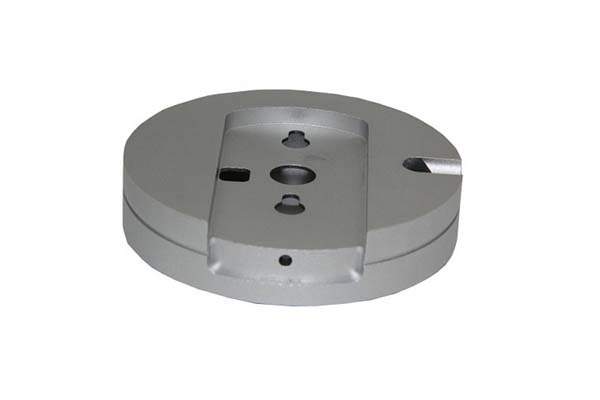
When it comes to manufacturing high-quality fasteners like socket shoulder screws and precision hardware, partnering with a reliable metal stamping die manufacturer is critical. These specialized manufacturers design and produce the tooling that shapes metal components with accuracy, consistency, and efficiency—qualities essential for meeting industry standards like ISO 7379 and ASME B18.3.
Why Metal Stamping Die Quality Matters for Fastener Production
Metal stamping dies are the backbone of producing consistent, high-performance fasteners such as stainless steel shoulder screws, bolts, and screws. The quality of these dies directly impacts every aspect of the final product, from dimensional accuracy to mechanical strength.
Precision Engineering
Fasteners like ISO 7379 socket shoulder screws require tight tolerances to ensure proper fit in assemblies. For example, the shoulder diameter (d1) must be held within tolerances as tight as -0.0006/-0.002 inches. A skilled die manufacturer achieves these tolerances through advanced machining, precision grinding, and rigorous quality control. Even a small deviation can cause loose fits that compromise assembly integrity or jams that halt production lines.
Material Compatibility
Stainless steel (such as AISI 304) is widely used for its corrosion resistance, but stamping this material requires dies designed to handle its hardness without excessive wear. Expert manufacturers optimize die materials—such as high-speed steel (HSS) or carbide—for specific fastener metals. Matching the die material to the workpiece material ensures consistent production over thousands of cycles and prevents premature tool failure.
Cost Efficiency
Well-designed dies reduce waste, minimize rework, and extend tool life—lowering production costs over time. A precision die can produce thousands of consistent shoulder screws before needing maintenance, while a poorly designed die may require frequent adjustments, produce scrap, and drive up per-part costs. The upfront investment in quality tooling pays dividends in long-term operational efficiency.
A real-world example: A leading automotive supplier needed to produce 100,000 ISO 7379 stainless steel shoulder screws (M8, d1=0.3937 inches) for suspension assemblies. Their initial die manufacturer produced screws with inconsistent shoulder diameters, causing 15% of parts to fail fit tests. After switching to a specialized metal stamping die manufacturer with precision-ground dies, dimensional variation was reduced by 80%, thread quality improved with 99.5% of screws passing torque tests (up from 85% previously), and production costs dropped by 12% due to reduced waste and faster cycle times.
Key Qualities to Look for in a Metal Stamping Die Manufacturer
Not all manufacturers are equal. When evaluating potential partners, prioritizing these critical factors will help you find a supplier capable of meeting your quality and production requirements.
Technical Expertise in Fastener Tooling
Fasteners like socket shoulder screws have unique features—unthreaded shoulders, precise thread pitches, and recessed drives—that demand specialized die design. Look for manufacturers with:
- Experience producing dies for ISO 7379, ASME B18.3, and other fastener standards. Familiarity with these specifications ensures your dies will produce compliant parts.
- In-house engineering teams skilled in CAD/CAM software for designing complex geometries, such as the transition from the shoulder diameter (d1) to the thread diameter (d2).
- Knowledge of material science to match die materials to fastener metals. Stainless steel, alloy steel, and specialty alloys each require specific die materials and heat treatments.
Quality Control and Certification
Reliable manufacturers adhere to strict quality standards to ensure die performance and consistency:
- ISO 9001 Certification: Ensures consistent quality management systems across design, production, and testing.
- RoHS Compliance: Critical for fasteners used in electronics or medical devices where restricted substances must be avoided.
- In-Process Testing: Use of coordinate measuring machines (CMM) to verify die dimensions ensures they meet tight tolerances, such as the overall length (l1) with ±0.01 inch accuracy.
Production Capacity and Flexibility
Whether you need small-batch prototypes or high-volume production, the manufacturer should offer:
- Scalable production capabilities to handle volumes from 100 to 100,000+ dies.
- Customization options for unique fastener designs, such as knurled heads, non-standard shoulder lengths, or special drives.
- Quick turnaround times for urgent projects, supported by efficient supply chains for raw materials and heat treatment services.
How Metal Stamping Dies Impact Fastener Performance
The quality of stamping dies directly affects the performance of the fasteners they produce. Understanding these relationships helps you specify the right tooling for your application.
Dimensional Accuracy
Fasteners must fit seamlessly into assemblies, requiring precise dimensions:
- Shoulder Diameter (d1): As shown in standard fastener tables, d1 ranges from 0.1575 inches (M3) to 0.6299 inches (M12) with strict tolerances. A well-designed die ensures these dimensions stay within spec, preventing loose fits that compromise strength or jams that damage components.
- Thread Quality: Threads (d2) must match pitch standards (such as #4-40 or M3) to ensure compatibility with nuts or tapped holes. Poor die design can result in mismatched threads, reducing fastener strength and causing assembly failures.
Mechanical Strength
Stamping dies influence the structural integrity of fasteners:
- Torque Resistance: The maximum tightening torque of socket shoulder screws is limited by shoulder design and material strength. Dies that ensure uniform shoulder thickness and proper grain flow prevent premature failure under load.
- Surface Finish: Smooth surfaces achieved with precision dies reduce friction during installation, improve corrosion resistance, and enhance the aesthetic quality of exposed fasteners—critical for stainless steel screws used in marine or outdoor applications.
Comparing Die Manufacturers: A Decision-Making Framework
To simplify your selection process, use this comparison table to evaluate manufacturers based on key criteria:
| Criteria | Top-Tier Manufacturer | Low-Quality Manufacturer |
|---|---|---|
| Technical Expertise | 10+ years in fastener die design; ISO 7379 experience | Limited fastener specialization; generic die designs |
| Quality Control | ISO 9001, RoHS compliance, CMM testing | No certifications; minimal inspection |
| Customization | Supports unique designs (e.g., knurled heads) | Only standard sizes; no customization |
| Production Capacity | 50,000+ dies/year; scalable for volume | Small batch limits; long lead times |
| Cost Efficiency | Higher upfront cost, lower long-term waste | Low upfront cost, high rework/waste expenses |
Selecting the right metal stamping die manufacturer is a foundational decision for producing high-quality fasteners like socket shoulder screws. Precision tooling ensures dimensional accuracy, consistent thread quality, and the mechanical strength required for critical applications. By prioritizing manufacturers with proven technical expertise, robust quality control systems, and scalable production capabilities, you can achieve reliable, cost-effective production that meets ISO 7379 and ASME B18.3 standards. The upfront investment in quality dies pays dividends through reduced waste, longer tool life, and faster production cycles—making it a strategic decision for any fastener manufacturing operation.
FAQ About Metal Stamping Die Manufacturers
What materials are best for metal stamping dies used for stainless steel fasteners?
High-speed steel (HSS) and carbide are ideal for stamping stainless steel. HSS offers good toughness and wear resistance for moderate volumes, while carbide provides superior wear resistance for high-volume production (50,000+ parts) and maintains tight tolerances over longer runs.
How long does a metal stamping die last for producing shoulder screws?
With proper maintenance, die life varies by material and complexity. For stainless steel fasteners, a well-designed HSS die typically produces 50,000–150,000 parts before requiring sharpening. Carbide dies can produce 200,000–500,000 parts before maintenance. Factors affecting die life include material hardness, part complexity, and production speed.
Can a manufacturer produce dies for both metric and imperial fasteners?
Yes, reputable manufacturers design dies for both metric (e.g., M3–M12) and imperial (e.g., #4-40) standards. They maintain tooling libraries for common fastener specifications and can adapt designs for custom requirements, ensuring compatibility with global markets.
What certifications should I look for in a die manufacturer?
Key certifications include ISO 9001 for quality management systems and RoHS compliance for restricted substances. For medical or aerospace applications, additional certifications such as ISO 13485 (medical devices) or AS9100 (aerospace) may be required. Always request certificates and audit reports to verify compliance.
How to write a spec that gets priced correctly
A drawing is a contract. If it leaves a number open, the shop fills that number in with its own default. The default is rarely the one you had in mind. Put these five lines on every RFQ and most of the back-and-forth disappears before it starts.
- Part drawing with the tolerance stack called out
- Material grade, temper and thickness
- Strip layout or the feed direction you expect
- Surface finish and any coating
- Annual volume and the release schedule
The point is not paperwork. Each line removes a decision the shop would otherwise make for you. A complete RFQ comes back priced. An incomplete one comes back guessed.
What actually drives the price
Buyers usually push on material because it is the line they can see. In practice the material is rarely the biggest number on a quote. These five lines decide most of it:
- tool complexity and station count
- material utilisation in the strip
- press tonnage and cycle rate
- secondary operations
- annual volume
Ask for the quote split by line. A supplier who cannot break it down is guessing, and you will pay for the guess. The line you can usually renegotiate is the tolerance band, not the raw material.
Problems you will meet, and the fix
Every process has a failure mode it prefers. The same four show up again and again on this kind of work, and none of them are mysteries once you know what to look for.
- Burr on the shear edge that grows as the tool wears
- Gallng on a drawn wall after a few thousand strokes
- Punch break-out on thick material
- Part lift and misfeed at high stroke rates
Catch the fault on the first part, not the hundredth. A first-article check costs an hour. A bad batch costs the whole order. Write the check into the purchase order so nobody has to remember it.
What to check on the first article
The first article is the cheapest inspection you will ever buy. Use it properly and the rest of the run becomes boring, which is exactly what you want.
- Every dimension on the drawing, with the measured value written beside it.
- The material certificate, matched to the heat or lot number on the parts.
- The finish against the sample you approved, under the same light.
- Fit against the mating part, assembled rather than measured.
- Packaging, because parts that arrive damaged were never in tolerance.
Check in this order: datums, then mating features, then cosmetic faces. If the datums are wrong, every number after them is noise. Keep the report on file. When a problem shows up in month six, that document is the only thing that tells you what changed.
How to compare two quotes fairly
Two numbers are not comparable unless the scope matches. Line them up before you decide, because a low number with three gaps is not a low number.
Same drawing, same material, same finish, same inspection. Anything else is a different job wearing the same part number. Then look at what each quote leaves out. Freight, packaging, certificates and tooling are the usual gaps.
Ask each supplier to state their assumptions in writing. The one who does is usually the one who has run the process before.
Scaling from one part to a batch
The first part teaches you the process. The hundredth teaches you the process cost.
Watch three things as volume grows: setup amortisation, tool wear, and how much hand work the finish still needs. If the unit price barely moves between ten and a hundred, the cost sits in material or in hand work, not in setup. Ask which, because only one of them is negotiable.
Lead time behaves the same way. A one-off is scheduled around other jobs. A repeat order is scheduled around your forecast. Give the shop a forecast and the lead time gets shorter, not longer.
How to read a supplier's quote
A quote is a short document with a long shadow. Four things in it decide whether the job runs smoothly, and only one of them is the price.
- The scope line. It should name the process, the material and the finish, not just the part.
- The tolerance basis. General tolerance or the drawing, and which standard it follows.
- The exclusions. Tooling, freight, certificates and inspection are the usual omissions.
- The validity date. Material prices move, and an open-ended quote is a promise nobody can keep.
Read the exclusions before you read the total. A quote that leaves out tooling is not cheaper. It is a quote for a different job.
What to send with the first order
The first order sets the pattern for every order after it. Send a complete package once and the shop files it, and the second order takes a fraction of the time.
- A STEP or native model plus a PDF drawing carrying the same revision letter.
- The material callout by standard number, not by trade name.
- The finish and the exact faces it applies to.
- Any test the part must pass: fit, seal, drop, salt spray, dielectric.
- A contact who can answer a question inside one working day.
Then write down what was agreed. An email that confirms the material, the finish and the date is worth more than a longer purchase order that leaves them open.
When this is the wrong choice
A good supplier tells you when the process does not fit. These are the cases where we say so.
- The volume is so low that setup costs more than the parts are worth.
- The tolerance is tighter than the process can hold without a second operation.
- The geometry cannot be made without a tool feature that will not pay back.
- The material you need is not available in the form the process requires.
- The schedule is shorter than the tooling or setup time, and nobody has said so yet.
None of these are refusals. They are reasons to look at a different route, and the earlier that conversation happens the cheaper it is. The most expensive mistake in manufacturing is a process chosen before the question was understood.
Planning the ramp from prototype to production
The gap between one good part and a thousand identical ones is a plan, not a machine. Three decisions close it.
First, freeze the design. Every change after tooling starts is a re-cut, and re-cuts are where schedules go. Second, decide the inspection level. A prototype is checked by eye; a production part is checked against a report. Third, agree the change process in writing, including who pays for it.
Write the ramp down as dates and owners, not as intentions. A ramp plan with three names and three dates is worth more than a page of good intentions.
Our solution for Metal Stamping Die Manufacturer: Guide
YiguProto runs metal stamping in house, from a single prototype to a production batch. We quote the process, the material and the finish as separate lines, so you can see where the money goes instead of arguing with one number.
Send a STEP file or a drawing and you get a DFM report in one to two business days. It flags the features that add cost and the features that will not hold tolerance on the process you picked.
Every order ships with an inspection report on the features you call out. If a part misses, we make it again. Ready to price a part? Start with a free quote and DFM review, or read more about our metal stamping. You can also talk to an engineer before you commit to a drawing.
FAQ about Metal Stamping Die Manufacturer: Guide
How do I compare two quotes fairly?
Match the scope first: same drawing, same material, same finish, same inspection. Then read the exclusions. Freight, tooling and certificates are the usual gaps, and a low number with three gaps is not a low number.
What material should I specify?
Specify by standard, not by trade name. A trade name can change under you between two orders; a standard number cannot. Then add the one property that actually decides the part, whether that is strength, heat resistance or chemical exposure.
How much does Metal Stamping Die Manufacturer: Guide cost?
Price comes from five lines: material, machine or tool time, setup, finishing and inspection. The material itself is usually the smallest of them. Send a drawing and we will split the quote so you can see which line is doing the damage.
What is Metal Stamping Die Manufacturer: Guide used for?
Metal Stamping Die Manufacturer: Guide turns up wherever the part has to do a real job at a predictable cost: brackets, housings, fixtures, covers and the fittings that hold them together. The honest test is whether the properties match the load and the environment, not whether the material is fashionable.
What files do you need in order to quote?
A STEP file plus a PDF drawing that carries the same revision letter. The model carries the geometry and the drawing carries the intent. When the two disagree, the shop picks one, and it is never the one you meant.
Does the process work for prototypes as well as production?
Yes, and that is usually the point. Running the prototype on the production process removes a whole class of surprises, because the part you test is made the same way as the part you sell.
The short version
Metal Stamping Die Manufacturer: Guide rewards the buyer who reads the data sheet and the drawing together. Pick the option for the property that matters, not for the price per kilo.
Tighten only what mates. Test a sample before the run. Then let the process do the rest.