
Rapid Prototyping
Why Is CNC the Best Choice for Jewelry Prototype Making?
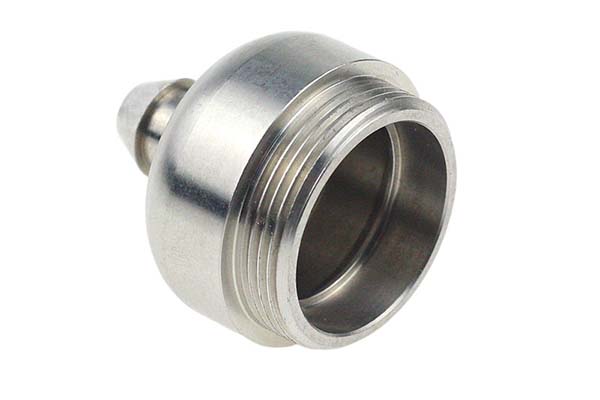
Jewelry designers face a constant challenge. They dream up intricate rings, delicate necklaces, and bold earrings, but turning those ideas into physical prototypes has always been difficult. Traditional hand carving takes forever, and errors ruin expensive materials. The jewelry prototype model CNC process changes everything.
Key takeaways
- Jewelry lives or dies by its details. A ring’s filigree might be only 0.1mm thick. An engraving on a pendant could be shallower than a human hair.
- Traditional methods limit what you can use. Some metals are too hard to carve by hand. Some stones crack under manual pressure.
- Time is money in the jewelry business. Seasonal collections have hard deadlines. Bridal pieces must ship before wedding season.
- Gold and platinum cost real money. Gold trades around (40 to )60 per gram. Platinum is similar.
How Does CNC Achieve Such Incredible Accuracy?
Jewelry lives or dies by its details. A ring’s filigree might be only 0.1mm thick. An engraving on a pendant could be shallower than a human hair. Get those details wrong, and the piece looks cheap. The CNC process gets them right every time.
What Level of Precision Can CNC Machines Actually Hit?
CNC machines for jewelry work at tolerances as tight as ±0.005mm. To understand how small that is, consider that a human hair is about 0.08mm thick. CNC holds accuracy 16 times finer than a hair. This matters because jewelry designs pack tiny features into small spaces. A floral pattern on a ring might have 20 separate petals in a 5mm area. Each petal needs crisp edges and proper spacing.
The machine achieves this through closed-loop control. Sensors on each axis constantly report position back to the computer. If the cutting tool drifts by even 0.001mm, the computer corrects it instantly. Manual hands cannot do this. The steadiest jeweler introduces微小 variations with every movement.
Why Does Consistency Matter for Multiple Copies?
Luxury brands often produce collections with matching pieces. A set of earrings, a ring, and a pendant should share identical design elements. Doing this by hand is nearly impossible.
A luxury Italian brand learned this lesson the hard way. They needed 50 identical prototype rings for a new collection featuring a 3D interlaced floral pattern. Their master carver worked for weeks on the first ring. It looked beautiful. But when they tried to copy it by hand, the copies drifted. Some had petals thicker than the original. Others misaligned the interlaced pattern. Of the first 12 prototypes, 3 had visible errors they could not sell. That is a 25% failure rate.
Switching to CNC fixed everything. They programmed the machine once from the CAD file. It cut all 50 rings identically. Every petal matched. Every interlacing lined up perfectly. Zero errors. The collection launched on time, and every prototype looked exactly like the designer intended.
How Do Manual and CNC Error Rates Compare?
Here is the data showing why consistency matters for production:
| Production Method | Error Rate | Consistency Between Copies |
|---|---|---|
| Manual Machining | 8-12% | 75-85% |
| CNC Process | <0.5% | 99.9% |
Manual methods lose 10 to 15% of copies to errors. CNC loses less than 1 in 200. For precious metals costing thousands per kilogram, that difference pays for the machine quickly.
What Materials Can CNC Handle for Jewelry?
Traditional methods limit what you can use. Some metals are too hard to carve by hand. Some stones crack under manual pressure. The CNC process works with almost everything, opening up creative possibilities.
Which Precious Metals Work Best with CNC?
Gold in all karats machines beautifully. 18K gold cuts cleanly with sharp tools. 24K gold, being softer, needs gentler feeds but produces mirror-like finishes. Silver is probably the easiest metal for CNC. It cuts fast, polishes well, and costs less than gold for practice runs. Platinum is harder and tougher, but CNC handles it easily with the right tools and speeds.
A New York jeweler created a prototype necklace combining 18K gold and platinum in one piece. The design required the two metals to join seamlessly along a curved edge. Manual soldering always left a visible seam. CNC machined both metals from a single block, creating a perfect metallurgical bond with no visible join line. The prototype looked like one continuous material.
Can CNC Work with Gemstones Without Breaking Them?
Yes, and this is where CNC beats manual methods badly. Precious stones like sapphires and emeralds are hard but brittle. One wrong tap with a hand tool can crack a (10,000 stone. Opals are even worse. They contain water inside and can shatter from heat or pressure.
CNC machines use gentle cutting forces and precise depth control. The tool touches exactly where programmed and removes exactly the material intended. There is no hammering, no prying, no sudden shocks. A jeweler in Australia used CNC to drill 0.3mm holes in black opals for a pendant series. Every hole came out clean. No stones cracked. Manual drilling had broken 3 of every 10 opals before.
Why Use Plastics and Resins in CNC Prototyping?
Smart jewelers do not cut expensive metal for the first prototype. They machine the design in plastic or resin first. These materials cost pennies compared to gold. You can test the design, check proportions, and show the client—all before committing to precious metal.
A startup jewelry brand had 10 design ideas for their first collection. They CNC machined each in resin for (50 total material cost. The founder wore each prototype, showed friends, and gathered feedback. Three designs tested poorly. Seven went to production. Machining all 10 in silver would have cost over )5,000 in materials alone. The resin prototypes saved that money and improved the final collection.
How Much Faster Is CNC Than Hand Carving?
Time is money in the jewelry business. Seasonal collections have hard deadlines. Bridal pieces must ship before wedding season. The CNC process compresses timelines dramatically.
What Does a Real Timeline Comparison Look Like?
Consider a complex bracelet prototype with interlocking links and detailed surface engraving. Here is how manual and CNC times compare step by step:
| Production Step | Manual Machining | CNC Process | Time Saved |
|---|---|---|---|
| Design Setup | 4 hours | 1 hour | 75% |
| Cutting & Shaping | 12 hours | 2.5 hours | 79% |
| Finishing Touches | 6 hours | 1.5 hours | 75% |
| Total Time | 22 hours | 5 hours | 77% |
CNC finishes the prototype in less than one workday. Manual work takes nearly three full days. That difference matters when you have multiple designs to prototype.
How Did a London Brand Beat a Valentine’s Day Deadline?
A London-based jewelry brand planned a Valentine’s Day collection with three new pendant designs. They started late—only 3 weeks before the holiday. Manual prototyping would have taken 2 weeks for all three pieces, leaving just 1 week for production and shipping. That was too tight.
They switched to CNC. The team programmed all three designs in one morning. The CNC machine cut the first prototype that afternoon. Within 3 days, they had three perfect prototypes in hand. Clients approved them immediately. Production started early, and the collection hit stores 10 days before Valentine’s Day. Sales exceeded projections by 40%. The speed of CNC directly captured revenue that manual methods would have missed.
How Does CNC Reduce Expensive Material Waste?
Gold and platinum cost real money. Gold trades around (40 to)60 per gram. Platinum is similar. Waste even 2 grams per prototype adds up fast across dozens of pieces. The CNC process minimizes scrap through smarter cutting.
What Waste Savings Can You Expect?
Here is actual waste data from production runs:
| Material | Manual Machining Waste | CNC Process Waste | Savings Per Prototype |
|---|---|---|---|
| 18K Gold (10g piece) | 2.5g (25%) | 0.3g (3%) | (85 (at)40/g) |
| Silver (20g piece) | 4g (20%) | 0.5g (2.5%) | $3 |
That gold savings is not small. (85 per prototype means if you make 100 prototypes a year, CNC saves you )8,500 just in gold waste. The machine pays for itself.
How Does CNC Cut Waste So Dramatically?
Two reasons. First, optimized tool paths. CAM software analyzes the 3D model and plans the most efficient cutting sequence. It nests parts close together on the material block. It avoids cutting air. It uses each tool for exactly the right operations.
Second, precision means fewer recuts. When manual work goes wrong, you scrap the piece and start over. That wasted metal adds up fast. With CNC, the first cut is right 99.5% of the time. No recuts means no waste from errors.
A Thai jewelry manufacturer specialized in gold pieces for export. They tracked waste carefully. Before CNC, they lost 25% of their gold to machining scrap and failed pieces. After switching to CNC, waste dropped to 3%. Over one year, that 22% reduction saved them $120,000 in gold costs. They used that money to hire two new designers and expand their collection.
What Designs Become Possible Only with CNC?
Some ideas simply cannot be made by hand. The geometry is too complex, the internal details too fine, the precision too demanding. CNC machining removes these limits.
How Did a Japanese Designer Create a Hidden Dragon?
A designer in Japan imagined a ring with a dragon hidden inside the band. The dragon wrapped around the interior surface, visible only when removed. The design required 50 tiny scales, each just 0.2mm wide, carved into the curved inner wall.
Manual carving was impossible. How do you reach inside a ring band with tools? How do you cut 50 identical scales freehand without ruining one and destroying the whole piece? The designer estimated 40+ hours of work with a high chance of failure.
CNC solved it in 3 hours. A 5-axis machine tilted the ring and reached inside with tiny ball-end mills. The computer controlled every cut precisely. The dragon emerged perfectly, every scale crisp and identical. The prototype sold immediately, and the production run sold out in weeks.
What Other Impossible Designs Become Easy?
Hollow pendants with internal patterns become possible. Machine the front and back separately, with intricate details on both inner surfaces, then assemble them. No hand tool can reach inside a hollow space to carve patterns.
Interlocking rings that cannot be separated become straightforward. Machine them as one piece, with the links formed around each other. Manual methods require assembling separate rings and hoping they move freely.
Micro-textures covering entire surfaces become routine. A CNC machine can cut thousands of tiny pyramids or dimples across a ring’s entire surface, creating light effects impossible to achieve by hand.
How to write a spec that gets priced correctly
A drawing is a contract. If it leaves a number open, the shop fills that number in with its own default. The default is rarely the one you had in mind. Put these five lines on every RFQ and most of the back-and-forth disappears before it starts.
- A model you are willing to freeze for the build
- The question the prototype must answer
- Process and material that can answer it
- Tolerance on the features under test
- How many iterations you have budgeted
The point is not paperwork. Each line removes a decision the shop would otherwise make for you. A complete RFQ comes back priced. An incomplete one comes back guessed.
What actually drives the price
Buyers usually push on material because it is the line they can see. In practice the material is rarely the biggest number on a quote. These five lines decide most of it:
- process choice
- part size and feature count
- material
- finish and fit checks
- number of iterations
Ask for the quote split by line. A supplier who cannot break it down is guessing, and you will pay for the guess. The line you can usually renegotiate is the tolerance band, not the raw material.
Problems you will meet, and the fix
Every process has a failure mode it prefers. The same four show up again and again on this kind of work, and none of them are mysteries once you know what to look for.
- A prototype that is too good and hides a production problem
- A prototype that is too rough to test the real question
- Material chosen for speed rather than for the test
- No measurement plan, so the result is an opinion
Catch the fault on the first part, not the hundredth. A first-article check costs an hour. A bad batch costs the whole order. Write the check into the purchase order so nobody has to remember it.
How Does CNC Improve Safety for Jewelers?
Jewelry making involves risk. Sharp tools cut fingers. Repetitive motion damages wrists. Fine dust harms lungs. The CNC process reduces these dangers significantly.
What Injury Reductions Do Factories See?
A survey of 50 jewelry factories tracked workplace injuries before and after adopting CNC. The results were clear:
Work-related injuries dropped by 68% after switching to CNC for prototype work.
Why? Because CNC removes the high-risk tasks from human hands. The machine does the cutting. The machine handles the sharp tools. The operator loads material and pushes “start,” then stands back.
How Does CNC Reduce Physical Strain?
Manual jewelers spend 8+ hours a day hunched over workbenches. They grip tiny tools with pinched fingers. They apply constant pressure for hours. This leads to carpal tunnel syndrome, chronic back pain, and eye strain.
CNC operators work differently. They sit at computers reviewing designs and checking finished parts. They stand at the machine loading material and unloading prototypes. The physical demands are lower. The variety of movement is higher. Job satisfaction improves because craftsmen focus on creative work, not repetitive cutting.
A master jeweler in his 50s told us: “Before CNC, my hands hurt constantly. I could not feel small details anymore. Now I run the CNC machine and inspect the outputs. My hands have healed. I can keep working another 10 years.”
The jewelry prototype model CNC process has transformed how modern jewelers work. It delivers ±0.005mm precision that hand work cannot match, producing 99.9% identical copies with less than 0.5% error rates. It handles every material from soft 24K gold to brittle opals to hard platinum, letting designers experiment freely. It cuts production time by over 75%, turning 22-hour manual jobs into 5-hour CNC runs. It reduces waste dramatically—saving (85 per gold prototype—and pays for itself quickly. It enables impossible designs like internal dragon carvings and hollow pendants with inner patterns. And it makes workshops safer, cutting injuries by 68% and reducing physical strain on craftsmen. For any jeweler serious about quality, speed, and creativity, CNC is not just an option. It is the standard.
How we can help
YiguProto runs rapid prototyping in house, from a single prototype to a production batch. We quote the process, the material and the finish as separate lines, so you can see where the money goes instead of arguing with one number.
Send a STEP file or a drawing and you get a DFM report in one to two business days. It flags the features that add cost and the features that will not hold tolerance on the process you picked.
Every order ships with an inspection report on the features you call out. If a part misses, we make it again. Ready to price a part? Start with a free quote and DFM review, or read more about our rapid prototyping. You can also talk to an engineer before you commit to a drawing.
Frequently asked questions
What happens if a part is out of specification?
We measure it against the same drawing you approved and, if it misses, we make it again. What matters is that the report exists, because a disagreement without data is just an opinion.
What material should I specify?
Specify by standard, not by trade name. A trade name can change under you between two orders; a standard number cannot. Then add the one property that actually decides the part, whether that is strength, heat resistance or chemical exposure.
What files do you need in order to quote?
A STEP file plus a PDF drawing that carries the same revision letter. The model carries the geometry and the drawing carries the intent. When the two disagree, the shop picks one, and it is never the one you meant.
Does the process work for prototypes as well as production?
Yes, and that is usually the point. Running the prototype on the production process removes a whole class of surprises, because the part you test is made the same way as the part you sell.
What should I check before approving the parts?
Datums first, then the features that mate, then the cosmetic faces. Ask for a dimensional report, a material certificate and a finish sample. A part can be inside every tolerance and still not fit, so assemble one before you sign.
How do I compare two quotes fairly?
Match the scope first: same drawing, same material, same finish, same inspection. Then read the exclusions. Freight, tooling and certificates are the usual gaps, and a low number with three gaps is not a low number.
The short version
Good parts reward the buyer who reads the data sheet and the drawing together. Pick the option for the property that matters, not for the price per kilo.
Tighten only what mates. Test a sample before the run. Then let the process do the rest.