
3D Printing
Which 3D Printing Material Is Right for Your Project?
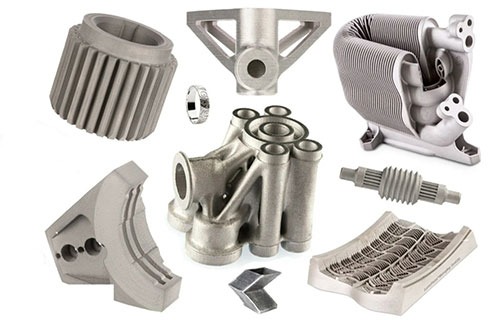
The moment between a brilliant 3D design and a successful print is often where projects falter, and the culprit is frequently material choice. Selecting a filament is more than just picking a color; it’s a foundational engineering decision that determines your part’s strength, function, durability, and even its feasibility.
Key takeaways
- Before comparing specific plastics, successful selection starts with asking the right questions about your project.
- 3D printing thermoplastics can be grouped into families, each with a distinct “personality” and role in your toolkit.
- Choosing the right 3D printing material is an exercise in informed compromise.
How Do You Frame the Material Selection Problem?
Before comparing specific plastics, successful selection starts with asking the right questions about your project. Think of it as a brief for your material.
You need to define these four core requirements:
- Mechanical Demand: What forces will the part endure? Is it a static display model, a snap-fit enclosure that needs to flex, or a load-bearing bracket that must be rigid and strong?
- Environmental Exposure: Where will the part live? Will it face UV sunlight, heat, moisture, chemicals, or need to be food-safe or biocompatible?
- Aesthetic & Finish Need: Is it a visual prototype where surface smoothness and detail are paramount, or a functional jig where appearance doesn’t matter?
- Process & Practical Constraints: What is your printer capable of (heated bed, enclosure, nozzle type)? What is your budget and timeline?
Answering these questions creates a filter through which to evaluate materials, moving you from “What’s popular?” to “What’s necessary?”
What Are the Core Polymer Families and Their Strategic Uses?
3D printing thermoplastics can be grouped into families, each with a distinct “personality” and role in your toolkit.
The Beginner’s Workhorse: PLA and Its Variants
- Standard PLA: The ideal starting point. It’s easy to print (low warp, wide temperature window), comes in endless colors, and is biodegradable. However, it’s brittle and has low heat resistance (softening around 60°C/140°F). Best For: Concept models, decorative items, educational projects, and low-stress prototypes. It’s your “fast sketch” material. Real Case: A teacher prints anatomical models for a biology class. PLA’s ease of use, safety (low odor), and color variety are perfect, and the models won’t be subjected to heat or stress.
The Durable All-Rounder: PETG
- PETG strikes perhaps the best balance for general-purpose functional parts. It combines excellent layer adhesion and good impact strength with chemical and moisture resistance. It prints almost as easily as PLA but is significantly tougher and can handle higher temperatures. Best For: Functional prototypes, mechanical parts, outdoor fixtures, and containers. It’s your reliable “go-to” for parts that need to work and last. Real Case: An engineer needs a custom housing for an outdoor sensor. PETG is chosen for its UV stability (when properly formulated), water resistance, and durability—PLA would become brittle, and ABS might require too much tuning on their printer.
The Engineering Standard: ABS and ASA
- ABS is a classic for a reason. It offers good toughness, high heat resistance (~100°C), and can be easily smoothed with acetone vapor. Its downside is significant warping, requiring a heated bed and enclosed printer to manage internal stresses.
- ASA is essentially ABS with built-in UV stabilizers. It possesses similar strength and heat properties but is formulated for outdoor weatherability without yellowing or degrading. Best For: Automotive components, electronic enclosures, high-heat applications, and any part needing a smooth, finished look via acetone. Real Case: A product designer prototypes a drone body. They use ASA for its combination of strength, lightweight properties, and ability to withstand sunlight and minor impacts during testing.
The Flexible Specialist: TPU and TPE
- TPU (Thermoplastic Polyurethane) is a flexible, rubber-like material with excellent abrasion resistance and elastic recovery. Shore hardness ratings (e.g., 95A) indicate softness. Best For: Gaskets, seals, wearables, protective cases, and functional hinges. It solves the problem of needing a part that bends, compresses, or absorbs shock. Real Case: A startup creating a custom ergonomic handle prints the grip in TPU 85A for a soft, non-slip feel, while the structural core is printed in PETG.
The High-Performance Engineering Plastics: Nylon and PC
- Nylon (PA6, PA12): Known for its exceptional toughness, fatigue resistance, and wear resistance. It’s semi-flexible, very strong, but hygroscopic (absorbs moisture from the air, which must be managed).
- Polycarbonate (PC): The king of strength and heat resistance (HDT up to ~110-135°C) among common filaments. It’s transparent, incredibly tough, but requires a high-temperature printer (hotend >260°C, enclosed chamber). Best For: Nylon is used for gears, latches, living hinges, and functional clothing items. PC is used for tooling, light-duty machine parts, and automotive applications.
Here’s a comparison of these key filament properties to aid in decision-making:
| Material | Key Strength | Key Weakness | Ideal Use Case | Printer Requirement |
|---|---|---|---|---|
| PLA | Ease of Printing, Detail, Color Variety | Brittle, Low Heat Resistance | Visual Prototypes, Display Models | Basic FDM |
| PETG | Toughness, Chemical/Moisture Res., Easy Print | Stringing, Less Stiff than ABS | Functional Prototypes, Outdoor Parts, Containers | Heated Bed Recommended |
| ABS/ASA | High Heat Resist., Tough, Surface Finishable | High Warp, Fumes, Requires Tuning | Automotive, Enclosures, High-Temp Parts | Heated Bed & Enclosure Mandatory |
| TPU | Flexibility, Elasticity, Impact Absorption | Challenging to Feed, Slow Print Speed | Gaskets, Wearables, Soft Grips | Direct Drive Extruder Preferred |
| Nylon | Extreme Toughness, Wear Resistance | Hygroscopic, Warps, Needs Drying | Gears, Functional Mechanisms, Tools | Heated Bed, Enclosure, Dry Storage |
| Polycarbonate | Ultimate Strength & Heat Resistance | Very High Print Temp, Prone to Warping | Engineering Tools, High-Stress Parts | High-Temp Hotend & Enclosure Mandatory |
How Do You Solve Specific, Common Problems with Material Choice?
Let’s translate properties into solutions for frequent pain points.
- Problem: “My parts keep snapping or breaking under load.” Solution: Move from PLA to PETG or ABS. For high-impact scenarios (e.g., a drone arm), consider Nylon.
- Problem: “My parts warp and lift off the bed, ruining large prints.” Solution: This is classic ABS/PC behavior. Ensure an enclosed printer and correct bed adhesion. Alternatively, switch to PETG, which has much lower warping tendencies for similar applications.
- Problem: “I need a part that can sit in a hot car or near electronics.” Solution: PLA will deform. Use ABS, ASA, or PETG for moderate heat. For very high temperatures (e.g., under-hood automotive), Polycarbonate or High-Temp Nylon is required.
- Problem: “I need a transparent part for light diffusion or optics.” Solution: While some PLAs and PETGs are transparent, Polycarbonate offers the best combination of true clarity and high performance. Clear resin (SLA) is best for optically clear parts.
How to write a spec that gets priced correctly
A drawing is a contract. If it leaves a number open, the shop fills that number in with its own default. The default is rarely the one you had in mind. Put these five lines on every RFQ and most of the back-and-forth disappears before it starts.
- File format and units, with the model exported in millimetres
- Process and material grade, not a trade name
- Critical features and the tolerance each one needs
- Surface finish and the faces it applies to
- Quantity for the pilot build and for the year
The point is not paperwork. Each line removes a decision the shop would otherwise make for you. A complete RFQ comes back priced. An incomplete one comes back guessed.
What actually drives the price
Buyers usually push on material because it is the line they can see. In practice the material is rarely the biggest number on a quote. These five lines decide most of it:
- build volume and orientation
- layer height and support structure
- material grade and colour
- post-processing and hand finishing
- quantity per build plate
Ask for the quote split by line. A supplier who cannot break it down is guessing, and you will pay for the guess. The line you can usually renegotiate is the tolerance band, not the raw material.
Problems you will meet, and the fix
Every process has a failure mode it prefers. The same four show up again and again on this kind of work, and none of them are mysteries once you know what to look for.
- Warping on long flat faces where the part lifts off the plate
- Layer lines showing through a cosmetic surface
- Support scars on a mating face nobody flagged
- Dimensional drift on thin walls after cooling
Catch the fault on the first part, not the hundredth. A first-article check costs an hour. A bad batch costs the whole order. Write the check into the purchase order so nobody has to remember it.
What to check on the first article
The first article is the cheapest inspection you will ever buy. Use it properly and the rest of the run becomes boring, which is exactly what you want.
- Every dimension on the drawing, with the measured value written beside it.
- The material certificate, matched to the heat or lot number on the parts.
- The finish against the sample you approved, under the same light.
- Fit against the mating part, assembled rather than measured.
- Packaging, because parts that arrive damaged were never in tolerance.
Check in this order: datums, then mating features, then cosmetic faces. If the datums are wrong, every number after them is noise. Keep the report on file. When a problem shows up in month six, that document is the only thing that tells you what changed.
How to compare two quotes fairly
Two numbers are not comparable unless the scope matches. Line them up before you decide, because a low number with three gaps is not a low number.
Same drawing, same material, same finish, same inspection. Anything else is a different job wearing the same part number. Then look at what each quote leaves out. Freight, packaging, certificates and tooling are the usual gaps.
Ask each supplier to state their assumptions in writing. The one who does is usually the one who has run the process before.
Scaling from one part to a batch
The first part teaches you the process. The hundredth teaches you the process cost.
Watch three things as volume grows: setup amortisation, tool wear, and how much hand work the finish still needs. If the unit price barely moves between ten and a hundred, the cost sits in material or in hand work, not in setup. Ask which, because only one of them is negotiable.
Lead time behaves the same way. A one-off is scheduled around other jobs. A repeat order is scheduled around your forecast. Give the shop a forecast and the lead time gets shorter, not longer.
How to read a supplier's quote
A quote is a short document with a long shadow. Four things in it decide whether the job runs smoothly, and only one of them is the price.
- The scope line. It should name the process, the material and the finish, not just the part.
- The tolerance basis. General tolerance or the drawing, and which standard it follows.
- The exclusions. Tooling, freight, certificates and inspection are the usual omissions.
- The validity date. Material prices move, and an open-ended quote is a promise nobody can keep.
Read the exclusions before you read the total. A quote that leaves out tooling is not cheaper. It is a quote for a different job.
What About Advanced and Specialized Materials?
Beyond the core filaments, specialty materials open new doors:
- Composites (CF, GF): Carbon Fiber or Glass Fiber reinforced filaments (usually Nylon, PETG, or PLA base) offer greatly increased stiffness (rigidity) and reduced warping. They are abrasive and require hardened steel nozzles.
- Dissolvable Supports (PVA, BVOH): Used in dual-extrusion printers to create intricate support structures that wash away in water, enabling impossible-to-clean geometries.
- High-Temp & Industrial Materials: PEEK and PEI (Ultem) represent the pinnacle, offering incredible strength and thermal stability for aerospace and medical uses, but require specialized industrial printers.
Choosing the right 3D printing material is an exercise in informed compromise. There is no single “best” material—only the best material for your specific set of requirements and constraints. The most effective strategy is to build your expertise around a core palette of 2-3 materials (e.g., PLA for visuals, PETG for general function, TPU for flexibility) that cover 90% of your needs. Master their quirks on your printer. For the remaining 10% of demanding applications, let the functional requirements drive the selection: heat dictates ABS or PC; impact and wear dictate Nylon; outdoor exposure dictates ASA. By systematically evaluating your project’s mechanical, environmental, and aesthetic needs against the proven properties of each material family, you transform material selection from a guessing game into a reliable, repeatable step on the path to successful 3D printing.
FAQ (Frequently Asked Questions)
Q: I keep hearing about “PLA+.” Is it worth the extra cost over standard PLA?
A: Often, yes. PLA+ (or similar branded versions like “Tough PLA”) typically includes additives that increase impact resistance and layer adhesion, making it less brittle. It retains PLA’s easy printability. If your standard PLA parts are breaking in handling or during use, PLA+ is a cost-effective upgrade before jumping to a completely different material family like PETG.
Q: Can I print food-safe items with 3D printing filament?
A: It’s complicated. While PLA itself is a biologically derived, non-toxic polymer, the 3D printing process makes the final part unsuitable for direct food contact. The layer lines harbor bacteria that cannot be cleaned, and color pigments or additives may not be food-safe. For decorative items like cake toppers, it’s generally acceptable, but for cups, plates, or utensils, it is not recommended without a food-safe sealant coating.
Q: Why does my nylon filament print so poorly, with lots of bubbles and strings?
A: This is almost certainly due to moisture. Nylon is extremely hygroscopic. If not stored in a drybox or printed directly from a dehydrator, absorbed moisture turns to steam in the hotend, causing bubbling, poor layer adhesion, and terrible surface finish. Drying nylon filament for 6+ hours at 70-80°C before printing is non-negotiable.
Q: Is it worth buying a more expensive printer to handle materials like ABS or Nylon?
A: Only if your projects demand it. If you consistently need parts with higher heat resistance, greater toughness, or outdoor durability, then investing in a printer with a full enclosure and an all-metal hotend is essential. For occasional use, you might achieve limited success with makeshift enclosures, but for reliability, the right tool matters. If PLA and PETG satisfy all your needs, a simpler printer is a more cost-effective choice.
Our solution for 3D Printing Material
YiguProto runs 3D printing in house, from a single prototype to a production batch. We quote the process, the material and the finish as separate lines, so you can see where the money goes instead of arguing with one number.
Send a STEP file or a drawing and you get a DFM report in one to two business days. It flags the features that add cost and the features that will not hold tolerance on the process you picked.
Every order ships with an inspection report on the features you call out. If a part misses, we make it again. Ready to price a part? Start with a free quote and DFM review, or read more about our 3D printing. You can also talk to an engineer before you commit to a drawing.
FAQ about 3D Printing Material
What should I check before approving the parts?
Datums first, then the features that mate, then the cosmetic faces. Ask for a dimensional report, a material certificate and a finish sample. A part can be inside every tolerance and still not fit, so assemble one before you sign.
What happens if a part is out of specification?
We measure it against the same drawing you approved and, if it misses, we make it again. What matters is that the report exists, because a disagreement without data is just an opinion.
What is 3D Printing Material used for?
3D Printing Material turns up wherever the part has to do a real job at a predictable cost: brackets, housings, fixtures, covers and the fittings that hold them together. The honest test is whether the properties match the load and the environment, not whether the material is fashionable.
What files do you need in order to quote?
A STEP file plus a PDF drawing that carries the same revision letter. The model carries the geometry and the drawing carries the intent. When the two disagree, the shop picks one, and it is never the one you meant.
Does the process work for prototypes as well as production?
Yes, and that is usually the point. Running the prototype on the production process removes a whole class of surprises, because the part you test is made the same way as the part you sell.
What is the lead time for 3D Printing Material?
Expect 2 to 5 business days for a first batch. Tooling, material stock and the finishing queue all move that number, so we confirm the date in writing before the run starts rather than after.
The short version
3D Printing Material rewards the buyer who reads the data sheet and the drawing together. Pick the option for the property that matters, not for the price per kilo.
Tighten only what mates. Test a sample before the run. Then let the process do the rest.