
Sheet Metal
What Is Custom Metal Bending? A Complete Guide for Your Project Needs
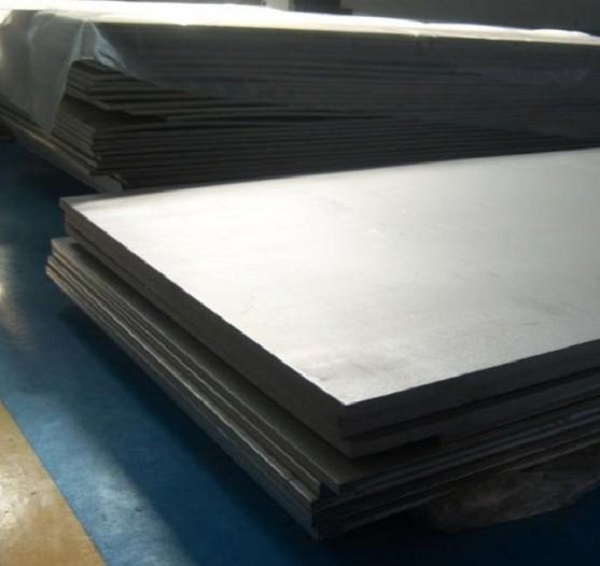
If you are wondering what custom metal bending is and how it can benefit your project, let us start with a straight answer. Custom metal bending is a specialized manufacturing process that shapes metal into unique, project-specific forms. Think brackets for industrial machinery. Curved frames for architectural designs. Custom enclosures for electronics.
Key takeaways
- At its core, custom metal bending transforms flat or linear metal stock into curved, angled, or complex 3D shapes using controlled force.
- Not all custom metal bending is the same. Different techniques are used depending on your material, desired shape, and project scale.
- The success of your custom metal bending project depends heavily on choosing the right material.
- Before you hire a provider or place an order, there are five key questions to answer. Skipping these steps can lead to costly mistakes.
What Is Custom Metal Bending and When Do You Need It?
At its core, custom metal bending transforms flat or linear metal stock into curved, angled, or complex 3D shapes using controlled force. Unlike standard bending which produces generic shapes like 90-degree angles, custom work is designed around your project unique specs.
For example, a solar panel installer might need custom-bent aluminum rails to fit a sloped roof. A furniture designer could require curved steel legs for a modern chair. These are jobs where off-the-shelf parts simply will not work.
Key Scenarios Where Custom Metal Bending Is Essential
Architectural projects rely on custom bending. Curved steel beams for stadiums require it. Aluminum trim for curved building facades needs it. Custom handrails that follow a staircase unique contour demand it. A 2024 study by the American Institute of Steel Construction found that 68 percent of modern commercial buildings use at least one custom-bent metal component for both aesthetics and functionality.
Industrial machinery depends on custom parts. Custom brackets mount sensors on factory equipment. Curved metal guards protect moving parts. A case study from a midwestern manufacturing plant showed that switching to custom-bent brackets reduced equipment downtime by 32 percent. The parts fit perfectly, eliminating vibration-related wear.
Automotive and aerospace industries use custom bending extensively. Lightweight, custom-bent aluminum or titanium parts go into electric vehicle frames. Aircraft interiors use them. The Society of Automotive Engineers reports that EV manufacturers rely on custom metal bending for 45 percent of their chassis components. It allows for lighter, more aerodynamic designs.
Consumer products benefit from custom bending. Custom enclosures for medical devices like MRI machine casings require it. Curved metal frames for fitness equipment use it. A leading fitness brand used custom-bent steel to create a foldable treadmill frame. This cut storage space by 50 percent compared to traditional designs.
What Are the Most Common Custom Metal Bending Techniques?
Not all custom metal bending is the same. Different techniques are used depending on your material, desired shape, and project scale. Here is a breakdown of the four most popular methods, with pros, cons, and ideal use cases to help you choose.
| Technique | How It Works | Best For | Pros | Cons |
|---|---|---|---|---|
| Press Brake Bending | Uses hydraulic or mechanical press to clamp metal between punch and die, creating precise angles or curves | Sheet metal 0.5 to 20mm thick, angles, channels | High precision of ±0.1mm, fast for high volumes, low cost per part | Limited to simple shapes, cannot handle very thick metal |
| Roll Bending | Passes metal through three or more rotating rolls to create uniform curves like cylinders and cones | Pipes, tubes, thick sheet metal up to 50mm | Ideal for large, smooth curves, works with thick materials | Less precise for sharp angles, slower for small batches |
| Rotary Draw Bending | Uses die with desired curve and rotating arm to draw metal around die, creating tight, complex bends | Tubes, pipes, small profiles | Perfect for tight radii down to 1x tube diameter, minimal distortion | Higher cost per part, slower for high volumes |
| Induction Bending | Heats small section of metal with induction coil, then bends while hot | Thick-walled pipes for oil and gas industry, structural steel | No need for heavy dies, works with hard metals like stainless steel 316 | Higher energy cost, longer lead times |
Real-World Example: Choosing the Right Technique
A construction company needed 500 custom-bent aluminum brackets for a high-rise balcony. The brackets required two 90-degree angles and a small tab for mounting. These were simple shapes but high volume.
Press brake bending was the clear choice. It produced each bracket in 10 seconds. The per-part cost was $2.50. If they had used rotary draw bending which is better for complex curves, the cost would have jumped to $8 per part. Lead time would have doubled.
How Do You Choose the Right Metal for Custom Bending?
The success of your custom metal bending project depends heavily on choosing the right material. Factors like strength, corrosion resistance, weight, and cost all play a role. Below are the five most common metals used, along with their bending properties and ideal applications.
Aluminum: The Most Versatile Choice
Why it is popular: Aluminum is lightweight at one-third the weight of steel. It is easy to bend with low tensile strength. It is corrosion-resistant thanks to its natural oxide layer. It is also affordable for most projects.
Bending notes: Aluminum 6061 is the most common alloy for bending. It is strong enough for structural parts but flexible enough to avoid cracking. Avoid aluminum 7075, a high-strength alloy, for bending. It is prone to breaking unless heated first.
Ideal use cases: Architectural trim, EV components, consumer products like laptop frames. A 2023 report from the Aluminum Association found that 72 percent of custom bending projects for consumer goods use aluminum.
Steel: The Strongest Option
Why it is popular: Steel offers exceptional strength and durability. It is perfect for load-bearing parts. Mild steel A36 is the easiest to bend. Stainless steel adds corrosion resistance.
Bending notes: Mild steel can be bent cold with no heating needed for most applications. Stainless steel like 304 is harder to bend. It may require annealing, which is heating to reduce hardness, to avoid cracking.
Ideal use cases: Structural beams, industrial machinery parts, outdoor furniture. A case study from an oil refinery showed that custom-bent stainless steel pipes lasted 15 years longer than carbon steel pipes in corrosive environments.
Copper and Brass: For Aesthetics and Conductivity
Why they are popular: Copper has excellent electrical conductivity used in wiring. Brass, which is copper plus zinc, has a shiny, decorative finish. Both are malleable and easy to bend but softer than steel.
Bending notes: Both metals scratch easily. Ask your provider to use protective films during bending. Brass is slightly harder than copper, so it may need more force for tight bends.
Ideal use cases: Electrical enclosures, decorative trim like restaurant interiors, musical instruments. A custom guitar maker we worked with uses brass for guitar bridges. They are custom-bent to match each instrument unique string spacing.
Titanium: The Premium, Lightweight Choice
Why it is popular: Titanium is as strong as steel but 45 percent lighter. It has excellent corrosion resistance even in saltwater or chemicals. It is also biocompatible and used in medical implants.
Bending notes: Titanium is hard to bend cold. Most projects require heating to 600 to 800 degrees Celsius. It is also expensive at up to 5 times the cost of steel. It is only used when weight or corrosion resistance is critical.
Ideal use cases: Aerospace components, medical implants, marine hardware. A leading aircraft manufacturer uses custom-bent titanium for engine parts. This reduces the engine weight by 20 percent and improves fuel efficiency.
What Critical Factors Should You Consider Before Starting?
Before you hire a provider or place an order, there are five key questions to answer. Skipping these steps can lead to costly mistakes. Parts that do not fit. Delayed timelines. Wasted materials.
What Are Your Exact Dimensions and Tolerances?
Tolerance is the allowed variation in size. It is non-negotiable. A bracket for a medical device might need a tolerance of plus or minus 0.05 millimeters. A decorative metal sign could tolerate plus or minus 1 millimeter.
Be sure to provide a detailed 2D or 3D drawing using CAD software like AutoCAD or SolidWorks with clear dimensions. Most reputable providers will review your drawing for bend feasibility. They check if a 5 millimeter thick steel sheet can be bent into a 10 millimeter radius. It can, but it may need annealing.
What Is the Expected Load or Stress on the Bent Part?
Will your part hold weight like a shelf bracket? Will it withstand vibration like a machine component? This determines the material thickness and bend radius.
A bracket holding 50 kilograms needs to be made of thicker steel at 3 millimeters versus 1 millimeter. It needs a larger bend radius to avoid stress cracks. Share your load requirements with your provider. They can run stress tests using software like ANSYS to ensure the design is safe.
What Finish Do You Need?
The finish affects both aesthetics and performance. Common options include:
Powder coating is a durable, decorative finish available in over 1000 colors. It resists scratches and corrosion. It is ideal for outdoor furniture or consumer products.
Anodizing creates a hard, protective layer on aluminum. It is often used for architectural parts or electronics.
Plating adds a layer of chrome, nickel, or zinc to steel for corrosion resistance. Automotive parts use it.
No finish is best for parts that will be painted later or hidden from view. Internal machine brackets are a good example.
What Is Your Timeline and Budget?
Press brake bending is the fastest method. Lead time is 1 to 2 weeks for small batches. Induction bending can take 3 to 4 weeks due to heating requirements.
Budget-wise, aluminum is the cheapest starting at $2 to $5 per part. Titanium can cost $20 to $50 per part. Be upfront about your timeline. Rush orders may cost 20 to 30 percent more. A good provider can often adjust if you plan ahead.
Do You Need Prototyping Before Mass Production?
Always order a prototype first. Even if you are sure your design is perfect. A prototype lets you test fit, function, and durability before investing in hundreds or thousands of parts.
A startup developing a portable grill ordered 5 prototype brackets using press brake bending. They discovered the brackets were 2 millimeters too wide to fit the grill frame. Fixing the design before mass production saved them $10,000 in wasted materials.
How to write a spec that gets priced correctly
A drawing is a contract. If it leaves a number open, the shop fills that number in with its own default. The default is rarely the one you had in mind. Put these five lines on every RFQ and most of the back-and-forth disappears before it starts.
- Flat pattern or STEP file plus a dimensioned drawing
- Material grade and thickness with the standard number
- Bend radii, K-factor and the direction of the grain
- Finish, masking and which faces stay bare
- Quantity and the assembly sequence
The point is not paperwork. Each line removes a decision the shop would otherwise make for you. A complete RFQ comes back priced. An incomplete one comes back guessed.
What actually drives the price
Buyers usually push on material because it is the line they can see. In practice the material is rarely the biggest number on a quote. These five lines decide most of it:
- blank size and nesting efficiency
- number of bends and weld joints
- material grade and thickness
- finish and masking
- batch quantity
Ask for the quote split by line. A supplier who cannot break it down is guessing, and you will pay for the guess. The line you can usually renegotiate is the tolerance band, not the raw material.
What Common Mistakes Should You Avoid in Custom Metal Bending?
Even with careful planning, mistakes can happen. Below are the four most common issues we have seen in over 15 years of working with custom metal bending. Plus how to prevent or fix them.
Cracking or Splitting During Bending
Why it happens: Using the wrong material causes this. Hard stainless steel 7075 instead of 304 is a common error. A bend radius that is too small also causes cracking. A 5 millimeter radius for a 10 millimeter thick steel sheet will likely crack.
Fix: Choose a more malleable alloy. Switch to stainless steel 304. Increase the bend radius. Aim for a radius that is at least 1.5 times the material thickness. If you need a tight radius, ask your provider to anneal the metal first. Annealing heats it to reduce hardness.
Parts That Do Not Fit
Why it happens: Inaccurate drawings cause dimensional errors. Ignoring springback is another cause. Springback is metal tendency to straighten slightly after bending. Using the wrong tooling also leads to poor fit.
Fix: Provide 3D CAD drawings, not hand sketches, to avoid misinterpretation. Ask your provider to account for springback. If you need a 90-degree bend, they will bend it to 92 degrees to compensate. For critical parts, request a first-article inspection to verify dimensions before full production.
Distortion or Warped Parts
Why it happens: Bending thick metal without supporting it causes warping. Using uneven pressure in the press brake also distorts parts.
Fix: For thick metal of 10 millimeters and above, use a press brake with a backgauge. This device holds the metal in place to prevent shifting. For tubes or pipes, use mandrel bending. A tool inserted inside the tube keeps the shape uniform. This avoids flattening the tube during bending.
Delayed Lead Times
Why it happens: Not accounting for tooling time causes delays. Custom dies can take 2 to 3 weeks to make. Last-minute design changes also add days to production.
Fix: Ask about tooling lead times upfront. Finalize your design before ordering. Even small changes like adjusting a hole size can add days. If you are on a tight timeline, prioritize press brake bending over induction bending. Press brake has faster tooling.
Custom metal bending shapes metal into unique forms tailored to your project. It transforms flat or linear stock into curved, angled, or complex 3D shapes using controlled force.
Key techniques include press brake bending for precision angles, roll bending for uniform curves, rotary draw bending for tight radii, and induction bending for thick, hard metals. Each has specific strengths and ideal applications.
Material selection is critical. Aluminum offers versatility and light weight. Steel provides maximum strength. Copper and brass deliver aesthetics and conductivity. Titanium gives premium performance for demanding applications.
Before starting, define your dimensions, tolerances, loads, finishes, timeline, and budget. Always prototype first to validate your design.
Avoid common mistakes like cracking from wrong materials, poor fit from ignoring springback, distortion from inadequate support, and delays from unplanned tooling.
With clear communication, proper planning, and the right partner, custom metal bending delivers parts that fit perfectly and perform as intended. Your unique design becomes reality.
Our solution for Custom Metal Bending
YiguProto runs sheet metal fabrication in house, from a single prototype to a production batch. We quote the process, the material and the finish as separate lines, so you can see where the money goes instead of arguing with one number.
Send a STEP file or a drawing and you get a DFM report in one to two business days. It flags the features that add cost and the features that will not hold tolerance on the process you picked.
Every order ships with an inspection report on the features you call out. If a part misses, we make it again. Ready to price a part? Start with a free quote and DFM review, or read more about our sheet metal fabrication. You can also talk to an engineer before you commit to a drawing.
FAQ about Custom Metal Bending
How much does Custom Metal Bending cost?
Price comes from five lines: material, machine or tool time, setup, finishing and inspection. The material itself is usually the smallest of them. Send a drawing and we will split the quote so you can see which line is doing the damage.
How long does a first article take?
Usually a few business days once the drawing is frozen, and longer if tooling is involved. The date we give you is the date we confirm in writing, not the date we hope for.
What files do you need in order to quote?
A STEP file plus a PDF drawing that carries the same revision letter. The model carries the geometry and the drawing carries the intent. When the two disagree, the shop picks one, and it is never the one you meant.
What is the lead time for Custom Metal Bending?
Expect 3 to 7 business days after drawing release. Tooling, material stock and the finishing queue all move that number, so we confirm the date in writing before the run starts rather than after.
What tolerance can you hold on Custom Metal Bending?
The working default is ±0.2 mm on formed features, ±0.1 mm on laser-cut holes. Tighter than that the process changes and so does the price, because every step tighter adds inspection time. Call out only the faces that mate with something else and leave the rest on the general tolerance.
Is there a minimum order quantity?
No hard minimum. One part is fine. What changes with volume is which costs dominate, so a single unit is priced mostly on setup and a thousand units are priced mostly on cycle time and material.
The short version
Custom Metal Bending rewards the buyer who reads the data sheet and the drawing together. Pick the option for the property that matters, not for the price per kilo.
Tighten only what mates. Test a sample before the run. Then let the process do the rest.