
Die Casting
Is Die Casting Service Right for Your Precision Metal Parts?
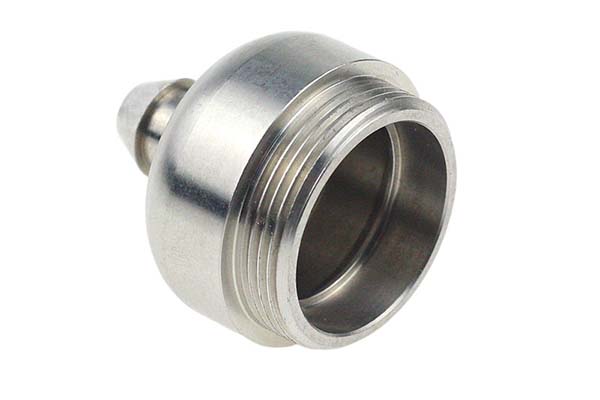
Die casting service stands as one of the most efficient ways to produce complex metal parts in large volumes. This manufacturing process forces molten metal into steel molds under high pressure, creating precise components with excellent surface finish. From automotive engine blocks to electronic connector housings, die casting touches nearly every industry. But what exactly happens during the process?
What Is a Die Casting Service?
Core process explained
A die casting service takes your part design and turns it into finished metal components. The process starts when molten metal gets injected into a steel die at high pressure—typically between 1,500 and 25,000 psi. This pressure forces the metal into every cavity detail before it cools and solidifies. The result is a net shape or near-net shape part that requires minimal additional work.
Key stages of production
Every die casting project follows similar steps. First comes design consultation, where engineers review your part for manufacturability. Next is die creation, where toolmakers machine the mold from hardened steel. The production phase involves melting, injection, cooling, and ejection. Finally, finishing operations like trimming or machining remove excess material and achieve final specifications.
Why it differs from other methods
Die casting stands apart from forging, machining, or sand casting in several ways. Unlike machining that cuts away material, die casting forms parts in one step with little waste. Compared to forging, it handles complex internal features and thin walls easily. And versus sand casting, die casting delivers tighter tolerances and smoother surfaces right out of the mold.
What Are the Main Benefits?
Precision that saves time
Professional die casting achieves tolerances as tight as ±0.005 inches on critical dimensions. This precision means parts often need no secondary machining, cutting production time and cost. For industries like aerospace and medical devices, this consistency proves essential for safety and function.
Cost advantages at volume
The numbers tell a clear story. A study by the American Die Casting Association shows die casting cuts production costs by 20-50% compared to machining for runs above 10,000 units. The initial die investment spreads across thousands of parts, making each piece increasingly affordable.
Design flexibility matters
Complex geometries become simple with die casting. You can incorporate thin walls down to 0.5mm, internal threads, logos, and undercuts directly into the part. Features that would require multiple machining steps get formed in seconds.
Surface finish reduces work
Die cast parts emerge with surface finishes as smooth as Ra 1.6 μm. This quality often eliminates polishing or grinding steps. For decorative applications like plated hardware, this smooth surface provides the perfect foundation for finishing.
Material options expand possibilities
Different metals serve different needs. Aluminum offers light weight and corrosion resistance. Zinc provides strength and takes beautiful platings. Magnesium delivers the best strength-to-weight ratio. Professional services handle them all.
Which Die Casting Process Should You Choose?
Hot chamber basics
Hot chamber die casting works best for low-melting-point metals like zinc, tin, and lead. The injection system sits submerged in molten metal, ready to fire at any moment. Cycle times run fast—15-30 parts per minute for small components. This makes it ideal for high-volume production of small items like zipper pulls, electrical connectors, and toy parts.
| Hot Chamber Feature | Typical Value |
|---|---|
| Cycle Rate | 15-30 parts/minute |
| Part Size Range | < 500 grams |
| Metals Used | Zinc, Tin, Lead |
| Wall Thickness | 0.5-2.0 mm |
Cold chamber explained
Cold chamber die casting handles high-melting-point metals like aluminum, magnesium, and copper. Here, molten metal gets ladled into a separate chamber for each shot. Cycle times run slower at 5-15 parts per minute, but the process produces larger, stronger parts. Automotive structural components and engine blocks come from cold chamber machines.
Vacuum assist advantages
Vacuum die casting removes air from the mold before metal injection. This simple change reduces porosity defects by up to 90% compared to conventional methods. Parts gain better mechanical properties and can undergo heat treatment without blistering. Aerospace and medical applications often specify vacuum casting for critical components.
How Do Materials Compare?
Aluminum alloys
Aluminum dominates die casting for good reason. Alloys like A380 and ADC12 offer light weight at 2.7 g/cm³, good corrosion resistance, and excellent thermal conductivity. Parts weigh one-third of what zinc versions would. Applications include engine components, transmission housings, and heat sinks. Tensile strength ranges from 240-310 MPa depending on alloy and heat treatment.
Zinc alloys
Zinc brings different strengths. Zamak 3 and Zamak 5 provide exceptional ductility—10-15% elongation before breaking. They cast with incredible detail and accept electroplating directly. Density runs high at 6.6 g/cm³, but strength reaches 280-320 MPa. Common uses include door handles, electronic housings, and decorative hardware.
Magnesium options
Magnesium is the lightweight champion at 1.8 g/cm³. Alloys like AZ91D deliver the best strength-to-weight ratio of any common casting metal. They also dampen vibration naturally, making them perfect for power tool housings and aerospace brackets. Cost runs higher, but weight savings often justify the expense.
Copper alloys
Copper alloys like brass bring electrical conductivity and natural antimicrobial properties. They resist corrosion in plumbing applications and carry current efficiently. Density at 8.5 g/cm³ makes parts heavy, but performance justifies the weight for electrical connectors and valve components.
What Industries Rely on Die Casting?
Automotive leads the way
The automotive industry consumes about 50% of all die cast production worldwide. A typical passenger car contains 15-25 kg of aluminum die castings in engine, transmission, and structural applications. These parts reduce weight, improve fuel economy, and lower emissions while maintaining strength.
Aerospace demands precision
Aircraft manufacturers use magnesium and aluminum die castings for brackets, housings, and interior components. Weight savings directly translate to fuel savings over thousands of flight hours. Consistent quality ensures reliable performance in demanding conditions.
Electronics need complexity
Smartphones, laptops, and通信 equipment rely on die cast shielding, connectors, and heat sinks. Zinc’s ability to form thin walls and fine details makes it perfect for miniaturized components. Aluminum’s thermal conductivity keeps processors cool under load.
Consumer goods benefit
From kitchen appliances to power tools, die casting produces durable parts at affordable costs. Motor housings, gear cases, and decorative trim all come from die casting. Consistent quality across millions of units ensures brand reputation remains strong.
How to Select a Die Casting Provider?
Technical expertise matters most
Look for providers with 10+ years experience in your industry. Ask about their engineering team’s qualifications and past projects similar to yours. A knowledgeable partner will spot potential issues in your design and suggest improvements before tooling starts.
Quality systems protect you
Certifications like ISO 9001 and IATF 16949 demonstrate commitment to quality. Ask about inspection methods—CMM, X-ray, and pressure testing—and defect rates. Top providers maintain defect rates below 0.5% for standard parts.
Capacity ensures delivery
Verify the provider can handle your volume needs now and in the future. Ask about machine sizes, available tonnage, and maximum part dimensions. Lead times should match your production schedule, with flexibility for urgent orders.
Design support adds value
Choose a service that offers design for manufacturability (DFM) analysis. Their engineers should review your models, suggest improvements, and validate designs with flow simulation software. This support often reduces tooling costs and improves part quality.
Pricing transparency builds trust
Get detailed quotes showing die costs, per-part pricing, finishing charges, and shipping. Compare multiple providers, but remember that lowest price rarely means best value. Focus on total cost including quality, delivery, and support.
What Advanced Technologies Improve Results?
Simulation prevents problems
Modern die casters use flow analysis software to predict how metal fills the mold. These simulations identify air traps, cold shots, and turbulence before any steel gets cut. First-pass yield improves dramatically, and tooling revisions decrease.
Automation increases consistency
Robots now handle part extraction, trimming, and inspection in leading facilities. Automated cells run 24/7 with minimal variation. Human error drops, and production capacity rises without adding floor space.
Monitoring optimizes processes
Sensors track temperature, pressure, and cycle times on every shot. IoT platforms analyze this data in real time, flagging deviations before they create defects. Some systems automatically adjust parameters to maintain optimal conditions.
3D printing speeds prototyping
Additive manufacturing creates prototype dies in days instead of weeks. This allows functional testing of parts before committing to production tooling. For complex geometries, 3D-printed sand cores enable casting trials impossible with conventional methods.
How to write a spec that gets priced correctly
A drawing is a contract. If it leaves a number open, the shop fills that number in with its own default. The default is rarely the one you had in mind. Put these five lines on every RFQ and most of the back-and-forth disappears before it starts.
- 3D model with the parting line marked
- Alloy grade and the standard it meets
- Wall thickness and draft on every face
- Machining allowance on the faces that will be cut
- Pressure tightness or porosity class
The point is not paperwork. Each line removes a decision the shop would otherwise make for you. A complete RFQ comes back priced. An incomplete one comes back guessed.
What actually drives the price
Buyers usually push on material because it is the line they can see. In practice the material is rarely the biggest number on a quote. These five lines decide most of it:
- die steel and cavity count
- part weight and wall section
- draft and slide count
- porosity requirement
- machining allowance
Ask for the quote split by line. A supplier who cannot break it down is guessing, and you will pay for the guess. The line you can usually renegotiate is the tolerance band, not the raw material.
Problems you will meet, and the fix
Every process has a failure mode it prefers. The same four show up again and again on this kind of work, and none of them are mysteries once you know what to look for.
- Cold shuts where two flow fronts meet
- Porosity that shows up only after machining
- Soldering on a hot spot in the die
- Shrinkage voids in a heavy section
Catch the fault on the first part, not the hundredth. A first-article check costs an hour. A bad batch costs the whole order. Write the check into the purchase order so nobody has to remember it.
What to check on the first article
The first article is the cheapest inspection you will ever buy. Use it properly and the rest of the run becomes boring, which is exactly what you want.
- Every dimension on the drawing, with the measured value written beside it.
- The material certificate, matched to the heat or lot number on the parts.
- The finish against the sample you approved, under the same light.
- Fit against the mating part, assembled rather than measured.
- Packaging, because parts that arrive damaged were never in tolerance.
Check in this order: datums, then mating features, then cosmetic faces. If the datums are wrong, every number after them is noise. Keep the report on file. When a problem shows up in month six, that document is the only thing that tells you what changed.
How to compare two quotes fairly
Two numbers are not comparable unless the scope matches. Line them up before you decide, because a low number with three gaps is not a low number.
Same drawing, same material, same finish, same inspection. Anything else is a different job wearing the same part number. Then look at what each quote leaves out. Freight, packaging, certificates and tooling are the usual gaps.
Ask each supplier to state their assumptions in writing. The one who does is usually the one who has run the process before.
Scaling from one part to a batch
The first part teaches you the process. The hundredth teaches you the process cost.
Watch three things as volume grows: setup amortisation, tool wear, and how much hand work the finish still needs. If the unit price barely moves between ten and a hundred, the cost sits in material or in hand work, not in setup. Ask which, because only one of them is negotiable.
Lead time behaves the same way. A one-off is scheduled around other jobs. A repeat order is scheduled around your forecast. Give the shop a forecast and the lead time gets shorter, not longer.
How to read a supplier's quote
A quote is a short document with a long shadow. Four things in it decide whether the job runs smoothly, and only one of them is the price.
- The scope line. It should name the process, the material and the finish, not just the part.
- The tolerance basis. General tolerance or the drawing, and which standard it follows.
- The exclusions. Tooling, freight, certificates and inspection are the usual omissions.
- The validity date. Material prices move, and an open-ended quote is a promise nobody can keep.
Read the exclusions before you read the total. A quote that leaves out tooling is not cheaper. It is a quote for a different job.
How Does Die Casting Impact the Environment?
Recycling reduces waste
Die casting generates minimal waste because scrap metal gets remelted and reused. Recovery rates exceed 95% in modern facilities. This closed-loop system reduces demand for virgin materials and cuts energy consumption significantly.
Energy efficiency improves
Newer die casting machines use variable speed pumps and heat recovery to cut energy use by 15-20% compared to older models. Some facilities power operations with renewable energy, further reducing carbon footprint.
Emissions get controlled
Advanced filtration systems capture particulates and volatile organic compounds before they reach the atmosphere. Water-based lubricants replace solvent-based options, reducing hazardous waste generation.
Recycled materials gain ground
Using recycled aluminum reduces energy consumption by 95% compared to primary production. Many die casters now offer low-carbon alloys containing 50-100% recycled content, helping customers meet sustainability goals.
Die casting service delivers precision, efficiency, and value for metal parts across every industry. The process transforms molten metal into complex components with minimal waste and excellent surface finish. Success depends on matching the right process—hot chamber, cold chamber, or vacuum—to your material and part requirements. Choose a provider with proven expertise, robust quality systems, and modern technology. With the right partner, die casting turns your design concepts into reliable, cost-effective products ready for market.
Our solution for Die Casting Service
YiguProto runs die casting in house, from a single prototype to a production batch. We quote the process, the material and the finish as separate lines, so you can see where the money goes instead of arguing with one number.
Send a STEP file or a drawing and you get a DFM report in one to two business days. It flags the features that add cost and the features that will not hold tolerance on the process you picked.
Every order ships with an inspection report on the features you call out. If a part misses, we make it again. Ready to price a part? Start with a free quote and DFM review, or read more about our die casting. You can also talk to an engineer before you commit to a drawing.
FAQ about Die Casting Service
What tolerance can you hold on Die Casting Service?
The working default is ±0.1 mm on cast features, ±0.05 mm after machining. Tighter than that the process changes and so does the price, because every step tighter adds inspection time. Call out only the faces that mate with something else and leave the rest on the general tolerance.
What is the lead time for Die Casting Service?
Expect 20 to 30 business days including die build. Tooling, material stock and the finishing queue all move that number, so we confirm the date in writing before the run starts rather than after.
What happens if a part is out of specification?
We measure it against the same drawing you approved and, if it misses, we make it again. What matters is that the report exists, because a disagreement without data is just an opinion.
What material should I specify?
Specify by standard, not by trade name. A trade name can change under you between two orders; a standard number cannot. Then add the one property that actually decides the part, whether that is strength, heat resistance or chemical exposure.
How long does a first article take?
Usually a few business days once the drawing is frozen, and longer if tooling is involved. The date we give you is the date we confirm in writing, not the date we hope for.
What is Die Casting Service used for?
Die Casting Service turns up wherever the part has to do a real job at a predictable cost: brackets, housings, fixtures, covers and the fittings that hold them together. The honest test is whether the properties match the load and the environment, not whether the material is fashionable.
The short version
Die Casting Service rewards the buyer who reads the data sheet and the drawing together. Pick the option for the property that matters, not for the price per kilo.
Tighten only what mates. Test a sample before the run. Then let the process do the rest.