
3D Printing
How Do I Choose Between SLS and SLM for My 3D Printing Project?
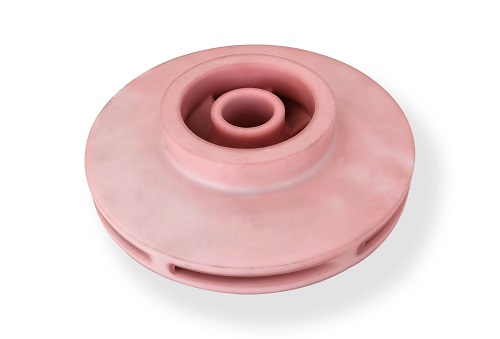
When navigating the world of industrial additive manufacturing, two powder-based technologies consistently stand out: Selective Laser Sintering (SLS) and Selective Laser Melting (SLM). While their names sound similar, the choice between them is not trivial—it fundamentally dictates the materials you can use, the performance of your final part, and your project’s budget.
What Is the Core Physical Difference Between Sintering and Melting?
The entire divergence between SLS and SLM stems from one fundamental physical principle: the level of energy applied to the powder bed. This isn’t just a technical nuance; it’s the root cause of all differences in material choice, part density, and mechanical strength.
- SLS (Selective Laser Sintering) uses a Controlled Fusing Process. Think of sintering like fusing grains of sand. An infrared laser, typically a CO₂ laser, heats the polymer, metal, or ceramic powder particles to a temperature just below their full melting point. This heat causes the particles to fuse at their boundaries through atomic diffusion, creating a solid part. However, microscopic pores remain between the originally distinct particles. The unsintered powder surrounding the part acts as a natural support, allowing for incredibly complex geometries.
- SLM (Selective Laser Melting) is a Complete Phase Change. In contrast, SLM is akin to micro-welding. It employs a high-power, focused laser (like a fiber or Nd:YAG laser) to deliver enough energy to completely melt the metal powder particles into a homogeneous liquid pool. This pool then solidifies into a fully dense, pore-free layer. This process requires carefully engineered support structures to anchor the part to the build plate and manage heat dissipation, preventing warping.
Expert Insight: The laser choice is critical. CO₂ lasers (used often in SLS) are well-absorbed by polymers and broader material sets. The shorter-wavelength lasers used in SLM are specifically chosen for their high absorption rate by metals, ensuring efficient and complete melting.
A Practical Comparison: How Do SLS and SLM Stack Up Across Critical Categories?
To make an informed decision, you need a side-by-side look. The table below breaks down the key operational and outcome differences between these two technologies.
| Comparison Category | SLS (Selective Laser Sintering) | SLM (Selective Laser Melting) | Key Takeaway for Engineers |
|---|---|---|---|
| Materials | Polymers (Nylon/PA11/PA12, TPU), Castable ceramics, composite powders (glass-filled, aluminum-filled). For metals, uses a binder-phase powder. | Pure, weldable metals and alloys (AlSi10Mg, Ti6Al4V, 316L Stainless Steel, CoCr, Inconel). | SLS offers material versatility for prototyping and non-metals. SLM is the specialist for high-performance, engineering-grade metals. |
| Part Density & Mechanics | Porous structure (typically 90-98% dense). Good, isotropic strength but lower than molded or melted parts. Can be brittle depending on material. | Fully dense (>99.5% density). Mechanical properties (tensile strength, fatigue resistance) are comparable to, or exceed, traditional wrought or cast materials. | SLM parts are for final, functional use in demanding environments. SLS parts suit prototypes, jigs, and low-stress applications. |
| Design Freedom & Supports | Exceptional freedom. The powder bed supports all features. You can build interlocking parts, extreme overhangs, and intricate internal channels without dedicated support structures. | Supports are mandatory for overhangs (typically >45°), to anchor the part to the build plate, and to pull heat away. This adds post-processing labor and can limit design. | SLS simplifies design for complexity. SLM requires Design for Additive Manufacturing (DfAM) expertise to optimize orientation and minimize supports. |
| Surface Finish & Precision | Grainy, matte finish with a “sandy” texture. Layer lines are visible. Typical surface roughness (Ra) of 10-20 μm. | Smoother, metallic finish but with visible weld beads and layer lines. Typical surface roughness (Ra) of 5-10 μm. Can be polished to mirror finish. | Both typically require post-processing for aesthetic or sealing purposes. SLM offers a better starting point for functional surfaces. |
| Primary Applications | Functional prototypes, ductwork & housings, snap-fit assemblies, tooling (jigs & fixtures), medical guides (biocompatible nylons). | Aerospace (brackets, fuel nozzles), Medical (custom orthopedic implants, dental copings), Automotive (lightweight structural components), High-performance tooling. | SLS accelerates product development. SLM enables final-part production in lightweight, high-strength applications. |
When Should I Specifically Choose SLS Technology?
Choose SLS when your priority is design validation, functional prototyping, or producing complex, non-metal components cost-effectively.
- Case Study: Rapid Tooling for Automotive Assembly. An automotive client needed 500 unique custom fixtures to hold wiring harnesses during assembly. Machining each one was prohibitively expensive and slow. Using SLS with glass-filled nylon, we produced durable, heat-resistant fixtures in a week. The natural support-free process allowed for intricate contours that perfectly matched the car body, and the low per-part cost made the short-run production viable.
- You Need Complex, Assembled-in-Design Parts: SLS is unparalleled for creating interlocking mechanisms, living hinges, or assembled ball-and-socket joints straight off the build plate. This eliminates assembly time and is ideal for prototyping consumer products.
- Your Material is a Polymer or Composite: For parts that will experience flex, impact, or thermal insulation—like drone housings, custom orthotics, or cable ducts—SLS nylons and TPUs are the optimal, often only, powder-bed choice.
When is SLM the Non-Negotiable Choice?
Choose SLM when your part must withstand structural loads, high temperatures, or corrosive environments, and must do so as a final production component.
- Case Study: Conformal Cooling for Injection Molds. A manufacturer of plastic components faced long cycle times due to inefficient cooling in a critical steel mold. We redesigned the cooling channels to follow the contour of the mold cavity—an impossible geometry for drilling. Using SLM with maraging steel, we produced a mold insert with these optimized conformal cooling channels. The result was a 20% reduction in cycle time and dramatically improved part quality, delivering ROI in under three months.
- You Require Metallurgical Integrity: For components in aerospace, medical implants, or energy sectors, the full density and certified material properties of SLM are mandatory. Regulatory bodies often require the traceability and consistency that SLM provides.
- You Are Leveraging Topology Optimization: SLM is the perfect partner for software-generated, organic, lightweight structures. It can physically produce the complex, weight-saving geometries that traditional manufacturing cannot, turning a solid block of metal into a strong, web-like structure.
What’s the Real Cost Difference, and How Do I Decide?
The cost equation extends far beyond the price of powder. You must consider the total cost of ownership and operation.
SLS has a lower barrier to entry. Machine costs, material costs (especially for polymers), and operation costs (inert gas consumption) are generally lower. Its lack of support structures also reduces post-processing labor. However, for metal SLS parts, secondary infiltration or Hot Isostatic Pressing (HIP) processes are often needed to improve density, adding cost and time.
SLM commands a premium for performance. The machines, pure metal powders (like Ti6Al4V), and operational energy are significantly more expensive. Support removal via EDM or machining is a necessary and skilled labor cost. The trade-off is that you often receive a near-net-shape final part that requires minimal secondary machining.
Decision Framework: Ask These Questions
- Material First: Is it a final-use metal part? If yes, lean SLM. Is it a prototype, tool, or polymer part? Lean SLS.
- Function Second: Will the part bear significant load, heat, or pressure? If yes, SLM is likely required. Is it for form, fit, or light functional testing? SLS is likely sufficient.
- Economics Third: For a prototype, is the speed and cost-effectiveness of SLS worth the property trade-off? For production, does the performance gain and part consolidation of SLM justify its higher upfront cost?
Summary: Complementary Tools for the Product Lifecycle
SLS and SLM are not rivals but specialized tools for different phases of the product development lifecycle. SLS excels as a rapid, agile, and cost-effective method for prototyping and producing complex polymer-based components. SLM stands as an industrial manufacturing solution for creating high-strength, dense metal parts for end-use applications. The most effective development strategies often employ both: using SLS for early-stage design iteration and validation, and transitioning to SLM for final production of certified, high-performance components.
How to write a spec that gets priced correctly
A drawing is a contract. If it leaves a number open, the shop fills that number in with its own default. The default is rarely the one you had in mind. Put these five lines on every RFQ and most of the back-and-forth disappears before it starts.
- File format and units, with the model exported in millimetres
- Process and material grade, not a trade name
- Critical features and the tolerance each one needs
- Surface finish and the faces it applies to
- Quantity for the pilot build and for the year
The point is not paperwork. Each line removes a decision the shop would otherwise make for you. A complete RFQ comes back priced. An incomplete one comes back guessed.
What actually drives the price
Buyers usually push on material because it is the line they can see. In practice the material is rarely the biggest number on a quote. These five lines decide most of it:
- build volume and orientation
- layer height and support structure
- material grade and colour
- post-processing and hand finishing
- quantity per build plate
Ask for the quote split by line. A supplier who cannot break it down is guessing, and you will pay for the guess. The line you can usually renegotiate is the tolerance band, not the raw material.
Problems you will meet, and the fix
Every process has a failure mode it prefers. The same four show up again and again on this kind of work, and none of them are mysteries once you know what to look for.
- Warping on long flat faces where the part lifts off the plate
- Layer lines showing through a cosmetic surface
- Support scars on a mating face nobody flagged
- Dimensional drift on thin walls after cooling
Catch the fault on the first part, not the hundredth. A first-article check costs an hour. A bad batch costs the whole order. Write the check into the purchase order so nobody has to remember it.
What to check on the first article
The first article is the cheapest inspection you will ever buy. Use it properly and the rest of the run becomes boring, which is exactly what you want.
- Every dimension on the drawing, with the measured value written beside it.
- The material certificate, matched to the heat or lot number on the parts.
- The finish against the sample you approved, under the same light.
- Fit against the mating part, assembled rather than measured.
- Packaging, because parts that arrive damaged were never in tolerance.
Check in this order: datums, then mating features, then cosmetic faces. If the datums are wrong, every number after them is noise. Keep the report on file. When a problem shows up in month six, that document is the only thing that tells you what changed.
How to compare two quotes fairly
Two numbers are not comparable unless the scope matches. Line them up before you decide, because a low number with three gaps is not a low number.
Same drawing, same material, same finish, same inspection. Anything else is a different job wearing the same part number. Then look at what each quote leaves out. Freight, packaging, certificates and tooling are the usual gaps.
Ask each supplier to state their assumptions in writing. The one who does is usually the one who has run the process before.
Scaling from one part to a batch
The first part teaches you the process. The hundredth teaches you the process cost.
Watch three things as volume grows: setup amortisation, tool wear, and how much hand work the finish still needs. If the unit price barely moves between ten and a hundred, the cost sits in material or in hand work, not in setup. Ask which, because only one of them is negotiable.
Lead time behaves the same way. A one-off is scheduled around other jobs. A repeat order is scheduled around your forecast. Give the shop a forecast and the lead time gets shorter, not longer.
How to read a supplier's quote
A quote is a short document with a long shadow. Four things in it decide whether the job runs smoothly, and only one of them is the price.
- The scope line. It should name the process, the material and the finish, not just the part.
- The tolerance basis. General tolerance or the drawing, and which standard it follows.
- The exclusions. Tooling, freight, certificates and inspection are the usual omissions.
- The validity date. Material prices move, and an open-ended quote is a promise nobody can keep.
Read the exclusions before you read the total. A quote that leaves out tooling is not cheaper. It is a quote for a different job.
What to send with the first order
The first order sets the pattern for every order after it. Send a complete package once and the shop files it, and the second order takes a fraction of the time.
- A STEP or native model plus a PDF drawing carrying the same revision letter.
- The material callout by standard number, not by trade name.
- The finish and the exact faces it applies to.
- Any test the part must pass: fit, seal, drop, salt spray, dielectric.
- A contact who can answer a question inside one working day.
Then write down what was agreed. An email that confirms the material, the finish and the date is worth more than a longer purchase order that leaves them open.
When this is the wrong choice
A good supplier tells you when the process does not fit. These are the cases where we say so.
- The volume is so low that setup costs more than the parts are worth.
- The tolerance is tighter than the process can hold without a second operation.
- The geometry cannot be made without a tool feature that will not pay back.
- The material you need is not available in the form the process requires.
- The schedule is shorter than the tooling or setup time, and nobody has said so yet.
None of these are refusals. They are reasons to look at a different route, and the earlier that conversation happens the cheaper it is. The most expensive mistake in manufacturing is a process chosen before the question was understood.
Our solution for I Choose Between SLS
YiguProto runs 3D printing in house, from a single prototype to a production batch. We quote the process, the material and the finish as separate lines, so you can see where the money goes instead of arguing with one number.
Send a STEP file or a drawing and you get a DFM report in one to two business days. It flags the features that add cost and the features that will not hold tolerance on the process you picked.
Every order ships with an inspection report on the features you call out. If a part misses, we make it again. Ready to price a part? Start with a free quote and DFM review, or read more about our 3D printing. You can also talk to an engineer before you commit to a drawing.
FAQ about I Choose Between SLS
How long does a first article take?
Usually a few business days once the drawing is frozen, and longer if tooling is involved. The date we give you is the date we confirm in writing, not the date we hope for.
What tolerance can you hold on I Choose Between SLS?
The working default is ±0.1 mm on small features, ±0.3% on long spans. Tighter than that the process changes and so does the price, because every step tighter adds inspection time. Call out only the faces that mate with something else and leave the rest on the general tolerance.
What is the lead time for I Choose Between SLS?
Expect 2 to 5 business days for a first batch. Tooling, material stock and the finishing queue all move that number, so we confirm the date in writing before the run starts rather than after.
Is there a minimum order quantity?
No hard minimum. One part is fine. What changes with volume is which costs dominate, so a single unit is priced mostly on setup and a thousand units are priced mostly on cycle time and material.
Can I Choose Between SLS be made in small quantities?
Yes, and small quantities are where a good supplier earns the next order. Setup dominates the price at low volume, so the cheapest route is usually the one with the fewest operations, not the cheapest material.
What files do you need in order to quote?
A STEP file plus a PDF drawing that carries the same revision letter. The model carries the geometry and the drawing carries the intent. When the two disagree, the shop picks one, and it is never the one you meant.
The short version
I Choose Between SLS rewards the buyer who reads the data sheet and the drawing together. Pick the option for the property that matters, not for the price per kilo.
Tighten only what mates. Test a sample before the run. Then let the process do the rest.