
Metal Materials
EN 1.4410 Duplex Steel: Need to Know About Properties, Uses & More
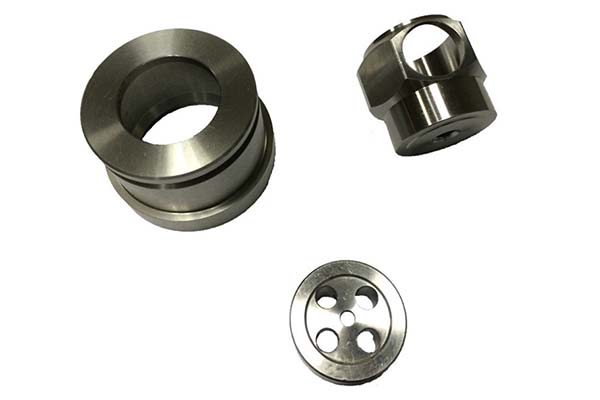
If you are searching for a steel that balances high strength, excellent corrosion resistance, and cost-effectiveness, EN 1.4410 duplex steel is worth a closer look. As a type of duplex stainless steel, it stands out for its unique dual-phase structure and reliable performance in tough environments.
What Is EN 1.4410 Duplex Steel?
EN 1.4410 is a dual-phase steel with a ferritic-austenitic structure. This means it contains roughly equal parts of ferrite (a magnetic phase) and austenite (a non-magnetic phase). This balanced microstructure gives it significant advantages over single-phase steels like standard austenitic (304, 316) or ferritic grades. Its general characteristics include:
- Higher strength than austenitic stainless steels
- Better corrosion resistance than ferritic stainless steels
- Good ductility—the ability to bend without breaking
- Cost-effective compared to high-end super duplex steels
A real-world example: A construction firm in Spain switched from 316 stainless steel to EN 1.4410 for a coastal bridge. The EN 1.4410’s dual-phase structure held up better against saltwater spray, reducing repair needs by 25% in the first two years.
What Is the Chemical Composition?
The performance of EN 1.4410 duplex steel comes from its carefully balanced chemical composition. Each element plays a key role in its strength and corrosion resistance. Here is a breakdown of the main components per EN 10088-3 standards.
| Element | Content Range (%) | Purpose |
|---|---|---|
| Chromium (Cr) | 19.0 – 21.0 | Boosts corrosion resistance. Fights rust and pitting. |
| Nickel (Ni) | 4.5 – 6.5 | Helps form the austenite phase. Improves ductility. |
| Molybdenum (Mo) | 2.5 – 3.5 | Enhances resistance to pitting and crevice corrosion. |
| Nitrogen (N) | 0.10 – 0.20 | Increases strength and stabilizes the austenite phase. |
| Carbon (C) | ≤ 0.03 | Kept low to maintain toughness and reduce brittleness. |
Without this exact balance, EN 1.4410 would not have its signature properties. Too little chromium would make it prone to rust, while too much nickel could weaken its strength.
What Are the Mechanical Properties?
EN 1.4410 duplex steel is known for its impressive mechanical performance, making it ideal for load-bearing and high-stress applications. The table below shows its key properties tested at room temperature per EN 10088-3.
| Property | Minimum Requirement | Real-World Impact |
|---|---|---|
| Tensile Strength | 600 MPa | Handles heavy loads. Suitable for offshore oil rig supports. |
| Yield Strength | 400 MPa | Resists bending or deformation under pressure. Better than 316 steel. |
| Elongation | 25% | Bends without breaking. Good for forming parts like pipes. |
| Hardness | 280 HB | Durable against scratches. Suitable for food processing equipment. |
| Impact Toughness | 40 J at -40°C | Does not crack in cold weather. Ideal for Arctic marine projects. |
| Fatigue Strength | 280 MPa (10⁷ cycles) | Withstands repeated stress. Ideal for moving parts like pump shafts. |
A real-world example: An oil and gas company in Norway used EN 1.4410 for wellhead components. The steel’s high yield strength (400 MPa) meant the components could handle underground pressure without deforming—something their old 316 steel struggled with.
How Resistant Is It to Corrosion?
One of the biggest advantages of EN 1.4410 is its corrosion resistance. It performs well in harsh environments where other steels fail.
| Type of Corrosion | Performance | Key Details |
|---|---|---|
| Pitting Resistance | Excellent | High chromium and molybdenum prevent small holes in chloride-rich environments like seawater. Resists pitting in 3.5% saltwater at temperatures up to 60°C. |
| Crevice Corrosion | Very Good | Performs well in tight spaces like bolted joints or gaskets. A marine engineer in Italy tested EN 1.4410 in crevices filled with seawater—no corrosion after 18 months. |
| Stress Corrosion Cracking | Excellent | Does not crack under combined stress and corrosion. A German chemical plant used it for pressure vessels holding acidic fluids—no issues over 5 years. |
| Acidic Environments | Good | Handles dilute acids like sulfuric acid better than 304. Lab tests found EN 1.4410 lost only 0.08 mm of thickness after 1000 hours in 5% sulfuric acid (vs. 0.4 mm for 304). |
| Alkaline Environments | Good | Resists damage from bases like sodium hydroxide. Useful in pulp and paper mills where alkaline chemicals are common. |
Where Is EN 1.4410 Used?
Thanks to its strength and corrosion resistance, EN 1.4410 is used across many demanding industries. Here are its most common applications with real-world examples.
Marine Engineering
- Ship Hulls and Propeller Shafts: A shipyard in South Korea built a cargo ship with EN 1.4410 hulls. After 4 years at sea, there were no signs of rust.
- Offshore Platforms: Handles saltwater exposure and wave-induced stress.
Chemical Processing
- Tanks, Valves, and Pipes: A chemical plant in France used EN 1.4410 for nitric acid storage. Replacing their old steel cut maintenance costs by 30%.
- Pressure Vessels: Withstands acidic and corrosive fluids.
Oil and Gas Industry
- Wellheads and Subsea Pipelines: A U.S. oil company used EN 1.4410 for subsea pipelines. Its fatigue strength meant the pipelines could handle wave movements without cracking.
- Offshore Rig Components: Resists chloride stress corrosion cracking.
Food Processing and Pulp & Paper
- Food Processing Equipment: A dairy in the Netherlands uses EN 1.4410 for milk tanks. The smooth surface is easy to clean, and it resists lactic acid corrosion. Meets EU food safety standards.
- Pulp and Paper Mills: A Canadian pulp mill switched to EN 1.4410 for bleach plants. Its resistance to alkaline bleach extended equipment life by 6 years.
Construction and Architecture
- Coastal Bridges and Handrails: A construction firm in Australia used EN 1.4410 for a beachfront mall’s handrails. No rust after 3 years of saltwater exposure.
- Building Facades: Provides long-term durability in coastal environments.
How Is It Manufactured and Fabricated?
To get the best performance from EN 1.4410, proper manufacturing and fabrication techniques are essential. The key is maintaining the correct ferrite-austenite balance throughout processing.
| Process | Key Details |
|---|---|
| Hot Rolling | Heated to 1100-1200°C and rolled into plates, bars, or pipes. Shapes the material while preserving the dual-phase structure. |
| Cold Rolling | Done at room temperature for thinner products like sheets. Increases hardness and improves surface finish. |
| Heat Treatment | Critical step. Heated to 1020-1100°C and rapidly cooled (quenched) in water. Ensures the 50-50 ferrite-austenite balance. Slow cooling can create brittle phases. |
| Forging | Used for complex parts like flanges and valves. Forging aligns the steel’s grains, making it stronger. |
| Machining | Easy to machine with high-speed steel (HSS) tools and coolants. Avoid overheating, which can damage the microstructure. |
How Do You Weld EN 1.4410?
Welding EN 1.4410 requires care to keep its properties intact. Following these guidelines ensures strong, corrosion-resistant welds.
| Aspect | Recommendation |
|---|---|
| Welding Techniques | TIG (Tungsten Inert Gas) is best for thin parts like pipes. MIG (Metal Inert Gas) works for thicker sections. SMAW is used for on-site repairs but requires more skill. |
| Welding Consumables | Use duplex-specific consumables such as AWS ER2209 to match EN 1.4410’s composition. Using austenitic wires can weaken the weld. |
| Heat Input | Keep low (max 1.5 kJ/mm). Too much heat can destroy the ferrite phase, reducing strength. |
| Post-Weld Heat Treatment | Usually not needed. If done, heat to 1020-1100°C and quench. Avoid slow cooling, which can make the weld brittle. |
| Joining Techniques | For non-welded joints, use bolted connections with EN 1.4410 bolts. Mixing metals like carbon steel bolts can cause galvanic corrosion. |
EN 1.4410 duplex steel offers a compelling combination of high strength, excellent corrosion resistance, and good workability. Its unique ferritic-austenitic structure delivers twice the yield strength of standard 316 stainless steel (400 MPa vs. 200 MPa) while maintaining good ductility and weldability. From marine engineering and chemical processing to oil and gas applications, this steel has proven its reliability in harsh environments. For projects that demand a balance of performance and cost—without the premium price of super duplex grades—EN 1.4410 is a versatile, dependable choice.
FAQ About EN 1.4410 Duplex Steel
Is EN 1.4410 magnetic?
Yes, it is slightly magnetic. Because it contains a ferritic phase (which is magnetic), it will attract a magnet—unlike fully austenitic steels such as 304, which are non-magnetic.
Can EN 1.4410 be used at high temperatures?
It performs well up to 300°C. Above this temperature, the ferrite phase can become brittle, reducing strength. For continuous service above 300°C, consider a super duplex steel or a high-temperature austenitic grade like 310S.
How does EN 1.4410 compare to EN 1.4462?
EN 1.4462 has higher chromium (21-23% vs. 19-21%) and nitrogen content, making it more corrosion-resistant. However, EN 1.4410 is more cost-effective and easier to process. Choose EN 1.4410 for projects where extreme corrosion resistance is not required; choose EN 1.4462 for more aggressive chloride environments.
Does EN 1.4410 require special welding procedures?
Yes. Use duplex-specific consumables (AWS ER2209), keep heat input low (≤1.5 kJ/mm), and avoid slow cooling. Preheating is not typically required, but post-weld heat treatment should only be done if necessary and must include rapid quenching to restore the ferrite-austenite balance.
How to write a spec that gets priced correctly
A drawing is a contract. If it leaves a number open, the shop fills that number in with its own default. The default is rarely the one you had in mind. Put these five lines on every RFQ and most of the back-and-forth disappears before it starts.
- Alloy designation and the standard behind it
- Temper or heat treatment condition
- Mechanical properties you actually need
- Mill certificate and traceability requirement
- Finish and the faces it applies to
The point is not paperwork. Each line removes a decision the shop would otherwise make for you. A complete RFQ comes back priced. An incomplete one comes back guessed.
What actually drives the price
Buyers usually push on material because it is the line they can see. In practice the material is rarely the biggest number on a quote. These five lines decide most of it:
- alloy grade and mill availability
- stock size versus finished size
- heat treatment and testing
- machinability
- certification
Ask for the quote split by line. A supplier who cannot break it down is guessing, and you will pay for the guess. The line you can usually renegotiate is the tolerance band, not the raw material.
Problems you will meet, and the fix
Every process has a failure mode it prefers. The same four show up again and again on this kind of work, and none of them are mysteries once you know what to look for.
- Substituting a similar grade without telling anyone
- Hardness that varies across a single bar
- Corrosion in a weld heat-affected zone
- Distortion after heat treatment on a thin part
Catch the fault on the first part, not the hundredth. A first-article check costs an hour. A bad batch costs the whole order. Write the check into the purchase order so nobody has to remember it.
What to check on the first article
The first article is the cheapest inspection you will ever buy. Use it properly and the rest of the run becomes boring, which is exactly what you want.
- Every dimension on the drawing, with the measured value written beside it.
- The material certificate, matched to the heat or lot number on the parts.
- The finish against the sample you approved, under the same light.
- Fit against the mating part, assembled rather than measured.
- Packaging, because parts that arrive damaged were never in tolerance.
Check in this order: datums, then mating features, then cosmetic faces. If the datums are wrong, every number after them is noise. Keep the report on file. When a problem shows up in month six, that document is the only thing that tells you what changed.
How to compare two quotes fairly
Two numbers are not comparable unless the scope matches. Line them up before you decide, because a low number with three gaps is not a low number.
Same drawing, same material, same finish, same inspection. Anything else is a different job wearing the same part number. Then look at what each quote leaves out. Freight, packaging, certificates and tooling are the usual gaps.
Ask each supplier to state their assumptions in writing. The one who does is usually the one who has run the process before.
Scaling from one part to a batch
The first part teaches you the process. The hundredth teaches you the process cost.
Watch three things as volume grows: setup amortisation, tool wear, and how much hand work the finish still needs. If the unit price barely moves between ten and a hundred, the cost sits in material or in hand work, not in setup. Ask which, because only one of them is negotiable.
Lead time behaves the same way. A one-off is scheduled around other jobs. A repeat order is scheduled around your forecast. Give the shop a forecast and the lead time gets shorter, not longer.
How to read a supplier's quote
A quote is a short document with a long shadow. Four things in it decide whether the job runs smoothly, and only one of them is the price.
- The scope line. It should name the process, the material and the finish, not just the part.
- The tolerance basis. General tolerance or the drawing, and which standard it follows.
- The exclusions. Tooling, freight, certificates and inspection are the usual omissions.
- The validity date. Material prices move, and an open-ended quote is a promise nobody can keep.
Read the exclusions before you read the total. A quote that leaves out tooling is not cheaper. It is a quote for a different job.
What to send with the first order
The first order sets the pattern for every order after it. Send a complete package once and the shop files it, and the second order takes a fraction of the time.
- A STEP or native model plus a PDF drawing carrying the same revision letter.
- The material callout by standard number, not by trade name.
- The finish and the exact faces it applies to.
- Any test the part must pass: fit, seal, drop, salt spray, dielectric.
- A contact who can answer a question inside one working day.
Then write down what was agreed. An email that confirms the material, the finish and the date is worth more than a longer purchase order that leaves them open.
Our solution for EN 1.4410 Duplex Steel: Need
YiguProto runs metal sourcing and machining in house, from a single prototype to a production batch. We quote the process, the material and the finish as separate lines, so you can see where the money goes instead of arguing with one number.
Send a STEP file or a drawing and you get a DFM report in one to two business days. It flags the features that add cost and the features that will not hold tolerance on the process you picked.
Every order ships with an inspection report on the features you call out. If a part misses, we make it again. Ready to price a part? Start with a free quote and DFM review, or read more about our metal sourcing and machining. You can also talk to an engineer before you commit to a drawing.
FAQ about EN 1.4410 Duplex Steel: Need
What is the lead time for EN 1.4410 Duplex Steel: Need?
Expect 5 to 12 business days depending on mill stock. Tooling, material stock and the finishing queue all move that number, so we confirm the date in writing before the run starts rather than after.
What tolerance can you hold on EN 1.4410 Duplex Steel: Need?
The working default is ±0.05 mm on machined features, ±0.1 mm on formed ones. Tighter than that the process changes and so does the price, because every step tighter adds inspection time. Call out only the faces that mate with something else and leave the rest on the general tolerance.
How long does a first article take?
Usually a few business days once the drawing is frozen, and longer if tooling is involved. The date we give you is the date we confirm in writing, not the date we hope for.
How much does EN 1.4410 Duplex Steel: Need cost?
Price comes from five lines: material, machine or tool time, setup, finishing and inspection. The material itself is usually the smallest of them. Send a drawing and we will split the quote so you can see which line is doing the damage.
What material should I specify?
Specify by standard, not by trade name. A trade name can change under you between two orders; a standard number cannot. Then add the one property that actually decides the part, whether that is strength, heat resistance or chemical exposure.
What should I check before approving the parts?
Datums first, then the features that mate, then the cosmetic faces. Ask for a dimensional report, a material certificate and a finish sample. A part can be inside every tolerance and still not fit, so assemble one before you sign.
The short version
EN 1.4410 Duplex Steel: Need rewards the buyer who reads the data sheet and the drawing together. Pick the option for the property that matters, not for the price per kilo.
Tighten only what mates. Test a sample before the run. Then let the process do the rest.