
Metal Materials
EN 1.4462 Duplex Steel: A Guide to Properties, Applications & Standards
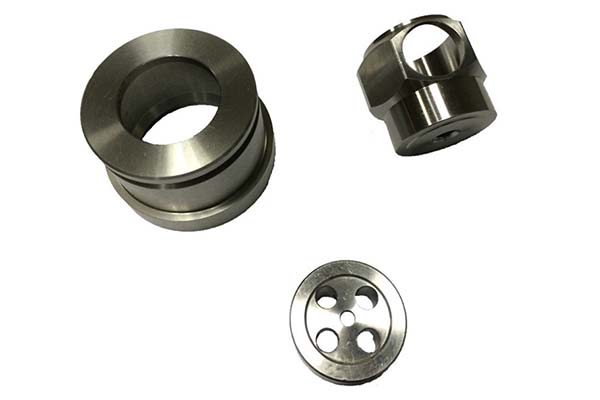
When your project demands exceptional strength combined with outstanding corrosion resistance—whether for offshore pipelines, chemical processing equipment, or marine structures—EN 1.4462 duplex steel offers a solution that bridges the gap between standard austenitic and ferritic stainless steels.
What Defines EN 1.4462 Duplex Steel?
The performance of EN 1.4462 is rooted in its chemical composition and the balanced dual-phase microstructure that gives it its name. Understanding these fundamentals explains why this material outperforms single-phase stainless steels.
Chemical Composition
EN 1.4462 achieves its properties through a precise balance of chromium, nickel, molybdenum, and nitrogen. These elements stabilize the dual-phase structure and provide corrosion resistance.
| Element | Content Range (%) | Functional Role |
|---|---|---|
| Chromium (Cr) | 21.0–23.0 | Provides the foundation for corrosion resistance and stabilizes the ferrite phase. |
| Nickel (Ni) | 4.5–6.5 | Stabilizes the austenite phase and contributes to toughness and weldability. |
| Molybdenum (Mo) | 2.5–3.5 | Enhances pitting resistance and crevice corrosion resistance in chloride environments. |
| Nitrogen (N) | 0.14–0.20 | Strengthens the austenite phase, improves pitting resistance, and stabilizes the dual-phase structure. |
| Carbon (C) | ≤ 0.030 | Kept low to maintain corrosion resistance and prevent sensitization. |
| Manganese (Mn) | ≤ 2.00 | Improves hot workability and contributes to austenite stability. |
| Silicon (Si) | ≤ 1.00 | Aids deoxidation during steelmaking. |
| Phosphorus (P) | ≤ 0.035 | Controlled to prevent brittleness. |
| Sulfur (S) | ≤ 0.015 | Minimized to maintain corrosion resistance and toughness. |
Microstructure
The defining characteristic of EN 1.4462 is its balanced dual-phase microstructure. After proper heat treatment, the steel consists of approximately 50% austenite and 50% ferrite. This combination provides:
- High strength from the ferrite phase
- Good toughness from the austenite phase
- Excellent corrosion resistance from the combined effect of both phases
Mechanical Properties
The mechanical characteristics of EN 1.4462 significantly exceed those of conventional austenitic stainless steels.
| Property | Typical Value | EN Standard Minimum | Practical Significance |
|---|---|---|---|
| Yield Strength | 450–550 MPa | ≥ 450 MPa | Approximately double that of 316 stainless, allowing for thinner sections and lighter structures. |
| Tensile Strength | 620–800 MPa | ≥ 620 MPa | Provides a safety margin against overload conditions. |
| Elongation | 25–35% | ≥ 25% | Maintains ductility for forming and fabrication. |
| Hardness | 260–290 HB | N/A | Provides good wear resistance for moving parts and equipment. |
| Impact Toughness | ≥ 40 J at -40°C | ≥ 40 J (Charpy) | Maintains fracture resistance in cold environments and during installation. |
Physical Properties
The physical characteristics of EN 1.4462 differ from austenitic grades in ways that affect design and fabrication.
| Property | Typical Value | Practical Significance |
|---|---|---|
| Density | 7.8 g/cm³ | Slightly lower than austenitic stainless steels, beneficial for weight-sensitive applications. |
| Thermal Conductivity | 19 W/(m·K) | Lower than carbon steel but higher than austenitic grades, affecting welding heat input requirements. |
| Coefficient of Thermal Expansion | 13.5 × 10⁻⁶/°C (20–100°C) | Lower than austenitic grades, reducing thermal stress in welded structures. |
| Electrical Resistivity | 0.80 μΩ·m | Higher than carbon steel, minimal impact on most applications. |
Why Is It Preferred for Harsh Environments?
EN 1.4462 has become a standard material for demanding applications because its properties directly address the failure modes that threaten equipment in corrosive environments.
Superior Pitting Resistance
Pitting corrosion is a primary concern in chloride-containing environments like seawater. EN 1.4462 has a Pitting Resistance Equivalent Number (PREN) of 32–38, calculated from its chromium, molybdenum, and nitrogen content. This is significantly higher than 316 (PREN 23–25), meaning it can withstand much higher chloride concentrations before pitting initiates. In seawater applications, EN 1.4462 resists pitting at temperatures up to 60°C, compared to approximately 40°C for 316.
Excellent Stress Corrosion Cracking Resistance
Austenitic stainless steels are susceptible to stress corrosion cracking (SCC) in chloride environments when under tensile stress. The dual-phase structure of EN 1.4462 provides excellent resistance to this failure mode. This makes it suitable for pressure vessels, piping, and structural components that experience both stress and chloride exposure.
High Strength Enabling Weight Reduction
With yield strength approximately double that of 316 stainless, EN 1.4462 allows designers to use thinner sections for equivalent load capacity. In structural applications like bridges, offshore platforms, and pressure vessels, this translates to significant weight savings and reduced material costs.
Good Weldability
Unlike some high-strength alloys that are difficult to weld, EN 1.4462 has good weldability when proper procedures are followed. With controlled heat input and appropriate filler metals, welded joints can achieve properties comparable to the base metal, maintaining corrosion resistance and mechanical performance.
Where Is EN 1.4462 Commonly Used?
The combination of high strength and corrosion resistance makes EN 1.4462 suitable for demanding applications across multiple industries.
- Oil and Gas Industry: Offshore pipelines and flowlines for subsea oil and gas production. Wellhead equipment and christmas trees requiring resistance to seawater and produced fluids. Process piping on offshore platforms and FPSO vessels. Subsea manifolds and control systems in deepwater applications.
- Chemical Processing: Reactor vessels and pressure vessels for aggressive chemical processes. Storage tanks for acids, chlorides, and corrosive chemicals. Heat exchangers exposed to corrosive cooling water or process streams. Piping systems for transporting corrosive fluids.
- Marine and Offshore: Ship hulls for vessels operating in corrosive seawater environments. Propeller shafts and propulsion components requiring high strength and corrosion resistance. Desalination plants for seawater processing and fresh water production. Port infrastructure including cranes, docks, and loading equipment.
- Pulp and Paper Industry: Bleach plant equipment exposed to chlorine dioxide and other bleaching chemicals. Digester vessels for pulp processing. Paper machine components requiring corrosion resistance in wet environments.
- Food and Beverage Processing: Processing tanks for acidic foods, dairy products, and beverages. Piping systems for product transfer and cleaning-in-place (CIP) circuits. Mixing and blending equipment requiring easy cleaning and corrosion resistance.
How Is EN 1.4462 Manufactured?
The manufacturing process for EN 1.4462 is designed to develop and preserve its balanced dual-phase microstructure.
Steelmaking and Casting
EN 1.4462 is produced in an Electric Arc Furnace (EAF) with precise additions of chromium, nickel, molybdenum, and nitrogen. The nitrogen content is carefully controlled to achieve the required properties. After melting, the steel is cast into slabs, billets, or ingots.
Hot Rolling and Forming
Slabs are hot rolled at 1,100–1,200°C to form plates, sheets, bars, and structural shapes. The hot rolling process refines the grain structure while maintaining the dual-phase balance. For complex components, forging at similar temperatures aligns grain structure and improves mechanical properties.
Heat Treatment
Heat treatment is critical to achieving the proper dual-phase balance:
| Process | Temperature Range | Purpose |
|---|---|---|
| Solution Annealing | 1,020–1,100°C | Dissolves unwanted precipitates and creates the correct austenite-ferrite balance. |
| Quenching | Water quench | Rapid cooling prevents the formation of brittle phases like sigma and chi. |
The cooling rate after solution annealing is critical. Water quenching is typically required to avoid the slow cooling that can allow brittle intermetallic phases to form.
Welding
Welding EN 1.4462 requires careful control to maintain corrosion resistance and mechanical properties:
| Consideration | Requirement |
|---|---|
| Filler Metal | Duplex-specific consumables (AWS ER2209 or equivalent) |
| Heat Input | Low heat input (maximum 1.5 kJ/mm) to preserve phase balance |
| Interpass Temperature | Maximum 150°C |
| Shielding Gas | Argon with nitrogen addition (2–5%) to maintain nitrogen content |
| Post-Weld Heat Treatment | Generally not required; if performed, full solution annealing and quenching |
How Does It Compare to Other Stainless Steels?
Understanding where EN 1.4462 fits relative to other stainless grades helps clarify its value for specific applications.
| Material | Yield Strength (MPa) | PREN (Pitting Resistance) | Relative Cost | Best Applications |
|---|---|---|---|---|
| EN 1.4462 (Duplex) | ≥ 450 | 32–38 | $$ | Offshore, chemical, marine, high-strength corrosion applications |
| 316 (Austenitic) | ≥ 205 | 23–25 | $ | General corrosion resistance, food processing |
| 317 (Austenitic) | ≥ 210 | 28–30 | $–$$ | More aggressive chemical environments |
| 254 SMO (Super Austenitic) | ≥ 300 | 42–45 | $$$ | Extreme chloride environments, seawater systems |
| 2205 (Duplex) | ≥ 450 | 32–38 | $$ | Equivalent to EN 1.4462 (same grade) |
| Super Duplex (2507) | ≥ 550 | 40–45 | $$$ | Ultra-high strength, extreme corrosion applications |
Key takeaways:
- EN 1.4462 offers approximately double the yield strength of 316 at a moderate cost premium.
- Its pitting resistance significantly exceeds that of 316, making it suitable for seawater and chloride environments.
- Compared to super austenitic grades like 254 SMO, EN 1.4462 provides comparable corrosion resistance in many applications with higher strength and lower cost.
- For extreme chloride environments or ultra-high strength requirements, super duplex grades may be specified, though at higher cost.
Case Studies: EN 1.4462 in Real-World Applications
Case Study 1: North Sea Offshore Pipelines
A Norwegian oil company operating in the North Sea was experiencing corrosion issues with carbon steel subsea pipelines. The combination of seawater, produced fluids, and cathodic protection systems was causing accelerated corrosion and frequent maintenance. The company replaced sections of the pipeline with EN 1.4462 duplex steel piping. After five years of operation in harsh North Sea conditions, the duplex steel pipelines showed no pitting or crevice corrosion. Maintenance costs were reduced by 30%, and the improved strength allowed for thinner pipe walls, reducing material weight and installation costs.
Case Study 2: Chemical Processing Reactor
A U.S. chemical manufacturer was using 316 stainless steel for a reactor vessel handling sulfuric acid and chlorides. The reactor required replacement every 3–4 years due to pitting corrosion and stress corrosion cracking. The company switched to an EN 1.4462 reactor vessel. After eight years of continuous operation, the vessel showed no signs of corrosion or cracking. The higher strength of the duplex steel also allowed for a slightly thinner wall section, offsetting part of the material cost premium.
Case Study 3: Coastal Patrol Vessel Hull
A Japanese shipyard constructing coastal patrol vessels for operations in saltwater environments needed a material that could withstand corrosion while providing structural strength. Using EN 1.4462 duplex steel for the hull, the shipyard achieved a 20% weight reduction compared to conventional steel designs due to the higher yield strength. After three years of service, the hull showed no signs of rust or corrosion, outperforming vessels built with conventional steel that required frequent repainting and repair.
EN 1.4462 duplex steel represents a significant advancement in stainless steel technology. Its balanced austenitic-ferritic microstructure delivers approximately double the yield strength of conventional austenitic grades while providing superior resistance to pitting, crevice corrosion, and stress corrosion cracking. From offshore oil and gas platforms and chemical processing equipment to marine structures and desalination plants, this versatile material enables designs that are stronger, lighter, and more durable than those possible with single-phase stainless steels. While it requires careful control during welding and fabrication, the performance benefits—extended service life, reduced maintenance, and weight savings—make EN 1.4462 a cost-effective choice for the most demanding environments where failure is not an option.
FAQ About EN 1.4462 Duplex Steel
What is the difference between EN 1.4462 and 316 stainless steel?
EN 1.4462 has approximately double the yield strength (450 MPa vs. 205 MPa for 316) and significantly better corrosion resistance in chloride environments. It resists pitting at higher temperatures and chloride concentrations, and it is highly resistant to stress corrosion cracking. 316 is less expensive and easier to fabricate, but for harsh environments, EN 1.4462 provides superior durability.
Can EN 1.4462 be used at high temperatures?
EN 1.4462 performs well up to approximately 300°C. Above this temperature, the ferrite phase can undergo embrittling transformations, and the material may lose its corrosion resistance. For sustained service above 300°C, austenitic grades like 310S or nickel-based alloys are more appropriate. For cryogenic applications down to -50°C, EN 1.4462 maintains good toughness.
Is EN 1.4462 suitable for food contact applications?
Yes. EN 1.4462 meets European Union Regulation (EC) No. 1935/2004 for food contact materials. Its smooth surface finish is easy to clean, and it resists corrosion from food acids, dairy products, and cleaning chemicals. It is commonly used in dairy processing, beverage production, and food handling equipment where both corrosion resistance and strength are required.
What is the proper welding procedure for EN 1.4462?
Use duplex-specific filler metals like AWS ER2209. Maintain low heat input (maximum 1.5 kJ/mm) and interpass temperatures below 150°C. Shielding gas should include 2–5% nitrogen to prevent nitrogen loss from the weld pool. Post-weld heat treatment is generally not required if proper welding procedures are followed. For critical applications, consult welding procedure specifications (WPS) qualified for the specific material thickness and joint configuration.
How to write a spec that gets priced correctly
A drawing is a contract. If it leaves a number open, the shop fills that number in with its own default. The default is rarely the one you had in mind. Put these five lines on every RFQ and most of the back-and-forth disappears before it starts.
- Alloy designation and the standard behind it
- Temper or heat treatment condition
- Mechanical properties you actually need
- Mill certificate and traceability requirement
- Finish and the faces it applies to
The point is not paperwork. Each line removes a decision the shop would otherwise make for you. A complete RFQ comes back priced. An incomplete one comes back guessed.
What actually drives the price
Buyers usually push on material because it is the line they can see. In practice the material is rarely the biggest number on a quote. These five lines decide most of it:
- alloy grade and mill availability
- stock size versus finished size
- heat treatment and testing
- machinability
- certification
Ask for the quote split by line. A supplier who cannot break it down is guessing, and you will pay for the guess. The line you can usually renegotiate is the tolerance band, not the raw material.
Problems you will meet, and the fix
Every process has a failure mode it prefers. The same four show up again and again on this kind of work, and none of them are mysteries once you know what to look for.
- Substituting a similar grade without telling anyone
- Hardness that varies across a single bar
- Corrosion in a weld heat-affected zone
- Distortion after heat treatment on a thin part
Catch the fault on the first part, not the hundredth. A first-article check costs an hour. A bad batch costs the whole order. Write the check into the purchase order so nobody has to remember it.
What to check on the first article
The first article is the cheapest inspection you will ever buy. Use it properly and the rest of the run becomes boring, which is exactly what you want.
- Every dimension on the drawing, with the measured value written beside it.
- The material certificate, matched to the heat or lot number on the parts.
- The finish against the sample you approved, under the same light.
- Fit against the mating part, assembled rather than measured.
- Packaging, because parts that arrive damaged were never in tolerance.
Check in this order: datums, then mating features, then cosmetic faces. If the datums are wrong, every number after them is noise. Keep the report on file. When a problem shows up in month six, that document is the only thing that tells you what changed.
Our solution for EN 1.4462 Duplex Steel
YiguProto runs metal sourcing and machining in house, from a single prototype to a production batch. We quote the process, the material and the finish as separate lines, so you can see where the money goes instead of arguing with one number.
Send a STEP file or a drawing and you get a DFM report in one to two business days. It flags the features that add cost and the features that will not hold tolerance on the process you picked.
Every order ships with an inspection report on the features you call out. If a part misses, we make it again. Ready to price a part? Start with a free quote and DFM review, or read more about our metal sourcing and machining. You can also talk to an engineer before you commit to a drawing.
FAQ about EN 1.4462 Duplex Steel
What happens if a part is out of specification?
We measure it against the same drawing you approved and, if it misses, we make it again. What matters is that the report exists, because a disagreement without data is just an opinion.
Is there a minimum order quantity?
No hard minimum. One part is fine. What changes with volume is which costs dominate, so a single unit is priced mostly on setup and a thousand units are priced mostly on cycle time and material.
Does the process work for prototypes as well as production?
Yes, and that is usually the point. Running the prototype on the production process removes a whole class of surprises, because the part you test is made the same way as the part you sell.
What tolerance can you hold on EN 1.4462 Duplex Steel?
The working default is ±0.05 mm on machined features, ±0.1 mm on formed ones. Tighter than that the process changes and so does the price, because every step tighter adds inspection time. Call out only the faces that mate with something else and leave the rest on the general tolerance.
How much does EN 1.4462 Duplex Steel cost?
Price comes from five lines: material, machine or tool time, setup, finishing and inspection. The material itself is usually the smallest of them. Send a drawing and we will split the quote so you can see which line is doing the damage.
How long does a first article take?
Usually a few business days once the drawing is frozen, and longer if tooling is involved. The date we give you is the date we confirm in writing, not the date we hope for.
The short version
EN 1.4462 Duplex Steel rewards the buyer who reads the data sheet and the drawing together. Pick the option for the property that matters, not for the price per kilo.
Tighten only what mates. Test a sample before the run. Then let the process do the rest.