
Metal Materials
EN 100Cr6 Bearing Steel: Properties, Applications, and Manufacturing Guide
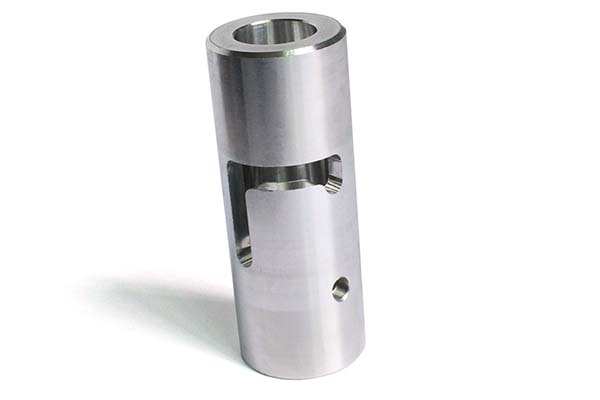
EN 100Cr6 bearing steel is a high-carbon, chromium-alloyed steel that serves as the global standard for rolling element bearings. Defined by the European standard EN 10083-3, it is renowned for its exceptional hardness (60-64 HRC) , wear resistance, and fatigue strength.
Key takeaways
- The performance of EN 100Cr6 is defined by its chemical composition and the mechanical properties achieved through its specialized heat treatment.
- EN 100Cr6 is used in virtually every application where rolling element bearings are required.
- The manufacturing process for EN 100Cr6 is designed to produce a clean, uniform material with consistent properties.
- Comparing EN 100Cr6 to other materials helps clarify its position as the standard bearing steel.
What Are the Key Properties of EN 100Cr6?
The performance of EN 100Cr6 is defined by its chemical composition and the mechanical properties achieved through its specialized heat treatment.
Chemical Composition
The high carbon and chromium content are the defining features of this bearing steel.
| Element | Content Range (%) | Its Role in Performance |
|---|---|---|
| Carbon (C) | 0.95 – 1.05 | Provides high hardness and wear resistance after heat treatment. |
| Chromium (Cr) | 1.30 – 1.65 | Improves hardenability and fatigue strength, forming hard chromium carbides. |
| Manganese (Mn) | 0.25 – 0.45 | Enhances tensile strength and helps control grain structure. |
| Silicon (Si) | 0.15 – 0.35 | Aids in deoxidation during steelmaking. |
| Sulfur (S) | ≤ 0.025 | Minimized to prevent brittleness. |
| Phosphorus (P) | ≤ 0.025 | Controlled to prevent cracking. |
Mechanical Properties
After proper heat treatment (quenching and tempering), EN 100Cr6 achieves the properties required for bearing applications.
| Property | Typical Value | Why It Matters |
|---|---|---|
| Hardness | 60 – 64 HRC | Provides exceptional wear resistance for rolling and sliding contact. |
| Tensile Strength | ≥ 2000 MPa | Withstands high compressive and tensile stresses under load. |
| Yield Strength | ≥ 1800 MPa | Resists permanent deformation under high loads. |
| Elongation | ≤ 8% | Low ductility is the trade-off for high hardness; sufficient for bearing applications. |
| Impact Toughness | ≥ 15 J | Provides enough toughness to avoid cracking under impact. |
| Density | 7.85 g/cm³ | Standard for steel, simplifying design. |
- Fatigue Strength: This is a critical property. EN 100Cr6 can withstand millions of stress cycles without failure, which is essential for bearings that rotate continuously.
- Hardenability: It has excellent hardenability, allowing for uniform hardness in sections up to 50mm or more, which is important for larger bearings and races.
- Corrosion Resistance: It has moderate corrosion resistance. For wet or harsh environments, a protective coating like zinc plating is required.
Where Is EN 100Cr6 Used in the Real World?
EN 100Cr6 is used in virtually every application where rolling element bearings are required.
Automotive and Transportation
The automotive industry is a major user. EN 100Cr6 is used for wheel bearings, engine bearings, transmission bearings, and valve train components.
- Case Study: A car manufacturer was experiencing frequent bearing failures in an SUV engine. The original bearings, made from a lower-grade steel, were wearing out after 50,000 km. They switched to EN 100Cr6 bearings. Failure rates dropped by 80%. Bearing life extended to 150,000 km.
Industrial Machinery and Heavy Equipment
EN 100Cr6 is used in gearboxes, electric motors, pumps, and conveyor systems where bearings must handle heavy loads and long operating hours.
High-Speed and Aerospace Applications
The material’s high fatigue strength makes it suitable for demanding applications.
- Case Study: A railway company needed bearings for high-speed trains operating at up to 300 km/h. The bearings had to withstand high vibration and heat. They chose EN 100Cr6 bearings for their fatigue resistance. To further enhance performance, a ceramic coating was applied. The new bearings lasted 2 times longer than the previous stainless steel bearings, cutting maintenance costs by 35%.
How Is EN 100Cr6 Manufactured?
The manufacturing process for EN 100Cr6 is designed to produce a clean, uniform material with consistent properties.
Steelmaking and Forming
- Steelmaking: It is typically made in an Electric Arc Furnace (EAF), allowing for precise control of the carbon and chromium content. Secondary refining processes ensure a clean steel with low impurity levels.
- Hot Rolling: The steel is hot rolled into bars, which are the starting material for bearing components.
- Cold Rolling: For smaller bearings and precision components, cold rolling is used to improve surface finish and dimensional accuracy.
Heat Treatment
Heat treatment is critical to achieving the high hardness and fatigue strength required for bearings.
- Quenching: The steel is heated to 820-860°C and then rapidly cooled in oil or water. This creates a hard, strong martensitic structure.
- Tempering: The quenched steel is then reheated to 150-200°C. This reduces brittleness while maintaining the high hardness (60-64 HRC) required for bearing applications.
Machining and Finishing
- Turning: Bearing races and other cylindrical components are machined to shape.
- Grinding: This is the critical finishing step. Precision grinding creates the ultra-smooth surfaces and tight tolerances required for low friction and long bearing life.
EN 100Cr6 vs. Other Bearing Materials
Comparing EN 100Cr6 to other materials helps clarify its position as the standard bearing steel.
| Material | Hardness | Wear Resistance | Fatigue Strength | Corrosion Resistance | Relative Cost | Best For |
|---|---|---|---|---|---|---|
| EN 100Cr6 | 60 – 64 HRC | Excellent | Excellent | Moderate | Medium | General-purpose bearings, automotive, industrial |
| AISI 52100 | 60 – 64 HRC | Excellent | Excellent | Moderate | Medium | U.S. standard equivalent |
| Stainless (440C) | 58 – 60 HRC | Good | Good | Excellent | Higher | Wet or corrosive environments |
| Ceramic (Si₃N₄) | 75+ HRA | Excellent | Very High | Excellent | Much Higher | High-speed, extreme applications |
| Plastic | Low | Poor | Poor | Good | Lower | Low-load, low-speed applications |
Key Takeaway: EN 100Cr6 (and its equivalent AISI 52100) is the standard bearing steel for a reason. It offers an exceptional combination of high hardness, wear resistance, and fatigue strength at a reasonable cost. For the vast majority of bearing applications, it provides the optimal balance of performance and cost.
EN 100Cr6 bearing steel is a proven, reliable material that has served as the foundation of the bearing industry for decades. Its combination of high hardness, excellent wear resistance, and superior fatigue strength makes it the ideal choice for the vast majority of rolling element bearing applications. From the wheels on your car to the gears in an industrial gearbox, this material provides the reliability and longevity that modern machinery demands. For engineers designing rotating equipment, EN 100Cr6 is the standard by which all other bearing materials are measured.
How to write a spec that gets priced correctly
A drawing is a contract. If it leaves a number open, the shop fills that number in with its own default. The default is rarely the one you had in mind. Put these five lines on every RFQ and most of the back-and-forth disappears before it starts.
- Alloy designation and the standard behind it
- Temper or heat treatment condition
- Mechanical properties you actually need
- Mill certificate and traceability requirement
- Finish and the faces it applies to
The point is not paperwork. Each line removes a decision the shop would otherwise make for you. A complete RFQ comes back priced. An incomplete one comes back guessed.
What actually drives the price
Buyers usually push on material because it is the line they can see. In practice the material is rarely the biggest number on a quote. These five lines decide most of it:
- alloy grade and mill availability
- stock size versus finished size
- heat treatment and testing
- machinability
- certification
Ask for the quote split by line. A supplier who cannot break it down is guessing, and you will pay for the guess. The line you can usually renegotiate is the tolerance band, not the raw material.
Problems you will meet, and the fix
Every process has a failure mode it prefers. The same four show up again and again on this kind of work, and none of them are mysteries once you know what to look for.
- Substituting a similar grade without telling anyone
- Hardness that varies across a single bar
- Corrosion in a weld heat-affected zone
- Distortion after heat treatment on a thin part
Catch the fault on the first part, not the hundredth. A first-article check costs an hour. A bad batch costs the whole order. Write the check into the purchase order so nobody has to remember it.
What to check on the first article
The first article is the cheapest inspection you will ever buy. Use it properly and the rest of the run becomes boring, which is exactly what you want.
- Every dimension on the drawing, with the measured value written beside it.
- The material certificate, matched to the heat or lot number on the parts.
- The finish against the sample you approved, under the same light.
- Fit against the mating part, assembled rather than measured.
- Packaging, because parts that arrive damaged were never in tolerance.
Check in this order: datums, then mating features, then cosmetic faces. If the datums are wrong, every number after them is noise. Keep the report on file. When a problem shows up in month six, that document is the only thing that tells you what changed.
How to compare two quotes fairly
Two numbers are not comparable unless the scope matches. Line them up before you decide, because a low number with three gaps is not a low number.
Same drawing, same material, same finish, same inspection. Anything else is a different job wearing the same part number. Then look at what each quote leaves out. Freight, packaging, certificates and tooling are the usual gaps.
Ask each supplier to state their assumptions in writing. The one who does is usually the one who has run the process before.
Scaling from one part to a batch
The first part teaches you the process. The hundredth teaches you the process cost.
Watch three things as volume grows: setup amortisation, tool wear, and how much hand work the finish still needs. If the unit price barely moves between ten and a hundred, the cost sits in material or in hand work, not in setup. Ask which, because only one of them is negotiable.
Lead time behaves the same way. A one-off is scheduled around other jobs. A repeat order is scheduled around your forecast. Give the shop a forecast and the lead time gets shorter, not longer.
How to read a supplier's quote
A quote is a short document with a long shadow. Four things in it decide whether the job runs smoothly, and only one of them is the price.
- The scope line. It should name the process, the material and the finish, not just the part.
- The tolerance basis. General tolerance or the drawing, and which standard it follows.
- The exclusions. Tooling, freight, certificates and inspection are the usual omissions.
- The validity date. Material prices move, and an open-ended quote is a promise nobody can keep.
Read the exclusions before you read the total. A quote that leaves out tooling is not cheaper. It is a quote for a different job.
What to send with the first order
The first order sets the pattern for every order after it. Send a complete package once and the shop files it, and the second order takes a fraction of the time.
- A STEP or native model plus a PDF drawing carrying the same revision letter.
- The material callout by standard number, not by trade name.
- The finish and the exact faces it applies to.
- Any test the part must pass: fit, seal, drop, salt spray, dielectric.
- A contact who can answer a question inside one working day.
Then write down what was agreed. An email that confirms the material, the finish and the date is worth more than a longer purchase order that leaves them open.
When this is the wrong choice
A good supplier tells you when the process does not fit. These are the cases where we say so.
- The volume is so low that setup costs more than the parts are worth.
- The tolerance is tighter than the process can hold without a second operation.
- The geometry cannot be made without a tool feature that will not pay back.
- The material you need is not available in the form the process requires.
- The schedule is shorter than the tooling or setup time, and nobody has said so yet.
None of these are refusals. They are reasons to look at a different route, and the earlier that conversation happens the cheaper it is. The most expensive mistake in manufacturing is a process chosen before the question was understood.
Planning the ramp from prototype to production
The gap between one good part and a thousand identical ones is a plan, not a machine. Three decisions close it.
First, freeze the design. Every change after tooling starts is a re-cut, and re-cuts are where schedules go. Second, decide the inspection level. A prototype is checked by eye; a production part is checked against a report. Third, agree the change process in writing, including who pays for it.
Write the ramp down as dates and owners, not as intentions. A ramp plan with three names and three dates is worth more than a page of good intentions.
What documentation to expect
Paperwork is not bureaucracy when a part fails at the customer. It is the only record of what was agreed. A normal shipment should carry four documents.
- A dimensional report covering every callout on the drawing.
- A material certificate traceable to the heat or lot number.
- A finish or coating certificate where the specification requires one.
- A packing list that matches the carton labels.
If a supplier cannot produce these on request, they are not running a controlled process. Ask for one sample set before you place the first order and you will know exactly what you are buying.
FAQ About EN 100Cr6 Bearing Steel
Can EN 100Cr6 be used in wet or corrosive environments?
It has only moderate corrosion resistance. For applications in wet, humid, or corrosive environments (such as marine or food processing), a protective coating like zinc plating, chrome plating, or a ceramic coating is required to prevent rust. For severe corrosive conditions, a stainless bearing steel like 440C would be a better choice.
What heat treatment is required for EN 100Cr6 bearings?
The standard heat treatment is quenching followed by tempering. The steel is heated to 820-860°C, rapidly cooled in oil or water, and then reheated to 150-200°C. This process achieves the required hardness of 60-64 HRC and the necessary fatigue strength.
How does EN 100Cr6 compare to AISI 52100?
They are virtually identical. EN 100Cr6 is the European standard designation, while AISI 52100 is the U.S. standard. Both have the same carbon (0.95-1.05%) and chromium (1.30-1.65%) content and can be used interchangeably in most applications. They are produced to the same high standards of cleanliness and consistency.
Our solution for EN 100Cr6 Bearing Steel: Properties
YiguProto runs metal sourcing and machining in house, from a single prototype to a production batch. We quote the process, the material and the finish as separate lines, so you can see where the money goes instead of arguing with one number.
Send a STEP file or a drawing and you get a DFM report in one to two business days. It flags the features that add cost and the features that will not hold tolerance on the process you picked.
Every order ships with an inspection report on the features you call out. If a part misses, we make it again. Ready to price a part? Start with a free quote and DFM review, or read more about our metal sourcing and machining. You can also talk to an engineer before you commit to a drawing.
FAQ about EN 100Cr6 Bearing Steel: Properties
What happens if a part is out of specification?
We measure it against the same drawing you approved and, if it misses, we make it again. What matters is that the report exists, because a disagreement without data is just an opinion.
What files do you need in order to quote?
A STEP file plus a PDF drawing that carries the same revision letter. The model carries the geometry and the drawing carries the intent. When the two disagree, the shop picks one, and it is never the one you meant.
Does the process work for prototypes as well as production?
Yes, and that is usually the point. Running the prototype on the production process removes a whole class of surprises, because the part you test is made the same way as the part you sell.
What is the lead time for EN 100Cr6 Bearing Steel: Properties?
Expect 5 to 12 business days depending on mill stock. Tooling, material stock and the finishing queue all move that number, so we confirm the date in writing before the run starts rather than after.
What is EN 100Cr6 Bearing Steel: Properties used for?
EN 100Cr6 Bearing Steel: Properties turns up wherever the part has to do a real job at a predictable cost: brackets, housings, fixtures, covers and the fittings that hold them together. The honest test is whether the properties match the load and the environment, not whether the material is fashionable.
How do I compare two quotes fairly?
Match the scope first: same drawing, same material, same finish, same inspection. Then read the exclusions. Freight, tooling and certificates are the usual gaps, and a low number with three gaps is not a low number.
The short version
EN 100Cr6 Bearing Steel: Properties rewards the buyer who reads the data sheet and the drawing together. Pick the option for the property that matters, not for the price per kilo.
Tighten only what mates. Test a sample before the run. Then let the process do the rest.