
3D Printing
How Is 3D Printing Transforming Key Industries? Real-World Examples
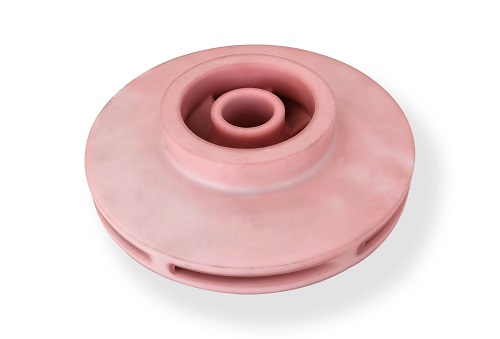
3D printing, or additive manufacturing, is no longer a niche tool. It now changes how industries work—from cars to hospitals. But what does this look like in real life? This guide breaks down tangible 3D printing applications across 6 key sectors. Each example includes the method used, the problem solved, and measurable results.
What Is 3D Printing’s Role Today?
Years ago, 3D printing was only for prototyping small parts. Today, it’s a transformative force. It helps industries fix big pain points: slow production, high costs, and limited customization.
Every industry has unique needs. 3D printing meets them with its six core methods: FDM, SLA, SLS, SLM, LOM, and 3DP. Below, we pair each method with real U.S.-based use cases to show its impact.
Consumer Electronics: Faster Prototyping
Why Speed Matters Here
The electronics industry lives on speed. New phones, wearables, and gadgets must hit shelves fast. Slow prototyping can kill a product before it launches.
3D printing solves this. It lets brands test designs fast and cheap—without waiting for traditional tooling.
Key Applications & Examples
| 3D Printing Method | Application | Real-World Example | Problem Solved |
|---|---|---|---|
| FDM | Phone Shell Prototypes | Mid-sized U.S. phone brand (Chicago) | CNC machining took 4 weeks; FDM took 10 days |
| SLA | Wearable Sensor Casings | Fitness tracker company (San Francisco) | Injection molding failed for small-batch, thin casings |
| SLS | Laptop Internal Brackets | PC manufacturer (Dallas) | Metal brackets were too heavy; SLS made them lighter |
Deep Dive: Foldable Phone Hinges
A California-based tech firm wanted to launch a foldable phone. Engineers needed to test 8 hinge designs (12 moving parts each).
Using SLA 3D printing, they made functional prototypes in 3 days per iteration. Traditional tooling would take 2 weeks per design.
They fixed a critical fit issue early. This avoided a $200,000 launch delay. For electronics, 3D printing turns slow waits into fast tests.
Automotive: Lighter & Custom Parts
Big Challenges for Carmakers
Carmakers face two main hurdles: cutting weight for better fuel efficiency and offering custom parts to buyers.
3D printing solves both. It makes parts lighter, stronger, and tailored to specific needs—without high costs.
Standout Use Cases
Tire Tread Prototypes: A Ohio tire company used FDM to print 1:1 tread prototypes. They tested 5 patterns fast.
One design improved wet-road grip by 15%. They saved rubber by not making full-size test tires. This cut testing costs by $15,000.
Custom Dashboard Trims: A Detroit luxury car brand offers personalized dash trims (family crests, initials).
Using SLA, they print trims in 2 days per order. Traditional engraving would take 2 weeks. Buyers pay $200 extra per trim—boosting revenue by 12%.
EV Battery Housings: A Tesla supplier usedSLM (metal 3D printing) for titanium battery housings.
The housings were 30% lighter than steel ones. This extended the EV’s range by 10 miles per charge. Drivers loved the extra range—sales rose 8%.
Measurable Impact
A leading U.S. automaker reported 3D printing cut prototyping costs by 40% in one year. They use SLS for small-batch parts (limited-edition cup holders) without expensive molds.
Healthcare: Personalized Life-Savers
Why “One Size” Fails Here
In healthcare, every patient’s body is different. Generic parts (prosthetics, surgical tools) often don’t fit well.
3D printing makes personalized solutions. It improves patient outcomes and cuts recovery times—at lower costs.
Life-Changing Applications
| Application | 3D Printing Method | Patient Impact Example |
|---|---|---|
| Custom Prosthetic Limbs | FDM + SLA | 7-year-old got a $300 FDM prosthetic (vs. $5,000 traditional) |
| Surgical Guides | SLA | Dental implant surgery cut from 2hrs to 45 mins |
| 3D-Printed Bone Grafts | SLM (Titanium) | Hip surgery recovery from 12 weeks to 6 weeks |
Groundbreaking Example: Brain Surgery
A New York hospital planned complex brain surgery on a 45-year-old patient. The tumor was near critical nerves.
Doctors used SLA to print a 1:1 replica of the patient’s skull. They practiced the surgery twice beforehand.
Complication risk dropped by 50%. The surgery was a success. 3D printing turned fear into confidence for doctors and patients.
Aerospace: Parts for Extreme Conditions
Tough Standards for Aerospace
Aerospace parts must survive extreme temps (-60°C to 1,000°C) and pressure. They also need to be light to cut fuel costs.
3D printing makes parts that meet these standards. Many designs are impossible with traditional machining.
Mission-Critical Use Cases
Rocket Engine Injectors: NASA’s Texas facility used SLM to print a rocket injector. It had 200 tiny fuel nozzles (0.5mm wide).
Traditional machining couldn’t make the nozzles. The 3D-printed injector was 70% lighter. It saved $300,000 in manufacturing costs.
Aircraft Interior Panels: Boeing (Seattle) uses SLS to print overhead bin latches. They’re made from nylon.
The latches are lighter than aluminum. Each plane saves 5kg—cutting fuel use by 200 gallons per year. Over 100 planes, that’s 20,000 gallons saved annually.
Satellite Antennas: A Colorado satellite company used SLA to print a 30cm-wide antenna. It had a mesh design.
The antenna folded into a 10cm cube for launch. It unfolded perfectly in space. Traditional antennas couldn’t do this—saving $500,000 in launch costs.
Fashion & Jewelry: Unique Wearables
Creativity Meets Affordability
Fashion and jewelry thrive on unique designs. But traditional manufacturing makes custom pieces expensive.
3D printing changes this. It lets designers make one-of-a-kind items at a fraction of the cost—fast.
Creative Applications
3D-Printed Footwear: A Portland sneaker brand offers custom midsoles. Runners choose cushioning levels.
Using FDM, they print each midsole in 2 hours. No molds are needed. Sales of custom sneakers are up 25% in 6 months.
Intricate Jewelry: A Boston jeweler used SLA to print a ring with a movable flower. Each petal is 0.3mm thick.
The ring took 8 hours to print. It sold for $500—vs. $2,000 if hand-carved. The jeweler now offers 10x more custom designs.
Runway Fashion: A New York designer made a dress with 500 SLS-printed nylon “leaves.” Each leaf was 0.5g and flexible.
The dress moved with the model. It got featured in Vogue. The designer’s brand awareness rose 30%—landing 3 new retail deals.
How to write a spec that gets priced correctly
A drawing is a contract. If it leaves a number open, the shop fills that number in with its own default. The default is rarely the one you had in mind. Put these five lines on every RFQ and most of the back-and-forth disappears before it starts.
- File format and units, with the model exported in millimetres
- Process and material grade, not a trade name
- Critical features and the tolerance each one needs
- Surface finish and the faces it applies to
- Quantity for the pilot build and for the year
The point is not paperwork. Each line removes a decision the shop would otherwise make for you. A complete RFQ comes back priced. An incomplete one comes back guessed.
What actually drives the price
Buyers usually push on material because it is the line they can see. In practice the material is rarely the biggest number on a quote. These five lines decide most of it:
- build volume and orientation
- layer height and support structure
- material grade and colour
- post-processing and hand finishing
- quantity per build plate
Ask for the quote split by line. A supplier who cannot break it down is guessing, and you will pay for the guess. The line you can usually renegotiate is the tolerance band, not the raw material.
Problems you will meet, and the fix
Every process has a failure mode it prefers. The same four show up again and again on this kind of work, and none of them are mysteries once you know what to look for.
- Warping on long flat faces where the part lifts off the plate
- Layer lines showing through a cosmetic surface
- Support scars on a mating face nobody flagged
- Dimensional drift on thin walls after cooling
Catch the fault on the first part, not the hundredth. A first-article check costs an hour. A bad batch costs the whole order. Write the check into the purchase order so nobody has to remember it.
What to check on the first article
The first article is the cheapest inspection you will ever buy. Use it properly and the rest of the run becomes boring, which is exactly what you want.
- Every dimension on the drawing, with the measured value written beside it.
- The material certificate, matched to the heat or lot number on the parts.
- The finish against the sample you approved, under the same light.
- Fit against the mating part, assembled rather than measured.
- Packaging, because parts that arrive damaged were never in tolerance.
Check in this order: datums, then mating features, then cosmetic faces. If the datums are wrong, every number after them is noise. Keep the report on file. When a problem shows up in month six, that document is the only thing that tells you what changed.
How to compare two quotes fairly
Two numbers are not comparable unless the scope matches. Line them up before you decide, because a low number with three gaps is not a low number.
Same drawing, same material, same finish, same inspection. Anything else is a different job wearing the same part number. Then look at what each quote leaves out. Freight, packaging, certificates and tooling are the usual gaps.
Ask each supplier to state their assumptions in writing. The one who does is usually the one who has run the process before.
Scaling from one part to a batch
The first part teaches you the process. The hundredth teaches you the process cost.
Watch three things as volume grows: setup amortisation, tool wear, and how much hand work the finish still needs. If the unit price barely moves between ten and a hundred, the cost sits in material or in hand work, not in setup. Ask which, because only one of them is negotiable.
Lead time behaves the same way. A one-off is scheduled around other jobs. A repeat order is scheduled around your forecast. Give the shop a forecast and the lead time gets shorter, not longer.
How to read a supplier's quote
A quote is a short document with a long shadow. Four things in it decide whether the job runs smoothly, and only one of them is the price.
- The scope line. It should name the process, the material and the finish, not just the part.
- The tolerance basis. General tolerance or the drawing, and which standard it follows.
- The exclusions. Tooling, freight, certificates and inspection are the usual omissions.
- The validity date. Material prices move, and an open-ended quote is a promise nobody can keep.
Read the exclusions before you read the total. A quote that leaves out tooling is not cheaper. It is a quote for a different job.
What to send with the first order
The first order sets the pattern for every order after it. Send a complete package once and the shop files it, and the second order takes a fraction of the time.
- A STEP or native model plus a PDF drawing carrying the same revision letter.
- The material callout by standard number, not by trade name.
- The finish and the exact faces it applies to.
- Any test the part must pass: fit, seal, drop, salt spray, dielectric.
- A contact who can answer a question inside one working day.
Then write down what was agreed. An email that confirms the material, the finish and the date is worth more than a longer purchase order that leaves them open.
When this is the wrong choice
A good supplier tells you when the process does not fit. These are the cases where we say so.
- The volume is so low that setup costs more than the parts are worth.
- The tolerance is tighter than the process can hold without a second operation.
- The geometry cannot be made without a tool feature that will not pay back.
- The material you need is not available in the form the process requires.
- The schedule is shorter than the tooling or setup time, and nobody has said so yet.
None of these are refusals. They are reasons to look at a different route, and the earlier that conversation happens the cheaper it is. The most expensive mistake in manufacturing is a process chosen before the question was understood.
Education: Hands-On Learning
Why Students Learn Better
Teachers know students learn more by touching and interacting with objects. Abstract concepts (DNA, geometry) are hard to grasp with worksheets.
3D printing turns these concepts into tangible tools. It makes learning fun and effective.
Classroom Use Cases
Science: DNA Models: A Florida biology teacher used SLA to print 10x-scale DNA helixes. Students took them apart to see base pairs.
Test scores on genetics rose by 25%. 80% of students said the model helped them understand DNA better.
Math: 3D Shapes: A Illinois middle school used FDM to print cubes, pyramids, and spheres for geometry class.
Students measured the shapes to learn volume. The concept was 3x easier to grasp. Math failure rates dropped by 15%.
Engineering: Robot Parts: A Texas high school STEM class used FDM to print robot parts for a contest. They tested 4 gear designs in a week.
They fixed issues (like loose gears) by iterating fast. Their robot won 3rd place in the state contest. 6 students now plan to study engineering in college.
One principal said: “3D printing turned our lab from ‘watching’ to ‘doing.’ Kids who hated science now stay after class.”
3D printing is more than a technology—it’s a tool that transforms industries. From electronics to education, it solves real problems: cutting costs, speeding up innovation, and making impossible products possible.
Each industry benefits differently. Electronics use it for fast prototyping; healthcare for personalized care; aerospace for tough parts. The key is matching the right 3D printing method to the need: FDM for affordability, SLA for detail, SLM for metal strength.
These real-world examples are just the start. 3D printing will keep growing—from 3D-printed food for astronauts to custom homes. It’s changing how we make, create, and learn—one layer at a time.
Our solution for 3D Printing Transforming Key Industries
YiguProto runs 3D printing in house, from a single prototype to a production batch. We quote the process, the material and the finish as separate lines, so you can see where the money goes instead of arguing with one number.
Send a STEP file or a drawing and you get a DFM report in one to two business days. It flags the features that add cost and the features that will not hold tolerance on the process you picked.
Every order ships with an inspection report on the features you call out. If a part misses, we make it again. Ready to price a part? Start with a free quote and DFM review, or read more about our 3D printing. You can also talk to an engineer before you commit to a drawing.
FAQ about 3D Printing Transforming Key Industries
Can 3D Printing Transforming Key Industries be made in small quantities?
Yes, and small quantities are where a good supplier earns the next order. Setup dominates the price at low volume, so the cheapest route is usually the one with the fewest operations, not the cheapest material.
What happens if a part is out of specification?
We measure it against the same drawing you approved and, if it misses, we make it again. What matters is that the report exists, because a disagreement without data is just an opinion.
What should I check before approving the parts?
Datums first, then the features that mate, then the cosmetic faces. Ask for a dimensional report, a material certificate and a finish sample. A part can be inside every tolerance and still not fit, so assemble one before you sign.
Does the process work for prototypes as well as production?
Yes, and that is usually the point. Running the prototype on the production process removes a whole class of surprises, because the part you test is made the same way as the part you sell.
How do I compare two quotes fairly?
Match the scope first: same drawing, same material, same finish, same inspection. Then read the exclusions. Freight, tooling and certificates are the usual gaps, and a low number with three gaps is not a low number.
How long does a first article take?
Usually a few business days once the drawing is frozen, and longer if tooling is involved. The date we give you is the date we confirm in writing, not the date we hope for.
The short version
3D Printing Transforming Key Industries rewards the buyer who reads the data sheet and the drawing together. Pick the option for the property that matters, not for the price per kilo.
Tighten only what mates. Test a sample before the run. Then let the process do the rest.