
3D Printing
Is Extra Large 3D Printing the Future of Manufacturing?
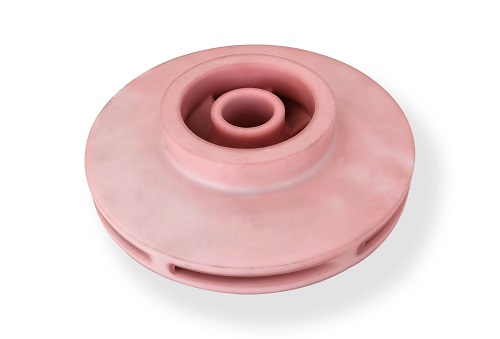
In today’s demanding industrial landscape, how do you build a 30-foot architectural facade, a monolithic aerospace fuselage section, or a custom marine hull without resorting to monumental tooling costs and months of lead time? The frontier of this challenge is being redrawn by Extra Large 3D Printing (XLAM)—also known as large-scale or grand-format additive manufacturing.
Key takeaways
- At its core, Extra Large 3D Printing is an additive manufacturing process specifically engineered to produce objects with at least one dimension typically exceeding 2 meters (6.5 feet), with many systems capable of 10 meters (33 feet) or more.
- The leap to extra-large scale isn’t just about scaling up a desktop printer.
- The value proposition of XLAM becomes clear when directly contrasted with conventional methods like casting, fabrication, and machining.
- Adopting XLAM isn’t without its hurdles, but the industry is developing robust answers.
What Exactly Is Extra Large 3D Printing?
At its core, Extra Large 3D Printing is an additive manufacturing process specifically engineered to produce objects with at least one dimension typically exceeding 2 meters (6.5 feet), with many systems capable of 10 meters (33 feet) or more. Unlike standard 3D printers confined to a fixed enclosure, XLAM systems often utilize robotic arms, gantry systems, or hybrid mobile platforms that move the print head through space, effectively making the “build volume” as large as the facility allows.
Think of it not as a printer in a box, but as a programmable, robotic construction tool. Instead of assembling a wing spar from hundreds of parts, an XLAM system with a deposition head on a 6-axis robot can continuously lay down aerospace-grade thermoplastic or composite, building the entire complex, optimized structure as one cohesive unit. This monolithic fabrication approach inherently improves structural integrity by eliminating adhesive or fastened joints—common points of failure—and unlocks geometries that are simply impossible with traditional subtractive or formative methods.
What Are the Core Technical Features That Make It Possible?
The leap to extra-large scale isn’t just about scaling up a desktop printer. It requires fundamental innovations in motion control, process monitoring, and material handling.
How Do We Achieve Unprecedented Scale and Stability?
Precision at a monumental scale is the primary engineering hurdle. Systems employ:
- Industrial Robotic Arms or Heavy-Duty Gantries: These provide the mobility and reach for large-scale deposition. They are engineered for rigidity and repeatability, with positional accuracy often within ±0.5 mm over a 10-meter span.
- Advanced Real-Time Correction: Systems use laser trackers and feedback control to constantly monitor and correct the position of the print head, compensating for any thermal drift or mechanical deflection during long-duration prints that can last for days.
What Powers the High Deposition Rates Needed?
Printing a cubic meter of material drop-by-drop is impractical. XLAM uses high-throughput deposition technologies:
- Pellet Extrusion (FGF): Instead of thin filament, these systems feed standard thermoplastic pellets through a heated screw extruder. This allows for deposition rates of 5-20+ kg/hour, making the production of large, solid structures feasible. Materials like ABS, PETG, PEI (ULTEM), and filled composites (carbon fiber, glass fiber) are common.
- Wire-Arc Additive Manufacturing (WAAM): For large metal parts, this method uses a standard welding arc as the heat source and welding wire as the material. A robotic arm deposits molten metal layer by layer. While surface finish is rougher, it’s unparalleled for creating multi-ton steel, aluminum, or titanium structures for maritime, energy, and heavy machinery.
How is Quality Assured During Such Large Builds?
Monitoring a 48-hour print is critical. In-situ process monitoring is integral:
- Thermal Imaging Cameras track heat distribution to identify areas of potential warping or incomplete fusion.
- Layer-wise vision systems compare each deposited layer to the digital model, flagging deviations in real-time.
- This data can feed into machine learning algorithms that adjust parameters on the fly, ensuring consistency from the first layer to the last.
How Does XLAM Compare to Traditional Large-Scale Manufacturing?
The value proposition of XLAM becomes clear when directly contrasted with conventional methods like casting, fabrication, and machining.
| Aspect | Extra Large 3D Printing (XLAM) | Traditional Manufacturing (Casting/Fabrication) |
|---|---|---|
| Lead Time | Days to weeks. No tooling required. Digital file to final part. | Months. Requires design and fabrication of molds/dies (8-16 weeks), then production. |
| Cost for Low-Volume / Custom | Radically lower. Eliminates six-figure mold costs. Ideal for prototypes, custom one-offs, and bridge production. | Prohibitively high. High upfront tooling amortization makes small batches economically unviable. |
| Design Freedom | Near-unlimited. Creates organic, topology-optimized, and hollow lattice structures that reduce weight while maintaining strength. | Highly constrained. Designs must account for draft angles, tool access, and assembly feasibility. |
| Material Efficiency | High (>95% utilization). Additive process places material only where needed. Supports can often be recycled. | Low (50-70% utilization). Subtractive processes (machining from billet) can waste most of the raw material. |
| Part Consolidation | Extensive. Can combine an assembly of 100+ parts into a single printed component, simplifying supply chain and assembly. | Limited. Complex assemblies require many individually manufactured and joined components. |
Industry Case Study: Aerospace Tooling
A major aerospace manufacturer needed large composite lay-up molds for a new aircraft wing section. The traditional method involved machining a massive mold from a solid block of aluminum—a 6-month, $250,000 process with 80% material waste. They switched to XLAM using a carbon fiber-reinforced thermoplastic. The printed mold was completed in 3 weeks for $45,000, was 60% lighter (easier to handle), and performed flawlessly in autoclave curing cycles. The time and cost savings were transformative for their prototyping phase.
Where Is Extra Large 3D Printing Making the Biggest Impact Today?
Revolutionizing Construction and Architecture
XLAM is moving beyond prototypes to permanent structures, using concrete, clay, or polymer composites.
- Application: On-site printing of walls, foundations, and entire small homes. It allows for complex, curvilinear architectural designs without expensive formwork.
- Data Point: Projects like ICON’s Vulcan system in the U.S. have printed affordable housing units, reporting construction waste reductions of up to 30% and labor time reductions of 50% compared to conventional wood framing.
Accelerating Innovation in Aerospace & Defense
The drive for lightweight, strong, and complex geometries is a perfect match for XLAM.
- Application: One-piece interior cabin components (e.g., ducting, panels), large fairings, drone fuselages, and tooling for composite parts. Companies like Thermwood are printing full-scale, single-piece wing tools.
- Expert Insight: The ability to print integrated conformal cooling channels within a large mold or directly into a rocket engine part is a game-changer for thermal management, something nearly impossible with traditional machining.
Enabling Customization in Marine and Transportation
From luxury yachts to heavy equipment, customization and low-volume production are key.
- Application: Custom yacht hulls, superstructures, large-scale prototypes for cars and trucks, and replacement parts for legacy heavy machinery. The Port of Rotterdam has explored printing large, custom maritime components on-demand to reduce ship downtime.
Advancing the Energy Sector
Building large, optimized components for harsh environments.
- Application: Wind turbine blade molds, custom ductwork for power plants, and large brackets for oil & gas infrastructure. XLAM allows for rapid iteration of blade designs to maximize efficiency.
How to write a spec that gets priced correctly
A drawing is a contract. If it leaves a number open, the shop fills that number in with its own default. The default is rarely the one you had in mind. Put these five lines on every RFQ and most of the back-and-forth disappears before it starts.
- File format and units, with the model exported in millimetres
- Process and material grade, not a trade name
- Critical features and the tolerance each one needs
- Surface finish and the faces it applies to
- Quantity for the pilot build and for the year
The point is not paperwork. Each line removes a decision the shop would otherwise make for you. A complete RFQ comes back priced. An incomplete one comes back guessed.
What actually drives the price
Buyers usually push on material because it is the line they can see. In practice the material is rarely the biggest number on a quote. These five lines decide most of it:
- build volume and orientation
- layer height and support structure
- material grade and colour
- post-processing and hand finishing
- quantity per build plate
Ask for the quote split by line. A supplier who cannot break it down is guessing, and you will pay for the guess. The line you can usually renegotiate is the tolerance band, not the raw material.
Problems you will meet, and the fix
Every process has a failure mode it prefers. The same four show up again and again on this kind of work, and none of them are mysteries once you know what to look for.
- Warping on long flat faces where the part lifts off the plate
- Layer lines showing through a cosmetic surface
- Support scars on a mating face nobody flagged
- Dimensional drift on thin walls after cooling
Catch the fault on the first part, not the hundredth. A first-article check costs an hour. A bad batch costs the whole order. Write the check into the purchase order so nobody has to remember it.
What to check on the first article
The first article is the cheapest inspection you will ever buy. Use it properly and the rest of the run becomes boring, which is exactly what you want.
- Every dimension on the drawing, with the measured value written beside it.
- The material certificate, matched to the heat or lot number on the parts.
- The finish against the sample you approved, under the same light.
- Fit against the mating part, assembled rather than measured.
- Packaging, because parts that arrive damaged were never in tolerance.
Check in this order: datums, then mating features, then cosmetic faces. If the datums are wrong, every number after them is noise. Keep the report on file. When a problem shows up in month six, that document is the only thing that tells you what changed.
How to compare two quotes fairly
Two numbers are not comparable unless the scope matches. Line them up before you decide, because a low number with three gaps is not a low number.
Same drawing, same material, same finish, same inspection. Anything else is a different job wearing the same part number. Then look at what each quote leaves out. Freight, packaging, certificates and tooling are the usual gaps.
Ask each supplier to state their assumptions in writing. The one who does is usually the one who has run the process before.
Scaling from one part to a batch
The first part teaches you the process. The hundredth teaches you the process cost.
Watch three things as volume grows: setup amortisation, tool wear, and how much hand work the finish still needs. If the unit price barely moves between ten and a hundred, the cost sits in material or in hand work, not in setup. Ask which, because only one of them is negotiable.
Lead time behaves the same way. A one-off is scheduled around other jobs. A repeat order is scheduled around your forecast. Give the shop a forecast and the lead time gets shorter, not longer.
How to read a supplier's quote
A quote is a short document with a long shadow. Four things in it decide whether the job runs smoothly, and only one of them is the price.
- The scope line. It should name the process, the material and the finish, not just the part.
- The tolerance basis. General tolerance or the drawing, and which standard it follows.
- The exclusions. Tooling, freight, certificates and inspection are the usual omissions.
- The validity date. Material prices move, and an open-ended quote is a promise nobody can keep.
Read the exclusions before you read the total. A quote that leaves out tooling is not cheaper. It is a quote for a different job.
What to send with the first order
The first order sets the pattern for every order after it. Send a complete package once and the shop files it, and the second order takes a fraction of the time.
- A STEP or native model plus a PDF drawing carrying the same revision letter.
- The material callout by standard number, not by trade name.
- The finish and the exact faces it applies to.
- Any test the part must pass: fit, seal, drop, salt spray, dielectric.
- A contact who can answer a question inside one working day.
Then write down what was agreed. An email that confirms the material, the finish and the date is worth more than a longer purchase order that leaves them open.
What Are the Key Challenges and Practical Solutions?
Adopting XLAM isn’t without its hurdles, but the industry is developing robust answers.
| Challenge | Description | Emerging Solutions |
|---|---|---|
| High Capital Investment | Industrial robotic cells and gantry systems represent a significant upfront cost. | Service Bureaus & Leasing: Growing network of specialized XLAM service providers lets companies access technology without capital outlay. Modular systems allow for scaling up investment over time. |
| Limited Material Portfolio | While growing, the range of qualified, high-performance materials for large-scale deposition is smaller than for traditional processes. | Intense R&D: Material companies are rapidly developing fire-retardant, UV-stable, and high-temperature polymers for XLAM. Hybrid Processes: Combining deposition with in-situ consolidation (compaction) or secondary CNC machining in the same cell enhances finish and tolerance. |
| Lack of Standards & Certification | The absence of universal standards for material properties, process validation, and nondestructive testing (NDT) can slow adoption in regulated industries. | Industry Consortia: Groups like America Makes are driving the development of process qualification guidelines. Digital Twins & In-situ Monitoring: Creating a complete digital record of every print parameter provides the data needed for part certification. |
| Post-Processing & Finishing | The as-printed surface of a pellet-extruded or WAAM part often requires significant finishing to meet aesthetic or tolerance requirements. | Integrated Hybrid Systems: The latest systems combine deposition with subtractive machining heads in one platform, machining critical features immediately after they are printed. Automated sanding and coating systems are also being developed. |
Extra Large 3D Printing is unequivocally transitioning from a novel prototyping stunt to a core production technology for industries where scale, complexity, and efficiency collide. It addresses the chronic pain points of traditional manufacturing—protracted lead times, exorbitant tooling costs, and design constraints—by offering a path to digitally native, monolithic, and optimized large-scale parts. While challenges around materials, finishing, and standardization persist, the trajectory is clear: investment is soaring, solutions are maturing, and successful use cases are multiplying. For forward-thinking organizations, the strategic imperative is no longer whether to explore XLAM, but how to strategically integrate its capabilities to build stronger, lighter, and more innovative products, fundamentally transforming what is possible in large-scale manufacturing.
Our solution for Extra Large 3D Printing
YiguProto runs 3D printing in house, from a single prototype to a production batch. We quote the process, the material and the finish as separate lines, so you can see where the money goes instead of arguing with one number.
Send a STEP file or a drawing and you get a DFM report in one to two business days. It flags the features that add cost and the features that will not hold tolerance on the process you picked.
Every order ships with an inspection report on the features you call out. If a part misses, we make it again. Ready to price a part? Start with a free quote and DFM review, or read more about our 3D printing. You can also talk to an engineer before you commit to a drawing.
FAQ about Extra Large 3D Printing
Can Extra Large 3D Printing be made in small quantities?
Yes, and small quantities are where a good supplier earns the next order. Setup dominates the price at low volume, so the cheapest route is usually the one with the fewest operations, not the cheapest material.
Does the process work for prototypes as well as production?
Yes, and that is usually the point. Running the prototype on the production process removes a whole class of surprises, because the part you test is made the same way as the part you sell.
What is Extra Large 3D Printing used for?
Extra Large 3D Printing turns up wherever the part has to do a real job at a predictable cost: brackets, housings, fixtures, covers and the fittings that hold them together. The honest test is whether the properties match the load and the environment, not whether the material is fashionable.
How long does a first article take?
Usually a few business days once the drawing is frozen, and longer if tooling is involved. The date we give you is the date we confirm in writing, not the date we hope for.
What files do you need in order to quote?
A STEP file plus a PDF drawing that carries the same revision letter. The model carries the geometry and the drawing carries the intent. When the two disagree, the shop picks one, and it is never the one you meant.
What happens if a part is out of specification?
We measure it against the same drawing you approved and, if it misses, we make it again. What matters is that the report exists, because a disagreement without data is just an opinion.
The short version
Extra Large 3D Printing rewards the buyer who reads the data sheet and the drawing together. Pick the option for the property that matters, not for the price per kilo.
Tighten only what mates. Test a sample before the run. Then let the process do the rest.