
Rapid Prototyping
What Makes Laser Cutting So Effective for Modern Manufacturing?
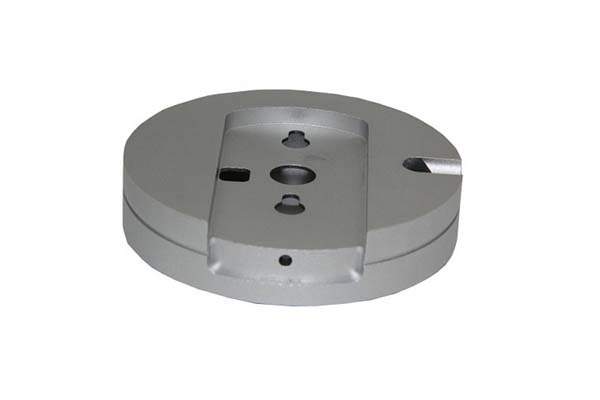
Early in my manufacturing career, I watched a shop struggle with a simple problem: they needed to cut thousands of metal brackets, but their mechanical saws couldn’t keep up. Blades wore out weekly. Edges required secondary finishing. The noise was unbearable. Then they installed a laser cutting system. Everything changed. The brackets came out perfect—smooth edges, exact dimensions, no secondary work.
Key takeaways
- The quality of laser-cut parts sets a standard that mechanical methods struggle to match.
- Traditional cutting tools touch the material. Saw blades, milling cutters, drill bits—they all make physical contact.
- For large-format cutting, two systems work with the laser to maintain quality.
How Does Laser Cutting Achieve Exceptional Quality?
The quality of laser-cut parts sets a standard that mechanical methods struggle to match.
What Makes the Cut So Precise?
The laser’s focused beam creates an incredibly small spot size. All that energy concentrates in a tiny area, vaporizing material in a narrow line.
The result is a narrow, uniform kerf (the width of the cut). The two sides of the incision remain parallel and perpendicular to the surface. No tapering. No angled edges.
Dimensional accuracy reaches ±0.05mm. That’s tight enough for aerospace components, medical devices, and electronic enclosures where even tiny deviations cause assembly failures.
Why Is the Cut Surface So Smooth?
Localized heat input means only the material being cut gets hot. The surrounding area stays cool.
This creates a smooth cut surface that often needs no sanding or polishing. Parts come off the machine ready to use.
The heat-affected zone (HAZ) is minimal. Material around the cut doesn’t warp or lose structural strength. This matters enormously for thin materials like aluminum sheets or delicate composites that would distort under other cutting methods.
Real-World Example: Aerospace Brackets
A manufacturer of aerospace parts uses laser cutting to produce titanium alloy brackets. The ±0.05mm accuracy ensures brackets fit perfectly with other components. The minimal HAZ preserves titanium’s high strength. No costly rejections. No safety risks.
That’s the quality difference laser cutting delivers.
How Fast Is Laser Cutting Compared to Alternatives?
Speed is where laser cutting truly separates from mechanical methods.
What Cutting Speeds Can You Expect?
A 1200W laser —common in industrial settings—cuts at impressive speeds:
- 2mm mild steel: 600 cm per minute
- 5mm polypropylene: 1200 cm per minute
- 3mm aluminum: 450 cm per minute
- 1mm leather: 1800 cm per minute
These aren’t theoretical maximums. They’re reliable production speeds.
What Does This Mean for Production Volume?
A furniture manufacturer switched from mechanical cutting to laser for 5mm polypropylene sheets. Their production rate tripled—from 400 sheets per day to 1200 sheets per day.
That’s not just faster. That’s the ability to take on more orders without adding shifts, without hiring more workers, without expanding floor space.
Why Is Laser Faster?
Mechanical cutting is limited by physical constraints. Blades can only move so fast before they break or overheat.
Laser cutting has no such limits. The beam moves at the speed of light. The machine’s motion system is the only constraint, and modern systems are incredibly fast.
| Material | Thickness | Speed (1200W Laser) |
|---|---|---|
| Mild steel | 2mm | 600 cm/min |
| Polypropylene | 5mm | 1200 cm/min |
| Aluminum | 3mm | 450 cm/min |
| Leather | 1mm | 1800 cm/min |
What Makes Non-Contact Cutting So Valuable?
Traditional cutting tools touch the material. Saw blades, milling cutters, drill bits—they all make physical contact.
Laser cutting doesn’t.
How Does This Eliminate Tool Wear?
No physical contact means no tool wear. Blades don’t dull. Bits don’t break. There’s nothing to replace.
For a manufacturer cutting 10,000 metal parts monthly, this saves up to $5,000 annually in tool expenses. More importantly, it eliminates downtime for tool changes. The machine keeps running.
What About Noise and Vibration?
Laser cutting operates at noise levels below 70 decibels —similar to a normal conversation. Compare that to mechanical saws that hit 90-100 decibels, requiring hearing protection and soundproofing.
The lack of vibration protects delicate workpieces. Thin glass, fragile plastics, sensitive electronics—they all survive laser cutting without damage.
Is Laser Cutting Environmentally Friendly?
No dust, no chips, no harmful fumes (with proper ventilation). The process vaporizes material, and extraction systems capture the byproducts.
This matters for industries where cleanliness is mandatory—food packaging, medical devices, electronics. No contamination. No cleanup.
How Versatile Is Laser Cutting Across Materials?
Laser cutting works on an astonishing range of materials.
What Metals Can Laser Cut?
- Mild steel for automotive parts and structural components
- Aluminum for aerospace and lightweight applications
- Copper for electrical components
- Titanium for high-performance and medical parts
Different metals need different laser types. Fiber lasers excel at metals, delivering the wavelength metals absorb best.
What Non-Metals Work?
- Leather for upholstery and fashion
- Wood for furniture and signage
- Paper and fiber for packaging
- Acrylic for displays and enclosures
CO₂ lasers are the choice for non-metals, with wavelengths that organic materials absorb readily.
What About Composites?
Metal matrix composites and carbon fiber —materials that challenge traditional cutting—handle well with laser. The non-contact nature prevents delamination and fraying.
Real-World Example: Textile Manufacturing
A textile manufacturer uses a CO₂ laser to cut intricate patterns into cotton and polyester. Unlike die-cutting, laser allows quick design changes with no new tooling. Edges come out clean with no fraying, reducing material waste by 20%.
| Material Category | Examples | Typical Uses |
|---|---|---|
| Metals | Steel, aluminum, copper, titanium | Automotive, aerospace, hardware |
| Non-metals | Leather, wood, paper, fiber | Furniture, packaging, textiles |
| Composites | Carbon fiber, MMCs | Drones, racing cars |
| Polymers | Polypropylene, acrylic, PVC | Signage, enclosures, medical trays |
How to write a spec that gets priced correctly
A drawing is a contract. If it leaves a number open, the shop fills that number in with its own default. The default is rarely the one you had in mind. Put these five lines on every RFQ and most of the back-and-forth disappears before it starts.
- A model you are willing to freeze for the build
- The question the prototype must answer
- Process and material that can answer it
- Tolerance on the features under test
- How many iterations you have budgeted
The point is not paperwork. Each line removes a decision the shop would otherwise make for you. A complete RFQ comes back priced. An incomplete one comes back guessed.
What actually drives the price
Buyers usually push on material because it is the line they can see. In practice the material is rarely the biggest number on a quote. These five lines decide most of it:
- process choice
- part size and feature count
- material
- finish and fit checks
- number of iterations
Ask for the quote split by line. A supplier who cannot break it down is guessing, and you will pay for the guess. The line you can usually renegotiate is the tolerance band, not the raw material.
Problems you will meet, and the fix
Every process has a failure mode it prefers. The same four show up again and again on this kind of work, and none of them are mysteries once you know what to look for.
- A prototype that is too good and hides a production problem
- A prototype that is too rough to test the real question
- Material chosen for speed rather than for the test
- No measurement plan, so the result is an opinion
Catch the fault on the first part, not the hundredth. A first-article check costs an hour. A bad batch costs the whole order. Write the check into the purchase order so nobody has to remember it.
What to check on the first article
The first article is the cheapest inspection you will ever buy. Use it properly and the rest of the run becomes boring, which is exactly what you want.
- Every dimension on the drawing, with the measured value written beside it.
- The material certificate, matched to the heat or lot number on the parts.
- The finish against the sample you approved, under the same light.
- Fit against the mating part, assembled rather than measured.
- Packaging, because parts that arrive damaged were never in tolerance.
Check in this order: datums, then mating features, then cosmetic faces. If the datums are wrong, every number after them is noise. Keep the report on file. When a problem shows up in month six, that document is the only thing that tells you what changed.
How to compare two quotes fairly
Two numbers are not comparable unless the scope matches. Line them up before you decide, because a low number with three gaps is not a low number.
Same drawing, same material, same finish, same inspection. Anything else is a different job wearing the same part number. Then look at what each quote leaves out. Freight, packaging, certificates and tooling are the usual gaps.
Ask each supplier to state their assumptions in writing. The one who does is usually the one who has run the process before.
Scaling from one part to a batch
The first part teaches you the process. The hundredth teaches you the process cost.
Watch three things as volume grows: setup amortisation, tool wear, and how much hand work the finish still needs. If the unit price barely moves between ten and a hundred, the cost sits in material or in hand work, not in setup. Ask which, because only one of them is negotiable.
Lead time behaves the same way. A one-off is scheduled around other jobs. A repeat order is scheduled around your forecast. Give the shop a forecast and the lead time gets shorter, not longer.
How to read a supplier's quote
A quote is a short document with a long shadow. Four things in it decide whether the job runs smoothly, and only one of them is the price.
- The scope line. It should name the process, the material and the finish, not just the part.
- The tolerance basis. General tolerance or the drawing, and which standard it follows.
- The exclusions. Tooling, freight, certificates and inspection are the usual omissions.
- The validity date. Material prices move, and an open-ended quote is a promise nobody can keep.
Read the exclusions before you read the total. A quote that leaves out tooling is not cheaper. It is a quote for a different job.
What to send with the first order
The first order sets the pattern for every order after it. Send a complete package once and the shop files it, and the second order takes a fraction of the time.
- A STEP or native model plus a PDF drawing carrying the same revision letter.
- The material callout by standard number, not by trade name.
- The finish and the exact faces it applies to.
- Any test the part must pass: fit, seal, drop, salt spray, dielectric.
- A contact who can answer a question inside one working day.
Then write down what was agreed. An email that confirms the material, the finish and the date is worth more than a longer purchase order that leaves them open.
When this is the wrong choice
A good supplier tells you when the process does not fit. These are the cases where we say so.
- The volume is so low that setup costs more than the parts are worth.
- The tolerance is tighter than the process can hold without a second operation.
- The geometry cannot be made without a tool feature that will not pay back.
- The material you need is not available in the form the process requires.
- The schedule is shorter than the tooling or setup time, and nobody has said so yet.
None of these are refusals. They are reasons to look at a different route, and the earlier that conversation happens the cheaper it is. The most expensive mistake in manufacturing is a process chosen before the question was understood.
Planning the ramp from prototype to production
The gap between one good part and a thousand identical ones is a plan, not a machine. Three decisions close it.
First, freeze the design. Every change after tooling starts is a re-cut, and re-cuts are where schedules go. Second, decide the inspection level. A prototype is checked by eye; a production part is checked against a report. Third, agree the change process in writing, including who pays for it.
Write the ramp down as dates and owners, not as intentions. A ramp plan with three names and three dates is worth more than a page of good intentions.
What documentation to expect
Paperwork is not bureaucracy when a part fails at the customer. It is the only record of what was agreed. A normal shipment should carry four documents.
- A dimensional report covering every callout on the drawing.
- A material certificate traceable to the heat or lot number.
- A finish or coating certificate where the specification requires one.
- A packing list that matches the carton labels.
If a supplier cannot produce these on request, they are not running a controlled process. Ask for one sample set before you place the first order and you will know exactly what you are buying.
How to handle a change after the order
Changes happen. What matters is whether the change is priced, scheduled and recorded, or absorbed quietly and discovered later.
Send the change as a new revision, not as a note in an email. Ask for three answers in writing: what it costs, what it does to the date, and what happens to material or tooling already committed. Then decide.
A change without a revision number is a rumour. The shop will build what it has on file, and both sides will be right and unhappy at the same time.
What Auxiliary Systems Ensure Consistent Quality?
For large-format cutting, two systems work with the laser to maintain quality.
How Does the Follower System Work?
The follower system automatically adjusts the cutting head’s height to maintain a consistent distance from the material surface.
Materials aren’t perfectly flat. They warp. They bow. They have slight unevenness.
The follower system compensates in real time. When cutting a large aluminum sheet with a slight curve, the laser stays at the optimal distance. No uneven cuts. No burn marks.
What Role Does Auxiliary Gas Play?
A stream of gas blows through the cutting head alongside the laser beam. Common gases include:
- Oxygen for faster cutting of steel
- Nitrogen for clean, oxidation-free cuts on stainless
- Compressed air for general-purpose cutting
The gas serves multiple purposes:
Blows away molten slag from the kerf, keeping the cut clean. Cools the machined surface, reducing the heat-affected zone. Protects the focusing lens from contamination by slag or fumes.
Using nitrogen when cutting stainless steel prevents oxidation, eliminating the need for post-cut cleaning. Parts come off the machine ready to use.
Our solution for Makes Laser Cutting
YiguProto runs rapid prototyping in house, from a single prototype to a production batch. We quote the process, the material and the finish as separate lines, so you can see where the money goes instead of arguing with one number.
Send a STEP file or a drawing and you get a DFM report in one to two business days. It flags the features that add cost and the features that will not hold tolerance on the process you picked.
Every order ships with an inspection report on the features you call out. If a part misses, we make it again. Ready to price a part? Start with a free quote and DFM review, or read more about our rapid prototyping. You can also talk to an engineer before you commit to a drawing.
FAQ about Makes Laser Cutting
How long does a first article take?
Usually a few business days once the drawing is frozen, and longer if tooling is involved. The date we give you is the date we confirm in writing, not the date we hope for.
What files do you need in order to quote?
A STEP file plus a PDF drawing that carries the same revision letter. The model carries the geometry and the drawing carries the intent. When the two disagree, the shop picks one, and it is never the one you meant.
Is there a minimum order quantity?
No hard minimum. One part is fine. What changes with volume is which costs dominate, so a single unit is priced mostly on setup and a thousand units are priced mostly on cycle time and material.
How much does Makes Laser Cutting cost?
Price comes from five lines: material, machine or tool time, setup, finishing and inspection. The material itself is usually the smallest of them. Send a drawing and we will split the quote so you can see which line is doing the damage.
What happens if a part is out of specification?
We measure it against the same drawing you approved and, if it misses, we make it again. What matters is that the report exists, because a disagreement without data is just an opinion.
What is Makes Laser Cutting used for?
Makes Laser Cutting turns up wherever the part has to do a real job at a predictable cost: brackets, housings, fixtures, covers and the fittings that hold them together. The honest test is whether the properties match the load and the environment, not whether the material is fashionable.
The short version
Makes Laser Cutting rewards the buyer who reads the data sheet and the drawing together. Pick the option for the property that matters, not for the price per kilo.
Tighten only what mates. Test a sample before the run. Then let the process do the rest.