
Sheet Metal
Is 29 Gauge Sheet Metal Right for Your Project?
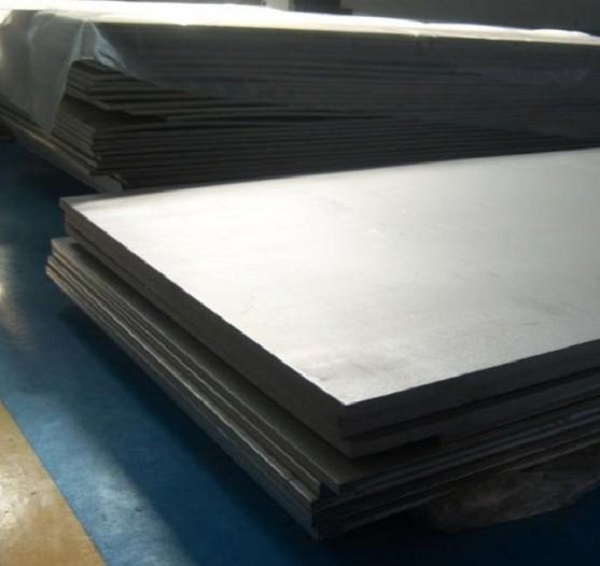
If you’re planning a roof for a shed, siding for a barn, or an accent piece for your home, you’ve likely heard about 29 gauge sheet metal. The term comes up often, especially when you’re trying to save money. But what exactly is it? Simply put, 29 gauge is a thinner, more economical metal panel commonly used for farm buildings, utility structures, and budget-conscious home projects.
What Does 29 Gauge Actually Mean?
The gauge system explained
The gauge system for sheet metal can be confusing: higher gauge number = thinner, lighter metal. A 29 gauge panel is much thinner than a 22 gauge panel. This is important to remember.
Exact thickness
For standard steel, 29 gauge has a thickness of approximately 0.0142 inches or 0.361 millimeters. This is the base steel thickness before protective coatings—like zinc (galvanized) or zinc-aluminum alloy (Galvalume®)—and paint are added. Final thickness will be slightly more, typically around 0.015 inches.
Weight
29 gauge steel panels typically weigh between 0.60 and 0.70 pounds per square foot, depending on the specific panel profile. This lightweight nature makes it manageable for one person to handle shorter panels and reduces overall structural load—important for older barns or simple shed frames.
Gauge comparison
| Gauge | Nominal Thickness (inches) | Nominal Thickness (mm) | Common Perception |
|---|---|---|---|
| 22 | 0.0299 | 0.759 | Heavy commercial |
| 24 | 0.0239 | 0.607 | High-end residential/commercial |
| 26 | 0.0179 | 0.455 | Standard residential/light commercial |
| 29 | 0.0142 | 0.361 | Economy/agricultural/utility |
Moving from 29 gauge to 26 gauge represents a thickness increase of over 25% —a significant difference that directly affects performance.
29 Gauge vs. 26 Gauge: How Do They Compare?
For most DIYers, homeowners, and farm owners, the main decision comes down to one choice: 29 gauge or 26 gauge. This decision balances budget against long-term performance.
| Feature | 29 Gauge Sheet Metal | 26 Gauge Sheet Metal |
|---|---|---|
| Thickness & durability | Thinner (0.0142″ base). More flexible, prone to denting. | Thicker (0.0179″ base). Much more rigid and durable. |
| Dent & hail resistance | Low to moderate. Can be damaged by large hail, falling branches, or improper walking. | Good to excellent. Industry standard for home roofing where hail is a concern. |
| Wind & snow load | Lower capacity. Needs closer support spacing. | Higher capacity. Can span greater distances. Better wind uplift resistance. |
| “Oil canning” risk | Higher risk. Thinner material more likely to show waviness in flat areas. | Lower risk. Added thickness helps panel stay flat. |
| Cost | The “economy” choice. Typically 20–30% less expensive per square foot. | The “standard” choice. Higher initial investment for greater longevity. |
| Weight & handling | Lighter, more flexible. Easier for one person to handle, but more easily damaged during transport. | Heavier, more rigid. Often requires two people, but less prone to kinking. |
| Ideal use cases | Sheds, barns, agricultural buildings, interior liners, accent roofs, budget projects. | Primary home roofing, commercial buildings, high-wind or heavy-snow zones, projects where longevity is top priority. |
Key functional differences
Strength and span capability: A 26 gauge panel can safely span greater distances between structural supports (purlins). This means you might use less framing material. More importantly, its thickness provides better resistance to wind uplift—a critical factor for roofing.
Impact resistance: The difference is dramatic. We’ve seen hailstorms leave 29 gauge shed roofs looking like golf balls while nearby 26 gauge house roofs remained undamaged. If you live in an area with hail or have large trees with overhanging branches, upgrading to 26 gauge is a smart investment.
Oil canning: This is visual waviness in flat panel areas, caused by thermal expansion and material stresses. Thinner 29 gauge metal is much more likely to show oil canning. While it doesn’t usually affect weather-tightness, it can be an appearance concern for highly visible home projects.
Bottom line
29 gauge sheet metal wins for cost-sensitive projects where the structure isn’t a primary home and environmental risks are lower. For a primary residence or a building you expect to be trouble-free for decades, the added cost of 26 gauge is almost always worth it.
Where Does 29 Gauge Work Best?
Agricultural buildings
For barns, pole sheds, livestock shelters, and equipment storage, 29 gauge is the industry standard. Cost-effectiveness is the main driver. The goal is a durable, weather-tight shelter, and minor cosmetic dents from farm use are expected and accepted.
Utility and storage sheds
A perfect match. A backyard shed doesn’t need the same performance as a house. 29 gauge provides more than enough protection from rain and sun to keep tools and equipment dry for decades, all while keeping the project on a tight budget.
Home accent roofing
While not recommended for whole-house roofs, 29 gauge is excellent for smaller, steeper accent areas: roofs over front porches, bay windows, or small dormers. These areas are typically small, so cost savings are welcome, and they often don’t face the same direct weather exposure as the main roof.
Interior liners and wainscoting
Inside workshops, garages, commercial kitchens, or car washes, 29 gauge panels make fantastic wall surfaces. They’re durable, easy to clean, bright, and reflective. Structural strength isn’t a factor here, so the economical choice makes sense.
When Should You Avoid 29 Gauge?
We strongly advise against using 29 gauge for:
- Primary home roofing in harsh climates: If your area experiences heavy snow loads, high winds, or frequent hailstorms, the risk of panel damage, fastener pull-out, and leaks is too high.
- Low-slope roofs: Any roof with pitch below 3:12 (three inches rise per twelve inches run). Thinner panels are more likely to leak under pressure from pooling water or wind-driven rain.
- Buildings requiring long-term, high-performance warranties: If your goal is a “50-year roof” with minimal maintenance and maximum property value, invest in a heavier 26 or 24 gauge system.
What Should You Know Before Buying?
Understanding the finish
The finish is a two-part system: metallic coating protecting against rust, and paint system providing color and UV protection.
Metallic coating under the paint:
- Galvanized: Traditional zinc coating. Good protection, but cut or scratched edges can rust. Specified by weight: G60 or G90 (G90 = thicker, more protective).
- Galvalume®: Superior modern coating of aluminum-zinc alloy (typically 55% aluminum). Offers much better long-term corrosion resistance, especially at cut edges, where aluminum forms a protective oxide layer. Most quality painted panels today use Galvalume® substrate, often designated AZ50 or AZ55. For any exterior application, we recommend Galvalume® over galvanized.
Paint finish:
- SMP (silicone-modified polyester): Industry workhorse, the “good” standard option. Offers good color retention and durability for the price. Paint warranties for chalk and fade typically 25–40 years. Fantastic balance of performance and cost—most common finish on 29 gauge agricultural panels.
- PVDF (polyvinylidene fluoride): Commonly known by trade name Kynar 500®, the “best” premium paint finish. Exceptionally resistant to UV fading and chalking. More expensive, but will look better longer. Warranties often extend 30+ years with better color fade terms. Choosing PVDF, even on thinner 29 gauge steel, maximizes long-term aesthetic value.
Understanding warranties
You typically get two separate warranties:
- Substrate warranty: Protects against panel rust-through (perforation). Typical: 20–30 years.
- Paint warranty: Protects against paint film integrity, chalking, and fading. A 40-year warranty might state panel won’t chalk beyond a certain rating or fade more than a specified number of Hunter units (scientific color change measurement).
Read the fine print: Warranties are almost always voided by improper installation—wrong fasteners, cutting with abrasive blades. They typically exclude coastal environments (salt spray) or industrial fallout.
Panel profiles matter
A flat sheet of 29 gauge steel is very flimsy. Strength comes from the profile—the series of ribs and bends formed into the metal. Common profiles like “Ag-Panel” (or Tuff-Rib) have major ribs every 9 inches with smaller stiffening ribs in between. These ribs act like small beams, giving the panel rigidity and the ability to span between supports and shed water. A well-designed panel profile adds significant functional strength that’s just as important as base thickness.
How to write a spec that gets priced correctly
A drawing is a contract. If it leaves a number open, the shop fills that number in with its own default. The default is rarely the one you had in mind. Put these five lines on every RFQ and most of the back-and-forth disappears before it starts.
- Flat pattern or STEP file plus a dimensioned drawing
- Material grade and thickness with the standard number
- Bend radii, K-factor and the direction of the grain
- Finish, masking and which faces stay bare
- Quantity and the assembly sequence
The point is not paperwork. Each line removes a decision the shop would otherwise make for you. A complete RFQ comes back priced. An incomplete one comes back guessed.
What actually drives the price
Buyers usually push on material because it is the line they can see. In practice the material is rarely the biggest number on a quote. These five lines decide most of it:
- blank size and nesting efficiency
- number of bends and weld joints
- material grade and thickness
- finish and masking
- batch quantity
Ask for the quote split by line. A supplier who cannot break it down is guessing, and you will pay for the guess. The line you can usually renegotiate is the tolerance band, not the raw material.
Problems you will meet, and the fix
Every process has a failure mode it prefers. The same four show up again and again on this kind of work, and none of them are mysteries once you know what to look for.
- Stretching at a bend that is tighter than the material allows
- Hole distortion when a hole sits too close to a bend line
- Weld draw on a visible face
- Springback that pulls a formed angle out of tolerance
Catch the fault on the first part, not the hundredth. A first-article check costs an hour. A bad batch costs the whole order. Write the check into the purchase order so nobody has to remember it.
What to check on the first article
The first article is the cheapest inspection you will ever buy. Use it properly and the rest of the run becomes boring, which is exactly what you want.
- Every dimension on the drawing, with the measured value written beside it.
- The material certificate, matched to the heat or lot number on the parts.
- The finish against the sample you approved, under the same light.
- Fit against the mating part, assembled rather than measured.
- Packaging, because parts that arrive damaged were never in tolerance.
Check in this order: datums, then mating features, then cosmetic faces. If the datums are wrong, every number after them is noise. Keep the report on file. When a problem shows up in month six, that document is the only thing that tells you what changed.
How Do You Work With 29 Gauge Metal?
Handling and safety
Factory-cut edges are razor-sharp. Always wear high-quality, cut-resistant gloves. Eye protection is non-negotiable. Because panels are flexible, they can be unwieldy in wind. When carrying long panels, keep the leading edge low to prevent catching wind like a sail. Handle gently to avoid kinking or bending before installation—these dents are often impossible to remove.
Cutting: The right and wrong way
The right way (cool cuts): Tools that shear metal without significant heat.
- Electric metal shears: Best for long, straight cuts. Work like powered can openers—clean, fast, no heat or sparks.
- Hand snips (aviation snips): For small, intricate cuts, notches, or trimming around pipes. Essential set of left, right, and straight-cutting snips.
- Nibbler: Takes small “bites” out of metal. Excellent for curved or complex cuts.
The wrong way (hot cuts): NEVER use abrasive blades—circular saws with metal-cutting abrasive discs or grinders with cutoff wheels. The intense heat and sparks will burn off protective Galvalume® and zinc coating along the cut edge. This super-heated edge will be the first place to rust, often within a year, and it voids your material warranty instantly.
Fastening: The most critical step
Screw type: Use the correct fastener. For installing over wood substrate, standard is a #9 or #10 self-tapping wood screw with hex head and, most importantly, a high-quality EPDM rubber washer. This washer is the gasket that creates the seal. Don’t cheap out on screws—use manufacturer-recommended ones.
Placement: Install screws in the flat area of the panel (the “pan”) right next to the major rib. Do not install screws on top of the major rib. Placing screws in the pan secures the panel to the structure and allows the EPDM washer to create a perfect seal against the flat surface. It also allows the panel to naturally expand and contract with temperature changes without stressing the fastener.
The golden rule of proper torque: Use a screw gun with an adjustable clutch.
- Over-tightening is disastrous. It squashes the EPDM washer out from under the screw head, breaking the seal and often dimpling the thin 29 gauge panel. This creates a small depression that collects water and will eventually leak.
- Under-tightening also fails. The washer won’t be compressed enough to create a watertight seal.
- Perfect torque: The washer is compressed just enough to see it bulge slightly around the screw head perimeter. The washer should look compressed, not flattened like a pancake. Practice on scrap until you get the clutch setting just right.
29 gauge sheet metal is an excellent, highly economical material when used in the right application. It’s not a “bad” material, but it is a specialized one. It delivers the longevity, fire resistance, and low-maintenance benefits of metal at a price that competes well with asphalt shingles or vinyl siding. However, its thinner nature means trade-offs in strength, dent resistance, and span capability compared to 26 gauge.
Choose 29 gauge for utility structures, agricultural buildings, accent roofs, and interior liners where budget matters and environmental risks are lower. Upgrade to 26 gauge for primary home roofing, commercial buildings, and any project in areas with hail, high winds, or heavy snow. By understanding these fundamental trade-offs, you’re fully equipped to choose the perfect metal panel for a successful, long-lasting result.
Our solution for 29 Gauge Sheet Metal
YiguProto runs sheet metal fabrication in house, from a single prototype to a production batch. We quote the process, the material and the finish as separate lines, so you can see where the money goes instead of arguing with one number.
Send a STEP file or a drawing and you get a DFM report in one to two business days. It flags the features that add cost and the features that will not hold tolerance on the process you picked.
Every order ships with an inspection report on the features you call out. If a part misses, we make it again. Ready to price a part? Start with a free quote and DFM review, or read more about our sheet metal fabrication. You can also talk to an engineer before you commit to a drawing.
FAQ about 29 Gauge Sheet Metal
What is 29 Gauge Sheet Metal used for?
29 Gauge Sheet Metal turns up wherever the part has to do a real job at a predictable cost: brackets, housings, fixtures, covers and the fittings that hold them together. The honest test is whether the properties match the load and the environment, not whether the material is fashionable.
How much does 29 Gauge Sheet Metal cost?
Price comes from five lines: material, machine or tool time, setup, finishing and inspection. The material itself is usually the smallest of them. Send a drawing and we will split the quote so you can see which line is doing the damage.
Can 29 Gauge Sheet Metal be made in small quantities?
Yes, and small quantities are where a good supplier earns the next order. Setup dominates the price at low volume, so the cheapest route is usually the one with the fewest operations, not the cheapest material.
How long does a first article take?
Usually a few business days once the drawing is frozen, and longer if tooling is involved. The date we give you is the date we confirm in writing, not the date we hope for.
Is there a minimum order quantity?
No hard minimum. One part is fine. What changes with volume is which costs dominate, so a single unit is priced mostly on setup and a thousand units are priced mostly on cycle time and material.
What should I check before approving the parts?
Datums first, then the features that mate, then the cosmetic faces. Ask for a dimensional report, a material certificate and a finish sample. A part can be inside every tolerance and still not fit, so assemble one before you sign.
The short version
29 Gauge Sheet Metal rewards the buyer who reads the data sheet and the drawing together. Pick the option for the property that matters, not for the price per kilo.
Tighten only what mates. Test a sample before the run. Then let the process do the rest.