
Industry Applications
Do You Understand the Complete Process of Machining and Casting?
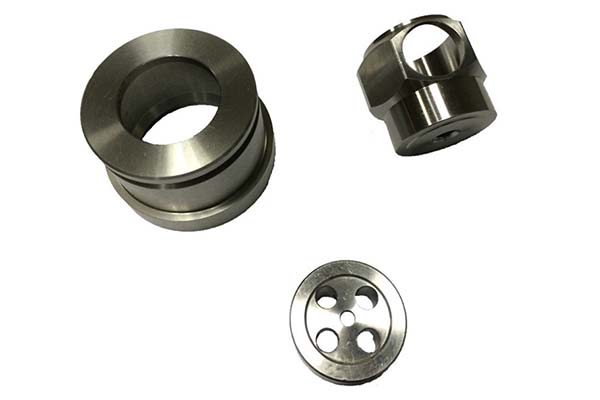
If you’re in manufacturing—or just starting to learn about it—you’ve likely encountered two fundamental processes: casting and machining. But how do they actually work together? And more importantly, how do you choose the right combination for your specific project? Let’s start with the basics: Casting is an additive process where molten metal is poured into a mold to create a rough shape (a “blank”).
What Are the Basic Concepts of Machining and Casting?
Casting: The Art of Forming
Casting is a manufacturing process where metal is melted, poured into a mold, and allowed to solidify. The core principle relies on the fluidity and solidification characteristics of metal—controlling these determines the final shape and quality.
Key advantages:
- Can create complex shapes that would be difficult or impossible to machine
- Efficient for producing multiple copies
- Wide range of material options
Machining: The Science of Finishing
Machining encompasses various processes that remove material from a workpiece to achieve precise dimensions and surface finishes. The principle is based on mechanical actions like cutting, grinding, and drilling to gradually remove excess material (the “allowance”).
Key advantages:
- Achieves tight tolerances (often IT5-IT8 level)
- Creates smooth surface finishes
- Provides dimensional accuracy that casting alone cannot
Why They Work Together
Casting solves the problem of “molding efficiency” —creating the basic shape quickly and economically. Machining solves the problem of “precision standards” —ensuring the final part meets exact specifications.
The connection between molding and finishing is a critical link that directly impacts product quality and production efficiency. A well-designed casting minimizes the machining work needed; precise machining transforms a rough casting into a usable component.
What Are the Core Process Methods and Technologies?
Casting Process Classification
Different casting processes suit different applications. Here’s how to choose:
| Process | Core Features | Best For | Typical Example |
|---|---|---|---|
| Sand Casting | Low cost, high flexibility | Small to medium batches, complex parts | Agricultural machinery gearbox housings |
| Die Casting | High efficiency, high precision | Large quantities, thin-walled aluminum parts | Smartphone frames, automotive knuckles |
| Investment Casting | Extremely high precision, smooth surface | High-end precision parts | Aerospace engine blades |
| Permanent Mold Casting | Long life, good consistency | Medium batches of non-ferrous parts | Motorcycle crankcases |
| Centrifugal Casting | Uniform wall thickness, high strength | Tubular parts | Water pipes, boiler tubes |
| Low-Pressure Casting | Stable filling, few defects | High-quality castings | Automotive wheels |
| Lost Foam Casting | No parting lines, flexible design | Complex structural parts | Heavy machinery bases |
Selection guideline: For mass production of aluminum phone parts, choose die casting. For aerospace superalloy precision parts, investment casting is essential.
Machining Technology Core
Machining encompasses several key technologies:
| Process | Application | Typical Accuracy |
|---|---|---|
| Turning | Shaft and disc parts (outer surfaces, holes) | IT6-IT8 |
| Milling | Flat surfaces, grooves, complex contours | Ra1.6-6.3μm |
| Drilling/Boring | Hole features (boring offers higher precision) | Engine cylinder finishing |
| Grinding | Precision finishing | IT5 and above (bearing rings) |
| EDM/Laser Cutting | High-hardness, complex shapes | Mold cavities, precision parts |
CNC machining has revolutionized manufacturing, enabling automated production through CAD/CAM programming—especially valuable for multi-variety, high-precision parts.
Near-net shape technology (precision casting with minimal finishing) is a key cost-reduction strategy. One auto parts company reduced engine piston machining allowance by 30% and production costs by 15% through this approach.
Heat Treatment and Post-Processing
These steps are crucial for enhancing performance:
- Stress relief annealing after casting reduces deformation
- Quenching after machining improves hardness
- Surface treatments (plating, painting) enhance wear and corrosion resistance
How Do Materials Influence Process Selection?
Mainstream Casting Alloys
| Material | Key Properties | Typical Applications |
|---|---|---|
| Cast Iron | Low cost, good wear resistance (200-900MPa) | Machine tool beds, engine blocks |
| Cast Steel | High strength, good toughness | Crane hooks, bridge bearings |
| Aluminum Alloy | Lightweight (2.7g/cm³), good thermal conductivity | Automotive, aerospace |
| Magnesium Alloy | High specific strength | Drone frames, lightweight components |
| Copper Alloy | Excellent electrical/thermal conductivity | Valves, pipe fittings |
Core Material Selection Considerations
Machinability varies dramatically:
- Aluminum alloys are easy to machine
- Superalloys are 5-10 times more difficult than ordinary steel, requiring special tools and parameters
Material properties must match usage:
- Construction machinery parts need toughness
- Molds require high hardness
- High-temperature environments demand heat-resistant steels or superalloys
Casting defects relate to materials:
- Cast iron: prone to graphite floatation
- Aluminum alloy: prone to porosity
- Solution: Adjust composition and process parameters
Heat treatment effects:
45# cast steel after quenching and tempering: hardness increases from HB200 to HB280-320, with significantly improved toughness.
What Design Considerations Optimize Manufacturing?
Casting Structure Design Essentials
| Feature | Requirement | Consequence of Ignoring |
|---|---|---|
| Draft angle | 1-3° minimum | Casting sticking, strain (one farm equipment company had 8% scrap due to insufficient draft) |
| Machining allowance | Sand casting: 3-5mm; Die casting: 0.5-2mm | Excessive material waste or insufficient material for finishing |
| Wall thickness uniformity | Avoid sudden changes | Shrinkage, porosity defects |
Precision and Tooling Design
- Tolerance levels: Machining typically IT6-IT10, select based on assembly requirements (clearance, transition, interference fits)
- Surface roughness: Castings Ra12.5-100μm; Machined Ra0.8-6.3μm. Moving mating surfaces need higher finish
- Fixture design: Proper fixtures improve efficiency and accuracy—double-top clamps for shafts, one-side-two-pins for box parts
Design for Manufacturing (DFM)
The core principle: Consider manufacturing feasibility during design—simplify complex structures, avoid enclosed cavities. An electronics company optimized die-casting mold life from 50,000 to 80,000 shots through DFM.
CAD/CAM Integration
Seamless design-to-manufacturing workflow:
- Complete 3D modeling in CAD
- Import to CAM for toolpath planning, tool selection, parameter setting
- Generate NC programs for CNC machines
A mold company shortened product development cycles by 40% through CAD/CAM integration.
How Is Quality Controlled Throughout the Process?
Non-Destructive Testing (NDT)
NDT finds internal defects without destroying products:
| Method | Detects | Accuracy/Depth |
|---|---|---|
| X-ray inspection | Internal porosity, shrinkage | 0.1mm precision |
| Ultrasonic testing | Internal cracks, inclusions | Several meters depth |
| Magnetic particle | Surface cracks (ferromagnetic materials) | Gears, shaft parts |
Whole-Process Quality System
Raw material testing: Chemical composition analysis—cast iron carbon content should be controlled at 2.5-3.5%
In-process testing:
- Sand properties during casting
- Molten metal temperature
- Dimensional sampling during machining
Finished product inspection:
| Test | Purpose | Tools |
|---|---|---|
| Dimensional | Verify drawing requirements | CMM, calipers |
| Mechanical properties | Strength, toughness | Tensile test, impact test |
| Surface quality | Porosity, sand holes, strain | Visual, magnifying glass |
Common Defects and Solutions
| Defect | Cause | Solution |
|---|---|---|
| Porosity | High gas content, poor venting | Refine degassing, add vents |
| Shrinkage | Unreasonable solidification, insufficient feeding | Add risers, optimize gating |
| Cold shut | Low temperature, slow filling | Increase pouring temperature, optimize sprue |
Statistical Process Control (SPC) monitors key parameters to reduce defect rates. An automotive casting company reduced scrap from 5% to under 2% after implementing SPC.
How Do Cost, Efficiency, and Supply Chain Interact?
Cost Composition and Control
| Cost Element | Typical Range | Notes |
|---|---|---|
| Mold cost | Sand: thousands; Die casting: hundreds of thousands to millions | Main fixed cost, amortized over batches |
| Machining cost | CNC: 100-300 yuan/hour | Includes equipment depreciation, tooling, labor |
Cost optimization strategies:
- Use near-net shape technology to reduce machining allowance
- Select cost-effective materials
- Optimize supply chain to reduce procurement costs
Production Efficiency and Batch Considerations
| Batch Size | Recommended Approach |
|---|---|
| Small batch | Sand casting + general machining |
| Mass production | Die casting + CNC automation |
Example: A home appliance company switched from sand casting to die casting when volume reached 100,000 pieces, reducing unit cost by 20%.
Rapid prototyping: Use 3D printing for molds or direct parts to shorten R&D. A medical device company advanced product launch by 6 months using rapid prototyping.
Supply Chain Decisions
Supplier selection: Prioritize those with process capability and complete QC systems. Evaluate through audits and sample testing.
Outsourcing decisions: Consider outsourcing non-core processes. A machinery company reduced fixed asset investment by 30% by outsourcing casting while focusing on precision machining and assembly.
What Do Real-World Applications Look Like?
Key Industry Applications
| Industry | Components | Processes |
|---|---|---|
| Automotive | Engine blocks, gearbox housings, wheels, drive shafts | Sand casting, low-pressure casting, turning, grinding |
| Aerospace | Engine blades, structural parts | Investment casting (superalloy), CNC machining (Al/Ti) |
| Medical | Surgical instruments, implants | Stainless steel casting + precision grinding, titanium alloy machining |
| Energy | Wind turbine hubs, nuclear piping | Sand casting (ductile iron), centrifugal casting (heat-resistant steel) |
| Mold making | Cavities, bases | EDM + grinding, casting + milling |
Case Study 1: Automotive Wheel Optimization
Challenge: A manufacturer used sand casting for wheels—8% scrap rate, long cycles.
Solution: Switched to low-pressure casting + CNC machining with:
- Optimized mold design (added vents)
- Adjusted aluminum alloy composition (added refiners)
Result:
- Scrap rate reduced to 2%
- Production efficiency increased 30%
- Unit cost reduced 15%
Case Study 2: Aerospace Blade Manufacturing
Challenge: Investment casting of superalloy blades faced internal shrinkage defects.
Solution: Implemented:
- Directional solidification technology
- Optimized pouring temperature and speed
- X-ray NDT for verification
Result: Defect rate reduced from 12% to 3%, meeting stringent aerospace requirements.
Machining and casting form the fundamental backbone of manufacturing—casting creates the shape efficiently, machining delivers the precision. Together, they transform raw materials into components that power our world.
Key takeaways:
- Casting processes range from sand to investment casting—choose based on batch size, material, and precision needs
- Machining technologies from turning to EDM each serve specific purposes; CNC enables automation and precision
- Material selection must balance properties, machinability, and cost
- Design for Manufacturing (DFM) prevents problems before they start
- Quality control through NDT, SPC, and systematic inspection ensures reliability
- Cost optimization comes from near-net shaping, appropriate batch sizing, and smart supply chain decisions
- Real-world applications across industries demonstrate the versatility of these processes
Digital and intelligent technologies are driving continuous improvement—CAD/CAM integration, AI-driven parameter optimization, automated inspection—all enhancing precision, consistency, and efficiency. For manufacturers, balancing process selection, cost control, and quality through DFM and supply chain collaboration creates maximum value.
How to write a spec that gets priced correctly
A drawing is a contract. If it leaves a number open, the shop fills that number in with its own default. The default is rarely the one you had in mind. Put these five lines on every RFQ and most of the back-and-forth disappears before it starts.
- The application and the environment it runs in
- The standard the part must meet
- Process and material that can meet it
- Inspection and documentation package
- Volume and ramp schedule
The point is not paperwork. Each line removes a decision the shop would otherwise make for you. A complete RFQ comes back priced. An incomplete one comes back guessed.
What actually drives the price
Buyers usually push on material because it is the line they can see. In practice the material is rarely the biggest number on a quote. These five lines decide most of it:
- process selection
- material and certification
- tolerance band
- inspection and documentation
- volume
Ask for the quote split by line. A supplier who cannot break it down is guessing, and you will pay for the guess. The line you can usually renegotiate is the tolerance band, not the raw material.
Problems you will meet, and the fix
Every process has a failure mode it prefers. The same four show up again and again on this kind of work, and none of them are mysteries once you know what to look for.
- A consumer-grade process chosen for an industrial duty
- Documentation that arrives after the parts
- A tolerance tighter than the application needs
- No plan for the second source
Catch the fault on the first part, not the hundredth. A first-article check costs an hour. A bad batch costs the whole order. Write the check into the purchase order so nobody has to remember it.
What to check on the first article
The first article is the cheapest inspection you will ever buy. Use it properly and the rest of the run becomes boring, which is exactly what you want.
- Every dimension on the drawing, with the measured value written beside it.
- The material certificate, matched to the heat or lot number on the parts.
- The finish against the sample you approved, under the same light.
- Fit against the mating part, assembled rather than measured.
- Packaging, because parts that arrive damaged were never in tolerance.
Check in this order: datums, then mating features, then cosmetic faces. If the datums are wrong, every number after them is noise. Keep the report on file. When a problem shows up in month six, that document is the only thing that tells you what changed.
How to compare two quotes fairly
Two numbers are not comparable unless the scope matches. Line them up before you decide, because a low number with three gaps is not a low number.
Same drawing, same material, same finish, same inspection. Anything else is a different job wearing the same part number. Then look at what each quote leaves out. Freight, packaging, certificates and tooling are the usual gaps.
Ask each supplier to state their assumptions in writing. The one who does is usually the one who has run the process before.
FAQ About Machining and Casting
How is the order of casting and machining determined?
Typically, casting first to create the blank, then machining for finishing. For low-precision, simple parts, casting alone may suffice (e.g., some agricultural components).
How do I choose the right casting process?
Consider:
- Batch size: Large batch → die casting; Small batch → sand casting
- Material: Aluminum alloy → die/low-pressure casting; Superalloy → investment casting
- Precision: High precision → investment casting; Ordinary → sand casting
How can I improve surface roughness in machining?
Use finishing processes (grinding, polishing), optimize cutting parameters (reduce speed, reduce feed), select sharp tools, and ensure adequate cutting fluid.
How do I effectively prevent casting defects?
Establish closed-loop control across:
- Raw materials: Refining, degassing
- Mold design: Optimize gating, add vents
- Process parameters: Control pouring temperature, solidification speed
- Inspection: NDT throughout
How can I control costs for small batch production?
Choose sand casting + general machining, use universal fixtures, simplify designs through DFM to reduce machining allowance, and consider outsourcing to reduce capital investment.
What’s the difference between sand casting and die casting?
Sand casting: Low-cost molds, flexible, suitable for small batches and complex shapes. Die casting: High-cost molds, high efficiency, excellent surface finish, ideal for mass production of thin-walled parts.
How do I know if a casting defect is repairable?
Surface defects can often be welded and re-machined. Internal structural defects typically require scrapping. Consult with your foundry engineer for specific cases.
How we can help
YiguProto runs contract manufacturing in house, from a single prototype to a production batch. We quote the process, the material and the finish as separate lines, so you can see where the money goes instead of arguing with one number.
Send a STEP file or a drawing and you get a DFM report in one to two business days. It flags the features that add cost and the features that will not hold tolerance on the process you picked.
Every order ships with an inspection report on the features you call out. If a part misses, we make it again. Ready to price a part? Start with a free quote and DFM review, or read more about our contract manufacturing. You can also talk to an engineer before you commit to a drawing.
Frequently asked questions
What files do you need in order to quote?
A STEP file plus a PDF drawing that carries the same revision letter. The model carries the geometry and the drawing carries the intent. When the two disagree, the shop picks one, and it is never the one you meant.
What should I check before approving the parts?
Datums first, then the features that mate, then the cosmetic faces. Ask for a dimensional report, a material certificate and a finish sample. A part can be inside every tolerance and still not fit, so assemble one before you sign.
Does the process work for prototypes as well as production?
Yes, and that is usually the point. Running the prototype on the production process removes a whole class of surprises, because the part you test is made the same way as the part you sell.
What happens if a part is out of specification?
We measure it against the same drawing you approved and, if it misses, we make it again. What matters is that the report exists, because a disagreement without data is just an opinion.
What material should I specify?
Specify by standard, not by trade name. A trade name can change under you between two orders; a standard number cannot. Then add the one property that actually decides the part, whether that is strength, heat resistance or chemical exposure.
How long does a first article take?
Usually a few business days once the drawing is frozen, and longer if tooling is involved. The date we give you is the date we confirm in writing, not the date we hope for.
The short version
Good parts reward the buyer who reads the data sheet and the drawing together. Pick the option for the property that matters, not for the price per kilo.
Tighten only what mates. Test a sample before the run. Then let the process do the rest.