
3D Printing
Is High-Temperature 3D Printing Key to Your Next High-Performance Part?
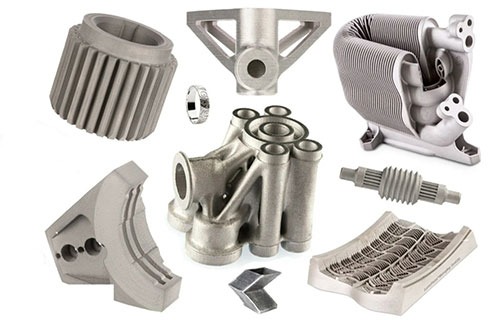
High-temperature 3D printing is transforming modern manufacturing, moving far beyond prototyping to enable the production of end-use parts capable of surviving in the most demanding environments. This advanced form of additive manufacturing combines specialized, heat-resistant materials with precise, controlled processes to build durable components layer by layer.
Key takeaways
- The landscape of high-temperature additive manufacturing (AM) is rapidly evolving, driven by significant hardware advancements and material science breakthroughs.
- This technology is unlocking possibilities in industries where performance under stress is non-negotiable.
- Adopting high-temperature 3D printing comes with specific challenges, but proven strategies exist for each.
- Implementing this technology requires a holistic approach, from design to post-processing.
What Are the Core Innovations Driving High-Temperature 3D Printing Forward?
The landscape of high-temperature additive manufacturing (AM) is rapidly evolving, driven by significant hardware advancements and material science breakthroughs. The focus has squarely shifted from simple prototyping to reliable, scalable production.
How Is Next-Generation Hardware Expanding Capabilities?
Recent industry announcements reveal a clear trend: AM hardware is becoming more capable, versatile, and ready for factory-floor integration. Major manufacturers are introducing systems designed for reliability and high throughput with advanced materials. For instance, new industrial filament printers are being launched specifically for high-performance applications, representing a major push toward scalable production. Furthermore, the market now offers everything from fully integrated, high-temperature ecosystems validated for materials like PEEK, PEKK, and carbon fiber composites, to more compact, desktop-friendly systems that bring industrial-grade multi-material capabilities to smaller operations. These systems often feature intelligent calibration and automated workflows, reducing the expertise barrier to printing with challenging high-temp polymers.
What New Materials Are Solving Old Problems?
Innovation isn’t limited to machines; it’s also flourishing in material formulations. Developers are creating new filaments that maintain ease of use while dramatically enhancing thermal performance. A prime example is the development of high-temperature PLA (HT-PLA), which retains the user-friendly printing properties of standard PLA but can withstand continuous temperatures over 150°C, a significant leap from standard PLA’s limit of around 60°C. When reinforced with glass fibers (HT-PLA-GF), the material achieves even greater dimensional stability and a heat deflection temperature (HDT) that can exceed 110°C after annealing, making it suitable for functional parts like power tool mounts and automotive fixtures.
Comparative Performance of High-Temp Polymers:
| Material | Key Characteristics | Typical Heat Deflection Temp (HDT) | Best For Applications |
|---|---|---|---|
| PEEK/PEKK | Exceptional strength, chemical resistance, biocompatibility | 300°C+ | Aerospace, medical implants, high-stress components |
| PPA-GF (Polyphthalamide) | High rigidity, low moisture absorption, cost-effective | ~200°C (after annealing) | Automotive under-hood parts, electrical connectors |
| High-Temp PLA | Easy to print, good dimensional stability, affordable | 106°C – 115°C (annealed) | Functional prototypes, enclosures, consumer goods |
| Polyimide (e.g., Kapton) | Extreme temperature resistance, used as spacecraft insulation | Up to ~370°C (700°F) | Spacecraft insulation, extreme environment electronics |
Where Is High-Temperature 3D Printing Making the Biggest Impact?
This technology is unlocking possibilities in industries where performance under stress is non-negotiable.
Can It Withstand the Extreme Demands of Aerospace and Aviation?
Absolutely. Aerospace is a primary beneficiary, using high-temperature 3D printing to create parts that must endure intense heat, pressure, and mechanical stress. The technology enables the production of lightweight airframe components, complex engine parts with internal cooling channels, and heat-resistant ducts and housings. Materials like titanium alloys and super-alloys (e.g., Inconel) allow components to withstand temperatures up to 1,200°C, which is crucial for turbine sections. The ability to optimize geometries for weight reduction—achieving 30-40% lighter parts—directly translates to massive fuel savings over an aircraft’s lifespan.
How Is It Revolutionizing Automotive and Consumer Manufacturing?
The automotive industry leverages high-temperature 3D printing for both prototyping and end-use parts. It is ideal for creating under-hood components, custom brackets for electric vehicle batteries, and high-temperature fixtures. Perhaps one of the most transformative applications is in rapid tooling. Companies can now 3D print high-temperature resin molds for injection molding, which is a game-changer for small-batch production. Compared to traditional steel molds costing $10,000-$50,000 and taking 4-8 weeks, 3D printed resin tooling can be produced for $500-$3,000 in just 3-7 days. This allows for rapid market testing and design iteration with minimal financial risk.
Is There a Role for High-Temp Printing in Medicine and Electronics?
Emerging applications in these fields are particularly exciting. In medicine, researchers are developing room-temperature extrusion techniques for biocompatible implants, using materials like PCL (polycaprolactone) that can be printed directly onto bone fractures during surgery. For electronics, innovations like room-temperature printing of nanocrystal inks are enabling the fabrication of miniature infrared sensors and flexible circuits without the need for high-temperature annealing, opening doors to new form factors in wearables and sensors.
What Are the Practical Solutions for Overcoming Technical Hurdles?
Adopting high-temperature 3D printing comes with specific challenges, but proven strategies exist for each.
Key Challenges and Mitigation Strategies:
| Challenge | Main Impact | Practical Solutions & Best Practices |
|---|---|---|
| Warping & Layer Adhesion | Print failure, especially with large parts and semi-crystalline polymers. | Use a controlled, heated chamber to ensure uniform cooling. For printers without a full chamber, an enclosure is a minimum requirement. |
| Material Handling & Drying | Poor print quality, bubbling, and weakened strength. | Always pre-dry filaments before use. Store hygroscopic materials (like PPA, Nylon) in sealed containers with desiccant. Follow manufacturer drying guides (e.g., 80-100°C for 4-6 hours for PPA-GF). |
| Nozzle Abrasion | Dimensional inaccuracy, clogging from worn nozzle. | Use hardened steel or specialty nozzles (e.g., silicon carbide) when printing with fiber-reinforced materials like PPA-GF or carbon-fiber PEEK. Avoid brass nozzles for these materials. |
| Process Parameter Complexity | Inconsistent results, requiring extensive trial and error. | Leverage validated printer profiles from material or machine manufacturers. Utilize AI-driven slicing software that can auto-adjust parameters for specific materials. |
A critical, often underestimated factor is the heated build chamber. Maintaining a stable, elevated ambient temperature around the part is essential for printing most high-performance materials. It drastically reduces thermal gradients that cause warping and internal stress, and is vital for achieving good layer adhesion and optimal mechanical properties, particularly in the Z-direction.
How to write a spec that gets priced correctly
A drawing is a contract. If it leaves a number open, the shop fills that number in with its own default. The default is rarely the one you had in mind. Put these five lines on every RFQ and most of the back-and-forth disappears before it starts.
- File format and units, with the model exported in millimetres
- Process and material grade, not a trade name
- Critical features and the tolerance each one needs
- Surface finish and the faces it applies to
- Quantity for the pilot build and for the year
The point is not paperwork. Each line removes a decision the shop would otherwise make for you. A complete RFQ comes back priced. An incomplete one comes back guessed.
What actually drives the price
Buyers usually push on material because it is the line they can see. In practice the material is rarely the biggest number on a quote. These five lines decide most of it:
- build volume and orientation
- layer height and support structure
- material grade and colour
- post-processing and hand finishing
- quantity per build plate
Ask for the quote split by line. A supplier who cannot break it down is guessing, and you will pay for the guess. The line you can usually renegotiate is the tolerance band, not the raw material.
Problems you will meet, and the fix
Every process has a failure mode it prefers. The same four show up again and again on this kind of work, and none of them are mysteries once you know what to look for.
- Warping on long flat faces where the part lifts off the plate
- Layer lines showing through a cosmetic surface
- Support scars on a mating face nobody flagged
- Dimensional drift on thin walls after cooling
Catch the fault on the first part, not the hundredth. A first-article check costs an hour. A bad batch costs the whole order. Write the check into the purchase order so nobody has to remember it.
What to check on the first article
The first article is the cheapest inspection you will ever buy. Use it properly and the rest of the run becomes boring, which is exactly what you want.
- Every dimension on the drawing, with the measured value written beside it.
- The material certificate, matched to the heat or lot number on the parts.
- The finish against the sample you approved, under the same light.
- Fit against the mating part, assembled rather than measured.
- Packaging, because parts that arrive damaged were never in tolerance.
Check in this order: datums, then mating features, then cosmetic faces. If the datums are wrong, every number after them is noise. Keep the report on file. When a problem shows up in month six, that document is the only thing that tells you what changed.
How to compare two quotes fairly
Two numbers are not comparable unless the scope matches. Line them up before you decide, because a low number with three gaps is not a low number.
Same drawing, same material, same finish, same inspection. Anything else is a different job wearing the same part number. Then look at what each quote leaves out. Freight, packaging, certificates and tooling are the usual gaps.
Ask each supplier to state their assumptions in writing. The one who does is usually the one who has run the process before.
Scaling from one part to a batch
The first part teaches you the process. The hundredth teaches you the process cost.
Watch three things as volume grows: setup amortisation, tool wear, and how much hand work the finish still needs. If the unit price barely moves between ten and a hundred, the cost sits in material or in hand work, not in setup. Ask which, because only one of them is negotiable.
Lead time behaves the same way. A one-off is scheduled around other jobs. A repeat order is scheduled around your forecast. Give the shop a forecast and the lead time gets shorter, not longer.
How to read a supplier's quote
A quote is a short document with a long shadow. Four things in it decide whether the job runs smoothly, and only one of them is the price.
- The scope line. It should name the process, the material and the finish, not just the part.
- The tolerance basis. General tolerance or the drawing, and which standard it follows.
- The exclusions. Tooling, freight, certificates and inspection are the usual omissions.
- The validity date. Material prices move, and an open-ended quote is a promise nobody can keep.
Read the exclusions before you read the total. A quote that leaves out tooling is not cheaper. It is a quote for a different job.
What to send with the first order
The first order sets the pattern for every order after it. Send a complete package once and the shop files it, and the second order takes a fraction of the time.
- A STEP or native model plus a PDF drawing carrying the same revision letter.
- The material callout by standard number, not by trade name.
- The finish and the exact faces it applies to.
- Any test the part must pass: fit, seal, drop, salt spray, dielectric.
- A contact who can answer a question inside one working day.
Then write down what was agreed. An email that confirms the material, the finish and the date is worth more than a longer purchase order that leaves them open.
When this is the wrong choice
A good supplier tells you when the process does not fit. These are the cases where we say so.
- The volume is so low that setup costs more than the parts are worth.
- The tolerance is tighter than the process can hold without a second operation.
- The geometry cannot be made without a tool feature that will not pay back.
- The material you need is not available in the form the process requires.
- The schedule is shorter than the tooling or setup time, and nobody has said so yet.
None of these are refusals. They are reasons to look at a different route, and the earlier that conversation happens the cheaper it is. The most expensive mistake in manufacturing is a process chosen before the question was understood.
How Do You Build a Successful High-Temperature 3D Printing Workflow?
Implementing this technology requires a holistic approach, from design to post-processing.
What Does the End-to-End Process Look Like?
A successful workflow integrates several key stages:
- Design for Additive Manufacturing (DfAM): This first step is crucial. Engineers must design parts to leverage AM’s strengths—consolidating assemblies into single pieces, incorporating lattice structures for light-weighting, and optimizing orientation for strength and support minimization.
- Material Selection & Preparation: Choose the material based on the part’s functional requirements (HDT, strength, chemical exposure). Properly prepare the material by drying it thoroughly according to vendor specifications.
- Machine & Parameter Setup: Ensure your printer is equipped for the job (correct nozzle type, capable heated bed, enclosed chamber). Use a verified print profile as your starting point.
- Post-Processing: Most high-temperature parts require post-processing. This always involves careful support removal. For many materials, thermal annealing is a critical step. For example, annealing HT-PLA-GF at 100°C for 30 minutes can raise its HDT from 75°C to 114.7°C. Annealing relieves internal stresses and enhances crystallinity, leading to significantly improved thermal and mechanical performance.
When Should You Consider Outsourcing vs. In-House Production?
The decision to bring this capability in-house or to partner with a service provider like our shop depends on several factors. Consider in-house investment if you have high-volume, recurring needs for prototypes or end-use parts, dedicated trained personnel to operate and maintain the equipment, and the capital for industrial-grade machinery (which can be a significant investment). Outsourcing is often the smarter strategic move for low-to-medium volume production, when you need access to a wider range of materials and technologies without capital expenditure, or when you require certified production (e.g., for aerospace or medical applications) that a specialized partner can provide.
High-temperature 3D printing has matured into a indispensable manufacturing solution, bridging the gap between complex design and functional reality for parts that operate under extreme duress. The convergence of more robust hardware, innovative materials like HT-PLA and PPA-GF, and proven best practices for overcoming technical hurdles has made this technology more accessible and reliable than ever. Whether enabling weight savings in a satellite, accelerating product development through rapid resin tooling, or creating a biocompatible implant, its value proposition is clear: unmatched design freedom combined with serious performance. For forward-thinking manufacturers, the question is no longer if high-temperature AM is viable, but how quickly it can be integrated into their innovation and production cycles to build a stronger, lighter, and more efficient future.
Our solution for High-Temperature 3D Printing Key
YiguProto runs 3D printing in house, from a single prototype to a production batch. We quote the process, the material and the finish as separate lines, so you can see where the money goes instead of arguing with one number.
Send a STEP file or a drawing and you get a DFM report in one to two business days. It flags the features that add cost and the features that will not hold tolerance on the process you picked.
Every order ships with an inspection report on the features you call out. If a part misses, we make it again. Ready to price a part? Start with a free quote and DFM review, or read more about our 3D printing. You can also talk to an engineer before you commit to a drawing.
FAQ about High-Temperature 3D Printing Key
How long does a first article take?
Usually a few business days once the drawing is frozen, and longer if tooling is involved. The date we give you is the date we confirm in writing, not the date we hope for.
What is High-Temperature 3D Printing Key used for?
High-Temperature 3D Printing Key turns up wherever the part has to do a real job at a predictable cost: brackets, housings, fixtures, covers and the fittings that hold them together. The honest test is whether the properties match the load and the environment, not whether the material is fashionable.
What material should I specify?
Specify by standard, not by trade name. A trade name can change under you between two orders; a standard number cannot. Then add the one property that actually decides the part, whether that is strength, heat resistance or chemical exposure.
Can High-Temperature 3D Printing Key be made in small quantities?
Yes, and small quantities are where a good supplier earns the next order. Setup dominates the price at low volume, so the cheapest route is usually the one with the fewest operations, not the cheapest material.
What happens if a part is out of specification?
We measure it against the same drawing you approved and, if it misses, we make it again. What matters is that the report exists, because a disagreement without data is just an opinion.
What should I check before approving the parts?
Datums first, then the features that mate, then the cosmetic faces. Ask for a dimensional report, a material certificate and a finish sample. A part can be inside every tolerance and still not fit, so assemble one before you sign.
The short version
High-Temperature 3D Printing Key rewards the buyer who reads the data sheet and the drawing together. Pick the option for the property that matters, not for the price per kilo.
Tighten only what mates. Test a sample before the run. Then let the process do the rest.