
3D Printing
How Are 3D Printed Aircraft Parts Revolutionizing Aviation
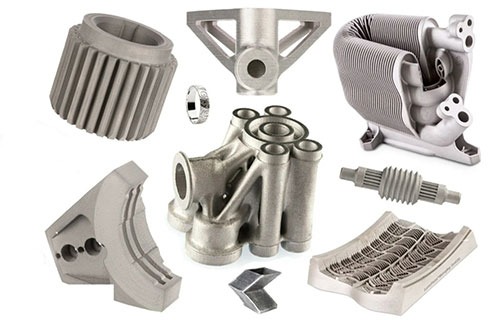
Everything we know about 3D Printed Aircraft, written the way we would explain it across a table: what it is good at, what it costs you, and the design rules that keep the part out of the scrap bin.
What 3D Printed Aircraft changes
3D Printed Aircraft is not a demo. It is a production route that already ships parts.
The gain is not that it looks clever. The gain is that it removes a constraint. Tooling, lead time, geometry, or batch size.
The cost is that it moves the hard work somewhere else. Into design, into file prep, or into post-processing.
Both sides matter. This page covers them in the order a buyer meets them.
Where it fits, and where it does not
Every process has a sweet spot. Outside it, the same process turns expensive and slow.
Match the batch size first. Small batches reward flexibility. Large batches reward tooling.
- High-Performance Polymers: a job where the material and the tolerance have to agree
- Commercial Aircraft: a part that is checked by function, not by looks
- Military Aviation: work where the failure mode is known and designed around
- Space Applications: a case where the process removes a step from the old route
If your case sits at the edge of the list, run a small trial. A trial costs a fraction of a tool and answers the question with data instead of opinion.
The numbers that decide the job
Four numbers settle most arguments about 3D Printed Aircraft. Strength, hardness, density and how much it moves when it heats up. Read them together, never alone.
A high strength figure with low elongation means a brittle part. A low hardness figure means the part will wear where it rubs. Pick the pair of numbers that matches your failure mode.
| Material | Properties | Common Applications |
|---|---|---|
| Titanium (Ti-6Al-4V) | High strength-to-weight, corrosion resistant | Structural brackets, engine components |
| Aluminum (AlSi10Mg) | Lightweight, good thermal conductivity | Heat exchangers, housings |
| Inconel (718, 625) | High-temperature strength, oxidation resistant | Turbine blades, exhaust components |
| Stainless Steel (17-4 PH) | Corrosion resistant, high strength | Fasteners, structural parts |
Values like these come from a mill certificate, not from a sales sheet. Ask for the certificate with the first shipment. Then check the heat number against the parts you keep.
If your drawing needs a value tighter than the table, say so in writing. A tolerance with no stated basis is a guess on both sides.
Parameters that work
Start from the numbers below, then tune to the machine in front of you. Every press and every spindle has its own temper.
Change one variable at a time. Two changes at once and you learn nothing from the result.
| Material | Properties | Common Applications |
|---|---|---|
| PEEK | High temperature resistance, chemical resistant | Electrical connectors, brackets |
| ULTEM (PEI) | Flame retardant, high strength-to-weight | Cabin interior parts, ducting |
| Nylon (PA12) | Tough, lightweight | Ducts, clips, non-structural parts |
Tolerance and finish you can actually hold
A drawing asks for a number. A shop delivers a range. The gap between the two is where quotes go wrong.
±0.1 mm is the working default for most features on this material. Below ±0.05 mm the process changes, and so does the price.
| Feature | Typical | Best case | Notes |
|---|---|---|---|
| Layer height | 0.1 to 0.2 mm | 0.025 mm | Thinner costs time |
| Tolerance | ±0.3 mm | ±0.05 mm | Process dependent |
| Min feature | 0.4 mm | 0.2 mm | Below this, features vanish |
| Build speed | 10 to 50 cm3/h | 150 cm3/h | Depends on process |
| Post work | 1 to 3 hours | 20 minutes | Support removal dominates |
Call out the faces that mate with something else. Leave the rest on the general tolerance. That one habit cuts cost more than any negotiation.
If you need a number we cannot hold on the machine, we will say so before the run, not after.
What drives the price
Price on 3D Printed Aircraft parts comes from five lines. Material, machine time, setup, finishing and inspection. Only one of them is the powder or resin itself.
Buyers usually push on material. The real money sits in setup and in the tolerance callouts. Loosen one tolerance and you can move the price more than a material swap.
- Build volume. A part that fills the chamber blocks every other job in the queue.
- Support removal. Every support touch point is a minute of hand finishing.
- Tolerance band. Each step tighter adds inspection time.
- Surface finish. A cosmetic face needs a separate pass and often hand work.
- Quantity. Setup spreads across the run, so ten parts cost far less each than one.
Ask for the quote broken down by line. A supplier who cannot split it is guessing, and you will pay for the guess.
Problems you will meet, and the fix
Every material has a failure mode it likes best. On 3D Printed Aircraft it usually shows up in the same three places.
None of these are mysteries. Each one has a cause you can name and a fix you can test.
Catch the fault on the first part, not the hundredth. A first-article check costs an hour. A bad batch costs the whole order.
Design rules for 3D Printed Aircraft parts
Good parts are designed, not rescued. These rules catch most of the cost before it reaches a machine.
- Design the load path first. Put material where the stress runs, then shape around it.
- Keep walls even. A thick section next to a thin one moves at a different rate and pulls the part out of flat.
- Give every pocket a radius. Square internal corners need a tool that cannot reach them.
- Leave a datum you can hold. Without one, two inspectors measure two different parts.
- Call out only what mates. Every extra tight tolerance is money spent on nothing.
- Think about the finish early. A cosmetic face needs a separate pass, and that pass needs room.
- Add a chamfer, not a sharp edge. Sharp edges chip in handling and cut the people who pack the box.
- Ask for a DFM review. Two days of review can remove a week of rework.
None of this is exotic. It is the list we walk through on every quote, and it is why some parts come in 30% cheaper than the drawing suggests.
How it compares with the alternatives
No process wins on every line. The right choice depends on batch size and on which tolerance you cannot give up.
Read the table by column, not by row. The batch column usually settles the argument before the tolerance column gets a vote.
| Route | Tooling | Best batch | Tolerance | Surface |
|---|---|---|---|---|
| FDM | None | 1 to 50 | ±0.3 mm | Visible layers |
| SLA | None | 1 to 200 | ±0.1 mm | Smooth |
| SLS / MJF | None | 10 to 2,000 | ±0.3 mm | Grainy |
| CNC machining | Fixtures only | 1 to 10,000 | ±0.05 mm | Machined |
| Injection molding | Steel tool | 5,000+ | ±0.1 mm | As tooled |
If your volume sits between two rows, quote both. The crossover point moves with part size and with how much hand work the finish needs.
Ask the supplier where their own crossover sits. A shop that runs both routes will tell you honestly, because they win either way.
What to check before you accept the parts
Inspection is not a formality. It is the step that turns a shipment into a decision you can defend.
Check in this order. Datums, then mating features, then cosmetic faces. If the datums are wrong, every number after them is noise.
- Dimensional report. Every callout on the drawing, with the measured value beside it.
- Material certificate. Matched to the heat or lot number on the parts.
- Finish sample. Compared against the piece you approved, under the same light.
- Function check. Assembled, not just measured. A part can be in tolerance and still not fit.
- Packaging. Parts that arrive damaged were never in tolerance.
Keep the first-article report on file. When a problem shows up in month six, that document is the only thing that tells you what changed.
Lead time, and what moves it
Lead time has four parts. Material, queue, production and finishing. Only the queue is fully inside the supplier's control.
Ask which of the four is the constraint on your job. Then you know what a rush fee actually buys.
Material is the quiet one. A standard grade ships from stock. A special temper or a mill run adds two to four weeks, and nobody flags it unless you ask.
Finishing is the second. Anodizing, painting and laser marking often run in batches at a subcontractor, so a small order can wait for a big one.
Put the date you need in the RFQ, not the date you hope for. A supplier who cannot make it will tell you at quote stage, which is the cheapest moment to find out.
Our solution for 3D Printed Aircraft parts
YiguProto runs 3D printing in house, from one-off prototypes to production batches. We quote the process, the material and the finish as separate lines, so you can see where the money goes.
Send a STEP file or a drawing and you get a DFM report in one to two business days. It flags the features that add cost and the ones that will not hold tolerance.
Every order ships with an inspection report on the features you call out. If a part misses, we make it again.
Ready to price a part? Start with a free quote and DFM review, or read more about our 3D printing service. You can also talk to an engineer before you commit to a drawing.
FAQ about 3D Printed Aircraft
Is 3D Printed Aircraft ready for production?
Yes, for the right batch size. Small and medium runs are where it wins. Above a few thousand identical parts, tooling usually beats it on unit price.
What does 3D Printed Aircraft cost?
Cost depends on volume of material, machine time and finishing. Ask for a quote on two quantities. The gap between them tells you where the setup sits.
What are the limits of 3D Printed Aircraft?
Surface finish, tolerance and repeatability. It is a strong route for shape and speed, not the strongest route for precision.
How long does it take?
A small part can ship in 24 to 48 hours. Larger builds and finishing add days. Plan the finishing step, not just the build.
What file do I need to send?
STEP if you have it, STL if you do not. Check that the mesh is watertight and the units are millimeters before you upload.
Can I test before committing?
Always. One sample part costs a fraction of a wrong order, and it answers the question with data.
How to write the RFQ
A good RFQ is short and complete. It carries the file, the material, the finish, the quantity and the date you need it.
Missing any one of the five slows the quote down. Missing two usually gets you a guess.
- A STEP file and a PDF drawing with the revision letter.
- Material grade, with the standard number not the trade name.
- Finish and the faces it applies to.
- Quantity for the first order and for the year.
- Any test the part must pass: drop, seal, salt spray, dielectric.
What to check on the first article
The first article is the cheapest inspection you will ever buy. Use it.
Check the datums first, then the features that mate, then the cosmetic faces. In that order.
- Every dimension on the drawing, with the measured value written next to it.
- The material certificate, matched to the heat number on the parts.
- The finish against the sample you approved.
- Fit against the mating part, assembled, not just measured.
Mistakes that cost the most
Three mistakes show up again and again in quotes that go wrong.
None of them are technical. All of them are about the handover between design and shop.
- A drawing that contradicts the 3D file. The shop picks one, and it is never the one you meant.
- A tolerance with no datum. Two inspectors measure two different parts.
- A cosmetic callout with no sample. Everyone is right and nobody is happy.
How to compare two quotes fairly
Two numbers are not comparable unless the scope matches. Line them up before you decide.
Same drawing, same material, same finish, same inspection. Anything else is a different job.
Then look at what each quote leaves out. Freight, packaging, certificates and tooling are the usual gaps. A low number with three gaps is not a low number.
Scaling from one part to a batch
The first part teaches you the process. The hundredth teaches you the process cost.
Watch three things as volume grows. Setup amortisation, tool wear, and how much hand work the finish still needs.
If the part price barely drops between ten and a hundred, the cost is in material or in hand work, not in setup. Ask which, because only one of them is negotiable.
The short version
3D Printed Aircraft rewards the buyer who reads the data sheet and the drawing together. Pick it for the property that matters, not for the price per kilo.
Tighten only what mates. Test a sample before the run. Then let the process do the rest.