
3D Printing
How to Choose the Right 3D Printing Manufacturers for Your Needs?
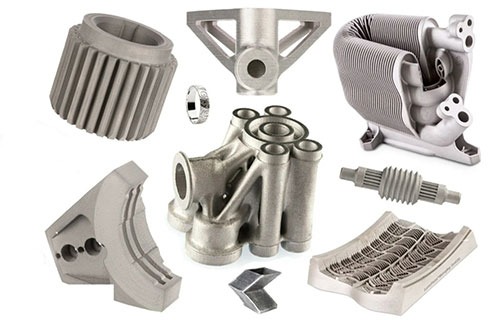
If you need 3D printing help, you probably wonder how to pick the right manufacturer. The simple answer is to focus on your project goals, materials, budget, and their industry know-how. But it’s not that easy—all 3D printing manufacturers are different. Choose wrong, and you’ll face delays, wasted cash, or useless parts. This guide breaks down everything you need to know.
Key takeaways
- Before you pick a manufacturer, you need to know exactly what they offer.
- Your project’s success depends on picking a manufacturer that knows your industry.
- Don’t hire a manufacturer without asking these critical questions. They’ll help you avoid hidden costs, delays, and low-quality parts.
- It’s easy to pick the cheapest quote, but that’s a mistake. The “price per part” often hides extra costs.
What Do 3D Printing Manufacturers Do?
Before you pick a manufacturer, you need to know exactly what they offer. They don’t just print parts—they handle the whole process from start to finish. This includes helping you refine your 3D model, picking the best 3D printing tech, choosing the right materials, printing, post-processing, and quality checks.
Every manufacturer has a specialty. Some focus on small-batch prototypes for startups. Others do large-scale production for aerospace or healthcare. Their certifications and skills change based on their focus.
Full-Service Breakdown
A good 3D printing manufacturer offers these core services. Each step is key to a successful project:
- Model Refinement: They fix flaws in your 3D model. This ensures it prints well and works as intended.
- Tech Selection: They pick the right 3D printing tech (FDM, SLA, SLS, metal 3D printing) for your project.
- Material Choice: They select materials that match your part’s use (e.g., heat-resistant plastics for car parts).
- Printing: They run the 3D printers and monitor the process to avoid mistakes.
- Post-Processing: They sand, paint, or assemble parts to get the final look and feel.
- Quality Testing: They check parts for strength, accuracy, and consistency.
Specialty Examples
Here are real examples of manufacturer specialties. This shows how their focus changes by industry:
- Medical Focus: A manufacturer making medical implants has ISO 13485 certification. This ensures their parts are safe for human use.
- Consumer Toys: A toy manufacturer uses colorful, non-toxic plastics. They don’t need medical certifications.
- Aerospace Focus: They use metal 3D printing for lightweight, high-strength parts. They meet NASA standards.
Which Manufacturers Excel in Your Industry?
Your project’s success depends on picking a manufacturer that knows your industry. Different industries have unique rules, materials, and quality needs. Below is a breakdown of top manufacturers by industry and what makes them a fit.
Industry-by-Industry Guide
This table lists key manufacturers for common industries. It also highlights their expertise and why they work for that field:
| Industry | Key Manufacturers | Expertise & Fit |
|---|---|---|
| Aerospace & Defense | Stratasys Direct Manufacturing, 3D Systems | Specialize in metal 3D printing (titanium, Inconel). Make lightweight, high-strength parts. Meet NASA/DOE standards. |
| Healthcare | Formlabs (Service Bureau), Materialise | ISO 13485 certified. Print medical implants, surgical guides, and prosthetics. Use medical-grade resins/plastics. |
| Automotive | Protolabs, Fast Radius | Fast turnaround for prototypes and low-volume parts. Use durable materials (ABS, nylon) for car components. |
| Consumer Products | Sculpteo, Shapeways | Great for custom, small-batch items (jewelry, phone cases). Offer a wide range of colorful plastics and finishes. |
Niche Industry Tip
If you’re in a niche field (dental, industrial robotics), ask for industry-specific case studies. A manufacturer that printed 10,000 dental aligners will handle your project better than one that makes toys. For example, a dental manufacturer knows the exact materials and accuracy needed for aligners.
What Questions Should You Ask Manufacturers?
Don’t hire a manufacturer without asking these critical questions. They’ll help you avoid hidden costs, delays, and low-quality parts. Think of it like test-driving a car before buying it.
Materials & Technologies?
Not all manufacturers use the same materials or tech. Your part’s success depends on both. Ask these follow-up questions:
- What materials do you offer? (e.g., PETG, TPU, titanium)
- Do you have the material I need for my part’s use? (e.g., heat-resistant for kitchen tools)
- Which 3D printing tech do you use? Does it fit my project?
Example: If you need a drone frame, look for a manufacturer that uses carbon-fiber reinforced nylon. They should use FDM or SLS tech for strength and light weight.
Turnaround & MOQ?
Turnaround time (how long it takes) and minimum order quantity (MOQ) matter a lot. They change based on your project size. Ask:
- How long for 10 parts? 100 parts?
- Do you have a MOQ? (Some won’t take orders under 50 parts)
- What if you miss the deadline? (Look for guarantees like 10% refunds)
Startups often need 5–10 prototypes fast. Big companies may need 1,000+ parts over weeks. Make sure their timeline fits yours.
Design Support?
Most 3D models have flaws. Good manufacturers offer design for additive manufacturing (DFAM) support. They’ll review your model and suggest changes to make it stronger, cheaper, or faster to print.
Warning: Avoid manufacturers that say “just send the file.” If your design is flawed, they’ll print it anyway. You’ll end up with useless parts and wasted money.
Quality Control?
You need consistent, high-quality parts. Ask these questions to check their quality process:
- Do you test parts for strength, durability, or accuracy?
- What certifications do you have? (ISO 9001, AS9100)
- Can you send a sample part before my full order?
Always ask for a sample. It lets you check quality firsthand. A good manufacturer will happily send one—they stand behind their work.
How to Compare Manufacturer Costs?
It’s easy to pick the cheapest quote, but that’s a mistake. The “price per part” often hides extra costs. You need to compare total turnkey costs to get the real value.
Hidden Costs to Watch For
These hidden costs can add up fast. Make sure to ask about them upfront:
- Design Fees: Extra cost for fixing or creating your 3D model.
- Post-Processing: Sanding, painting, or assembling can add 20–50% to the total.
- Shipping & Taxes: Overseas manufacturers may have low part costs, but shipping heavy parts is expensive.
Turnkey Quote Example
Here’s how to compare quotes properly. Always ask for a total turnkey quote (includes everything):
- Manufacturer A: $5 per part (100 parts = $500). Adds $150 post-processing + $50 shipping. Total = $700.
- Manufacturer B: $6 per part (100 parts = $600). Includes post-processing and shipping. Total = $600.
Even though Manufacturer B has a higher per-part price, they’re cheaper overall. Always compare total costs, not just per-part prices.
Mistakes to Avoid with Manufacturers
After 5+ years in the additive manufacturing industry, I’ve seen clients make the same mistakes. These mistakes cost time and money. Here’s how to avoid them.
Mistake 1: Unclear Part Purpose
Don’t just say “I need a plastic part.” Give detailed info about its use. For example: “This part is for a children’s toy. It needs to be non-toxic (FDA-approved), flexible, and survive a 3-foot drop.” The more details, the better the end result.
If you’re vague, the manufacturer will pick the wrong material or tech. You’ll get a part that doesn’t work.
Mistake 2: Ignoring Post-Processing
Raw 3D printed parts have rough edges or layer lines. For consumer products (phone cases, jewelry), post-processing is essential. It gives parts a professional look.
Don’t skip post-processing to save money. Your customers will notice the rough finish, and it will hurt your brand.
Mistake 3: Choosing by Location Alone
Local manufacturers are tempting for fast shipping. But overseas manufacturers (Europe, Asia) may have better expertise or lower costs. Just factor in shipping time and customs fees.
Example: A European manufacturer specializing in medical parts may do a better job than a local one that makes prototypes. The extra shipping time is worth the quality.
Mistake 4: Not Checking References
Always ask for references from past clients. A good manufacturer will give you contact info for clients in your industry. Call them and ask:
- Did the manufacturer meet deadlines?
- Was the quality consistent?
- Did they handle issues well?
How to write a spec that gets priced correctly
A drawing is a contract. If it leaves a number open, the shop fills that number in with its own default. The default is rarely the one you had in mind. Put these five lines on every RFQ and most of the back-and-forth disappears before it starts.
- File format and units, with the model exported in millimetres
- Process and material grade, not a trade name
- Critical features and the tolerance each one needs
- Surface finish and the faces it applies to
- Quantity for the pilot build and for the year
The point is not paperwork. Each line removes a decision the shop would otherwise make for you. A complete RFQ comes back priced. An incomplete one comes back guessed.
What actually drives the price
Buyers usually push on material because it is the line they can see. In practice the material is rarely the biggest number on a quote. These five lines decide most of it:
- build volume and orientation
- layer height and support structure
- material grade and colour
- post-processing and hand finishing
- quantity per build plate
Ask for the quote split by line. A supplier who cannot break it down is guessing, and you will pay for the guess. The line you can usually renegotiate is the tolerance band, not the raw material.
Problems you will meet, and the fix
Every process has a failure mode it prefers. The same four show up again and again on this kind of work, and none of them are mysteries once you know what to look for.
- Warping on long flat faces where the part lifts off the plate
- Layer lines showing through a cosmetic surface
- Support scars on a mating face nobody flagged
- Dimensional drift on thin walls after cooling
Catch the fault on the first part, not the hundredth. A first-article check costs an hour. A bad batch costs the whole order. Write the check into the purchase order so nobody has to remember it.
What to check on the first article
The first article is the cheapest inspection you will ever buy. Use it properly and the rest of the run becomes boring, which is exactly what you want.
- Every dimension on the drawing, with the measured value written beside it.
- The material certificate, matched to the heat or lot number on the parts.
- The finish against the sample you approved, under the same light.
- Fit against the mating part, assembled rather than measured.
- Packaging, because parts that arrive damaged were never in tolerance.
Check in this order: datums, then mating features, then cosmetic faces. If the datums are wrong, every number after them is noise. Keep the report on file. When a problem shows up in month six, that document is the only thing that tells you what changed.
How to compare two quotes fairly
Two numbers are not comparable unless the scope matches. Line them up before you decide, because a low number with three gaps is not a low number.
Same drawing, same material, same finish, same inspection. Anything else is a different job wearing the same part number. Then look at what each quote leaves out. Freight, packaging, certificates and tooling are the usual gaps.
Ask each supplier to state their assumptions in writing. The one who does is usually the one who has run the process before.
Scaling from one part to a batch
The first part teaches you the process. The hundredth teaches you the process cost.
Watch three things as volume grows: setup amortisation, tool wear, and how much hand work the finish still needs. If the unit price barely moves between ten and a hundred, the cost sits in material or in hand work, not in setup. Ask which, because only one of them is negotiable.
Lead time behaves the same way. A one-off is scheduled around other jobs. A repeat order is scheduled around your forecast. Give the shop a forecast and the lead time gets shorter, not longer.
How to read a supplier's quote
A quote is a short document with a long shadow. Four things in it decide whether the job runs smoothly, and only one of them is the price.
- The scope line. It should name the process, the material and the finish, not just the part.
- The tolerance basis. General tolerance or the drawing, and which standard it follows.
- The exclusions. Tooling, freight, certificates and inspection are the usual omissions.
- The validity date. Material prices move, and an open-ended quote is a promise nobody can keep.
Read the exclusions before you read the total. A quote that leaves out tooling is not cheaper. It is a quote for a different job.
FAQ: Common Manufacturer Questions
Q1: How much does a 3D printing manufacturer cost? Costs vary a lot. A small plastic prototype can cost $50. Large metal parts can cost $10,000+. Key factors: material (metals are more expensive), part size, quantity, and post-processing. Always ask for a detailed quote.
Q2: How long does it take to get parts? Small prototypes (1–10 parts) take 3–7 days. Large orders (100+ parts) or complex metal parts take 2–4 weeks. Rush services are available for extra fees.
Q3: Do I need a 3D model first? No. Many manufacturers offer design services. They can create a 3D model from your sketches or ideas. Just be ready to pay a design fee if you don’t have a model.
Q4: Can they handle mass production (10,000+ parts)? Yes. Some use industrial-grade printers that print hundreds of parts at once. But 3D printing is often more expensive than injection molding for very large batches. Ask if 3D printing is the best option.
Q5: What if I don’t like the parts? Good manufacturers offer warranties or reprints. Ask: “What if parts don’t meet my specs?” Most will reprint for free or refund you if it’s their fault (e.g., wrong material).
Choosing the right 3D printing manufacturer doesn’t have to be hard. It starts with knowing what they do, what your project needs, and asking the right questions. Focus on industry expertise, transparency, and quality—these are the signs of a good partner.
Avoid common mistakes like being vague about your part’s purpose or ignoring hidden costs. Compare total turnkey quotes, not just per-part prices. And always ask for samples and references.
The right manufacturer will make your project smoother and deliver parts that meet your goals. They’ll be a partner that helps you succeed. With the tips in this guide, you can confidently pick the perfect 3D printing manufacturer for your needs.
How we can help
YiguProto runs 3D printing in house, from a single prototype to a production batch. We quote the process, the material and the finish as separate lines, so you can see where the money goes instead of arguing with one number.
Send a STEP file or a drawing and you get a DFM report in one to two business days. It flags the features that add cost and the features that will not hold tolerance on the process you picked.
Every order ships with an inspection report on the features you call out. If a part misses, we make it again. Ready to price a part? Start with a free quote and DFM review, or read more about our 3D printing. You can also talk to an engineer before you commit to a drawing.
Frequently asked questions
Does the process work for prototypes as well as production?
Yes, and that is usually the point. Running the prototype on the production process removes a whole class of surprises, because the part you test is made the same way as the part you sell.
How long does a first article take?
Usually a few business days once the drawing is frozen, and longer if tooling is involved. The date we give you is the date we confirm in writing, not the date we hope for.
What happens if a part is out of specification?
We measure it against the same drawing you approved and, if it misses, we make it again. What matters is that the report exists, because a disagreement without data is just an opinion.
How do I compare two quotes fairly?
Match the scope first: same drawing, same material, same finish, same inspection. Then read the exclusions. Freight, tooling and certificates are the usual gaps, and a low number with three gaps is not a low number.
What files do you need in order to quote?
A STEP file plus a PDF drawing that carries the same revision letter. The model carries the geometry and the drawing carries the intent. When the two disagree, the shop picks one, and it is never the one you meant.
What should I check before approving the parts?
Datums first, then the features that mate, then the cosmetic faces. Ask for a dimensional report, a material certificate and a finish sample. A part can be inside every tolerance and still not fit, so assemble one before you sign.
The short version
Good parts reward the buyer who reads the data sheet and the drawing together. Pick the option for the property that matters, not for the price per kilo.
Tighten only what mates. Test a sample before the run. Then let the process do the rest.