
Industry Applications
Is Injection Molding in China Right for Your Project? A No-Nonsense Guide
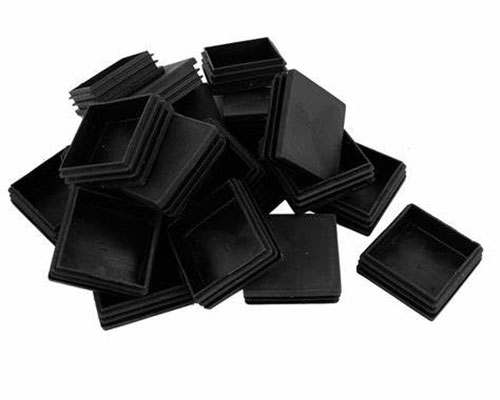
If you’re searching for “Injection Molding China,” you probably want to know one thing: Can Chinese manufacturers actually deliver high-quality parts that meet your specs, on time, and at a price that makes sense? The short answer is yes—but only if you know how to navigate the landscape. China’s injection molding industry has come a long way from the “cheap and cheerful” reputation of the past.
Why Choose Injection Molding in China?
Is It Still About Low Cost?
Let’s be honest: cost matters. But here’s what’s changed—China’s advantage isn’t just cheap labor anymore. It’s about a mature supply chain that creates real economies of scale.
When you work with a Chinese molder, you’re tapping into an ecosystem where everything exists locally: raw material suppliers (like Sinopec, one of the world’s largest plastic producers), mold makers, component suppliers, and finishing shops. This density drives down costs across the board.
Real numbers: A mid-sized U.S. electronics company we advised cut their injection molding costs by 35% by moving production to China—for the exact same ISO 9001-certified quality they were getting domestically. That’s not magic; it’s supply chain efficiency.
What About Quality and Technology?
This is where perceptions lag behind reality. Top Chinese molders now invest heavily in precision equipment:
- German KraussMaffei and Japanese Fanuc injection molding machines
- CNC-controlled systems with ±0.005mm tolerance capabilities
- Advanced processes like overmolding, insert molding, and micro-injection molding
Case example: A European medical device company needed tiny insulin pen components (parts weighing just 0.1g). They partnered with a molder in Suzhou that not only met FDA Class I requirements but achieved a 99.8% defect-free rate—on par with top European suppliers, but with 25% shorter lead times.
Can They Handle High Volumes?
China’s molding facilities are built for scale. Most medium-to-large factories can ramp up from 10,000 to 1 million+ units quickly, thanks to:
- Multiple production lines running 24/7
- Flexible shift schedules
- Large networks of backup suppliers
Example: A global toy brand needed 5 million plastic parts for the holiday season. Their Guangdong-based molder started with a 50,000-unit sample run, then scaled to full production in just 2 weeks—zero delays.
What Materials Can You Get?
Chinese molders have access to an enormous range of plastics, including:
- Standard grades: ABS, PC, PP, PE
- Engineering plastics: POM (Delrin), PA (Nylon), PC/ABS blends
- High-performance materials: PEEK, PPS, LCP for extreme conditions
- Sustainable options: Bio-based PLA, recycled PET/PP
Trend alert: According to a 2024 survey by Plastics Technology China, 60% of top molders now offer recycled plastic options or bio-based materials. A U.S. packaging company we know switched to recycled PP for their containers—their Chinese molder handled everything from material sourcing to certification.
Where Are China’s Injection Molding Hubs?
Which Region Fits Your Product?
Not all Chinese molders are the same—different regions have developed specializations over decades. Here’s a quick guide:
| Region | Core Strengths | Best For | Key Cities |
|---|---|---|---|
| Guangdong | High-volume, fast turnaround | Electronics, toys, consumer goods | Shenzhen, Dongguan, Guangzhou |
| Jiangsu | Precision molding, certifications | Medical devices, auto parts | Suzhou, Wuxi, Nanjing |
| Zhejiang | Custom molding, medium runs | Home appliances, hardware | Ningbo, Hangzhou, Taizhou |
| Shandong | Heavy-duty parts | Industrial components, machinery | Qingdao, Jinan |
Practical tip: If you’re making a medical device (like a syringe or surgical tool), focus on Jiangsu—over 30% of China’s ISO 13485-certified medical molders are concentrated around Suzhou. Need high-volume electronics parts? Guangdong’s Dongguan (nicknamed the “World’s Factory”) has hundreds of shops specialized in consumer goods.
How to Pick the Right Injection Molder
Step 1: Check Certifications First
Certifications aren’t just paperwork—they’re proof a molder can meet global standards. Ask for copies (don’t just take their word):
| Certification | When You Need It |
|---|---|
| ISO 9001 | Most consumer goods, basic quality management |
| ISO 13485 | Medical devices (mandatory for FDA/EU) |
| IATF 16949 | Automotive parts (required by major carmakers) |
| UL | Electrical products (fire safety for plastics) |
Warning story: A U.K. automotive supplier found out too late that their “certified” Chinese molder had let their IATF 16949 expire. The result? A 6-week production delay while they scrambled to find a qualified replacement.
Step 2: Match Experience to Your Industry
A molder that’s great at making toy parts may struggle with medical devices. Ask specific questions:
- “How many years have you worked in [your industry]?”
- “Can you share case studies from similar clients?”
- “Do you have dedicated teams for micro-molding or overmolding?”
Example: If you’re making auto bumpers (which need large molds and impact-resistant plastics), you want a molder with 10+ years in automotive—they’ll know how to prevent warping and weak points that generalists might miss.
Step 3: Verify Production Capacity
Be clear about your volumes and timelines. Ask for:
- Maximum monthly output for parts like yours
- Sample run timeline (typically 2-4 weeks for standard parts, 4-6 weeks for complex molds)
- Backup plans if machines break down (top shops have spare capacity)
Mistake to avoid: A Canadian furniture brand ordered 200,000 plastic chair legs from a small molder—only to learn their maximum capacity was 50,000 units/month. Product launch delayed by 3 months.
Step 4: Assess Communication and QC
Poor communication kills projects. Look for molders that:
- Assign English-speaking project managers (not just translators)
- Provide regular updates (weekly photos/videos of production)
- Have a documented quality control process: incoming checks → in-process inspections → final testing
Good example: A U.S. startup worked with a Ningbo molder using a shared QC app. They could log in anytime to see sample photos, test results (like tensile strength), and production timelines. Total transparency.
Step 5: Always Get Samples (and Consider Audits)
Never approve full production without physical samples. Check:
- Dimensional accuracy (compare to your CAD)
- Material feel and finish
- Functionality (assemble/test if applicable)
For orders over $50,000, consider a factory audit—either in-person or via third-party (SGS, Intertek). A European tool brand once saved $100,000 by auditing a molder that claimed 10 Fanuc machines—they actually had only 3, with the rest outdated models.
What Happens During the Injection Molding Process?
Step 1: Design Review and Mold Design
Your molder will review your 3D CAD files (STEP, STL) for manufacturability (DFM). They may suggest changes—like adding draft angles so parts release easily—to prevent defects. Then they’ll design the mold (steel or aluminum) and send a mold design approval (MDA) for your sign-off. Timeline: 1-2 weeks.
Step 2: Mold Making
The mold is machined using CNC mills, EDM, or laser cutting. Complex molds (multi-cavity, sliding actions) take 3-4 weeks. Then a trial run with plastic confirms everything works.
Step 3: Sample Production and Approval
You’ll receive samples (10-50 units) for testing. Check fit, finish, performance. Need changes? The molder modifies the mold and sends new samples. Timeline: 1-2 weeks.
Step 4: Mass Production
Approved? Production starts. Plastic pellets go into the injection molding machine, melt, and get injected into the mold under high pressure (1000-2000 bar). Parts cool, eject, and the cycle repeats. Small parts (like buttons) take 10 seconds; large parts (crates) take 1-2 minutes.
Step 5: QC and Packaging
Every batch is inspected—calipers, gauges, or CMM machines check for defects (flash, bubbles, dimensional errors). Top molders maintain <0.5% defect rates. Parts are packaged per your specs (bulk boxes, blister packs) and prepped for shipping.
Step 6: Shipping and Logistics
Most molders work with freight forwarders. They handle shipping (sea/air/express) and customs docs (commercial invoice, packing list). Sea freight: 2-4 weeks to North America/Europe. Air freight: 3-5 days.
What’s New in China’s Injection Molding Industry?
Trend 1: Automation and Smart Factories
Top molders now use IoT sensors to monitor machines in real-time—tracking temperature, pressure, cycle times. Alerts flag problems instantly. Some facilities use robots for part ejection and packaging, cutting labor costs and errors. According to CPMIA, 45% of large Chinese molders now use automated lines, up from 25% in 2020.
Trend 2: Sustainability Push
Global brands demand eco-friendly plastics, and Chinese molders are responding. Many now offer:
- Recycled plastics (rPET, rPP) matching virgin quality
- Bio-based plastics (PLA from corn starch)
- Mold designs that reduce waste (thinner walls, optimized geometry)
A 2024 study found 70% of molders invested in recycling equipment, and 50% offer carbon-neutral production options (using renewable energy offsets).
Trend 3: Small-Batch Flexibility
China’s not just for high volume anymore. Aluminum molds (cheaper and faster than steel) and digital design tools make small runs (100-1000 units) affordable. Perfect for startups testing new products.
Trend 4: 3D Printing Integration
Some molders use 3D printing for mold inserts (complex shapes) or even small-batch parts. A Suzhou molder recently cut sample time from 14 days to 3 days by 3D-printing an insert for a custom phone case mold.
Injection molding in China offers a compelling mix of cost efficiency, advanced technology, and scalability—but success depends on choosing the right partner. Focus on certifications, industry experience, and clear communication. Always test with samples before committing to large volumes.
The landscape has matured: today’s top Chinese molders compete on quality and reliability, not just price. Whether you need 1,000 or 1 million parts, there’s a molder in China that can meet your needs—if you know how to find them.
How to write a spec that gets priced correctly
A drawing is a contract. If it leaves a number open, the shop fills that number in with its own default. The default is rarely the one you had in mind. Put these five lines on every RFQ and most of the back-and-forth disappears before it starts.
- The application and the environment it runs in
- The standard the part must meet
- Process and material that can meet it
- Inspection and documentation package
- Volume and ramp schedule
The point is not paperwork. Each line removes a decision the shop would otherwise make for you. A complete RFQ comes back priced. An incomplete one comes back guessed.
What actually drives the price
Buyers usually push on material because it is the line they can see. In practice the material is rarely the biggest number on a quote. These five lines decide most of it:
- process selection
- material and certification
- tolerance band
- inspection and documentation
- volume
Ask for the quote split by line. A supplier who cannot break it down is guessing, and you will pay for the guess. The line you can usually renegotiate is the tolerance band, not the raw material.
Problems you will meet, and the fix
Every process has a failure mode it prefers. The same four show up again and again on this kind of work, and none of them are mysteries once you know what to look for.
- A consumer-grade process chosen for an industrial duty
- Documentation that arrives after the parts
- A tolerance tighter than the application needs
- No plan for the second source
Catch the fault on the first part, not the hundredth. A first-article check costs an hour. A bad batch costs the whole order. Write the check into the purchase order so nobody has to remember it.
What to check on the first article
The first article is the cheapest inspection you will ever buy. Use it properly and the rest of the run becomes boring, which is exactly what you want.
- Every dimension on the drawing, with the measured value written beside it.
- The material certificate, matched to the heat or lot number on the parts.
- The finish against the sample you approved, under the same light.
- Fit against the mating part, assembled rather than measured.
- Packaging, because parts that arrive damaged were never in tolerance.
Check in this order: datums, then mating features, then cosmetic faces. If the datums are wrong, every number after them is noise. Keep the report on file. When a problem shows up in month six, that document is the only thing that tells you what changed.
How to compare two quotes fairly
Two numbers are not comparable unless the scope matches. Line them up before you decide, because a low number with three gaps is not a low number.
Same drawing, same material, same finish, same inspection. Anything else is a different job wearing the same part number. Then look at what each quote leaves out. Freight, packaging, certificates and tooling are the usual gaps.
Ask each supplier to state their assumptions in writing. The one who does is usually the one who has run the process before.
Scaling from one part to a batch
The first part teaches you the process. The hundredth teaches you the process cost.
Watch three things as volume grows: setup amortisation, tool wear, and how much hand work the finish still needs. If the unit price barely moves between ten and a hundred, the cost sits in material or in hand work, not in setup. Ask which, because only one of them is negotiable.
Lead time behaves the same way. A one-off is scheduled around other jobs. A repeat order is scheduled around your forecast. Give the shop a forecast and the lead time gets shorter, not longer.
FAQ: Injection Molding in China
Is injection molding in China good for small businesses or startups?
Yes. Many molders now offer small-batch production (100-5000 units) with affordable aluminum molds. Startups can test products without huge upfront costs—just choose a molder experienced in small runs.
How long does it take to get parts from China?
Typical lead times:
- Samples: 2-4 weeks (design + trial + shipping)
- Mass production (10K-100K units): 4-6 weeks (production + QC + sea freight)
- Rush orders: 2-3 weeks (air shipping + expedited mold making)
What quality problems should I watch for?
Common issues: flash (excess plastic), warping (parts bending after cooling), dimensional errors. Avoid these by choosing molders with strict QC (ask for their defect rate—top shops are <0.5%) and always requesting samples first.
How do shipping and customs work?
Most molders partner with freight forwarders who handle everything—shipping, customs clearance, door-to-door delivery. Confirm who pays customs duties (usually buyer, though some offer DDP—Delivered Duty Paid—for an extra fee).
Can Chinese molders meet strict industry standards (FDA, automotive)?
Absolutely. Over 60% of top molders hold ISO 13485 (medical) or IATF 16949 (automotive) certifications. Many have passed audits by Apple, Toyota, Johnson & Johnson. Always ask for certification copies and client references.
Our solution for Injection Molding
YiguProto runs contract manufacturing in house, from a single prototype to a production batch. We quote the process, the material and the finish as separate lines, so you can see where the money goes instead of arguing with one number.
Send a STEP file or a drawing and you get a DFM report in one to two business days. It flags the features that add cost and the features that will not hold tolerance on the process you picked.
Every order ships with an inspection report on the features you call out. If a part misses, we make it again. Ready to price a part? Start with a free quote and DFM review, or read more about our contract manufacturing. You can also talk to an engineer before you commit to a drawing.
FAQ about Injection Molding
What is Injection Molding used for?
Injection Molding turns up wherever the part has to do a real job at a predictable cost: brackets, housings, fixtures, covers and the fittings that hold them together. The honest test is whether the properties match the load and the environment, not whether the material is fashionable.
Does the process work for prototypes as well as production?
Yes, and that is usually the point. Running the prototype on the production process removes a whole class of surprises, because the part you test is made the same way as the part you sell.
What files do you need in order to quote?
A STEP file plus a PDF drawing that carries the same revision letter. The model carries the geometry and the drawing carries the intent. When the two disagree, the shop picks one, and it is never the one you meant.
What should I check before approving the parts?
Datums first, then the features that mate, then the cosmetic faces. Ask for a dimensional report, a material certificate and a finish sample. A part can be inside every tolerance and still not fit, so assemble one before you sign.
Can Injection Molding be made in small quantities?
Yes, and small quantities are where a good supplier earns the next order. Setup dominates the price at low volume, so the cheapest route is usually the one with the fewest operations, not the cheapest material.
What tolerance can you hold on Injection Molding?
The working default is ±0.05 mm to ±0.1 mm depending on process. Tighter than that the process changes and so does the price, because every step tighter adds inspection time. Call out only the faces that mate with something else and leave the rest on the general tolerance.
The short version
Injection Molding rewards the buyer who reads the data sheet and the drawing together. Pick the option for the property that matters, not for the price per kilo.
Tighten only what mates. Test a sample before the run. Then let the process do the rest.