
Metal Materials
JIS SNCM439 Alloy Steel: Properties, Applications & Manufacturing Guide
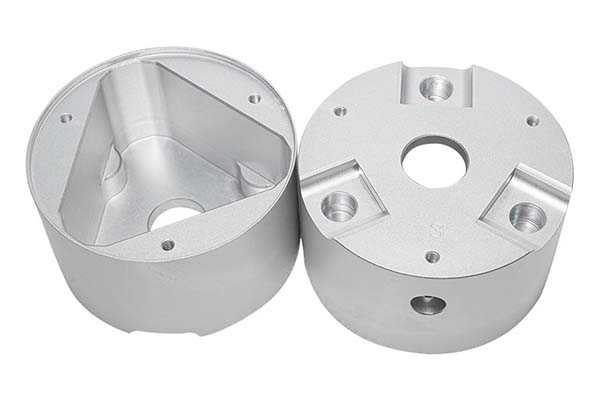
When your application involves high stress and low temperatures—think truck axles in snowy regions or industrial machinery shafts in cold climates—you need an alloy steel that maintains its strength and toughness where other materials become brittle. JIS SNCM439 alloy steel is a Japanese standard nickel-chromium-molybdenum steel designed specifically for these demanding conditions.
Key takeaways
- JIS SNCM439 achieves its performance through a carefully balanced composition and a specific heat treatment process.
- This material is best suited for applications that combine high mechanical loads with low operating temperatures.
- Achieving the full potential of JIS SNCM439 requires careful control of manufacturing processes, particularly heat treatment.
- Understanding the trade-offs between JIS SNCM439 and alternative materials helps in making an informed selection.
What Makes JIS SNCM439 Unique?
JIS SNCM439 achieves its performance through a carefully balanced composition and a specific heat treatment process. The key is the nickel content, which provides toughness, combined with chromium and molybdenum, which add hardenability and strength.
The Chemistry Behind the Performance
The chemical composition of JIS SNCM439 is specified in JIS G4105. Each element plays a specific role in achieving the final properties.
| Element | Content Range (%) | Why It Matters |
|---|---|---|
| Carbon (C) | 0.37 – 0.43 | Provides core strength and hardenability. |
| Nickel (Ni) | 1.60 – 2.00 | The critical element. Enhances impact toughness, especially at low temperatures. |
| Chromium (Cr) | 0.60 – 0.90 | Increases hardenability and provides moderate corrosion resistance. |
| Molybdenum (Mo) | 0.20 – 0.30 | Improves fatigue strength and reduces temper brittleness. |
| Manganese (Mn) | 0.60 – 0.85 | Aids in grain refinement and machinability. |
| Silicon (Si) | 0.15 – 0.35 | Acts as a deoxidizer and contributes to strength. |
| Sulfur (S) | ≤ 0.030 | Kept low to prevent cracking in high-stress applications. |
| Phosphorus (P) | ≤ 0.030 | Limited to prevent cold brittleness. |
Key Insight: The nickel content in SNCM439 (1.60–2.00%) is significantly higher than in SCM440 (≤ 0.25%). This is why SNCM439 maintains impact toughness of 80 J or more at -40°C, while SCM440 drops to around 50 J under the same conditions.
Mechanical Properties That Matter
The mechanical properties of JIS SNCM439 are achieved through quenching and tempering. The table below shows typical values after proper heat treatment.
| Property | Typical Value | Significance |
|---|---|---|
| Tensile Strength | ≥ 1100 MPa | Indicates the ultimate load capacity before fracture. |
| Yield Strength | ≥ 900 MPa | The stress at which permanent deformation begins. |
| Elongation | ≥ 12% | Measures ductility; higher values indicate less brittleness. |
| Impact Toughness (-40°C) | ≥ 80 J | Critical for cold-climate applications. Measures energy absorbed before fracture. |
| Fatigue Strength | ~560 MPa | Important for rotating components like axles and shafts. |
| Hardness (Brinell) | 280 – 340 HB | Balanced hardness for wear resistance without brittleness. |
Where Does JIS SNCM439 Deliver the Most Value?
This material is best suited for applications that combine high mechanical loads with low operating temperatures. It is widely used in automotive, heavy machinery, and structural components in cold climates.
Automotive Drivetrain Components
Truck axles, transmission gears, and drive shafts experience both high torque and, in cold regions, the risk of brittle fracture. JIS SNCM439 is commonly specified for these applications.
Case Study: A Japanese truck manufacturer operating in Hokkaido, where winter temperatures drop to -30°C, experienced axle failures in their 30-ton trucks. Their standard alloy steel axles had impact toughness of only 40 J at -30°C, leading to an 8% failure rate annually. They switched to JIS SNCM439 axles processed with forging at 1150°C, quenching at 850°C, and tempering at 580°C. The new axles achieved 920 MPa yield strength and 85 J impact toughness at -40°C. Service life increased to 350,000 kilometers—double the previous life—and the failure rate dropped from 8% to 1%.
Heavy Machinery and Mining Equipment
Crusher bearings, excavator components, and rolling mill rollers face heavy loads and abrasive conditions. JIS SNCM439 provides the wear resistance and toughness needed for these applications.
Case Study: A mining equipment manufacturer was using a standard alloy steel for crusher bearings. The bearings required replacement every 12 months due to wear and surface fatigue. They switched to JIS SNCM439 with a nitrided surface treatment. The new bearings lasted 24 months, cutting maintenance downtime by 50% and reducing annual replacement costs by 40%.
Structural Components in Cold Regions
Crane shafts, bridge fasteners, and high-strength bolts in cold climates require materials that do not become brittle at low temperatures.
Case Study: Port cranes in northern Japan use JIS SNCM439 for hoist shafts. The material’s tensile strength of ≥1100 MPa allows safe lifting of 50-ton containers, while its low-temperature toughness ensures reliability during winter operations. Similarly, highway bridges in cold regions use SNCM439 bolts, which maintain their clamping force and resist cracking for 15+ years of service.
How Is JIS SNCM439 Manufactured and Processed?
Achieving the full potential of JIS SNCM439 requires careful control of manufacturing processes, particularly heat treatment.
Steelmaking and Forming
The steel is typically produced in an electric arc furnace (EAF) for medium batches or a basic oxygen furnace (BOF) for mass production. After steelmaking, the material is shaped through:
- Forging: Heated to 1100–1200°C and hammered or pressed into shape. Forging aligns the grain structure, increasing tensile strength by about 15% compared to cast parts. This is the preferred method for axles and gears.
- Rolling: Used to produce bars, sheets, and basic shapes like bolt blanks.
- Extrusion: Used for complex shapes like hollow shafts.
Heat Treatment: The Critical Step
The standard heat treatment cycle for JIS SNCM439 is designed to balance strength and toughness.
- Annealing: Heat to 820–850°C and cool slowly. This softens the steel for machining, reducing tool wear by approximately 35%.
- Quenching: Heat to 840–860°C and cool rapidly in oil. This transforms the microstructure to martensite, achieving the high tensile strength.
- Tempering: Heat to 550–600°C and cool in air. This reduces brittleness while retaining strength. The tempering temperature controls the final balance. Lower tempering temperatures (550°C) produce higher strength with slightly lower toughness. Higher tempering temperatures (600°C) produce higher toughness with slightly lower strength.
Optional Nitriding: For components requiring enhanced wear resistance, such as bearings, the steel can be nitrided. The part is heated to 500–550°C in a nitrogen-rich atmosphere, which creates a hard surface layer (0.1–0.2 mm thick with hardness HV 800–1000) while maintaining the tough core.
Machining Considerations
In the annealed condition, JIS SNCM439 machines reasonably well. Use carbide tooling with cutting fluid to prevent overheating. After quenching and tempering, the steel becomes harder (HRC 29–35) and more difficult to machine. Grinding is often used for final finishing to achieve tight tolerances.
How Does JIS SNCM439 Compare to Other Materials?
Understanding the trade-offs between JIS SNCM439 and alternative materials helps in making an informed selection.
| Material | Tensile Strength (MPa) | Impact Toughness (-40°C) | Corrosion Resistance | Relative Cost | Best For |
|---|---|---|---|---|---|
| JIS SNCM439 | ≥ 1100 | ≥ 80 J | Good | 100% | Cold-region, high-stress components |
| SCM440 (Alloy Steel) | ≥ 1080 | ~50 J | Moderate | 80% | General high-stress parts, mild climates |
| S45C (Carbon Steel) | ≥ 600 | ~20 J | Low | 50% | Low-stress, non-critical components |
| SUS304 (Stainless Steel) | ~515 | ~50 J | Excellent | 180% | Food and chemical equipment |
| Ti-6Al-4V (Titanium) | ~1100 | ~100 J | Excellent | 800% | Lightweight aerospace components |
Key Insights:
- Compared to SCM440, JIS SNCM439 offers 60% better low-temperature impact toughness due to its higher nickel content. For applications in cold climates, this difference is critical.
- Compared to carbon steel like S45C, SNCM439 provides roughly double the strength and four times the low-temperature toughness.
- Compared to stainless steel, SNCM439 is significantly less expensive and offers higher strength, though it requires coating for corrosion protection in wet environments.
How to write a spec that gets priced correctly
A drawing is a contract. If it leaves a number open, the shop fills that number in with its own default. The default is rarely the one you had in mind. Put these five lines on every RFQ and most of the back-and-forth disappears before it starts.
- Alloy designation and the standard behind it
- Temper or heat treatment condition
- Mechanical properties you actually need
- Mill certificate and traceability requirement
- Finish and the faces it applies to
The point is not paperwork. Each line removes a decision the shop would otherwise make for you. A complete RFQ comes back priced. An incomplete one comes back guessed.
What actually drives the price
Buyers usually push on material because it is the line they can see. In practice the material is rarely the biggest number on a quote. These five lines decide most of it:
- alloy grade and mill availability
- stock size versus finished size
- heat treatment and testing
- machinability
- certification
Ask for the quote split by line. A supplier who cannot break it down is guessing, and you will pay for the guess. The line you can usually renegotiate is the tolerance band, not the raw material.
Problems you will meet, and the fix
Every process has a failure mode it prefers. The same four show up again and again on this kind of work, and none of them are mysteries once you know what to look for.
- Substituting a similar grade without telling anyone
- Hardness that varies across a single bar
- Corrosion in a weld heat-affected zone
- Distortion after heat treatment on a thin part
Catch the fault on the first part, not the hundredth. A first-article check costs an hour. A bad batch costs the whole order. Write the check into the purchase order so nobody has to remember it.
What to check on the first article
The first article is the cheapest inspection you will ever buy. Use it properly and the rest of the run becomes boring, which is exactly what you want.
- Every dimension on the drawing, with the measured value written beside it.
- The material certificate, matched to the heat or lot number on the parts.
- The finish against the sample you approved, under the same light.
- Fit against the mating part, assembled rather than measured.
- Packaging, because parts that arrive damaged were never in tolerance.
Check in this order: datums, then mating features, then cosmetic faces. If the datums are wrong, every number after them is noise. Keep the report on file. When a problem shows up in month six, that document is the only thing that tells you what changed.
How to compare two quotes fairly
Two numbers are not comparable unless the scope matches. Line them up before you decide, because a low number with three gaps is not a low number.
Same drawing, same material, same finish, same inspection. Anything else is a different job wearing the same part number. Then look at what each quote leaves out. Freight, packaging, certificates and tooling are the usual gaps.
Ask each supplier to state their assumptions in writing. The one who does is usually the one who has run the process before.
Scaling from one part to a batch
The first part teaches you the process. The hundredth teaches you the process cost.
Watch three things as volume grows: setup amortisation, tool wear, and how much hand work the finish still needs. If the unit price barely moves between ten and a hundred, the cost sits in material or in hand work, not in setup. Ask which, because only one of them is negotiable.
Lead time behaves the same way. A one-off is scheduled around other jobs. A repeat order is scheduled around your forecast. Give the shop a forecast and the lead time gets shorter, not longer.
How to read a supplier's quote
A quote is a short document with a long shadow. Four things in it decide whether the job runs smoothly, and only one of them is the price.
- The scope line. It should name the process, the material and the finish, not just the part.
- The tolerance basis. General tolerance or the drawing, and which standard it follows.
- The exclusions. Tooling, freight, certificates and inspection are the usual omissions.
- The validity date. Material prices move, and an open-ended quote is a promise nobody can keep.
Read the exclusions before you read the total. A quote that leaves out tooling is not cheaper. It is a quote for a different job.
What Standards and Certifications Should You Look For?
When sourcing JIS SNCM439, proper certification ensures you receive material that meets the specified properties.
- JIS G4105: The Japanese Industrial Standard for nickel-chromium-molybdenum steels. It defines the chemical composition and mechanical property requirements for SNCM439.
- Material Test Certificate (MTC): Reputable suppliers provide an MTC that confirms the heat number, chemical analysis, and mechanical test results, including tensile strength, yield strength, elongation, and impact toughness at the specified temperature.
Quality Tip: For applications requiring guaranteed low-temperature performance, request impact test results at -40°C or lower. The standard requirement is 80 J at -40°C, but with adjusted heat treatment, values above 90 J at -50°C can be achieved.
JIS SNCM439 alloy steel is a proven material for high-stress components that must perform reliably in cold environments. Its nickel content provides exceptional low-temperature toughness, while chromium and molybdenum contribute to hardenability and strength. When properly forged and heat-treated—quenched and tempered to the right balance—it delivers the combination of strength, toughness, and wear resistance required for truck axles, machinery shafts, gears, and structural components in cold climates. While it costs more than standard carbon or alloy steels, its reliability in harsh conditions often makes it the most cost-effective choice over the full lifecycle of the component.
FAQ About JIS SNCM439 Alloy Steel
Can JIS SNCM439 be used in temperatures colder than -40°C?
Yes, with adjusted heat treatment. Lowering the tempering temperature to 500–550°C can increase impact toughness to 90 J or more at -50°C. This makes the material suitable for polar-region equipment such as snowplows, arctic exploration vehicles, and cold-climate infrastructure.
What is the difference between JIS SNCM439 and SCM440?
The primary difference is nickel content. SNCM439 contains 1.60–2.00% nickel, while SCM440 contains 0.25% or less. This gives SNCM439 approximately 60% better low-temperature impact toughness. Choose SNCM439 for applications in cold climates where impact resistance is critical; choose SCM440 for general high-stress applications in milder environments.
How can I improve the wear resistance of JIS SNCM439 components?
Nitriding is the most effective method. Heat the component to 500–550°C in a nitrogen-rich atmosphere to create a hard surface layer (0.1–0.2 mm thick, HV 800–1000). This increases wear resistance by approximately 2x while maintaining the tough core. This treatment is commonly applied to bearings, gears, and other wear-intensive components.
What welding procedures are required for JIS SNCM439?
JIS SNCM439 has acceptable weldability but requires careful procedures. Preheat to 250–300°C to prevent cracking. Use low-hydrogen welding electrodes. After welding, perform post-weld heat treatment (stress relief) to restore the material’s properties in the heat-affected zone. For critical components, welding should be followed by full quenching and tempering.
Our solution for JIS SNCM439 Alloy Steel: Properties
YiguProto runs metal sourcing and machining in house, from a single prototype to a production batch. We quote the process, the material and the finish as separate lines, so you can see where the money goes instead of arguing with one number.
Send a STEP file or a drawing and you get a DFM report in one to two business days. It flags the features that add cost and the features that will not hold tolerance on the process you picked.
Every order ships with an inspection report on the features you call out. If a part misses, we make it again. Ready to price a part? Start with a free quote and DFM review, or read more about our metal sourcing and machining. You can also talk to an engineer before you commit to a drawing.
FAQ about JIS SNCM439 Alloy Steel: Properties
What tolerance can you hold on JIS SNCM439 Alloy Steel: Properties?
The working default is ±0.05 mm on machined features, ±0.1 mm on formed ones. Tighter than that the process changes and so does the price, because every step tighter adds inspection time. Call out only the faces that mate with something else and leave the rest on the general tolerance.
What is the lead time for JIS SNCM439 Alloy Steel: Properties?
Expect 5 to 12 business days depending on mill stock. Tooling, material stock and the finishing queue all move that number, so we confirm the date in writing before the run starts rather than after.
What material should I specify?
Specify by standard, not by trade name. A trade name can change under you between two orders; a standard number cannot. Then add the one property that actually decides the part, whether that is strength, heat resistance or chemical exposure.
How long does a first article take?
Usually a few business days once the drawing is frozen, and longer if tooling is involved. The date we give you is the date we confirm in writing, not the date we hope for.
Can JIS SNCM439 Alloy Steel: Properties be made in small quantities?
Yes, and small quantities are where a good supplier earns the next order. Setup dominates the price at low volume, so the cheapest route is usually the one with the fewest operations, not the cheapest material.
What should I check before approving the parts?
Datums first, then the features that mate, then the cosmetic faces. Ask for a dimensional report, a material certificate and a finish sample. A part can be inside every tolerance and still not fit, so assemble one before you sign.
The short version
JIS SNCM439 Alloy Steel: Properties rewards the buyer who reads the data sheet and the drawing together. Pick the option for the property that matters, not for the price per kilo.
Tighten only what mates. Test a sample before the run. Then let the process do the rest.