
Metal Materials
JIS SUP10 Spring Steel: Properties, Applications, and Manufacturing Guide
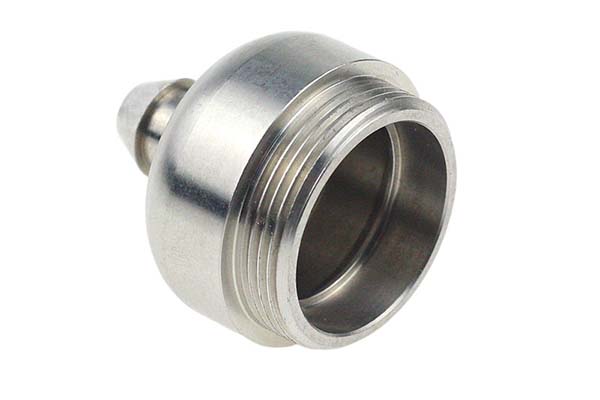
This guide covers everything you need to know about JIS SUP10 spring steel—the chromium-silicon alloy that delivers exceptional elasticity, fatigue resistance, and strength for demanding Japanese automotive and industrial applications. You’ll learn about its chemical makeup, mechanical properties, real-world uses, manufacturing processes, and how it compares to other spring materials.
What Makes JIS SUP10 Different?
A Chemical Formula Built for Springs
JIS SUP10’s performance starts with its precise alloy composition. Two elements set it apart: silicon and chromium.
| Element | Symbol | Content Range (%) | What It Does |
|---|---|---|---|
| Carbon | C | 0.52 – 0.60 | Provides hardness and strength for load-bearing springs |
| Chromium | Cr | 0.50 – 0.80 | Improves hardenability and fatigue resistance; adds mild corrosion protection |
| Silicon | Si | 1.20 – 1.60 | The key differentiator—boosts elastic modulus and spring recovery; enhances high-temperature stability |
| Manganese | Mn | 0.60 – 0.90 | Aids heat treatment; reduces brittleness under stress |
| Phosphorus | P | ≤ 0.030 | Tightly controlled to prevent cracking in high-stress parts |
| Sulfur | S | ≤ 0.035 | Minimized to avoid fatigue cracks under repeated loads |
| Nickel | Ni | ≤ 0.30 | Trace element; no major impact on performance |
| Vanadium | V | ≤ 0.10 | Minor grain refinement |
| Molybdenum | Mo | ≤ 0.10 | Trace element; no significant performance effect |
The high silicon content is what separates SUP10 from lower-grade spring steels like SUP9. Silicon raises the elastic modulus, meaning the spring returns to its original shape more reliably after compression—even after millions of cycles.
Physical Properties at a Glance
These properties describe how SUP10 behaves under physical conditions:
| Property | Value | Practical Significance |
|---|---|---|
| Density | 7.85 g/cm³ | Standard weight for steel components |
| Melting Point | 1,410 – 1,450 °C | Handles heat treatment without melting concerns |
| Thermal Conductivity | 44.5 W/(m·K) at 20°C | Suitable for heat treatment processes |
| Coefficient of Thermal Expansion | 11.6 × 10⁻⁶/°C (20–100°C) | Minimal shape distortion during heating and cooling |
| Magnetic Properties | Ferromagnetic | Attracts magnets—useful for sorting, inspection, and manufacturing clamping |
How Strong Is JIS SUP10?
Mechanical Properties After Heat Treatment
JIS SUP10’s mechanical performance truly shines after spring temper heat treatment. Here’s what you can expect:
| Property | Annealed Condition | Spring-Tempered Condition |
|---|---|---|
| Hardness (Rockwell) | 70–85 HRB | 40–48 HRC |
| Hardness (Vickers) | 140–170 HV | 400–480 HV |
| Tensile Strength | 650–800 MPa | 1,250–1,550 MPa |
| Yield Strength | 400–500 MPa | 1,050–1,350 MPa |
| Elongation (in 50 mm) | 18–23% | 5–9% |
| Impact Toughness (at 20°C) | ≥ 38 J | ≥ 15 J |
| Fatigue Limit (rotating beam) | 360–410 MPa | 680–780 MPa |
What These Numbers Mean in Practice
Elastic Modulus: ~205 GPa — Higher than plain carbon steels like JIS S65C. This translates to excellent spring recovery even after frequent heavy loads. A truck suspension using SUP10 returns to its original ride height consistently—year after year.
Spring Temper — Achieved through tempering at 350–450°C. This heat treatment balances hardness for strength with enough flexibility to prevent brittle fracture. Get it right, and the spring handles both compression and tension without breaking.
Hardenability — Excellent. Chromium and silicon enable uniform hardening in sections up to 30 mm thick. This matters for large leaf springs and heavy-duty coil springs where inconsistent hardness creates weak spots.
What Other Properties Matter?
Beyond Strength and Hardness
Wear Resistance: Good. Carbon and chromium form carbides that resist abrasion. In dusty agricultural environments—think tractor suspensions working in dry fields—SUP10 holds up where softer steels wear quickly.
Corrosion Resistance: Mild. Better than plain carbon steels, but not stainless. For outdoor or wet applications, surface coatings like zinc plating are essential. A truck leaf spring exposed to road salt needs protection.
Elastic Recovery: Superior. This is SUP10’s standout trait. The high silicon content ensures the spring returns to its original shape after compression. In valve springs, this means consistent valve timing. In suspension springs, it means predictable ride height.
Where Is JIS SUP10 Used?
Applications That Demand Reliability
JIS SUP10’s combination of high elasticity and strength makes it a staple across heavy industries:
Springs — The Primary Application
- Coil springs for truck suspensions and industrial machinery
- Leaf springs for commercial vehicles and trailers
- Torsion springs for heavy-duty door hinges and machinery
Automotive Suspension Components
Japanese truck manufacturers like Isuzu and Hino rely on SUP10 for leaf springs and coil springs that handle heavy weights and rough terrain. A single truck can carry 25-ton loads over thousands of kilometers—the springs must survive that abuse.
Valve Springs
Used in medium-to-large automotive engines, including diesel truck engines and industrial generators. SUP10 provides reliable performance for moderate RPMs and frequent cycles. For high-RPM racing engines, chromium-vanadium alloys like AISI 6150 are better suited.
Industrial Machinery
Springs in press machines, conveyor systems, and heavy-duty valves—common in Japanese factories, including Toyota Group suppliers. These applications demand consistent performance under high-load, high-cycle conditions.
Agricultural Machinery
Springs in tractor plows, rice harvester cutting heads, and manure spreaders. These components withstand dirt, vibration, and heavy impacts on Japanese farms. The wear resistance matters as much as the elasticity.
Hand Tools
Heavy-duty tools like bolt cutters, industrial pliers, and jacks. The steel provides the strength needed to grip or cut tough materials without permanent deformation.
Railway Components
Springs in train bogies and brake systems resist vibration and heavy loads. Even Shinkansen (bullet train) auxiliary parts use SUP10 for its reliability under demanding conditions.
How Is JIS SUP10 Manufactured?
From Steelmaking to Finished Spring
Producing JIS SUP10 follows precision-oriented Japanese manufacturing practices. Here’s the complete process:
Steelmaking
SUP10 is made using an Electric Arc Furnace (EAF) —common in Japan for scrap recycling, supporting sustainability goals. Alternatively, Basic Oxygen Furnace (BOF) is used for larger production runs. The critical step is precise control of silicon (1.20–1.60%) and chromium to meet JIS G4801 specifications.
Rolling
After steelmaking, the metal undergoes Hot Rolling at 1,100–1,200°C. This produces bars, sheets, or coils—standard formats for Japanese spring manufacturers.
For precision parts like valve springs, Cold Rolling at room temperature follows. This improves surface finish and dimensional accuracy, creating wire that meets tight tolerances.
Precision Forming
Springs take shape through several methods:
Spring Coiling: Cold-rolled wire wraps around a mandrel to create coil springs. Japanese manufacturers match JIS dimensional specifications precisely—often within ±0.1 mm.
Stamping: Flat steel presses into flat springs for applications like electrical switch contacts. High-precision dies ensure consistent geometry.
Bending and Forging: For leaf springs or gear blanks, the steel heats and shapes under pressure. This process refines the grain structure, adding strength.
Heat Treatment — The Critical Step
Heat treatment unlocks SUP10’s spring performance. Here’s the sequence:
| Step | Temperature | Process | Purpose |
|---|---|---|---|
| Annealing | 800–850°C | Slow cooling | Softens steel for forming operations |
| Quenching | 830–870°C | Rapid oil cooling | Hardens the steel; chromium and silicon ensure uniform results |
| Tempering | 350–450°C | Controlled reheating | Achieves spring temper—reduces brittleness while retaining strength and elasticity |
The tempering temperature matters significantly. Lower temperatures yield higher hardness (up to 48 HRC) but less toughness. Higher temperatures produce more flexibility (down to 40 HRC) but slightly lower strength. The right balance depends on the application.
Machining and Finishing
For complex parts like gears or custom springs, post-forming operations refine the component:
- Grinding achieves precise dimensions and smooth surfaces
- Milling cuts complex features
- Tolerances can reach ±0.01 mm for small precision springs
Surface Treatment
Optional surface treatments protect SUP10 from corrosion:
| Treatment | Standard | Best For |
|---|---|---|
| Zinc Plating | JIS H8610 | Outdoor tools, automotive springs—resists rain and humidity |
| Powder Coating | JIS K5600 | Visible components—adds aesthetics and rust protection |
| Blackening | JIS K5623 | Indoor machinery springs—low-cost oxide layer |
Quality Control
Rigorous testing ensures compliance with JIS standards:
- Chemical analysis via spectrometry (JIS G1253) verifies alloy content
- Tensile testing (JIS Z2241) confirms strength specifications
- Spring load testing (JIS B2704) ensures shape retention after 100,000+ cycles
- Dimensional inspection using CMMs verifies JIS tolerances
Real-World Performance: Two Case Studies
Case Study 1: Truck Leaf Spring Durability
A Tokyo-based truck manufacturer faced persistent leaf spring failures using JIS S65C. The springs cracked after just 90,000 km under the truck’s 25-ton load. Each failure meant unplanned downtime, roadside repairs, and unhappy customers.
The manufacturer switched to JIS SUP10 leaf springs, tempered to 45 HRC and zinc-plated for corrosion protection. Results were dramatic:
- Spring life extended to 220,000 km—a 144% improvement
- Maintenance costs dropped by 65%
- Fleet reliability improved significantly for delivery companies
The higher upfront cost of SUP10 paid for itself many times over in reduced downtime and longer service intervals.
Case Study 2: Agricultural Machinery Spring Performance
An Osaka-based tractor maker struggled with rice harvester spring failures. Using a low-silicon steel, the springs lost elasticity after just 700 hours in muddy, vibration-heavy conditions. Farmers faced mid-harvest breakdowns—a costly problem during the narrow harvest window.
Replacing the springs with JIS SUP10 (tempered to 43 HRC) transformed performance:
- Spring life increased to 2,100 hours—a 200% improvement
- Farmer downtime dropped by 66%
- Tractor sales increased in Japan and Southeast Asian markets
The durability improvement became a selling point for the tractor line, giving the manufacturer a competitive advantage.
How to write a spec that gets priced correctly
A drawing is a contract. If it leaves a number open, the shop fills that number in with its own default. The default is rarely the one you had in mind. Put these five lines on every RFQ and most of the back-and-forth disappears before it starts.
- Alloy designation and the standard behind it
- Temper or heat treatment condition
- Mechanical properties you actually need
- Mill certificate and traceability requirement
- Finish and the faces it applies to
The point is not paperwork. Each line removes a decision the shop would otherwise make for you. A complete RFQ comes back priced. An incomplete one comes back guessed.
What actually drives the price
Buyers usually push on material because it is the line they can see. In practice the material is rarely the biggest number on a quote. These five lines decide most of it:
- alloy grade and mill availability
- stock size versus finished size
- heat treatment and testing
- machinability
- certification
Ask for the quote split by line. A supplier who cannot break it down is guessing, and you will pay for the guess. The line you can usually renegotiate is the tolerance band, not the raw material.
Problems you will meet, and the fix
Every process has a failure mode it prefers. The same four show up again and again on this kind of work, and none of them are mysteries once you know what to look for.
- Substituting a similar grade without telling anyone
- Hardness that varies across a single bar
- Corrosion in a weld heat-affected zone
- Distortion after heat treatment on a thin part
Catch the fault on the first part, not the hundredth. A first-article check costs an hour. A bad batch costs the whole order. Write the check into the purchase order so nobody has to remember it.
What to check on the first article
The first article is the cheapest inspection you will ever buy. Use it properly and the rest of the run becomes boring, which is exactly what you want.
- Every dimension on the drawing, with the measured value written beside it.
- The material certificate, matched to the heat or lot number on the parts.
- The finish against the sample you approved, under the same light.
- Fit against the mating part, assembled rather than measured.
- Packaging, because parts that arrive damaged were never in tolerance.
Check in this order: datums, then mating features, then cosmetic faces. If the datums are wrong, every number after them is noise. Keep the report on file. When a problem shows up in month six, that document is the only thing that tells you what changed.
How to compare two quotes fairly
Two numbers are not comparable unless the scope matches. Line them up before you decide, because a low number with three gaps is not a low number.
Same drawing, same material, same finish, same inspection. Anything else is a different job wearing the same part number. Then look at what each quote leaves out. Freight, packaging, certificates and tooling are the usual gaps.
Ask each supplier to state their assumptions in writing. The one who does is usually the one who has run the process before.
How Does JIS SUP10 Compare to Other Spring Steels?
Material Comparison Table
| Material | Similarities to SUP10 | Key Differences | Best Application |
|---|---|---|---|
| JIS S65C | Japanese spring steel | No chromium or silicon; lower elasticity and fatigue resistance; cheaper | Standard low-to-medium load springs |
| JIS SUP9 | Japanese alloy spring steel | No high silicon; lower elastic modulus; cheaper | Medium-load industrial springs |
| AISI 6150 | Alloy spring steel | Chromium-vanadium; better high-temperature strength | High-RPM engines (racing, aerospace) |
| EN 50CrV4 | European alloy spring steel | Chromium-vanadium; better high-temperature stability; pricier | European heavy-duty springs (truck suspensions) |
| SUS304 (Stainless) | Spring properties | Corrosion-resistant but lower strength; more expensive | Wet or outdoor springs (marine, garden tools) |
| AISI 5160 | Chromium-alloyed steel | No high silicon; lower elasticity; cheaper | Moderate-load industrial springs |
When to Choose SUP10
Choose SUP10 when: You need high elasticity, good fatigue resistance, and reliable performance under heavy loads. Truck suspensions, agricultural machinery, and industrial equipment are ideal applications.
Choose other materials when: You need extreme high-temperature stability (AISI 6150 or 50CrV4), corrosion resistance without coating (SUS304), or cost is the primary driver (S65C for low-load applications).
JIS SUP10 spring steel delivers what demanding applications require: exceptional elasticity, high strength, and reliable fatigue resistance. Its high silicon content—the key differentiator from lower-grade spring steels—ensures consistent spring recovery even after millions of cycles under heavy loads.
For Japanese automotive manufacturers, SUP10 is a proven solution for truck suspensions and valve springs. For agricultural equipment makers, it provides the durability that farmers need during critical harvest windows. For industrial machinery builders, it delivers consistent performance in high-cycle applications.
While SUP10 costs more than plain carbon steels, the total cost of ownership often favors the higher-grade material. Longer service life, reduced maintenance, and improved reliability translate directly to bottom-line savings—especially in applications where failure means unplanned downtime.
Proper heat treatment and surface protection are essential to realizing SUP10’s full potential. Tempering temperature must match the application requirements, and zinc plating or other coatings are necessary for outdoor or wet environments.
When your project demands springs that won’t let you down, JIS SUP10 delivers the performance you need.
Our solution for JIS SUP10 Spring Steel: Properties
YiguProto runs metal sourcing and machining in house, from a single prototype to a production batch. We quote the process, the material and the finish as separate lines, so you can see where the money goes instead of arguing with one number.
Send a STEP file or a drawing and you get a DFM report in one to two business days. It flags the features that add cost and the features that will not hold tolerance on the process you picked.
Every order ships with an inspection report on the features you call out. If a part misses, we make it again. Ready to price a part? Start with a free quote and DFM review, or read more about our metal sourcing and machining. You can also talk to an engineer before you commit to a drawing.
FAQ about JIS SUP10 Spring Steel: Properties
What is the lead time for JIS SUP10 Spring Steel: Properties?
Expect 5 to 12 business days depending on mill stock. Tooling, material stock and the finishing queue all move that number, so we confirm the date in writing before the run starts rather than after.
What happens if a part is out of specification?
We measure it against the same drawing you approved and, if it misses, we make it again. What matters is that the report exists, because a disagreement without data is just an opinion.
How long does a first article take?
Usually a few business days once the drawing is frozen, and longer if tooling is involved. The date we give you is the date we confirm in writing, not the date we hope for.
Does the process work for prototypes as well as production?
Yes, and that is usually the point. Running the prototype on the production process removes a whole class of surprises, because the part you test is made the same way as the part you sell.
What should I check before approving the parts?
Datums first, then the features that mate, then the cosmetic faces. Ask for a dimensional report, a material certificate and a finish sample. A part can be inside every tolerance and still not fit, so assemble one before you sign.
What is JIS SUP10 Spring Steel: Properties used for?
JIS SUP10 Spring Steel: Properties turns up wherever the part has to do a real job at a predictable cost: brackets, housings, fixtures, covers and the fittings that hold them together. The honest test is whether the properties match the load and the environment, not whether the material is fashionable.
The short version
JIS SUP10 Spring Steel: Properties rewards the buyer who reads the data sheet and the drawing together. Pick the option for the property that matters, not for the price per kilo.
Tighten only what mates. Test a sample before the run. Then let the process do the rest.