
3D Printing
How Is 3D Printing Transforming Modern Manufacturing?
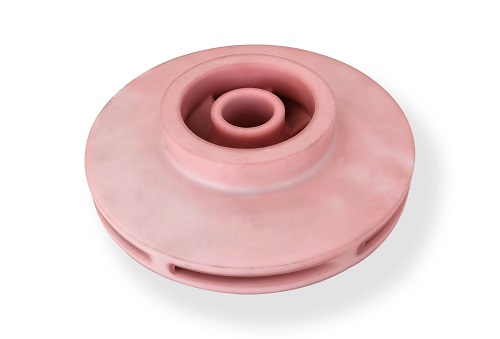
In the relentless drive for innovation and efficiency, modern manufacturing has long been constrained by a fundamental trade-off: the high cost and rigidity of mass production versus the slow speed and expense of custom fabrication. 3D printing, or additive manufacturing (AM), is dismantling this binary.
Key takeaways
- The additive principle liberates designers from the constraints of tool paths and draft angles, enabling Complexity for Free.
- Time-to-market and responsiveness are critical competitive metrics. 3D printing introduces radical compression across the product lifecycle.
- While per-part cost comparisons with injection molding often favor traditional methods at high volumes, AM’s economic advantage is strategic and systemic.
- The stereotype of 3D printing as only for plastic trinkets is obsolete. The material ecosystem is vast and industrially capable.
What Is the Foundational Principle That Enables Everything Else?
At its core, 3D printing is an additive process. Unlike traditional subtractive (e.g., CNC milling) or formative (e.g., injection molding) methods that remove material from a block or force it into a mold, AM builds objects layer by layer from the ground up, directly from a digital file. This single, fundamental difference is the engine for its revolutionary benefits. It decouples manufacturing complexity from cost and eliminates the need for dedicated tooling, enabling a level of geometric freedom and economic agility that was previously unimaginable.
How Does 3D Printing Achieve Unprecedented Design Freedom?
The additive principle liberates designers from the constraints of tool paths and draft angles, enabling Complexity for Free. This is perhaps its most disruptive characteristic.
- Topology Optimization & Lightweighting: Software can algorithmically design parts to use the minimum material necessary to meet performance requirements, creating organic, lattice-filled structures. In aerospace, this translates to fuel savings: Airbus uses 3D printed bionic partition walls in its A320 cabins, which are 45% lighter than traditional components while maintaining equivalent strength.
- Part Consolidation: Multiple components can be redesigned into a single, integrated print. General Electric famously consolidated 855 separate parts in a traditional jet engine fuel nozzle into a single 3D printed unit. This eliminated assembly, reduced potential failure points, and improved performance.
- Mass Customization: The cost of producing one unique part is virtually the same as producing one of a thousand identical ones. This is revolutionizing medical fields. Companies like Align Technology produce hundreds of thousands of unique, patient-specific Invisalign teeth aligners daily, each one a custom 3D printed medical device.
Case Study: The Customized Turbine BladeA power generation company needed to improve the efficiency of legacy gas turbines. Redesigning a new turbine blade with intricate, internal cooling channels was impossible with casting. Using metal 3D printing (DMLS), they produced a blade with a conformal cooling network that followed the blade’s external contours—a geometry only possible additively. The result was a 7% increase in cooling efficiency and extended component life, breathing new performance into existing infrastructure.
How Does 3D Printing Compress Timelines and Redefine Agility?
Time-to-market and responsiveness are critical competitive metrics. 3D printing introduces radical compression across the product lifecycle.
| Development Phase | Traditional Timeline (Weeks) | With 3D Printing (Days) | Business Impact |
|---|---|---|---|
| Concept Prototyping | 2-4 (for machined prototype) | 1-2 (print in-house overnight) | Faster validation, more design iterations, lower risk. |
| Tooling & Fixture Creation | 4-12 (for machined molds/jigs) | 1-3 (print end-use tooling) | Immediate production line support, rapid changeovers. |
| Low-Volume & Bridge Production | 6+ (waiting for mold delivery + sampling) | 1-2 (begin printing final parts) | Launch products, fulfill early orders, and gather market feedback before committing to mass production tooling. |
| Spare Parts & Legacy Support | 12+ (locating or re-manufacturing obsolete tooling) | 1-3 (print on-demand from digital file) | Eliminate massive inventories, ensure uptime for aging equipment (critical in defense, aviation, and heavy industry). |
This agility transforms business models. It enables on-demand manufacturing, where products are made only after an order is placed, drastically reducing inventory costs and waste.
Where Does the True Cost-Effectiveness of 3D Printing Lie?
While per-part cost comparisons with injection molding often favor traditional methods at high volumes, AM’s economic advantage is strategic and systemic.
- Elimination of Tooling: The upfront cost of molds, dies, and fixtures—which can range from tens to hundreds of thousands of dollars—is removed. This makes low-volume production and prototyping economically viable for startups and established companies alike.
- Reduced Assembly & Logistics: Consolidating assemblies into single parts cuts down on fasteners, labor, assembly time, and supply chain complexity. A study by the U.S. Department of Energy found that 3D printing could reduce the part count in a heat exchanger system by 75%, significantly cutting manufacturing and maintenance costs.
- Minimized Material Waste: Additive processes typically use only the material that ends up in the final part, with waste rates often below 5%. In contrast, subtractive machining can turn over 80% of a raw material block into scrap. For expensive materials like titanium or specialized alloys, this waste reduction is a major cost driver.
How Does the Expanding Material Palette Enable New Applications?
The stereotype of 3D printing as only for plastic trinkets is obsolete. The material ecosystem is vast and industrially capable.
| Material Class | Example Materials | Key Properties | Typical Industrial Applications |
|---|---|---|---|
| Polymers | Standard Resins, ABS, Nylon (PA12), ULTEM™ (PEI), PEEK | From visual prototypes to high-heat, chemical-resistant engineering thermoplastics. | Aerospace ducts, automotive brackets, medical sterilization trays. |
| Metals | Stainless Steel, Titanium (Ti6Al4V), Inconel, Aluminum | High strength-to-weight ratio, thermal resistance, biocompatibility. | Turbine blades, spinal implants, rocket engine components. |
| Ceramics & Composites | Alumina, Zirconia, Carbon Fiber Reinforced Polymers | Extreme hardness, heat resistance (beyond metals), enhanced stiffness. | Investment casting molds, dental crowns, satellite optics, lightweight drones. |
The frontier is multi-material and graded material printing, where a single part can have varying properties—like a rigid core with a soft, grippy exterior—opening doors for truly integrated, multi-functional components.
How to write a spec that gets priced correctly
A drawing is a contract. If it leaves a number open, the shop fills that number in with its own default. The default is rarely the one you had in mind. Put these five lines on every RFQ and most of the back-and-forth disappears before it starts.
- File format and units, with the model exported in millimetres
- Process and material grade, not a trade name
- Critical features and the tolerance each one needs
- Surface finish and the faces it applies to
- Quantity for the pilot build and for the year
The point is not paperwork. Each line removes a decision the shop would otherwise make for you. A complete RFQ comes back priced. An incomplete one comes back guessed.
What actually drives the price
Buyers usually push on material because it is the line they can see. In practice the material is rarely the biggest number on a quote. These five lines decide most of it:
- build volume and orientation
- layer height and support structure
- material grade and colour
- post-processing and hand finishing
- quantity per build plate
Ask for the quote split by line. A supplier who cannot break it down is guessing, and you will pay for the guess. The line you can usually renegotiate is the tolerance band, not the raw material.
Problems you will meet, and the fix
Every process has a failure mode it prefers. The same four show up again and again on this kind of work, and none of them are mysteries once you know what to look for.
- Warping on long flat faces where the part lifts off the plate
- Layer lines showing through a cosmetic surface
- Support scars on a mating face nobody flagged
- Dimensional drift on thin walls after cooling
Catch the fault on the first part, not the hundredth. A first-article check costs an hour. A bad batch costs the whole order. Write the check into the purchase order so nobody has to remember it.
What to check on the first article
The first article is the cheapest inspection you will ever buy. Use it properly and the rest of the run becomes boring, which is exactly what you want.
- Every dimension on the drawing, with the measured value written beside it.
- The material certificate, matched to the heat or lot number on the parts.
- The finish against the sample you approved, under the same light.
- Fit against the mating part, assembled rather than measured.
- Packaging, because parts that arrive damaged were never in tolerance.
Check in this order: datums, then mating features, then cosmetic faces. If the datums are wrong, every number after them is noise. Keep the report on file. When a problem shows up in month six, that document is the only thing that tells you what changed.
How to compare two quotes fairly
Two numbers are not comparable unless the scope matches. Line them up before you decide, because a low number with three gaps is not a low number.
Same drawing, same material, same finish, same inspection. Anything else is a different job wearing the same part number. Then look at what each quote leaves out. Freight, packaging, certificates and tooling are the usual gaps.
Ask each supplier to state their assumptions in writing. The one who does is usually the one who has run the process before.
Scaling from one part to a batch
The first part teaches you the process. The hundredth teaches you the process cost.
Watch three things as volume grows: setup amortisation, tool wear, and how much hand work the finish still needs. If the unit price barely moves between ten and a hundred, the cost sits in material or in hand work, not in setup. Ask which, because only one of them is negotiable.
Lead time behaves the same way. A one-off is scheduled around other jobs. A repeat order is scheduled around your forecast. Give the shop a forecast and the lead time gets shorter, not longer.
How to read a supplier's quote
A quote is a short document with a long shadow. Four things in it decide whether the job runs smoothly, and only one of them is the price.
- The scope line. It should name the process, the material and the finish, not just the part.
- The tolerance basis. General tolerance or the drawing, and which standard it follows.
- The exclusions. Tooling, freight, certificates and inspection are the usual omissions.
- The validity date. Material prices move, and an open-ended quote is a promise nobody can keep.
Read the exclusions before you read the total. A quote that leaves out tooling is not cheaper. It is a quote for a different job.
What to send with the first order
The first order sets the pattern for every order after it. Send a complete package once and the shop files it, and the second order takes a fraction of the time.
- A STEP or native model plus a PDF drawing carrying the same revision letter.
- The material callout by standard number, not by trade name.
- The finish and the exact faces it applies to.
- Any test the part must pass: fit, seal, drop, salt spray, dielectric.
- A contact who can answer a question inside one working day.
Then write down what was agreed. An email that confirms the material, the finish and the date is worth more than a longer purchase order that leaves them open.
What Is the Environmental and Sustainability Impact?
3D printing aligns with the principles of sustainable and circular manufacturing in profound ways.
- Localized Production: Manufacturing can be moved closer to the point of use, slashing the carbon footprint of long-distance shipping and logistics.
- On-Demand & Lightweighting: Producing parts only as needed eliminates overproduction and associated waste. The lightweighting enabled by topology optimization directly reduces fuel consumption in transportation applications over the product’s lifecycle.
- Material Efficiency & Recycling: As noted, waste is minimal. Furthermore, processes like Powder Bed Fusion (SLS, SLM) allow for high rates of unfused powder to be sieved and reused in subsequent builds. Research into recycling post-consumer plastics into filament is also advancing a circular economy model.
3D printing is not a silver bullet for every manufacturing challenge, but its characteristics collectively represent a new operating system for industrial production. Its value is not in replacing mass production, but in complementing it by excelling where traditional methods are weak: complex geometries, customization, rapid iteration, and low-volume agility. The most forward-thinking companies are using it not just to make things differently, but to make different things—products that are lighter, more efficient, personalized, and produced through more responsive and sustainable supply chains. Embracing these characteristics requires a shift in design thinking and business strategy, but the payoff is a formidable advantage in innovation, speed, and resilience.
FAQ (Frequently Asked Questions)
Q: Is 3D printing truly ready for end-use, production parts?
A: Absolutely, in well-defined applications. It is no longer just for prototyping. The key is application matching. 3D printing is being used for serial production in aerospace (Airbus, Boeing), medical (implants, guides), and automotive (customized components) where its advantages in lightweighting, consolidation, or customization justify the per-part cost. For high-volume, simple geometries, injection molding remains more economical.
Q: What are the biggest limitations or challenges with 3D printing today?
A: Key challenges include production speed for very high volumes, achieving consistent, certified material properties (especially in metals), post-processing requirements (support removal, surface finishing), and high material costs for industrial-grade powders and resins. The technology is rapidly advancing to address these, but they remain considerations for any production project.
Q: How does the strength of a 3D printed metal part compare to a forged or machined one?
A: It can be equivalent or superior in certain directions, but anisotropy is a factor. Well-printed metal parts using technologies like Laser Powder Bed Fusion (LPBF) can meet or exceed the strength of cast parts and approach the properties of wrought materials. However, the layer-by-layer process can create direction-dependent (anisotropic) properties, meaning strength may be slightly different along the build (Z) axis versus the in-plane (X/Y) axes. For critical applications, this is managed through design, process control, and post-processing like Hot Isostatic Pressing (HIP).
Q: Can I use 3D printing alongside my existing traditional manufacturing?
A: Yes, and this hybrid approach is often the most powerful strategy. Use 3D printing for rapid tooling (jigs, fixtures, custom molds), prototyping, and producing low-volume, complex components. Use traditional methods for high-volume, simple parts. This integrated model leverages the strengths of both worlds, maximizing overall manufacturing flexibility and efficiency.
Our solution for 3D Printing Transforming Modern Manufacturing
YiguProto runs 3D printing in house, from a single prototype to a production batch. We quote the process, the material and the finish as separate lines, so you can see where the money goes instead of arguing with one number.
Send a STEP file or a drawing and you get a DFM report in one to two business days. It flags the features that add cost and the features that will not hold tolerance on the process you picked.
Every order ships with an inspection report on the features you call out. If a part misses, we make it again. Ready to price a part? Start with a free quote and DFM review, or read more about our 3D printing. You can also talk to an engineer before you commit to a drawing.
FAQ about 3D Printing Transforming Modern Manufacturing
What files do you need in order to quote?
A STEP file plus a PDF drawing that carries the same revision letter. The model carries the geometry and the drawing carries the intent. When the two disagree, the shop picks one, and it is never the one you meant.
How do I compare two quotes fairly?
Match the scope first: same drawing, same material, same finish, same inspection. Then read the exclusions. Freight, tooling and certificates are the usual gaps, and a low number with three gaps is not a low number.
What is the lead time for 3D Printing Transforming Modern Manufacturing?
Expect 2 to 5 business days for a first batch. Tooling, material stock and the finishing queue all move that number, so we confirm the date in writing before the run starts rather than after.
What happens if a part is out of specification?
We measure it against the same drawing you approved and, if it misses, we make it again. What matters is that the report exists, because a disagreement without data is just an opinion.
What should I check before approving the parts?
Datums first, then the features that mate, then the cosmetic faces. Ask for a dimensional report, a material certificate and a finish sample. A part can be inside every tolerance and still not fit, so assemble one before you sign.
What tolerance can you hold on 3D Printing Transforming Modern Manufacturing?
The working default is ±0.1 mm on small features, ±0.3% on long spans. Tighter than that the process changes and so does the price, because every step tighter adds inspection time. Call out only the faces that mate with something else and leave the rest on the general tolerance.
The short version
3D Printing Transforming Modern Manufacturing rewards the buyer who reads the data sheet and the drawing together. Pick the option for the property that matters, not for the price per kilo.
Tighten only what mates. Test a sample before the run. Then let the process do the rest.