
3D Printing
Large-Scale 3D Printing: How It Works, Why It Wins
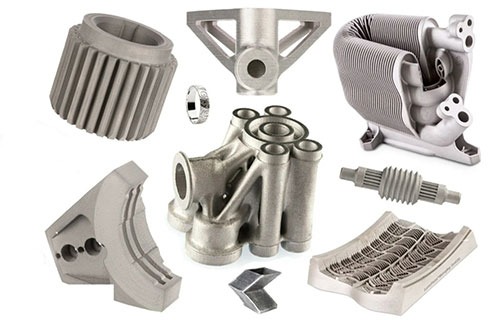
If you’re involved in manufacturing, engineering, or construction, you’ve likely heard the buzz about large-scale 3D printing. It’s no longer just about small plastic prototypes. Today, we’re printing entire car chassis, aircraft wing spars, and even habitable concrete houses.
Key takeaways
- At its heart, large-scale 3D printing, or big area additive manufacturing (BAAM), follows the same layer-by-layer principle as its desktop cousins.
- Why is industry shifting? Because traditional methods like casting, forging, and subtractive CNC machining hit a wall with large, complex parts.
- This isn’t futuristic speculation. It’s happening now, transforming bottom lines and project outcomes across sectors.
- The evolution is rapid. Here’s what we, as industry practitioners, are watching closely.
How Does Large-Scale 3D Printing Actually Work?
At its heart, large-scale 3D printing, or big area additive manufacturing (BAAM), follows the same layer-by-layer principle as its desktop cousins. But scaling up introduces unique engineering challenges. It’s not just about making a printer bigger; it’s about mastering material flow, thermal control, and structural integrity over vast volumes. Let’s look at the key technologies making this possible.
The core differentiator is the deposition process and the materials used. The table below compares the dominant technologies, cutting through the jargon to show you what each does best.
| Technology | Working Principle | Key Materials | Best For |
|---|---|---|---|
| FDM/FFF (Large-Scale) | A giant nozzle heats and extrudes thermoplastic filament or pellets, depositing them along a programmed path on a large bed. | ABS, Nylon, PEKK, Carbon-Fiber Reinforced composites | Automotive prototypes, custom jigs, large-scale models. |
| WAAM (Wire Arc Additive) | Uses a robotic welding arm to melt metal wire, building up parts layer by layer. It’s fast and great for very large metal structures. | Steel, Aluminum, Titanium alloys | Marine components, heavy machinery frames, aerospace brackets. |
| Powder Bed Fusion (EBM/SLM) | A high-energy electron beam or laser selectively melts fine metal powder in a sealed chamber. | Titanium, Inconel, Aluminum, Stainless Steel | **High-strength, complex *aerospace* and medical implants.** |
| Concrete 3D Printing | A robotic arm or gantry system extrudes a specially formulated cementitious mixture, building walls and structures directly from a digital model. | Reinforced concrete, mortar, geopolymers | **Construction of homes, bridges, and **architectural elements. |
A Real-World Glimpse: In my work with a heavy equipment manufacturer, we faced a six-month lead time for a custom, one-off support frame using traditional forging. By switching to large-scale WAAM, we printed a near-net-shape part in under two weeks. The subsequent machining was minimal, slashing total production time by over 70%. This hands-on experience cemented the value of matching the technology to the material and application.
Why Choose Large-Scale 3D Printing Over Traditional Manufacturing?
Why is industry shifting? Because traditional methods like casting, forging, and subtractive CNC machining hit a wall with large, complex parts. They become slow, wasteful, and prohibitively expensive. Large-scale additive manufacturing solves these pain points head-on.
Can It Truly Save Money and Material?
Absolutely. This is one of its most compelling arguments.
- Dramatic Waste Reduction: Traditional subtractive machining often starts with a solid block of metal, with 50-80% ending up as scrap chips. Large-scale 3D printing is additive, using material only where it’s needed. For expensive aerospace alloys, this alone can justify the investment.
- Eliminate Tooling Costs: Need a single, large custom part? The cost and time to produce a mold, die, or fixture for traditional methods can be astronomical. Large-scale 3D printing requires no tooling. You go directly from a CAD file to the finished part, removing a massive upfront cost and cutting weeks or months from your timeline.
Does It Really Offer More Design Freedom?
This is where it shines. Design for Additive Manufacturing (DfAM) unlocks geometries impossible by any other means.
- Lightweighting & Consolidation: You can design complex internal lattice structures that reduce weight by 30% or more while maintaining strength. Previously, a large assembly might require 20 separate parts bolted together. Now, it can be printed as a single, integrated component, eliminating assembly labor and potential failure points.
- Case in Point: Airbus has leveraged this to produce large-scale 3D printed partition walls for its A320 cabins. The redesigned, optimized part is significantly lighter yet stronger, contributing directly to fuel savings—a critical metric in aerospace.
Is the Production Cycle Really Faster?
For prototyping and low-volume production, the speed is unmatched.
- Accelerated R&D: Iterating a full-scale prototype for a car body or wind turbine blade can shrink from months to weeks. This allows for rapid testing and refinement.
- On-Demand & Spare Parts: For legacy machinery or maritime applications, storing massive spare parts is a logistics nightmare. With digital inventory and large-scale 3D printing, you can produce a replacement part on-site and on-demand, minimizing downtime.
Where Is Large-Scale 3D Printing Making a Real Impact Today?
This isn’t futuristic speculation. It’s happening now, transforming bottom lines and project outcomes across sectors.
Industrial Manufacturing & Aerospace
From custom automotive end-use parts like bumper beams to flight-certified titanium components for jet engines, the technology is in active use. Companies like Local Motors famously 3D-printed most of the Strati car’s body at the IMTS show in 2014, proving the concept for low-volume, highly customized vehicle production.
Construction & Infrastructure
This is perhaps the most visible application. Companies are printing homes in 24 hours, creating resilient disaster relief shelters, and building complex architectural structures like bridges. The 3D-printed concrete pedestrian bridge in Shanghai stands as a testament, completed with 30% less material waste and in a fraction of the time of conventional construction.
Energy & Maritime
The energy sector uses it for large, custom ductwork, turbine components, and heat exchangers with optimized fluid dynamics. In maritime, it’s used to produce large propellers, ship components, and repair parts directly at port, avoiding long supply chain delays.
How to write a spec that gets priced correctly
A drawing is a contract. If it leaves a number open, the shop fills that number in with its own default. The default is rarely the one you had in mind. Put these five lines on every RFQ and most of the back-and-forth disappears before it starts.
- File format and units, with the model exported in millimetres
- Process and material grade, not a trade name
- Critical features and the tolerance each one needs
- Surface finish and the faces it applies to
- Quantity for the pilot build and for the year
The point is not paperwork. Each line removes a decision the shop would otherwise make for you. A complete RFQ comes back priced. An incomplete one comes back guessed.
What actually drives the price
Buyers usually push on material because it is the line they can see. In practice the material is rarely the biggest number on a quote. These five lines decide most of it:
- build volume and orientation
- layer height and support structure
- material grade and colour
- post-processing and hand finishing
- quantity per build plate
Ask for the quote split by line. A supplier who cannot break it down is guessing, and you will pay for the guess. The line you can usually renegotiate is the tolerance band, not the raw material.
Problems you will meet, and the fix
Every process has a failure mode it prefers. The same four show up again and again on this kind of work, and none of them are mysteries once you know what to look for.
- Warping on long flat faces where the part lifts off the plate
- Layer lines showing through a cosmetic surface
- Support scars on a mating face nobody flagged
- Dimensional drift on thin walls after cooling
Catch the fault on the first part, not the hundredth. A first-article check costs an hour. A bad batch costs the whole order. Write the check into the purchase order so nobody has to remember it.
What to check on the first article
The first article is the cheapest inspection you will ever buy. Use it properly and the rest of the run becomes boring, which is exactly what you want.
- Every dimension on the drawing, with the measured value written beside it.
- The material certificate, matched to the heat or lot number on the parts.
- The finish against the sample you approved, under the same light.
- Fit against the mating part, assembled rather than measured.
- Packaging, because parts that arrive damaged were never in tolerance.
Check in this order: datums, then mating features, then cosmetic faces. If the datums are wrong, every number after them is noise. Keep the report on file. When a problem shows up in month six, that document is the only thing that tells you what changed.
How to compare two quotes fairly
Two numbers are not comparable unless the scope matches. Line them up before you decide, because a low number with three gaps is not a low number.
Same drawing, same material, same finish, same inspection. Anything else is a different job wearing the same part number. Then look at what each quote leaves out. Freight, packaging, certificates and tooling are the usual gaps.
Ask each supplier to state their assumptions in writing. The one who does is usually the one who has run the process before.
Scaling from one part to a batch
The first part teaches you the process. The hundredth teaches you the process cost.
Watch three things as volume grows: setup amortisation, tool wear, and how much hand work the finish still needs. If the unit price barely moves between ten and a hundred, the cost sits in material or in hand work, not in setup. Ask which, because only one of them is negotiable.
Lead time behaves the same way. A one-off is scheduled around other jobs. A repeat order is scheduled around your forecast. Give the shop a forecast and the lead time gets shorter, not longer.
How to read a supplier's quote
A quote is a short document with a long shadow. Four things in it decide whether the job runs smoothly, and only one of them is the price.
- The scope line. It should name the process, the material and the finish, not just the part.
- The tolerance basis. General tolerance or the drawing, and which standard it follows.
- The exclusions. Tooling, freight, certificates and inspection are the usual omissions.
- The validity date. Material prices move, and an open-ended quote is a promise nobody can keep.
Read the exclusions before you read the total. A quote that leaves out tooling is not cheaper. It is a quote for a different job.
What to send with the first order
The first order sets the pattern for every order after it. Send a complete package once and the shop files it, and the second order takes a fraction of the time.
- A STEP or native model plus a PDF drawing carrying the same revision letter.
- The material callout by standard number, not by trade name.
- The finish and the exact faces it applies to.
- Any test the part must pass: fit, seal, drop, salt spray, dielectric.
- A contact who can answer a question inside one working day.
Then write down what was agreed. An email that confirms the material, the finish and the date is worth more than a longer purchase order that leaves them open.
When this is the wrong choice
A good supplier tells you when the process does not fit. These are the cases where we say so.
- The volume is so low that setup costs more than the parts are worth.
- The tolerance is tighter than the process can hold without a second operation.
- The geometry cannot be made without a tool feature that will not pay back.
- The material you need is not available in the form the process requires.
- The schedule is shorter than the tooling or setup time, and nobody has said so yet.
None of these are refusals. They are reasons to look at a different route, and the earlier that conversation happens the cheaper it is. The most expensive mistake in manufacturing is a process chosen before the question was understood.
Planning the ramp from prototype to production
The gap between one good part and a thousand identical ones is a plan, not a machine. Three decisions close it.
First, freeze the design. Every change after tooling starts is a re-cut, and re-cuts are where schedules go. Second, decide the inspection level. A prototype is checked by eye; a production part is checked against a report. Third, agree the change process in writing, including who pays for it.
Write the ramp down as dates and owners, not as intentions. A ramp plan with three names and three dates is worth more than a page of good intentions.
What documentation to expect
Paperwork is not bureaucracy when a part fails at the customer. It is the only record of what was agreed. A normal shipment should carry four documents.
- A dimensional report covering every callout on the drawing.
- A material certificate traceable to the heat or lot number.
- A finish or coating certificate where the specification requires one.
- A packing list that matches the carton labels.
If a supplier cannot produce these on request, they are not running a controlled process. Ask for one sample set before you place the first order and you will know exactly what you are buying.
What’s Next? The Future Trends Shaping Large-Scale 3D Printing
The evolution is rapid. Here’s what we, as industry practitioners, are watching closely.
Smarter and More Automated Workflows
The future is in closed-loop control systems. Think printers equipped with in-situ monitoring sensors (like melt-pool monitoring in metal printing) that use AI to correct errors in real-time. This pushes precision for large parts below the 0.1% error margin, making them viable for more critical applications. Furthermore, the integration of AI-driven generative design will automatically create optimal, lightweight structures for large components, further pushing the boundaries of performance.
New Frontiers in Materials
The push is for higher performance and greater sustainability. We’re seeing rapid development in:
- Advanced composites: Continuous carbon fiber reinforcement in large-format FDM for parts rivaling metal strength at a fraction of the weight.
- Sustainable materials: Recycled plastic polymers for printing and low-carbon concrete mixes for construction, aligning with circular economy goals.
- Multi-material printing: The ability to print a single part with varying material properties—like a rigid core with a flexible outer layer—will open new functional possibilities.
Mainstream Adoption Through Cost Reduction
As printer manufacturers achieve economies of scale and open-material platforms become standard, the capital expenditure (CapEx) barrier will fall. We anticipate a 25-35% reduction in system costs over the next five years. Coupled with faster print speeds and more robust post-processing automation, the total cost of ownership will make large-scale 3D printing a compelling, standard option for small and medium-sized enterprises.
Our solution for Large-Scale 3D Printing: How
YiguProto runs 3D printing in house, from a single prototype to a production batch. We quote the process, the material and the finish as separate lines, so you can see where the money goes instead of arguing with one number.
Send a STEP file or a drawing and you get a DFM report in one to two business days. It flags the features that add cost and the features that will not hold tolerance on the process you picked.
Every order ships with an inspection report on the features you call out. If a part misses, we make it again. Ready to price a part? Start with a free quote and DFM review, or read more about our 3D printing. You can also talk to an engineer before you commit to a drawing.
FAQ about Large-Scale 3D Printing: How
What tolerance can you hold on Large-Scale 3D Printing: How?
The working default is ±0.1 mm on small features, ±0.3% on long spans. Tighter than that the process changes and so does the price, because every step tighter adds inspection time. Call out only the faces that mate with something else and leave the rest on the general tolerance.
What happens if a part is out of specification?
We measure it against the same drawing you approved and, if it misses, we make it again. What matters is that the report exists, because a disagreement without data is just an opinion.
What material should I specify?
Specify by standard, not by trade name. A trade name can change under you between two orders; a standard number cannot. Then add the one property that actually decides the part, whether that is strength, heat resistance or chemical exposure.
Is there a minimum order quantity?
No hard minimum. One part is fine. What changes with volume is which costs dominate, so a single unit is priced mostly on setup and a thousand units are priced mostly on cycle time and material.
What is Large-Scale 3D Printing: How used for?
Large-Scale 3D Printing: How turns up wherever the part has to do a real job at a predictable cost: brackets, housings, fixtures, covers and the fittings that hold them together. The honest test is whether the properties match the load and the environment, not whether the material is fashionable.
Can Large-Scale 3D Printing: How be made in small quantities?
Yes, and small quantities are where a good supplier earns the next order. Setup dominates the price at low volume, so the cheapest route is usually the one with the fewest operations, not the cheapest material.
The short version
Large-Scale 3D Printing: How rewards the buyer who reads the data sheet and the drawing together. Pick the option for the property that matters, not for the price per kilo.
Tighten only what mates. Test a sample before the run. Then let the process do the rest.