
3D Printing
What Makes Laser Sintering (SLS) 3D Printing So Versatile?
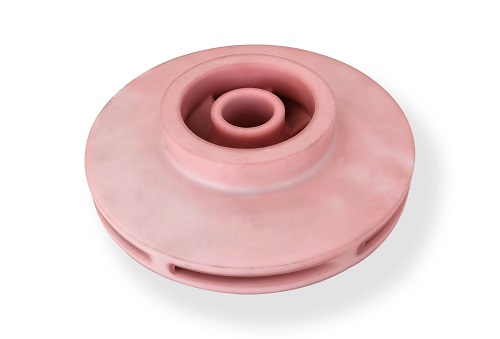
When you’re choosing a 3D printing technology for functional prototypes or end-use parts, you need more than just hype. You need a solution that balances design freedom, material performance, and production practicality. Selective Laser Sintering (SLS) has grown from a novel ’80s invention into a cornerstone of modern digital manufacturing. But what really sets it apart?
Key takeaways
- You’ve probably heard about FDM, SLA, and maybe even Metal 3D printing. Here’s how SLS stacks up where it matters.
- SLS isn’t limited to one material. Its powder-based system works with a growing family of polymers engineered for specific performance.
- Why do engineers and designers keep choosing SLS? Here are the compelling reasons.
- No technology is perfect. Being aware of SLS’s constraints helps you plan better and avoid costly surprises.
How Does Selective Laser Sintering Actually Work?
At its heart, SLS is a powder bed fusion process. A high-power laser—usually a CO₂ laser—selectively sinters (fuses) fine polymer powder particles layer by layer, building a solid part from the bottom up. Unlike technologies that melt filament or cure liquid resin, SLS uses unsintered powder as natural, built-in support. This is its superpower—it lets you create complex geometries, internal channels, and moving assemblies without worrying about designing or removing external supports.
The SLS Workflow, Step-by-Step
The process might seem straightforward, but each stage is finely tuned for quality and consistency.
1. Pre-Processing: Getting the Digital & Physical Ready
Before the laser fires up, your 3D CAD model is sliced into ultra-thin layers (typically 0.08–0.15 mm). The build chamber is then heated to just below the powder’s melting point. This pre-heating is crucial—it reduces the laser energy needed and minimizes thermal distortion.
2. The Layer-by-Layer Dance: Spreading, Sintering, Repeating
A recoating blade or roller spreads a thin, even layer of powder across the build platform. The laser then traces the slice’s cross-section, fusing powder particles where the part exists. The platform lowers, a new powder layer is applied, and the process repeats. The surrounding loose powder supports overhangs and cavities automatically.
3. Cooling & Unpacking: Patience is Key
After printing, the entire build chamber cools slowly and controllably—often taking several hours. This reduces internal stress and warping. Once cooled, the “cake” is removed, and parts are excavated from the loose powder. That unused powder isn’t waste; it’s filtered, refreshed with new material, and reused in the next job (typically with a 50-70% refresh rate).
How Is SLS Different from Other 3D Printing Tech?
You’ve probably heard about FDM, SLA, and maybe even Metal 3D printing. Here’s how SLS stacks up where it matters.
| Technology | Key Differentiator | Where It Beats SLS | Where SLS Beats It |
|---|---|---|---|
| FDM | Melts & extrudes filament | Lower machine cost; broader material variety | Requires supports; weaker between layers |
| SLA/DLP | UV light cures liquid resin | Smoother surface finish; finer details | Parts are often brittle; need supports |
| Material Jetting | Jets & cures photopolymer droplets | Excellent surface quality; multi-material | Limited functional material properties |
| SLM/DMLS | Fully melts metal powder | Fully dense metal parts | Higher cost, energy use; more limited geometries |
Here’s the real talk: SLS hits a sweet spot. It gives you near-isotropic strength (similar properties in all directions), excellent design freedom without supports, and durable, functional materials—primarily nylons. It’s less about pretty prototypes and more about parts that need to work.
What Materials Can You Really Use with SLS?
SLS isn’t limited to one material. Its powder-based system works with a growing family of polymers engineered for specific performance.
The Workhorse: Nylon-Based Powders
- Nylon 12 (PA 12): The most common. Great balance of strength, flexibility, and chemical resistance. Perfect for functional prototypes and end-use parts.
- Nylon 11 (PA 11): More flexible and impact-resistant. Derived from renewable castor oil. Excellent for living hinges, snap-fits, and parts needing high fatigue resistance.
- Glass-Filled Nylon (PA-GF): Stiffer, more heat-resistant, and dimensionally stable. Ideal for static structural components.
- Aluminum-Filled Nylon (PA-AF): Has a metallic look, better thermal conductivity, and increased rigidity.
Beyond Nylon: Specialized Options
- TPU (Thermoplastic Polyurethane): For flexible, rubber-like parts. Think gaskets, seals, cushions, and wearables.
- Polypropylene (PP): Excellent chemical resistance and fatigue life. Great for fluid containers and living hinges.
- PEBA (Polyether Block Amide): A high-performance elastomer with outstanding energy return and low-temperature flexibility. Used in elite athletic gear.
Quick Material Property Guide
| Material | Tensile Strength | Flexibility | Best For |
|---|---|---|---|
| Nylon 12 | ~48 MPa | Moderate | General-purpose functional parts |
| Nylon 11 | ~52 MPa | High | Impact-resistant components |
| TPU (95A) | ~25 MPa | Very High | Seals, grips, flexible enclosures |
| Glass-Filled Nylon | ~70 MPa | Low | Rigid housings, fixtures |
Pro Tip: Material choice isn’t just about strength. Consider heat deflection temperature (HDT), chemical exposure, and regulatory needs (like USP Class VI or FDA compliance for medical/dental uses).
What Are the Biggest Advantages of SLS?
Why do engineers and designers keep choosing SLS? Here are the compelling reasons.
1. Unmatched Design Freedom – “If You Can Design It, You Can Print It”
Because the powder itself acts as support, you can build complex lattices, internal channels, interlocking parts, and organic shapes that are impossible with molding or machining. We recently helped a client consolidate a 12-part assembly into a single SLS component, eliminating assembly time and potential failure points.
2. Functional, Durable Parts
SLS parts are not just visual models. They have good impact and wear resistance, making them suitable for functional testing, low-volume production, and end-use applications. A study by 3D Hubs showed that SLS parts can achieve up to 80% of the strength of injection-molded equivalents.
3. Efficient Material Use & Production Scaling
The high reuse rate of unsintered powder (often 70-80%) minimizes waste. You can also nest dozens of parts in a single build, maximizing machine time and reducing per-part cost. This makes SLS surprisingly economical for batch production of 10 to 10,000 units.
4. Consistent & Scalable
Once a material profile is dialed in, SLS offers excellent batch-to-batch consistency. There’s no need for tooling, so lead times remain short whether you’re making one prototype or a thousand production parts.
What Are the Real Limitations and Challenges?
No technology is perfect. Being aware of SLS’s constraints helps you plan better and avoid costly surprises.
Surface Finish & Dimensional Considerations
- Surface Texture: As-sintered parts have a slightly rough, granular finish (like fine sandpaper). For smooth or aesthetic surfaces, post-processing like bead blasting or vibro-polishing is needed.
- Dimensional Accuracy: Expect tolerances around ±0.3% (with a lower limit of ~±0.2 mm). Shrinkage is factored into the slicing software, but critical features may require machining.
- Porosity: The sintered structure is slightly porous. This is great for dyeing but means parts aren’t inherently watertight unless sealed/infiltrated.
Material & Operational Hurdles
- Limited High-Temp Performance: Most SLS nylons soften around 80-100°C. Not suitable for under-hood automotive or hot-end applications without special grades.
- Powder Handling & Safety: Powder is messy and requires proper ventilation and PPE. Material storage must be dry, as nylon powders are hygroscopic.
- Upfront & Operational Cost: Industrial SLS machines are significant investments (($100K+)), and they require a controlled environment. It often makes more sense to partner with an experienced service bureau (like us) unless your volume justifies the capex.
Where Is SLS Making a Real Impact Today?
Medical & Dental
- Custom Surgical Guides & Implants: Patient-specific models from biocompatible, sterilizable materials.
- Prosthetics & Orthotics: Lightweight, custom-fit components that improve patient comfort.
Aerospace & Automotive
- Lightweight, Complex Ducting: Consolidating multiple parts into one for reduced assembly and weight.
- Brackets & Fixtures: Optimized topologically to use minimal material while meeting strength specs.
Consumer Goods & Industrial
- Functional Prototypes: For form, fit, and function testing under real-world conditions.
- End-Use Production: On-demand manufacturing of complex parts like drone housings, electronic enclosures, and custom machinery components.
Sports Equipment
- Customized Performance Gear: From personalized bike saddles to optimized cleat studs, SLS allows for athlete-specific tuning without tooling.
What Post-Processing Options Unlock SLS’s Full Potential?
For Aesthetics & Feel
- Bead Blasting: The go-to for a uniform, matte finish.
- Dyeing: Nylon absorbs dye deeply, allowing for vibrant, permanent color.
- Vapor Smoothing: Chemical vapor creates a smoother, shinier surface but requires expertise.
For Enhanced Functionality
- Infiltration: Impregnating with resin or epoxy improves strength and seals porosity for fluid containment.
- Machining: Adding precision threads, bores, or mating surfaces with CNC.
- Coating: Applying conductive, wear-resistant, or cosmetic coatings.
How to write a spec that gets priced correctly
A drawing is a contract. If it leaves a number open, the shop fills that number in with its own default. The default is rarely the one you had in mind. Put these five lines on every RFQ and most of the back-and-forth disappears before it starts.
- File format and units, with the model exported in millimetres
- Process and material grade, not a trade name
- Critical features and the tolerance each one needs
- Surface finish and the faces it applies to
- Quantity for the pilot build and for the year
The point is not paperwork. Each line removes a decision the shop would otherwise make for you. A complete RFQ comes back priced. An incomplete one comes back guessed.
What actually drives the price
Buyers usually push on material because it is the line they can see. In practice the material is rarely the biggest number on a quote. These five lines decide most of it:
- build volume and orientation
- layer height and support structure
- material grade and colour
- post-processing and hand finishing
- quantity per build plate
Ask for the quote split by line. A supplier who cannot break it down is guessing, and you will pay for the guess. The line you can usually renegotiate is the tolerance band, not the raw material.
Problems you will meet, and the fix
Every process has a failure mode it prefers. The same four show up again and again on this kind of work, and none of them are mysteries once you know what to look for.
- Warping on long flat faces where the part lifts off the plate
- Layer lines showing through a cosmetic surface
- Support scars on a mating face nobody flagged
- Dimensional drift on thin walls after cooling
Catch the fault on the first part, not the hundredth. A first-article check costs an hour. A bad batch costs the whole order. Write the check into the purchase order so nobody has to remember it.
What to check on the first article
The first article is the cheapest inspection you will ever buy. Use it properly and the rest of the run becomes boring, which is exactly what you want.
- Every dimension on the drawing, with the measured value written beside it.
- The material certificate, matched to the heat or lot number on the parts.
- The finish against the sample you approved, under the same light.
- Fit against the mating part, assembled rather than measured.
- Packaging, because parts that arrive damaged were never in tolerance.
Check in this order: datums, then mating features, then cosmetic faces. If the datums are wrong, every number after them is noise. Keep the report on file. When a problem shows up in month six, that document is the only thing that tells you what changed.
How to compare two quotes fairly
Two numbers are not comparable unless the scope matches. Line them up before you decide, because a low number with three gaps is not a low number.
Same drawing, same material, same finish, same inspection. Anything else is a different job wearing the same part number. Then look at what each quote leaves out. Freight, packaging, certificates and tooling are the usual gaps.
Ask each supplier to state their assumptions in writing. The one who does is usually the one who has run the process before.
Scaling from one part to a batch
The first part teaches you the process. The hundredth teaches you the process cost.
Watch three things as volume grows: setup amortisation, tool wear, and how much hand work the finish still needs. If the unit price barely moves between ten and a hundred, the cost sits in material or in hand work, not in setup. Ask which, because only one of them is negotiable.
Lead time behaves the same way. A one-off is scheduled around other jobs. A repeat order is scheduled around your forecast. Give the shop a forecast and the lead time gets shorter, not longer.
How to read a supplier's quote
A quote is a short document with a long shadow. Four things in it decide whether the job runs smoothly, and only one of them is the price.
- The scope line. It should name the process, the material and the finish, not just the part.
- The tolerance basis. General tolerance or the drawing, and which standard it follows.
- The exclusions. Tooling, freight, certificates and inspection are the usual omissions.
- The validity date. Material prices move, and an open-ended quote is a promise nobody can keep.
Read the exclusions before you read the total. A quote that leaves out tooling is not cheaper. It is a quote for a different job.
FAQ: Your SLS Questions, Answered
Can SLS parts really be used for final products, not just prototypes?
Absolutely. With the right material (like PA 12 or glass-filled nylon) and design, SLS parts are used in functional, end-use applications across automotive, aerospace, and consumer goods. Their durability and consistency make them production-ready.
How does SLS handle fine details and thin walls?
It handles them well, but there are guidelines. For most nylons, we recommend a minimum wall thickness of 0.8-1.0 mm and a minimum feature size of 0.5 mm. Finer details are possible but may require expert tuning.
Is SLS cost-effective for small batches?
Yes, that’s one of its strengths. Because there’s no tooling cost, the price per part decreases predictably as you fill the build volume. For batches of 10-500 parts, SLS is often more economical than CNC or injection molding.
What about material recycling and sustainability?
Unused powder is sieved, blended with fresh material, and reused. Reuse rates of 70-80% are common. Some powders, like PA 11, are bio-based. However, energy consumption during printing is a factor to consider in the overall sustainability equation.
How long does a typical SLS project take?
From file upload to shipped parts, 3-5 business days is standard for most service providers. This includes printing, cooling, and basic post-processing. Complex finishing or dyeing may add time.
Our solution for Makes Laser Sintering (SLS) 3D
YiguProto runs 3D printing in house, from a single prototype to a production batch. We quote the process, the material and the finish as separate lines, so you can see where the money goes instead of arguing with one number.
Send a STEP file or a drawing and you get a DFM report in one to two business days. It flags the features that add cost and the features that will not hold tolerance on the process you picked.
Every order ships with an inspection report on the features you call out. If a part misses, we make it again. Ready to price a part? Start with a free quote and DFM review, or read more about our 3D printing. You can also talk to an engineer before you commit to a drawing.
FAQ about Makes Laser Sintering (SLS) 3D
Is there a minimum order quantity?
No hard minimum. One part is fine. What changes with volume is which costs dominate, so a single unit is priced mostly on setup and a thousand units are priced mostly on cycle time and material.
What files do you need in order to quote?
A STEP file plus a PDF drawing that carries the same revision letter. The model carries the geometry and the drawing carries the intent. When the two disagree, the shop picks one, and it is never the one you meant.
What should I check before approving the parts?
Datums first, then the features that mate, then the cosmetic faces. Ask for a dimensional report, a material certificate and a finish sample. A part can be inside every tolerance and still not fit, so assemble one before you sign.
What happens if a part is out of specification?
We measure it against the same drawing you approved and, if it misses, we make it again. What matters is that the report exists, because a disagreement without data is just an opinion.
What is Makes Laser Sintering (SLS) 3D used for?
Makes Laser Sintering (SLS) 3D turns up wherever the part has to do a real job at a predictable cost: brackets, housings, fixtures, covers and the fittings that hold them together. The honest test is whether the properties match the load and the environment, not whether the material is fashionable.
Does the process work for prototypes as well as production?
Yes, and that is usually the point. Running the prototype on the production process removes a whole class of surprises, because the part you test is made the same way as the part you sell.
The short version
Makes Laser Sintering (SLS) 3D rewards the buyer who reads the data sheet and the drawing together. Pick the option for the property that matters, not for the price per kilo.
Tighten only what mates. Test a sample before the run. Then let the process do the rest.