
Industry Applications
Is Your Medical Parts Manufacturing Strategy Ready for Today’s Challenges?
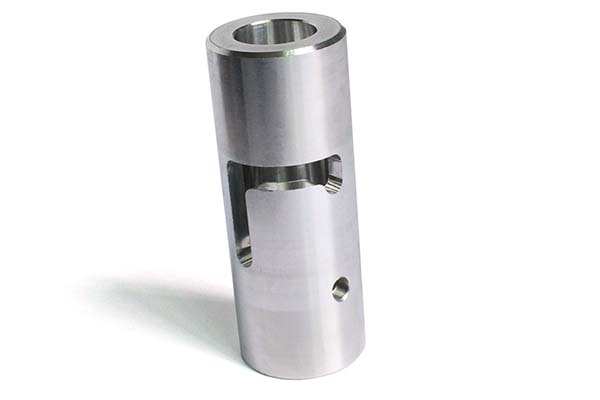
In the fast-paced world of healthcare, the demand for high-quality, reliable medical devices and components continues to grow. Medical parts manufacturing plays a critical role in bringing life-saving innovations to market—from initial concept to final production.
Key takeaways
- Medical parts manufacturing isn’t just about producing components—it’s about creating solutions that improve patient outcomes, enhance surgical precision, and streamline healthcare delivery.
- Medical parts manufacturing demands precision, compliance, and innovation at every stage.
- Q1: What certifications should a medical parts manufacturer hold?A1: Reputable medical parts manufacturers should hold ISO 13485 certification, the international standard for medical device quality management.
Why Strategic Medical Parts Manufacturing Matters
Medical parts manufacturing isn’t just about producing components—it’s about creating solutions that improve patient outcomes, enhance surgical precision, and streamline healthcare delivery. Every part must function flawlessly because lives depend on it.
The stakes are high:
- Regulatory requirements demand rigorous documentation and validation
- Patient safety requires zero-defect quality
- Market pressures push for faster development cycles
- Cost constraints require efficient production methods
Balancing these factors requires a strategic approach from day one.
8 Key Strategies for Optimizing Medical Parts Manufacturing
Strategy 1: Implement Design for Manufacturability (DFM) Analysis
Design for Manufacturability (DFM) is a critical first step in optimizing medical parts manufacturing. This analytical process evaluates your design to ensure it can be produced efficiently and cost-effectively while meeting all performance requirements.
What DFM examines:
- Geometry complexity and potential manufacturing challenges
- Wall thickness and draft angles
- Gate placement and material flow
- Potential knit lines and weld lines
- Difficult-to-fill areas
Available resources:
| Service | What It Offers | Best For |
|---|---|---|
| Automated DFM analysis | Free, instant feedback on basic manufacturability | Simple parts, early design stage |
| Expert design review | Dedicated engineer consultation | Complex geometries, multiple processes |
| Consultative DFM (CDFM) | In-depth analysis with specific geometry recommendations | High-stakes projects, challenging designs |
Proactive approach: Addressing manufacturing issues at the design stage avoids costly redesigns and production delays later. A simple change—like adjusting a draft angle by 2 degrees—can make the difference between a part that molds perfectly and one that fails quality checks.
Strategy 2: Leverage Injection Molding for Medical Applications
Injection molding remains a cornerstone of medical parts manufacturing, offering numerous advantages for both prototyping and production. When implemented correctly, it can significantly accelerate product development while maintaining the highest quality standards.
Key benefits for medical applications:
- Rapid turnaround from prototype to production
- High-quality aluminum tooling reduces lead times to days
- Complex geometries with consistent precision
- Scalability from low-volume to millions of parts
Quality considerations:
| Requirement | Why It Matters |
|---|---|
| ISO 13485 certification | International standard for medical device quality management |
| Process validation | Standardized qualification packages for regulatory submissions |
| Cleanroom production | Class 8 environments for contamination control |
| Tooling options | P20 and hardened steel for durability |
Advanced tool: Mold flow analysis software optimizes gate placement, identifies potential knit lines, locates difficult-to-fill areas, and recommends appropriate materials—all before cutting steel.
Strategy 3: Accelerate Prototyping with Multi-Cavity Tooling
In medical parts manufacturing, the ability to iterate quickly can make all the difference in bringing innovative products to market. Multi-cavity tooling enables manufacturers to produce multiple versions of the same prototype simultaneously using end-use materials.
Advantages:
- Faster testing of design variations
- Direct comparison of performance across multiple prototypes
- Increased efficiency for higher volume runs
- Reduced per-part costs as volume increases
Real-world impact: During the COVID-19 pandemic, this capability became especially valuable, allowing manufacturers to rapidly develop and test critical medical components for ventilators, respiratory masks, and diagnostic equipment.
Strategy 4: Utilize Metal 3D Printing for Complex Components
Direct Metal Laser Sintering (DMLS) has emerged as a game-changer in medical parts manufacturing, particularly for complex, high-precision components. This additive manufacturing technology builds parts layer by layer using metal powders, enabling geometries impossible with traditional methods.
Common materials:
| Material | Key Properties | Medical Applications |
|---|---|---|
| Stainless steel (17-4 PH & 316L) | Strength, corrosion resistance | Surgical tools, instruments |
| Aluminum (AlSi10Mg) | Lightweight, good thermal properties | Device housings, brackets |
| Cobalt chrome (CoCr) | Wear resistance, biocompatibility | Implants, orthopedic devices |
| Inconel (IN718) | High-temperature performance | Sterilization trays, equipment |
| Titanium (Ti-6Al-4V) | Biocompatibility, strength-to-weight ratio | Implants, surgical instruments |
Advantages for medical applications:
- Surgical tools with ultrafine features
- Patient-specific implants with organic shapes
- Reduced tooling costs compared to traditional manufacturing
- Rapid turnaround—prototypes often available within days
Strategy 5: Enhance Performance with Strategic Finishing Options
Post-processing and finishing play a crucial role in medical parts manufacturing, enhancing both functionality and aesthetics. The right finishing techniques can strengthen parts, improve biocompatibility, and enable precise customization.
Common finishing options:
| Finish | Purpose | Medical Application |
|---|---|---|
| Mold texturing | Improved grip or reduced friction | Handheld devices, surgical tools |
| Threaded inserts | Secure assembly | Reusable equipment, modular devices |
| Pad printing | Clear identification, labeling | Buttons, displays, packaging |
| Heat staking | Strong, reliable joints | Assemblies, multi-component devices |
| Laser engraving | Permanent part marking | Traceability, serial numbers |
Real example: Hemosonics, a medical device company, utilized heat staking and pad printing services for their Quantra System blood analysis machine, demonstrating how strategic finishing enhances both function and usability.
Strategy 6: Select the Right Materials for Medical Applications
Material selection is a critical decision in medical parts manufacturing, directly impacting performance, biocompatibility, sterilization capability, and cost. The ideal material depends on the specific application.
Medical material categories:
| Material Type | Key Properties | Common Applications |
|---|---|---|
| High-temp plastics (PEEK, PEI) | High-temperature resistance, creep resistance | Parts requiring autoclave sterilization |
| Medical-grade silicone rubber | Thermal/chemical resistance, biocompatibility | Skin-contact applications, seals |
| Carbon RPU/FPU | Rigidity, durability | Late-stage prototypes, end-use devices |
| Micro-resolution ABS-like | Fine detail capability (0.0025 in. features) | Precision instrumentation, diagnostics |
| Transparent ABS-like/PC-like | Optical clarity | Lenses, microfluidic components, housings |
| Medical alloys | Strength, corrosion resistance, temperature tolerance | Surgical instruments, implants |
Pro tip: For companies with proprietary materials, work with manufacturers who can match key material properties—elasticity, hardness, strength—ensuring prototypes accurately represent final production parts.
Strategy 7: Establish a Robust Quality Management System
In medical parts manufacturing, quality is non-negotiable. A comprehensive quality management system ensures consistency, reliability, and compliance throughout production.
For injection molding:
| Quality Element | Purpose |
|---|---|
| Bar coding | Enhanced traceability |
| Part-number and material controls | Prevent mix-ups |
| Calibrated drying equipment | Proper thermoplastic resin preparation |
| Documented dimensional inspections | Start-of-run and in-process verification |
| Hourly visual inspections | Maintain standards |
| Recorded press settings | Repeatable production |
| Scientific molding methodology | Process optimization |
For 3D printing:
| Quality Element | Purpose |
|---|---|
| Software-enabled production instructions | Consistent workflows |
| Pre-build material verification checklists | Prevent material errors |
| Real-time temperature monitoring | Process control |
| Digital tracking of all parts | Full traceability |
| ISO 9001 certification | Quality management foundation |
| AS9100 certification | Aerospace-level quality (for critical applications) |
Strategy 8: Streamline Quality Inspections
Effective inspection processes are essential to verify part conformity and maintain quality. A robust inspection strategy combines statistical sampling, periodic checks, and advanced measurement technologies.
Inspection capabilities:
| Method | What It Provides |
|---|---|
| Customized inspection reports | Tailored to service and inspection level |
| Statistical and periodic sampling | Efficient cosmetics and dimension checks |
| Calibrated measurement equipment | Documented calibration programs |
| Enhanced digital inspection | Up to 12 critical dimension measurements |
| High-speed 3D scanning with CAD comparison | Visual quality reporting |
| Third-party inspection reports | First article inspection (FAI) validation |
| Material testing | Tensile strength, hardness verification |
| Porosity and grain structure analysis | Metal 3D-printed part validation |
These inspection methods provide the documentation and verification needed to support regulatory submissions and ensure patient safety.
Medical parts manufacturing demands precision, compliance, and innovation at every stage. By integrating advanced technologies and strict quality systems, manufacturers can meet healthcare’s evolving needs while accelerating time-to-market.
Key takeaways:
- DFM analysis prevents costly redesigns
- Injection molding offers scalability and precision
- Multi-cavity tooling accelerates prototyping
- Metal 3D printing enables complex geometries
- Strategic finishing enhances performance
- Material selection impacts biocompatibility and sterilization
- Quality management systems ensure consistency
- Streamlined inspections verify compliance
For medical device companies, successful partnerships with experienced manufacturers—combining material expertise, rapid prototyping, and regulatory knowledge—will drive the next generation of life-saving medical technologies.
How to write a spec that gets priced correctly
A drawing is a contract. If it leaves a number open, the shop fills that number in with its own default. The default is rarely the one you had in mind. Put these five lines on every RFQ and most of the back-and-forth disappears before it starts.
- The application and the environment it runs in
- The standard the part must meet
- Process and material that can meet it
- Inspection and documentation package
- Volume and ramp schedule
The point is not paperwork. Each line removes a decision the shop would otherwise make for you. A complete RFQ comes back priced. An incomplete one comes back guessed.
What actually drives the price
Buyers usually push on material because it is the line they can see. In practice the material is rarely the biggest number on a quote. These five lines decide most of it:
- process selection
- material and certification
- tolerance band
- inspection and documentation
- volume
Ask for the quote split by line. A supplier who cannot break it down is guessing, and you will pay for the guess. The line you can usually renegotiate is the tolerance band, not the raw material.
Problems you will meet, and the fix
Every process has a failure mode it prefers. The same four show up again and again on this kind of work, and none of them are mysteries once you know what to look for.
- A consumer-grade process chosen for an industrial duty
- Documentation that arrives after the parts
- A tolerance tighter than the application needs
- No plan for the second source
Catch the fault on the first part, not the hundredth. A first-article check costs an hour. A bad batch costs the whole order. Write the check into the purchase order so nobody has to remember it.
What to check on the first article
The first article is the cheapest inspection you will ever buy. Use it properly and the rest of the run becomes boring, which is exactly what you want.
- Every dimension on the drawing, with the measured value written beside it.
- The material certificate, matched to the heat or lot number on the parts.
- The finish against the sample you approved, under the same light.
- Fit against the mating part, assembled rather than measured.
- Packaging, because parts that arrive damaged were never in tolerance.
Check in this order: datums, then mating features, then cosmetic faces. If the datums are wrong, every number after them is noise. Keep the report on file. When a problem shows up in month six, that document is the only thing that tells you what changed.
How to compare two quotes fairly
Two numbers are not comparable unless the scope matches. Line them up before you decide, because a low number with three gaps is not a low number.
Same drawing, same material, same finish, same inspection. Anything else is a different job wearing the same part number. Then look at what each quote leaves out. Freight, packaging, certificates and tooling are the usual gaps.
Ask each supplier to state their assumptions in writing. The one who does is usually the one who has run the process before.
Scaling from one part to a batch
The first part teaches you the process. The hundredth teaches you the process cost.
Watch three things as volume grows: setup amortisation, tool wear, and how much hand work the finish still needs. If the unit price barely moves between ten and a hundred, the cost sits in material or in hand work, not in setup. Ask which, because only one of them is negotiable.
Lead time behaves the same way. A one-off is scheduled around other jobs. A repeat order is scheduled around your forecast. Give the shop a forecast and the lead time gets shorter, not longer.
How to read a supplier's quote
A quote is a short document with a long shadow. Four things in it decide whether the job runs smoothly, and only one of them is the price.
- The scope line. It should name the process, the material and the finish, not just the part.
- The tolerance basis. General tolerance or the drawing, and which standard it follows.
- The exclusions. Tooling, freight, certificates and inspection are the usual omissions.
- The validity date. Material prices move, and an open-ended quote is a promise nobody can keep.
Read the exclusions before you read the total. A quote that leaves out tooling is not cheaper. It is a quote for a different job.
What to send with the first order
The first order sets the pattern for every order after it. Send a complete package once and the shop files it, and the second order takes a fraction of the time.
- A STEP or native model plus a PDF drawing carrying the same revision letter.
- The material callout by standard number, not by trade name.
- The finish and the exact faces it applies to.
- Any test the part must pass: fit, seal, drop, salt spray, dielectric.
- A contact who can answer a question inside one working day.
Then write down what was agreed. An email that confirms the material, the finish and the date is worth more than a longer purchase order that leaves them open.
FAQ About Medical Parts Manufacturing
Q1: What certifications should a medical parts manufacturer hold?
A1: Reputable medical parts manufacturers should hold ISO 13485 certification, the international standard for medical device quality management. For 3D printing services, ISO 9001 and AS9100 certifications demonstrate commitment to quality.
Q2: How can medical parts manufacturing accelerate time-to-market?
A2: Accelerated time-to-market is achieved through:
- DFM analysis to prevent redesigns
- Rapid prototyping with 3D printing
- Multi-cavity tooling for fast iterations
- Integrated end-to-end manufacturing processes
Q3: What materials are best for medical parts requiring sterilization?
A3: High-temperature plastics like PEEK and PEI (Ultem) are excellent choices for parts requiring autoclave sterilization. Medical-grade silicone rubbers also withstand repeated sterilization cycles while maintaining biocompatibility.
Q4: What’s the difference between ISO 13485 and ISO 9001?
A4: ISO 9001 is a general quality management standard applicable to any industry. ISO 13485 is specifically designed for medical devices, with additional requirements for risk management, traceability, and regulatory compliance.
Q5: Can 3D-printed medical parts be used in final products?
A5: Yes—with proper validation. Metal 3D printing (DMLS) is increasingly used for final production of implants, surgical instruments, and custom devices. The key is ensuring the process is validated and materials are biocompatible.
Q6: How do I choose between injection molding and 3D printing for medical parts?
A6: Consider:
- Volume: 3D printing for low-volume (1–100), injection molding for high-volume (1,000+)
- Complexity: 3D printing for complex geometries; injection molding for simpler shapes
- Material requirements: Both offer medical-grade options
- Timeline: 3D printing faster for prototypes; injection molding faster for production
Q7: What regulatory bodies oversee medical parts manufacturing?
A7: Key regulators include:
- FDA (U.S. Food and Drug Administration)
- TGA (Therapeutic Goods Administration) in Australia
- EMA (European Medicines Agency) in Europe
- Health Canada in Canada
Our solution for Medical Parts Manufacturing Strategy Ready
YiguProto runs contract manufacturing in house, from a single prototype to a production batch. We quote the process, the material and the finish as separate lines, so you can see where the money goes instead of arguing with one number.
Send a STEP file or a drawing and you get a DFM report in one to two business days. It flags the features that add cost and the features that will not hold tolerance on the process you picked.
Every order ships with an inspection report on the features you call out. If a part misses, we make it again. Ready to price a part? Start with a free quote and DFM review, or read more about our contract manufacturing. You can also talk to an engineer before you commit to a drawing.
FAQ about Medical Parts Manufacturing Strategy Ready
What tolerance can you hold on Medical Parts Manufacturing Strategy Ready?
The working default is ±0.05 mm to ±0.1 mm depending on process. Tighter than that the process changes and so does the price, because every step tighter adds inspection time. Call out only the faces that mate with something else and leave the rest on the general tolerance.
Can Medical Parts Manufacturing Strategy Ready be made in small quantities?
Yes, and small quantities are where a good supplier earns the next order. Setup dominates the price at low volume, so the cheapest route is usually the one with the fewest operations, not the cheapest material.
What is the lead time for Medical Parts Manufacturing Strategy Ready?
Expect 5 to 20 business days depending on process and volume. Tooling, material stock and the finishing queue all move that number, so we confirm the date in writing before the run starts rather than after.
What should I check before approving the parts?
Datums first, then the features that mate, then the cosmetic faces. Ask for a dimensional report, a material certificate and a finish sample. A part can be inside every tolerance and still not fit, so assemble one before you sign.
How much does Medical Parts Manufacturing Strategy Ready cost?
Price comes from five lines: material, machine or tool time, setup, finishing and inspection. The material itself is usually the smallest of them. Send a drawing and we will split the quote so you can see which line is doing the damage.
How do I compare two quotes fairly?
Match the scope first: same drawing, same material, same finish, same inspection. Then read the exclusions. Freight, tooling and certificates are the usual gaps, and a low number with three gaps is not a low number.
The short version
Medical Parts Manufacturing Strategy Ready rewards the buyer who reads the data sheet and the drawing together. Pick the option for the property that matters, not for the price per kilo.
Tighten only what mates. Test a sample before the run. Then let the process do the rest.