
Blogs
Our Micro Injection Molding Services
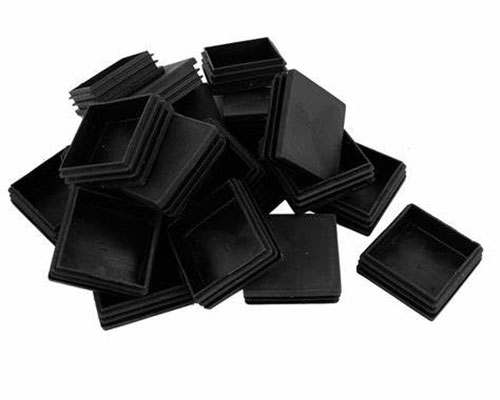
Our Micro Injection Molding Services, explained the way we would explain it across a table: what it is good at, what it costs you, and the details that keep the part out of the scrap bin.
Key takeaways
- At our shop we specialize in Micro Injection Molding—the gold standard for creating high-quality, tiny components that power today’s most advanced industries.
- At our shop we don’t just offer micro injection molding—we deliver end-to-end solutions tailored to your unique needs.
- Micro Injection Molding is a specialized manufacturing process designed to produce extremely small, complex parts with exceptional accuracy.
- The micro injection molding process is a carefully orchestrated sequence of steps, each optimized for precision and consistency.
Our Micro Injection Molding Services
At our shop we specialize in Micro Injection Molding—the gold standard for creating high-quality, tiny components that power today’s most advanced industries.
From medical micro-devices to MEMS, our blend of advanced micro-injection molding machines, custom micro-mold design, and strict quality assurance for micro-parts ensures your project meets ultra-tight micro-tolerances while staying cost-effective. Whether you need rapid prototyping or large-scale production, we turn your micro-scale ideas into reliable, high-performance reality.

Our Capabilities: Powering Your Micro Projects
At our shop we don’t just offer micro injection molding—we deliver end-to-end solutions tailored to your unique needs. Our capabilities are built on decades of micro-molding expertise and a commitment to innovation.
| Capability | Key Benefits | Applications |
| Custom micro-mold design | Tailored to your part’s unique geometry; reduces waste | Medical micro-devices, Micro-optics |
| High-precision tooling | Ensures consistent micro-tolerances (down to ±0.001mm) | Micro-electronics, MEMS |
| Advanced micro-injection molding machines | Automated control for repeatable quality | Micro-sensors, Micro-fluidics |
| Rapid micro-prototyping | Turns designs into physical parts in 5–7 days | New product development, Testing |
| Material selection for micro-molding | Access to 50+ high-performance polymers and bio-compatible options | Medical, Aerospace |
| Micro-assembly capabilities | Combines micro-parts into functional systems | Micro-robotics, Micro-actuators |
We also provide project engineering support and automated micro-production to scale your project from prototype to mass production—all with rigorous quality assurance for micro-parts.
What Is Micro Injection Molding?
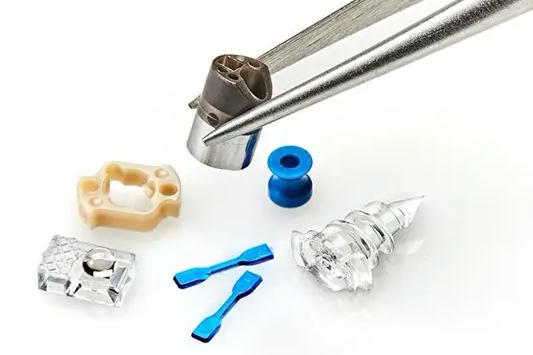
Micro Injection Molding is a specialized manufacturing process designed to produce extremely small, complex parts with exceptional accuracy. Unlike traditional injection molding, it focuses on micro-scale components—often measuring just a few millimeters or even microns—and requires techniques that prioritize high-precision manufacturing and ultra-fine molding.
This process leverages micro-technology to create parts with intricate micro-features, making it ideal for applications where size and precision are non-negotiable. Key terms that define micro injection molding include:
- Precision molding: Ensuring consistent, tight dimensional control.
- Miniature part production: Focusing on components too small for standard molding.
- High-resolution molding: Capturing fine details in micro-parts.
Nano-molding: Extending precision to the nanoscale for advanced applications.
Process: Step-by-Step Micro Injection Molding
The micro injection molding process is a carefully orchestrated sequence of steps, each optimized for precision and consistency. Unlike standard molding, it requires tighter control over material flow, temperature, and timing to avoid defects in tiny parts.
Key Stages of the Micro Injection Molding Process
- Micro-material preparation: Raw materials (e.g., micro-scale thermoplastics or micro-composites) are melted and filtered to remove impurities—critical for preventing clogs in micro-molds.
- Micro-mold setup: The custom mold (built with high-precision tooling) is clamped into the machine, and temperatures are calibrated for the chosen material.
- Precision injection: Molten material is injected into the mold at ultra-low pressures (5–50 MPa) to fill tiny cavities without damaging the mold or creating flash.
- Micro-cooling and solidification: The mold is cooled rapidly (using micro-channels) to set the part while preserving micro-features—this step typically takes 1–5 seconds.
- Micro-ejection: Gentle ejection systems (e.g., micro-pins) remove the part without bending or scratching it.
- Quality inspection at micro-level: Parts are checked using tools like optical microscopes or laser scanners to verify dimensional accuracy at micro-scale and adherence to micro-tolerances.
Throughout the process, process control at micro-scale and material flow optimization ensure consistent quality, while cycle time management keeps production efficient. Before full production, we conduct process validation for micro-parts to confirm the process meets your specifications.
Materials: Choosing the Right Micro-Grade Materials
The success of a micro injection molding project depends heavily on material selection. At our shop we offer a wide range of materials engineered for micro-scale performance, each chosen for its ability to withstand the molding process and meet end-use requirements.
Common Materials for Micro Injection Molding
| Material Type | Key Properties | Typical Applications |
| Micro-scale thermoplastics (e.g., PEEK, PP) | High strength, chemical resistance | Micro-packaging, Micro-sensors |
| High-performance polymers (e.g., LCP, PPS) | Heat resistance (up to 300°C), low outgassing | Aerospace micro-components, LED micro-optics |
| Bio-compatible materials (e.g., PLA, medical-grade PE) | Non-toxic, sterilizable | Medical micro-devices (e.g., catheters, implants) |
| Conductive micro-materials (e.g., carbon-filled PA) | Electrical conductivity | Micro-electronics (e.g., micro-connectors) |
| UV-resistant micro-materials (e.g., UV-stabilized PC) | Resistance to sun damage | Outdoor micro-sensors |
| Micro-composites (e.g., glass fiber-reinforced PP) | Enhanced stiffness, lightweight | Micro-actuators, Micro-robotics |
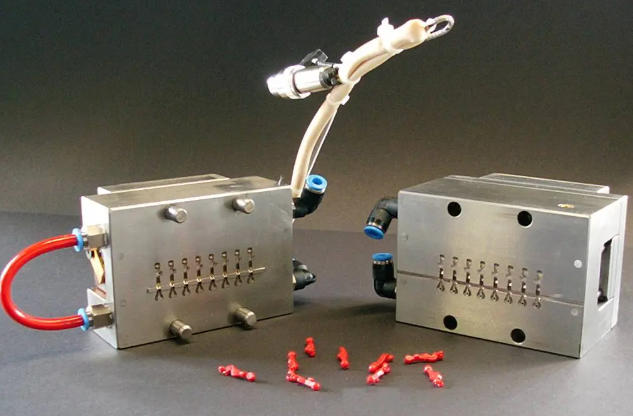
We also work with micro-powders, micro-beads, and micro-fibers to create custom materials for unique applications—just share your requirements, and our team will recommend the best option.
Tolerances: The Foundation of Micro Injection Molding
In micro injection molding, tolerances are everything. Even a tiny deviation (as small as 0.001mm) can render a part useless—especially in industries like medical or aerospace. At our shop we prioritize ultra-precision alignment and strict quality control to meet the tightest tolerances.
Tolerance Capabilities and Measurement Techniques
| Tolerance Type | Our Capability | Measurement Technique |
| Micro-tolerances | ±0.001mm (for parts < 1mm) | Optical comparators, laser profilometers |
| Dimensional accuracy at micro-scale | ±0.005mm (for parts 1–10mm) | Coordinate Measuring Machines (CMMs) with micro-probes |
| Interlocking micro-tolerances | ±0.002mm (for parts that fit together) | Micro-vision systems |
We also manage tolerance stack-up at micro-scale—a critical step when assembling multiple micro-parts—to ensure the final product functions as intended. All our processes comply with ISO certification for micro-molding (ISO 9001 and ISO 13485 for medical parts), so you can trust that your parts meet global quality standards.
Advantages: Why Choose Micro Injection Molding?
Micro injection molding offers unique benefits that make it the best choice for producing miniature parts—especially compared to traditional manufacturing methods like machining or 3D printing.
Key Advantages of Micro Injection Molding
- High precision: Creates parts with consistent micro-tolerances that other methods can’t match—critical for MEMS and medical devices.
- Miniature parts: Produces components as small as 0.1mm (about the size of a human hair) with intricate micro-features.
- Reduced assembly: Integrates multiple features into one part, eliminating the need to assemble tiny components (saves time and reduces errors).
- Cost-effectiveness for high-precision parts: For large production runs (10,000+ parts), micro injection molding is 30–50% cheaper than machining (see table below).
- Design flexibility: Accommodates complex geometries (e.g., micro-channels, thin walls) that are impossible with other methods.
- Material versatility: Works with a wide range of high-performance polymers and custom materials—more options than 3D printing.
- Faster production of micro-parts: Cycle times as short as 5 seconds (for small parts) mean faster delivery than machining (which can take minutes per part).
| Production Method | Cost per Part (100,000 units) | Cycle Time | Precision |
| Micro Injection Molding | 0.50–2.00 | 5–30 seconds | ±0.001mm |
| Micro Machining | 2.00–5.00 | 1–5 minutes | ±0.002mm |
| 3D Printing (SLA) | 5.00–10.00 | 10–60 minutes | ±0.01mm |
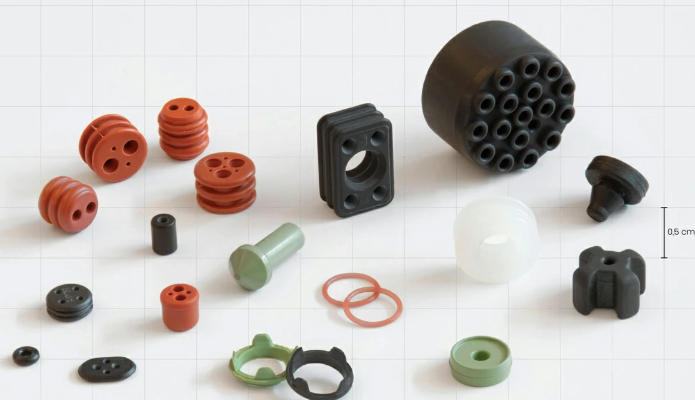
Other advantages include enhanced functionality (e.g., integrated sensors), improved durability (thanks to high-performance materials), and aesthetic appeal (via micro-surface finish techniques).
Applications Industry: Where Micro Injection Molding Shines
Micro injection molding is used across industries that rely on small, precise parts. Its versatility and precision make it indispensable for cutting-edge technologies.
Key Industries and Applications
| Industry | Applications | Key Requirements |
| Medical | Medical micro-devices (catheters, implants), micro-pumps, drug delivery systems | Bio-compatible materials, sterilizability, strict micro-tolerances |
| Electronics | Micro-electronics (micro-connectors, chip carriers), MEMS (micro-sensors, accelerometers) | Conductivity, heat resistance, miniaturization |
| Optics | Micro-optics (lenses, prisms for cameras or medical scopes) | Ultra-smooth surfaces, light transmission |
| Fluidics | Micro-fluidics (lab-on-a-chip devices, micro-valves) | Precise micro-channels, chemical resistance |
| Robotics | Micro-robotics (tiny motors, grippers) | Lightweight, high strength, interlocking micro-tolerances |
| Aerospace | Micro-sensors, micro-actuators for satellites | High-temperature resistance, low outgassing |
In each industry, our custom solutions address unique challenges—whether it’s creating a sterilizable medical part or a heat-resistant aerospace component.
Case Studies: Real-World Success with Micro Injection Molding
Our track record of successful micro-molding projects speaks to our expertise. Below are two examples of how we helped clients overcome challenges and achieve their goals.
Case Study 1: Medical Micro-Valve for Drug Delivery
- Challenge: A medical device company needed a 2mm micro-valve with a micro-tolerance of ±0.002mm. The valve had to be bio-compatible and withstand repeated sterilization.
- Solution: We used custom micro-mold design with a hot runner system to reduce waste. The material chosen was medical-grade PEEK (a high-performance polymer). We added a micro-coating of PTFE to improve valve sealing.
- Results:
- Production yield: 99.8%
- Cost savings: 40% compared to micro-machining
- Delivery time: 3 weeks (from design to production)
- Customer Testimonial: “our shop’s precision and speed helped us launch our drug delivery device 6 months ahead of schedule. The micro-valves perform flawlessly in clinical trials.” — Medical Device Engineer, Global Pharma Company
Case Study 2: MEMS Sensor for Automotive Applications
- Challenge: An automotive client needed a 5mm MEMS sensor with conductive micro-materials for temperature monitoring. The sensor required UV-resistant coating and a cycle time under 10 seconds.
- Solution: We used a sequential valve gating system to fill the mold quickly and evenly. The material was carbon-filled PA (conductive), and we applied a UV coating for micro-parts post-production.
- Results:
- Cycle time: 8 seconds
- Temperature resistance: Up to 150°C
- Cost per part: $0.75 (for 500,000 units)
- Customer Testimonial: “The MEMS sensors from our shop are more reliable than our previous supplier’s. Their process optimization helped us cut production costs by 25%.” — Automotive Component Manager
How to write a spec that gets priced correctly
A drawing is a contract. If it leaves a number open, the shop fills that number in with its own default. The default is rarely the one you had in mind. Put these five lines on every RFQ and most of the back-and-forth disappears before it starts.
- A model and a drawing that agree
- Material by standard number
- Tolerance only where it mates
- Finish and the faces it applies to
- Quantity and required date
The point is not paperwork. Each line removes a decision the shop would otherwise make for you. A complete RFQ comes back priced. An incomplete one comes back guessed.
What actually drives the price
Buyers usually push on material because it is the line they can see. In practice the material is rarely the biggest number on a quote. These five lines decide most of it:
- process choice
- material
- tolerance band
- finish
- volume
Ask for the quote split by line. A supplier who cannot break it down is guessing, and you will pay for the guess. The line you can usually renegotiate is the tolerance band, not the raw material.
Problems you will meet, and the fix
Every process has a failure mode it prefers. The same four show up again and again on this kind of work, and none of them are mysteries once you know what to look for.
- A drawing that contradicts the model
- A tolerance with no datum
- A cosmetic callout with no approved sample
- A quote compared against a different scope
Catch the fault on the first part, not the hundredth. A first-article check costs an hour. A bad batch costs the whole order. Write the check into the purchase order so nobody has to remember it.
What to check on the first article
The first article is the cheapest inspection you will ever buy. Use it properly and the rest of the run becomes boring, which is exactly what you want.
- Every dimension on the drawing, with the measured value written beside it.
- The material certificate, matched to the heat or lot number on the parts.
- The finish against the sample you approved, under the same light.
- Fit against the mating part, assembled rather than measured.
- Packaging, because parts that arrive damaged were never in tolerance.
Check in this order: datums, then mating features, then cosmetic faces. If the datums are wrong, every number after them is noise. Keep the report on file. When a problem shows up in month six, that document is the only thing that tells you what changed.
How to compare two quotes fairly
Two numbers are not comparable unless the scope matches. Line them up before you decide, because a low number with three gaps is not a low number.
Same drawing, same material, same finish, same inspection. Anything else is a different job wearing the same part number. Then look at what each quote leaves out. Freight, packaging, certificates and tooling are the usual gaps.
Ask each supplier to state their assumptions in writing. The one who does is usually the one who has run the process before.
Scaling from one part to a batch
The first part teaches you the process. The hundredth teaches you the process cost.
Watch three things as volume grows: setup amortisation, tool wear, and how much hand work the finish still needs. If the unit price barely moves between ten and a hundred, the cost sits in material or in hand work, not in setup. Ask which, because only one of them is negotiable.
Lead time behaves the same way. A one-off is scheduled around other jobs. A repeat order is scheduled around your forecast. Give the shop a forecast and the lead time gets shorter, not longer.
How to read a supplier's quote
A quote is a short document with a long shadow. Four things in it decide whether the job runs smoothly, and only one of them is the price.
- The scope line. It should name the process, the material and the finish, not just the part.
- The tolerance basis. General tolerance or the drawing, and which standard it follows.
- The exclusions. Tooling, freight, certificates and inspection are the usual omissions.
- The validity date. Material prices move, and an open-ended quote is a promise nobody can keep.
Read the exclusions before you read the total. A quote that leaves out tooling is not cheaper. It is a quote for a different job.
What to send with the first order
The first order sets the pattern for every order after it. Send a complete package once and the shop files it, and the second order takes a fraction of the time.
- A STEP or native model plus a PDF drawing carrying the same revision letter.
- The material callout by standard number, not by trade name.
- The finish and the exact faces it applies to.
- Any test the part must pass: fit, seal, drop, salt spray, dielectric.
- A contact who can answer a question inside one working day.
Then write down what was agreed. An email that confirms the material, the finish and the date is worth more than a longer purchase order that leaves them open.
FAQ for Micro Injection Molding
Our solution for Our Micro Injection Molding Services
YiguProto runs custom manufacturing in house, from a single prototype to a production batch. We quote the process, the material and the finish as separate lines, so you can see where the money goes instead of arguing with one number.
Send a STEP file or a drawing and you get a DFM report in one to two business days. It flags the features that add cost and the features that will not hold tolerance on the process you picked.
Every order ships with an inspection report on the features you call out. If a part misses, we make it again. Ready to price a part? Start with a free quote and DFM review, or read more about our custom manufacturing. You can also talk to an engineer before you commit to a drawing.
FAQ about Our Micro Injection Molding Services
What is the smallest part size Yigu Technology can produce with micro injection molding?
We can produce parts as small as 0.1mm (about the diameter of a human hair) with intricate micro-features (e.g., 0.05mm micro-channels). For parts of this size, we use specialized micro-injection molding machines and high-precision tooling to ensure accuracy.
What is the main difference between micro injection molding and conventional injection molding?
The primary differences are the shot size (volume of material injected) and the part size. Micro molding deals with extremely small shot weights, typically measured in milligrams (mg), and produces parts that often weigh less than a gram and can have features measured in microns. This requires specialized micro molding machines with superior precision, injection control, and screw design to handle such small volumes of material accurately and consistently, unlike standard machines designed for larger parts.
What are the biggest challenges in micro injection molding?
The key challenges include:Material Handling: Managing material flow, drying, and feeding for tiny shot sizes is critical, as even minor contamination or moisture can ruin a micro-part.Precision and Accuracy: Achieving and maintaining micron-level tolerances requires extremely precise mold manufacturing, often using micro-machining techniques like EDM.Process Control: Parameters like injection speed, pressure, and temperature must be controlled with much finer resolution than in conventional molding to ensure complete filling and correct part formation without defects.Part Handling and Inspection: Removing, handling, and inspecting such tiny parts without losing or damaging them demands specialized automated robotics and high-resolution vision systems.
How do I compare two quotes fairly?
Match the scope first: same drawing, same material, same finish, same inspection. Then read the exclusions. Freight, tooling and certificates are the usual gaps, and a low number with three gaps is not a low number.
How long does a first article take?
Usually a few business days once the drawing is frozen, and longer if tooling is involved. The date we give you is the date we confirm in writing, not the date we hope for.
Does the process work for prototypes as well as production?
Yes, and that is usually the point. Running the prototype on the production process removes a whole class of surprises, because the part you test is made the same way as the part you sell.
The short version
Our Micro Injection Molding Services rewards the buyer who reads the data sheet and the drawing together. Pick the option for the property that matters, not for the price per kilo.
Tighten only what mates. Test a sample before the run. Then let the process do the rest.