
Blogs
Our Polyether Block Amide PEBA Injection Molding Services
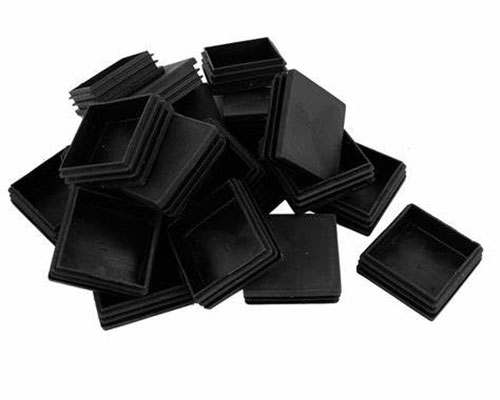
Our Polyether Block Amide PEBA Injection Molding Services, explained the way we would explain it across a table: what it is good at, what it costs you, and the details that keep the part out of the scrap bin.
Key takeaways
- Elevate your product performance with our shop’s Polyether Block Amide (PEBA) Injection Molding services—the gold standard for flexible, high-performance thermoplastic elastomer components.
- our shop’s PEBA injection molding capacity is engineered to handle projects of all sizes—from micro-scale prototypes to high-volume production runs—without compromising on quality.
- Polyether Block Amide (PEBA) injection molding is a specialized manufacturing process that shapes PEBA thermoplastic elastomer—a unique flexible block copolymer—into custom parts via high-pressure injection into precision molds.
- Achieving consistent PEBA parts requires strict control over every process step—from resin preparation to final degating.
Our Polyether Block Amide PEBA Injection Molding Services
Elevate your product performance with our shop’s Polyether Block Amide (PEBA) Injection Molding services—the gold standard for flexible, high-performance thermoplastic elastomer components.
From micro-precision medical catheters to high-rebound sports shoe midsoles, we combine state-of-the-art clean-room facilities, multi-cavity tooling, and biocompatible resin expertise to deliver consistent, cost-effective PEBA parts. Backed by ISO 13485/9001 certifications and 24/7 production support, we turn your PEBA molding challenges into market-leading solutions.

Our PEBA Injection Molding Capabilities: Precision Meets Scale
our shop’s PEBA injection molding capacity is engineered to handle projects of all sizes—from micro-scale prototypes to high-volume production runs—without compromising on quality. Our facility is equipped to meet the most demanding industry standards, with a focus on tight tolerances and advanced molding techniques.
Core Capabilities at a Glance
| Capability | Specification | Ideal Applications |
| Tolerance Control | ±0.005 mm for micro parts; ±0.02 mm for standard components | Medical catheters, hearing-aid seals |
| Micro PEBA Molding | Parts as small as 0.5 mm (length) with intricate features | Cardiovascular device components, micro-connectors |
| High-Volume Production | Up to 10 million parts/year (via multi-cavity tooling) | Sports shoe midsoles, consumer electronics grips |
| Clean-Room Molding | Class 8 (100,000) and Class 7 (10,000) certified rooms | Biocompatible medical parts (USP Class VI compliant) |
| Advanced Molding Techniques | 2-shot molding, gas-assist molding, insert/over-molding | Multi-material parts (e.g., PEBA over-molded pacemaker leads) |
What Is PEBA Injection Molding?
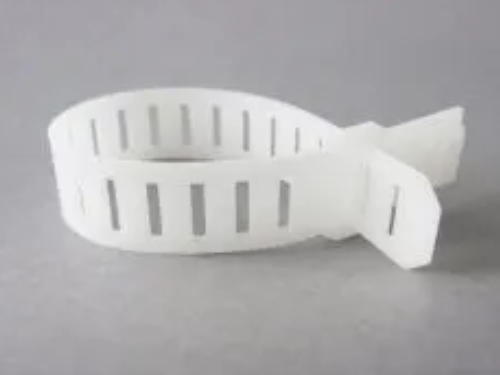
Polyether Block Amide (PEBA) injection molding is a specialized manufacturing process that shapes PEBA thermoplastic elastomer—a unique flexible block copolymer—into custom parts via high-pressure injection into precision molds. Unlike rigid plastics or traditional rubbers, PEBA blends the elasticity of elastomers with the processability of thermoplastics, making it ideal for applications requiring both flexibility and structural integrity.
At its core, PEBA plastic molding leverages the material’s segmented structure: hard polyamide (PA) blocks provide strength and chemical resistance, while soft polyether (PE) blocks deliver flexibility and low-temperature toughness. This balance explains why PEBA is the material of choice for industries ranging from medical to sports equipment.
Key Characteristics of PEBA Molding
| Characteristic | Description | Relevance to Molding |
| Thermoplastic Elastomer (TPE) Behavior | Softens when heated, hardens when cooled—reversible process | Enables high-volume production via injection molding |
| Block Copolymer Structure | Alternating hard PA and soft PE segments | Customizable flexibility/strength ratios for targeted applications |
| Low Density | Typically 0.91–0.98 g/cm³ | Reduces part weight without sacrificing performance |
| Broad Melt Temperature Range | 180–260°C (varies by grade) | Accommodates diverse molding setups and part complexities |
The PEBA Injection Molding Process: Step-by-Step Excellence
Achieving consistent PEBA parts requires strict control over every process step—from resin preparation to final degating. Below is our optimized workflow, designed to minimize waste and maximize part quality.
Step 1: Resin Drying & Preparation
PEBA absorbs moisture easily, which can cause bubbles or defects in molded parts. We dry PEBA resin grades at 80–100°C for 4–6 hours (depending on grade) using desiccant dryers to ensure moisture content <0.05%. Pigmented PEBA pellets or modified formulations (e.g., anti-static or radiopaque) are blended uniformly to maintain color/property consistency.
Step 2: Melt Temperature & Screw Design
The PEBA melt temperature window is critical: too low, and the resin won’t flow evenly; too high, and it degrades. We target 190–240°C (adjusted by grade) and use specialized screws with:
- Deep feed zones to prevent shear heating
- Low-compression ratios (1.5:1 to 2:1) to avoid polymer breakdown
- Smooth barrel surfaces to reduce friction (critical for low-shear molding)
Step 3: Injection & Mold Filling
Resin is injected into the mold at pressures of 800–1,200 bar, with injection speeds tailored to part thickness (slower for thin walls to avoid jetting). Our in-mold cooling systems use precision water channels to control temperature (typically 30–40°C) and reduce PEBA molding cycle time—we average 15–45 seconds per cycle (varies by part size).
Step 4: Demolding & Degating
After cooling, parts are demolded gently to avoid warping. We use automated PEBA degating techniques (e.g., laser cutting or punch tools) to remove runners cleanly, ensuring smooth, burr-free edges—critical for medical and electronic applications.
Step 5: Quality Inspection
Every batch undergoes 100% dimensional checks (via CMM machines) and material property testing (tensile strength, elongation, rebound). For medical parts, we also conduct biocompatibility and FDA compliance audits.
PEBA Materials: Custom Formulations for Every Industry
The performance of your PEBA part starts with the right resin. We offer a wide range of PEBA resin grades for molding, each optimized for specific application needs—from FDA-compliant medical devices to high-rebound sports gear.
Popular PEBA Formulations We Supply
| Formulation Type | Key Properties | Target Industries |
| FDA-Compliant PEBA Compounds | Non-toxic, sterilizable (autoclave/ETO), USP Class VI certified | Medical (tubing, catheters, orthodontic aligners) |
| High-Rebound PEBA Grades | 65–85% rebound rate (ASTM D2632), excellent energy return | Sports (shoe midsoles, protective gear) |
| Anti-Static PEBA Formulations | Surface resistance <10⁹ Ω, dust-repellent | Electronics (grips, connectors) |
| Radiopaque PEBA Modifiers | X-ray visible (barium sulfate or bismuth oxide additive) | Medical (vascular catheters, surgical instruments) |
| Pigmented PEBA Pellets | UV-stable, color-fast (Pantone-matched) | Consumer goods (headphone sleeves, watch bands) |
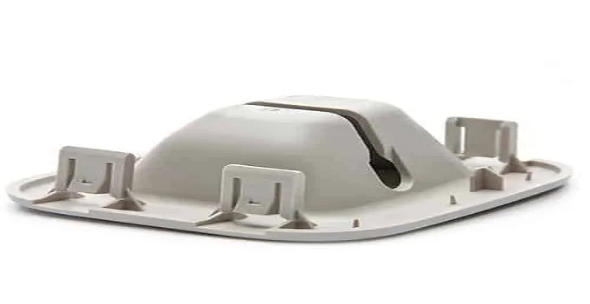
Advantages of PEBA: Why It Outperforms Other Materials
PEBA’s unique combination of properties makes it a superior choice for applications where flexibility, durability, and precision matter. Below are its key advantages over rubbers, rigid plastics, and other TPEs:
- Flexibility with Memory: Maintains shape after repeated bending (critical for kink-resistant IV tubes or flexible connectors).
- Low-Density Benefit: Up to 30% lighter than rubber, reducing shipping costs and improving end-product ergonomics (e.g., hearing-aid seals).
- Energy Return Value: Delivers 60–80% energy return (vs. 40–50% for EVA), making it ideal for sports-shoe midsoles that enhance performance.
- Chemical Resistance Plus: Withstands oils, solvents, and bodily fluids (perfect for medical devices and automotive dampers).
- Cold-Impact Toughness: Remains flexible at -40°C (vs. rigid plastics that become brittle), suitable for outdoor or industrial applications.
- Clarity & Colorability: Available in clear grades (for orthodontic aligners) or custom colors (for consumer electronics), with excellent UV stability.
PEBA Injection Molding Applications: Across Industries
PEBA’s versatility has made it a staple in industries worldwide. Our clients rely on our molding expertise to create parts that solve their most pressing challenges:
| Industry | Key Applications | Our Molding Solution |
| Medical | PEBA molded medical tubing, cardiovascular catheters, pacemaker leads, orthodontic aligners | Clean-room molding, USP Class VI resins, tight tolerances (±0.005 mm) |
| Sports & Fitness | High-rebound running-shoe inserts, ski boot liners, yoga mat grips | High-volume multi-cavity tooling, high-rebound PEBA grades |
| Automotive | PEBA automotive dampers, door seals, wire harnesses | Chemical-resistant formulations, 2-shot molding (PEBA + PP) |
| Electronics | PEBA consumer electronics grips, headphone sleeves, connector gaskets | Anti-static PEBA, pad-print marking, low-shear molding (to protect sensitive components) |
| Industrial | PEBA flexible connectors, pump diaphragms, valve seals | Kink-resistant grades, gas-assist molding for complex geometries |
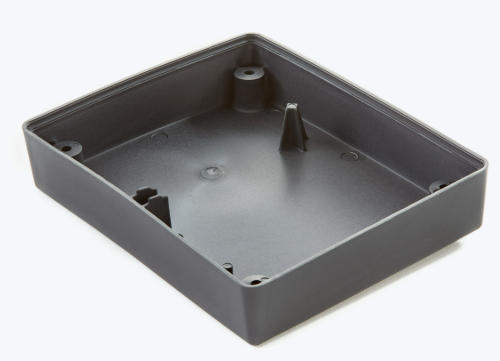
How to write a spec that gets priced correctly
A drawing is a contract. If it leaves a number open, the shop fills that number in with its own default. The default is rarely the one you had in mind. Put these five lines on every RFQ and most of the back-and-forth disappears before it starts.
- A model and a drawing that agree
- Material by standard number
- Tolerance only where it mates
- Finish and the faces it applies to
- Quantity and required date
The point is not paperwork. Each line removes a decision the shop would otherwise make for you. A complete RFQ comes back priced. An incomplete one comes back guessed.
What actually drives the price
Buyers usually push on material because it is the line they can see. In practice the material is rarely the biggest number on a quote. These five lines decide most of it:
- process choice
- material
- tolerance band
- finish
- volume
Ask for the quote split by line. A supplier who cannot break it down is guessing, and you will pay for the guess. The line you can usually renegotiate is the tolerance band, not the raw material.
Problems you will meet, and the fix
Every process has a failure mode it prefers. The same four show up again and again on this kind of work, and none of them are mysteries once you know what to look for.
- A drawing that contradicts the model
- A tolerance with no datum
- A cosmetic callout with no approved sample
- A quote compared against a different scope
Catch the fault on the first part, not the hundredth. A first-article check costs an hour. A bad batch costs the whole order. Write the check into the purchase order so nobody has to remember it.
What to check on the first article
The first article is the cheapest inspection you will ever buy. Use it properly and the rest of the run becomes boring, which is exactly what you want.
- Every dimension on the drawing, with the measured value written beside it.
- The material certificate, matched to the heat or lot number on the parts.
- The finish against the sample you approved, under the same light.
- Fit against the mating part, assembled rather than measured.
- Packaging, because parts that arrive damaged were never in tolerance.
Check in this order: datums, then mating features, then cosmetic faces. If the datums are wrong, every number after them is noise. Keep the report on file. When a problem shows up in month six, that document is the only thing that tells you what changed.
How to compare two quotes fairly
Two numbers are not comparable unless the scope matches. Line them up before you decide, because a low number with three gaps is not a low number.
Same drawing, same material, same finish, same inspection. Anything else is a different job wearing the same part number. Then look at what each quote leaves out. Freight, packaging, certificates and tooling are the usual gaps.
Ask each supplier to state their assumptions in writing. The one who does is usually the one who has run the process before.
Scaling from one part to a batch
The first part teaches you the process. The hundredth teaches you the process cost.
Watch three things as volume grows: setup amortisation, tool wear, and how much hand work the finish still needs. If the unit price barely moves between ten and a hundred, the cost sits in material or in hand work, not in setup. Ask which, because only one of them is negotiable.
Lead time behaves the same way. A one-off is scheduled around other jobs. A repeat order is scheduled around your forecast. Give the shop a forecast and the lead time gets shorter, not longer.
How to read a supplier's quote
A quote is a short document with a long shadow. Four things in it decide whether the job runs smoothly, and only one of them is the price.
- The scope line. It should name the process, the material and the finish, not just the part.
- The tolerance basis. General tolerance or the drawing, and which standard it follows.
- The exclusions. Tooling, freight, certificates and inspection are the usual omissions.
- The validity date. Material prices move, and an open-ended quote is a promise nobody can keep.
Read the exclusions before you read the total. A quote that leaves out tooling is not cheaper. It is a quote for a different job.
What to send with the first order
The first order sets the pattern for every order after it. Send a complete package once and the shop files it, and the second order takes a fraction of the time.
- A STEP or native model plus a PDF drawing carrying the same revision letter.
- The material callout by standard number, not by trade name.
- The finish and the exact faces it applies to.
- Any test the part must pass: fit, seal, drop, salt spray, dielectric.
- A contact who can answer a question inside one working day.
Then write down what was agreed. An email that confirms the material, the finish and the date is worth more than a longer purchase order that leaves them open.
When this is the wrong choice
A good supplier tells you when the process does not fit. These are the cases where we say so.
- The volume is so low that setup costs more than the parts are worth.
- The tolerance is tighter than the process can hold without a second operation.
- The geometry cannot be made without a tool feature that will not pay back.
- The material you need is not available in the form the process requires.
- The schedule is shorter than the tooling or setup time, and nobody has said so yet.
None of these are refusals. They are reasons to look at a different route, and the earlier that conversation happens the cheaper it is. The most expensive mistake in manufacturing is a process chosen before the question was understood.
Planning the ramp from prototype to production
The gap between one good part and a thousand identical ones is a plan, not a machine. Three decisions close it.
First, freeze the design. Every change after tooling starts is a re-cut, and re-cuts are where schedules go. Second, decide the inspection level. A prototype is checked by eye; a production part is checked against a report. Third, agree the change process in writing, including who pays for it.
Write the ramp down as dates and owners, not as intentions. A ramp plan with three names and three dates is worth more than a page of good intentions.
Case Study: How We Solved a Medical Device Client’s Kink Problem
A leading medical device manufacturer approached us with a critical issue: their existing IV tube (made from PVC) kinked easily, disrupting fluid flow and risking patient safety. They needed a kink-resistant IV tube that was also biocompatible and sterilizable.
Our Solution:
- Material Selection: Recommended a USP Class VI biocompatible PEBA grade with high flexural modulus (200 MPa) for kink resistance.
- Mold Design: Used gas-assist molding to create a reinforced tube wall (0.8 mm thick) with a smooth inner diameter (ID) for unobstructed flow.
- Process Control: Optimized in-mold cooling to reduce cycle time from 60 to 35 seconds, enabling high-volume production.
Results:
- The PEBA IV tube withstood 10,000 bending cycles without kinking (vs. 500 cycles for PVC).
- Met FDA and ISO 10993 requirements for biocompatibility.
Reduced the client’s production costs by 18% (via faster cycles and lower material waste).
Our solution for Our Polyether Block Amide PEBA
YiguProto runs custom manufacturing in house, from a single prototype to a production batch. We quote the process, the material and the finish as separate lines, so you can see where the money goes instead of arguing with one number.
Send a STEP file or a drawing and you get a DFM report in one to two business days. It flags the features that add cost and the features that will not hold tolerance on the process you picked.
Every order ships with an inspection report on the features you call out. If a part misses, we make it again. Ready to price a part? Start with a free quote and DFM review, or read more about our custom manufacturing. You can also talk to an engineer before you commit to a drawing.
FAQ about Our Polyether Block Amide PEBA
What is the typical lead time for PEBA injection molding parts?
For standard parts (using existing tooling), lead time is 2–4 weeks. For custom parts requiring new tooling, it’s 6–8 weeks (including tool design, prototyping, and production). We also offer expedited services (1–2 weeks for prototypes) for urgent projects.
Can you produce PEBA parts that meet FDA and USP Class VI requirements?
Yes. We specialize in FDA-compliant PEBA compounds and operate Class 7/8 clean rooms for medical-grade production. All our medical PEBA parts undergo USP Class VI testing (cytotoxicity, sensitization, irritation) and come with full FDA DMF documentation for regulatory submission.
How do you ensure consistency in high-volume PEBA production?
We use three key strategies: (1) Automated process control (temperature, pressure, and cycle time are monitored in real time via IoT sensors), (2) Statistical Process Control (SPC) to track part dimensions and material properties (with 100% inspection for critical parts), (3) Multi-cavity tooling (up to 32 cavities) that ensures uniform filling and cooling across all parts. This results in a defect rate of <0.1% for high-volume runs.
How much does Our Polyether Block Amide PEBA cost?
Price comes from five lines: material, machine or tool time, setup, finishing and inspection. The material itself is usually the smallest of them. Send a drawing and we will split the quote so you can see which line is doing the damage.
What should I check before approving the parts?
Datums first, then the features that mate, then the cosmetic faces. Ask for a dimensional report, a material certificate and a finish sample. A part can be inside every tolerance and still not fit, so assemble one before you sign.
What files do you need in order to quote?
A STEP file plus a PDF drawing that carries the same revision letter. The model carries the geometry and the drawing carries the intent. When the two disagree, the shop picks one, and it is never the one you meant.
The short version
Our Polyether Block Amide PEBA rewards the buyer who reads the data sheet and the drawing together. Pick the option for the property that matters, not for the price per kilo.
Tighten only what mates. Test a sample before the run. Then let the process do the rest.