
3D Printing
Is Powder 3D Printing the Key to Your Toughest Manufacturing Challenges?
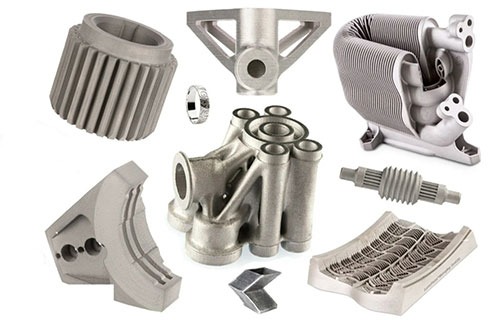
Struggling to produce a part with a complex internal channel? Need a small batch of metal components without the huge cost of machining or tooling? You’ve probably heard about powder bed fusion technologies, but the details can feel shrouded in a literal cloud of… well, powder. You’re right to be intrigued. This isn’t your desktop plastic printer.
Key takeaways
- At its core, powder 3D printing is about precision and efficiency. Think of it as the opposite of machining.
- This technology isn’t just about “cool factor.” It solves fundamental business and engineering problems.
- The material you select is half the battle. Each powder type brings a unique set of properties to the table. Here’s a practical comparison.
- This technology has moved far beyond prototyping. It’s now a viable production method for specific, high-value applications.
How Does Powder 3D Printing Actually Work?
At its core, powder 3D printing is about precision and efficiency. Think of it as the opposite of machining. Instead of starting with a solid block and cutting material away (subtractive), it builds your part layer by layer from the ground up (additive), using only the material you need. The process is surprisingly elegant and repeatable.
The Step-by-Step Workflow, Demystified
Let’s walk through the universal cycle used by technologies like Selective Laser Sintering (SLS) for plastics and Selective Laser Melting (SLM) or Electron Beam Melting (EBM) for metals.
- Digital Blueprint & Slicing: It all starts with your 3D CAD model. Specialized software slices this digital model into ultra-thin horizontal layers, typically between 0.02 mm and 0.1 mm thick. This creates the “instruction set” for the printer.
- Preparing the Powder Bed: The printer’s build chamber is heated (crucial for reducing thermal stress) and a recoater blade spreads a perfectly even, fine layer of powder across the build platform.
- Selective Fusion: This is where the magic happens. Based on the slice data, a high-power laser (or electron beam in EBM) scans over the powder bed. Where it hits, it selectively sinters or fully melts the powder particles, fusing them together to form a solid layer. The surrounding, untouched powder remains loose, acting as a natural support structure for overhangs.
- Layer-by-Layer Building: The build platform lowers by exactly one layer thickness. The recoater applies a fresh layer of powder, and the laser fuses the next cross-section, also bonding it to the layer below. This cycle repeats hundreds or thousands of times.
- Post-Processing & Recovery: Once complete, the entire build chamber is left to cool. The “build cake” is then removed. Your parts are dug out from the surrounding unsintered powder, which is sieved and recycled for the next job (reuse rates can exceed 95%). Parts often require stress-relief heat treatment, and support structures are removed via machining.
From Our Experience: A client once came to us with a titanium component that had a delicate, thin-walled internal cooling network. Machining was impossible, and casting would be prohibitively expensive for a prototype. Using SLM powder 3D printing, we built the part in one go. The loose powder supported the internal channels during printing, eliminating the need for complex internal supports that couldn’t be removed. The unsintered powder was simply poured out afterward.
What Are the Real, Tangible Advantages Over Traditional Methods?
This technology isn’t just about “cool factor.” It solves fundamental business and engineering problems. Here’s a breakdown of its most powerful benefits.
Unmatched Design Freedom & Part Consolidation
The single biggest advantage. You can manufacture geometries that are impossible with casting, forging, or CNC machining. Think of:
- Complex Internal Channels (for conformal cooling in molds or lightweight heat exchangers).
- Organic, Lattice Structures that dramatically reduce weight while maintaining strength (inspired by bone structures).
- Part Consolidation: We helped an aerospace supplier combine an assembly of 12 separate pieces into a single, lighter, more reliable 3D printed titanium component, eliminating assembly time and potential failure points.
Radical Material Efficiency and Cost-Saving
Traditional machining can waste 50-70% of a costly metal billet as “chips.” Powder processes are inherently additive. You only fuse the material you need for the part itself. The unused powder is recycled, leading to material utilization rates often above 90%. For expensive alloys like Ti-6Al-4V titanium, this isn’t just eco-friendly—it’s a massive cost saver.
Dramatically Shorter Lead Times for Complex Parts
Need a functional metal prototype or a small batch of specialized components? The traditional route involves designing and machining expensive tooling (taking 8-12 weeks), then casting. With powder 3D printing, you go directly from CAD to finished part in as little as 1-2 weeks. This accelerates R&D cycles and enables faster time-to-market. For on-demand spare parts in industries like maritime or energy, it’s a game-changer for reducing equipment downtime.
Enabling Mass Customization
Because each part is built from a digital file, changing the design has almost zero incremental cost. There is no need for new molds or tooling. This makes it perfect for personalized medical implants (where every patient’s anatomy is unique) or customized consumer products (like bespoke orthopedic insoles or high-end eyewear frames).
Which Powder Material Should I Choose for My Project?
The material you select is half the battle. Each powder type brings a unique set of properties to the table. Here’s a practical comparison.
| Material Category | Best For These Properties | Ideal Applications | Key Considerations |
|---|---|---|---|
| Metal Powders | High Strength, Heat Resistance, Durability | Aerospace, Medical, Automotive | Highest cost, requires significant post-processing (heat treat, machining). |
| Titanium Alloys (Ti-6Al-4V) | Best strength-to-weight ratio, Biocompatible, Corrosion resistant. | Aircraft brackets, Biomedical implants, Racing components. | The “gold standard” for high-performance, lightweight parts. |
| Stainless Steel (316L) | Good strength & corrosion resistance, Cost-effective (vs. Ti). | Industrial tooling, Marine hardware, Food-safe components. | A versatile, all-rounder metal for functional prototypes and end-use parts. |
| Aluminum Alloys (AlSi10Mg) | Lightweight, Good thermal conductivity. | Heat sinks, Lightweight automotive/ drone frames, Enclosures. | Not for high-stress applications; good for weight-sensitive designs. |
| Polymer Powders (Nylon PA12) | Flexibility, Good Impact Strength, Fine Detail | Consumer Goods, Functional Prototypes, Ductile Parts | No support structures needed, great for complex assemblies. |
| Nylon PA12/PA11 | Durable, Slightly flexible, Can be dyed. | Housings, Snap-fits, Wearables, Automotive ducting. | The most common SLS plastic. Offers excellent mechanical balance. |
| Ceramic Powders (Alumina, Zirconia) | Extreme Hardness, Heat & Chemical Resistance | Medical, Industrial Wear Parts, Electronics | Very brittle, used in binder jetting processes. |
| Zirconia (ZrO₂) | High toughness (for a ceramic), Biocompatible. | Dental crowns & bridges, Cutting tools, Insulators. | Requires a secondary sintering furnace to reach full density. |
Professional Insight: Don’t just default to the material you use for CNC. 3D printed metal has a different microstructure than wrought or cast metal. While tensile strength can be comparable or superior, fatigue life may differ. For safety-critical parts (like aerospace or implants), rigorous testing and process qualification (like NASA or FAA standards) are non-negotiable. Always consult with an experienced manufacturing partner early in the design phase.
How to write a spec that gets priced correctly
A drawing is a contract. If it leaves a number open, the shop fills that number in with its own default. The default is rarely the one you had in mind. Put these five lines on every RFQ and most of the back-and-forth disappears before it starts.
- File format and units, with the model exported in millimetres
- Process and material grade, not a trade name
- Critical features and the tolerance each one needs
- Surface finish and the faces it applies to
- Quantity for the pilot build and for the year
The point is not paperwork. Each line removes a decision the shop would otherwise make for you. A complete RFQ comes back priced. An incomplete one comes back guessed.
What actually drives the price
Buyers usually push on material because it is the line they can see. In practice the material is rarely the biggest number on a quote. These five lines decide most of it:
- build volume and orientation
- layer height and support structure
- material grade and colour
- post-processing and hand finishing
- quantity per build plate
Ask for the quote split by line. A supplier who cannot break it down is guessing, and you will pay for the guess. The line you can usually renegotiate is the tolerance band, not the raw material.
Problems you will meet, and the fix
Every process has a failure mode it prefers. The same four show up again and again on this kind of work, and none of them are mysteries once you know what to look for.
- Warping on long flat faces where the part lifts off the plate
- Layer lines showing through a cosmetic surface
- Support scars on a mating face nobody flagged
- Dimensional drift on thin walls after cooling
Catch the fault on the first part, not the hundredth. A first-article check costs an hour. A bad batch costs the whole order. Write the check into the purchase order so nobody has to remember it.
What to check on the first article
The first article is the cheapest inspection you will ever buy. Use it properly and the rest of the run becomes boring, which is exactly what you want.
- Every dimension on the drawing, with the measured value written beside it.
- The material certificate, matched to the heat or lot number on the parts.
- The finish against the sample you approved, under the same light.
- Fit against the mating part, assembled rather than measured.
- Packaging, because parts that arrive damaged were never in tolerance.
Check in this order: datums, then mating features, then cosmetic faces. If the datums are wrong, every number after them is noise. Keep the report on file. When a problem shows up in month six, that document is the only thing that tells you what changed.
How to compare two quotes fairly
Two numbers are not comparable unless the scope matches. Line them up before you decide, because a low number with three gaps is not a low number.
Same drawing, same material, same finish, same inspection. Anything else is a different job wearing the same part number. Then look at what each quote leaves out. Freight, packaging, certificates and tooling are the usual gaps.
Ask each supplier to state their assumptions in writing. The one who does is usually the one who has run the process before.
Scaling from one part to a batch
The first part teaches you the process. The hundredth teaches you the process cost.
Watch three things as volume grows: setup amortisation, tool wear, and how much hand work the finish still needs. If the unit price barely moves between ten and a hundred, the cost sits in material or in hand work, not in setup. Ask which, because only one of them is negotiable.
Lead time behaves the same way. A one-off is scheduled around other jobs. A repeat order is scheduled around your forecast. Give the shop a forecast and the lead time gets shorter, not longer.
How to read a supplier's quote
A quote is a short document with a long shadow. Four things in it decide whether the job runs smoothly, and only one of them is the price.
- The scope line. It should name the process, the material and the finish, not just the part.
- The tolerance basis. General tolerance or the drawing, and which standard it follows.
- The exclusions. Tooling, freight, certificates and inspection are the usual omissions.
- The validity date. Material prices move, and an open-ended quote is a promise nobody can keep.
Read the exclusions before you read the total. A quote that leaves out tooling is not cheaper. It is a quote for a different job.
Where is Powder 3D Printing Making a Real Impact Today?
This technology has moved far beyond prototyping. It’s now a viable production method for specific, high-value applications.
- Aerospace & Defense: This sector was an early adopter, driven by the need for lightweighting to save fuel. Complex fuel nozzles with integrated cooling channels are now routinely printed for jet engines, consolidating many parts into one. Satellite components and drone parts also benefit from the design freedom.
- Medical & Dental: This is perhaps the most life-changing application. Patient-specific titanium implants for skull plates, hip cups, or spinal cages are designed from CT scans for a perfect anatomical fit. In dentistry, cobalt-chrome or zirconia crowns/bridges are milled from printed “blanks” or directly printed, improving workflow and customization.
- Industrial Tooling & Manufacturing: This is a hidden powerhouse. Companies use metal powder printing to make conformal cooling injection molds. These molds have internal channels that perfectly follow the shape of the mold cavity, cooling the plastic part up to 70% faster, reducing cycle times and warping. It’s also perfect for low-volume production of specialized jigs, fixtures, and end-of-arm robot tooling.
The Trend We’re Seeing: The frontier is multi-material printing. Researchers and advanced manufacturers are experimenting with printing parts that gradiate from one metal to another (e.g., a hard, wear-resistant tip on a tough, ductile base) within a single build. While still in development, this points to a future of “designing” material properties zone by zone within a component.
FAQ: Your Powder 3D Printing Questions, Answered
Is powder 3D printing strong enough for final, functional parts?
Absolutely. Metal powder printed parts, after proper heat treatment, can meet or exceed the mechanical properties of their cast or forged counterparts. For example, laser-melted Ti-6Al-4V can achieve a tensile strength over 1200 MPa. The key is using a qualified process and appropriate post-processing.
What are the size limitations for powder 3D printed parts?
It’s defined by the build volume of the printer. Common industrial metal systems have build chambers ranging from 250 x 250 x 300 mm up to 500 x 500 x 500 mm or larger. For bigger parts, they can be strategically split into segments, printed, and then welded or assembled. The minimum feature size can be incredibly fine, down to 0.2-0.3 mm for metals and even finer for polymers.
How does the surface finish compare to CNC machining?
As-printed, powder parts have a characteristic grainy, matte surface (often called an “orange peel” texture) with a roughness (Ra) in the range of 10-25 microns. For many functional applications, this is acceptable. For interfaces or aesthetic needs, post-processing like CNC machining, polishing, bead blasting, or electrochemical polishing can achieve a mirror finish.
Is it cost-effective for high-volume production (10,000+ units)?
Typically, no. For very high volumes, traditional methods like injection molding or die casting have a lower per-part cost due to faster cycle times. Powder printing excels in low-to-medium volume production (from 1 to ~10,000 units), for highly complex parts, or where mass customization is required. The break-even point is constantly shifting as technology speeds up.
What about safety? Is metal powder hazardous?
Yes, fine metal powders can be flammable or explosive, and inhalation is a health risk. Industrial powder bed fusion systems are fully sealed, operate under inert gas (argon/nitrogen), and have integrated fire suppression. Powder handling—loading, sieving, recycling—requires proper industrial hygiene protocols, including gloves, respirators, and dedicated, well-ventilated areas.
Our solution for Powder 3D Printing
YiguProto runs 3D printing in house, from a single prototype to a production batch. We quote the process, the material and the finish as separate lines, so you can see where the money goes instead of arguing with one number.
Send a STEP file or a drawing and you get a DFM report in one to two business days. It flags the features that add cost and the features that will not hold tolerance on the process you picked.
Every order ships with an inspection report on the features you call out. If a part misses, we make it again. Ready to price a part? Start with a free quote and DFM review, or read more about our 3D printing. You can also talk to an engineer before you commit to a drawing.
FAQ about Powder 3D Printing
How much does Powder 3D Printing cost?
Price comes from five lines: material, machine or tool time, setup, finishing and inspection. The material itself is usually the smallest of them. Send a drawing and we will split the quote so you can see which line is doing the damage.
Can Powder 3D Printing be made in small quantities?
Yes, and small quantities are where a good supplier earns the next order. Setup dominates the price at low volume, so the cheapest route is usually the one with the fewest operations, not the cheapest material.
What is Powder 3D Printing used for?
Powder 3D Printing turns up wherever the part has to do a real job at a predictable cost: brackets, housings, fixtures, covers and the fittings that hold them together. The honest test is whether the properties match the load and the environment, not whether the material is fashionable.
How long does a first article take?
Usually a few business days once the drawing is frozen, and longer if tooling is involved. The date we give you is the date we confirm in writing, not the date we hope for.
What happens if a part is out of specification?
We measure it against the same drawing you approved and, if it misses, we make it again. What matters is that the report exists, because a disagreement without data is just an opinion.
What files do you need in order to quote?
A STEP file plus a PDF drawing that carries the same revision letter. The model carries the geometry and the drawing carries the intent. When the two disagree, the shop picks one, and it is never the one you meant.
The short version
Powder 3D Printing rewards the buyer who reads the data sheet and the drawing together. Pick the option for the property that matters, not for the price per kilo.
Tighten only what mates. Test a sample before the run. Then let the process do the rest.