
3D Printing
Is 3D Printing Worth It for Businesses? Pros & Cons Guide
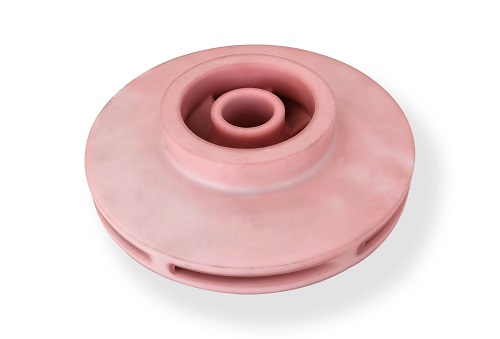
If you’re a manufacturer, designer, or entrepreneur, you’ve likely heard of 3D printing. You may wonder if it’s worth the investment. This guide breaks down the key pros and cons of 3D printing. It uses real data, use cases, and practical tips to help you decide. By the end, you’ll have all the info you need to make an informed choice for your business.
Key takeaways
- Before we dive into pros and cons, let’s clarify the basics.3D printing (or additive manufacturing) builds objects layer by layer.
- 3D printing solves many pain points for businesses. Below are its top benefits, with real examples and data to back them up.
- 3D printing isn’t perfect. It has limitations that can impact your business. Below are the main drawbacks, who they affect most, and real examples.
- Use this table to match 3D printing’s strengths and weaknesses to your business needs. It simplifies your decision.
What Makes 3D Printing Unique?
Before we dive into pros and cons, let’s clarify the basics.3D printing (or additive manufacturing) builds objects layer by layer. It uses digital CAD models as a blueprint. This differs from traditional “subtractive” methods like CNC machining. Subtractive methods cut or carve material from a solid block.
This core difference drives 3D printing’s biggest advantages. It also creates its main challenges. Understanding this helps you see where 3D printing fits in your business.
Quick Example
A small design firm needed 10 custom parts for a prototype. With CNC machining, they had to carve 10 blocks of plastic. This wasted 60% of the material. With 3D printing, they used only the material needed for the parts. No waste, and the parts were ready in hours.
What Are the Pros of 3D Printing?
3D printing solves many pain points for businesses. Below are its top benefits, with real examples and data to back them up.
| Advantage Category | Key Benefit | Real-World Example |
|---|---|---|
| Design Flexibility | Makes complex shapes impossible with traditional methods | A medical device company made a heart stent with tiny flow channels. This improved patient recovery by 30%. |
| Rapid Prototyping | Turns CAD designs into prototypes in hours, not weeks | A startup cut its smartphone case design cycle from 8 weeks to 5 days using 3D printing. |
| Material Efficiency | Reduces waste by 40-60% (uses only needed material) | An aerospace firm cut aluminum waste from 70% (CNC) to 15% (3D printing) for engine parts. |
| Energy & Sustainability | Uses 30-50% less energy than traditional manufacturing | A furniture brand’s 3D-printed chairs cut CO₂ by 45% vs. injection-molded versions. |
| Low-Volume Savings | Eliminates expensive molds, making small batches affordable | A jewelry designer makes custom necklaces in batches of 50 (vs. 500 minimum for molding) without raising prices. |
Deep Dive: Design Flexibility
Traditional methods struggle with complex geometries. Lattice structures, internal channels, or custom curves often require multiple tools or molds.
3D printing builds layer by layer. This lets you create these shapes in one piece. For example, a robotics company made a custom gear with internal cooling channels. It reduced overheating by 25% and worked better than the CNC-machined version.
Deep Dive: Rapid Prototyping
Product development speed is key for businesses. Slow prototyping can make you miss market windows.
A kitchenware startup wanted to test a new spatula design. With injection molding, they waited 3 weeks for a prototype. With 3D printing, they had it in 6 hours. They tested 4 designs in one week and launched 2 months faster than planned.
What Are the Cons of 3D Printing?
3D printing isn’t perfect. It has limitations that can impact your business. Below are the main drawbacks, who they affect most, and real examples.
High Upfront Costs
Industrial 3D printers cost $50k–$1M+. Basic CNC machines cost $10k–$50k by comparison.
Specialty materials add to costs. Metal powders or high-performance resins cost $50–$500 per kilogram. Raw plastic pellets cost just $2–$10 per kilogram.
Who it hits: Small businesses with tight budgets or those needing only basic production.
Material & Quality Limits
Most printers work with plastics, resins, or a few metals (titanium, steel). High-temperature plastics (for engines) or flexible rubbers are rare.
Accuracy can be an issue. Dimensional accuracy is ±0.1mm. Surface roughness often needs post-processing. This may not meet standards for critical parts.
Case in point: An automotive supplier rejected 3D-printed brake calipers. Their surface roughness caused brake fluid leaks. They switched back to CNC machining for this part.
Speed & Scalability Issues
3D printing is slow for mass production. A 3D printer takes 2–8 hours to make 1 plastic part.
An injection molding machine makes 100+ parts per hour. This gap grows for large batches.
Who it hits: Brands needing 10k+ units monthly (e.g., water bottle or toy manufacturers).
Environmental & Legal Risks
Failed prints create waste. 15–20% of 3D prints fail due to layer adhesion or design errors.
Some materials (like certain resins) can’t be recycled. This adds to environmental impact.
IP theft is another risk. Digital 3D files are easy to copy. A toy company found 3D-printed knockoffs online 2 weeks after launch.
Pros vs. Cons: Decision Checklist
Use this table to match 3D printing’s strengths and weaknesses to your business needs. It simplifies your decision.
| Your Business Need | Good Fit? | Why? |
|---|---|---|
| Small-batch production (1–1,000 units) | ✅ Yes | Avoids mold costs; fast turnaround. |
| Complex, custom designs | ✅ Yes | Makes shapes traditional methods can’t. |
| Mass production (10k+ units/month) | ❌ No | Too slow; injection molding is cheaper. |
| Critical parts (e.g., medical implants) | ⚠️ Maybe | Needs high-quality printers/materials; test first. |
| Tight budget (under $50k for equipment) | ❌ No | Upfront printer costs are too high. |
Case Study: Pros vs. Cons in Action
A small electronics company needed 500 custom phone chargers. They considered 3D printing vs. injection molding.
With 3D printing: No mold cost ($0), 10 days to produce, total cost $7,500 ($15 per unit).
With injection molding: $8,000 mold cost, 5 days to produce, total cost $9,000 ($18 per unit).
3D printing was cheaper for 500 units. But if they needed 5,000 units, injection molding would cost $12,000 ($2.40 per unit) vs. $75,000 for 3D printing. They chose 3D printing for the small batch and planned to switch for larger runs.
How to write a spec that gets priced correctly
A drawing is a contract. If it leaves a number open, the shop fills that number in with its own default. The default is rarely the one you had in mind. Put these five lines on every RFQ and most of the back-and-forth disappears before it starts.
- File format and units, with the model exported in millimetres
- Process and material grade, not a trade name
- Critical features and the tolerance each one needs
- Surface finish and the faces it applies to
- Quantity for the pilot build and for the year
The point is not paperwork. Each line removes a decision the shop would otherwise make for you. A complete RFQ comes back priced. An incomplete one comes back guessed.
What actually drives the price
Buyers usually push on material because it is the line they can see. In practice the material is rarely the biggest number on a quote. These five lines decide most of it:
- build volume and orientation
- layer height and support structure
- material grade and colour
- post-processing and hand finishing
- quantity per build plate
Ask for the quote split by line. A supplier who cannot break it down is guessing, and you will pay for the guess. The line you can usually renegotiate is the tolerance band, not the raw material.
Problems you will meet, and the fix
Every process has a failure mode it prefers. The same four show up again and again on this kind of work, and none of them are mysteries once you know what to look for.
- Warping on long flat faces where the part lifts off the plate
- Layer lines showing through a cosmetic surface
- Support scars on a mating face nobody flagged
- Dimensional drift on thin walls after cooling
Catch the fault on the first part, not the hundredth. A first-article check costs an hour. A bad batch costs the whole order. Write the check into the purchase order so nobody has to remember it.
What to check on the first article
The first article is the cheapest inspection you will ever buy. Use it properly and the rest of the run becomes boring, which is exactly what you want.
- Every dimension on the drawing, with the measured value written beside it.
- The material certificate, matched to the heat or lot number on the parts.
- The finish against the sample you approved, under the same light.
- Fit against the mating part, assembled rather than measured.
- Packaging, because parts that arrive damaged were never in tolerance.
Check in this order: datums, then mating features, then cosmetic faces. If the datums are wrong, every number after them is noise. Keep the report on file. When a problem shows up in month six, that document is the only thing that tells you what changed.
How to compare two quotes fairly
Two numbers are not comparable unless the scope matches. Line them up before you decide, because a low number with three gaps is not a low number.
Same drawing, same material, same finish, same inspection. Anything else is a different job wearing the same part number. Then look at what each quote leaves out. Freight, packaging, certificates and tooling are the usual gaps.
Ask each supplier to state their assumptions in writing. The one who does is usually the one who has run the process before.
Scaling from one part to a batch
The first part teaches you the process. The hundredth teaches you the process cost.
Watch three things as volume grows: setup amortisation, tool wear, and how much hand work the finish still needs. If the unit price barely moves between ten and a hundred, the cost sits in material or in hand work, not in setup. Ask which, because only one of them is negotiable.
Lead time behaves the same way. A one-off is scheduled around other jobs. A repeat order is scheduled around your forecast. Give the shop a forecast and the lead time gets shorter, not longer.
How to read a supplier's quote
A quote is a short document with a long shadow. Four things in it decide whether the job runs smoothly, and only one of them is the price.
- The scope line. It should name the process, the material and the finish, not just the part.
- The tolerance basis. General tolerance or the drawing, and which standard it follows.
- The exclusions. Tooling, freight, certificates and inspection are the usual omissions.
- The validity date. Material prices move, and an open-ended quote is a promise nobody can keep.
Read the exclusions before you read the total. A quote that leaves out tooling is not cheaper. It is a quote for a different job.
What to send with the first order
The first order sets the pattern for every order after it. Send a complete package once and the shop files it, and the second order takes a fraction of the time.
- A STEP or native model plus a PDF drawing carrying the same revision letter.
- The material callout by standard number, not by trade name.
- The finish and the exact faces it applies to.
- Any test the part must pass: fit, seal, drop, salt spray, dielectric.
- A contact who can answer a question inside one working day.
Then write down what was agreed. An email that confirms the material, the finish and the date is worth more than a longer purchase order that leaves them open.
When this is the wrong choice
A good supplier tells you when the process does not fit. These are the cases where we say so.
- The volume is so low that setup costs more than the parts are worth.
- The tolerance is tighter than the process can hold without a second operation.
- The geometry cannot be made without a tool feature that will not pay back.
- The material you need is not available in the form the process requires.
- The schedule is shorter than the tooling or setup time, and nobody has said so yet.
None of these are refusals. They are reasons to look at a different route, and the earlier that conversation happens the cheaper it is. The most expensive mistake in manufacturing is a process chosen before the question was understood.
How to Mitigate 3D Printing Cons?
You can reduce the impact of 3D printing’s limitations. Below are practical steps for each drawback.
For High Costs
- Outsource 3D printing: Use services like our shop instead of buying a printer. Pay per part, no upfront cost.
- Choose entry-level industrial printers: Some cost $20k–$50k and work for basic metal or plastic parts.
- Use affordable materials: Start with PLA or ABS for non-critical parts before moving to specialty materials.
For Material & Quality Limits
- Test materials first: Order sample parts to check strength and accuracy before full production.
- Invest in post-processing tools: Sanding or polishing machines improve surface quality.
- Choose the right tech: SLA for detailed resin parts, SLM for strong metal parts.
For Speed & Scalability
- Combine 3D printing with traditional methods: Prototype with 3D printing, mass produce with injection molding.
- Use faster printers: Binder jetting printers are 2–3x faster than standard FDM or SLM printers.
- Print multiple parts at once: Arrange parts on the printer bed to maximize output per print job.
For Environmental & Legal Risks
- Reduce failed prints: Use simulation software to check designs before printing. Train staff on calibration.
- Use recyclable materials: Choose PLA (biodegradable) or recycled PETG for less waste.
- Protect IP: Watermark 3D files or use encryption to prevent copying. Register designs legally.
3D printing offers powerful benefits for businesses. It enables complex designs, rapid prototyping, and affordable small batches. It cuts waste and energy use, making it a sustainable choice for many.
But it has limitations: high upfront costs, material restrictions, slow speed for mass production, and risks like IP theft. These drawbacks mean it’s not a one-size-fits-all solution.
The key is to match 3D printing to your business needs. Use the decision checklist to see if it’s a good fit. Mitigate cons by outsourcing, choosing the right tools, and optimizing your workflow.
At our shop we help businesses navigate these choices every day. 3D printing isn’t just a trend—it’s a tool that can give you a competitive edge. With the right approach, it can solve your pain points and drive innovation for years to come.
Our solution for 3D Printing
YiguProto runs 3D printing in house, from a single prototype to a production batch. We quote the process, the material and the finish as separate lines, so you can see where the money goes instead of arguing with one number.
Send a STEP file or a drawing and you get a DFM report in one to two business days. It flags the features that add cost and the features that will not hold tolerance on the process you picked.
Every order ships with an inspection report on the features you call out. If a part misses, we make it again. Ready to price a part? Start with a free quote and DFM review, or read more about our 3D printing. You can also talk to an engineer before you commit to a drawing.
FAQ about 3D Printing
Is there a minimum order quantity?
No hard minimum. One part is fine. What changes with volume is which costs dominate, so a single unit is priced mostly on setup and a thousand units are priced mostly on cycle time and material.
Does the process work for prototypes as well as production?
Yes, and that is usually the point. Running the prototype on the production process removes a whole class of surprises, because the part you test is made the same way as the part you sell.
What should I check before approving the parts?
Datums first, then the features that mate, then the cosmetic faces. Ask for a dimensional report, a material certificate and a finish sample. A part can be inside every tolerance and still not fit, so assemble one before you sign.
How much does 3D Printing cost?
Price comes from five lines: material, machine or tool time, setup, finishing and inspection. The material itself is usually the smallest of them. Send a drawing and we will split the quote so you can see which line is doing the damage.
What is 3D Printing used for?
3D Printing turns up wherever the part has to do a real job at a predictable cost: brackets, housings, fixtures, covers and the fittings that hold them together. The honest test is whether the properties match the load and the environment, not whether the material is fashionable.
What is the lead time for 3D Printing?
Expect 2 to 5 business days for a first batch. Tooling, material stock and the finishing queue all move that number, so we confirm the date in writing before the run starts rather than after.
The short version
3D Printing rewards the buyer who reads the data sheet and the drawing together. Pick the option for the property that matters, not for the price per kilo.
Tighten only what mates. Test a sample before the run. Then let the process do the rest.