
Industry Applications
Is Rapid Prototyping in China the Right Move for Your Product?
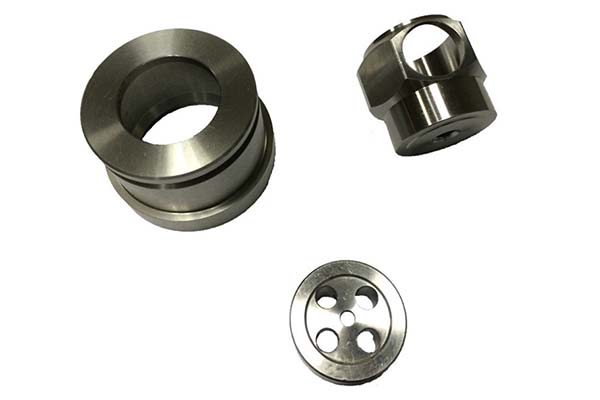
If you have a new product idea, you likely feel the pressure to move fast and control costs. Waiting weeks for a single prototype can kill your momentum. This is why so many businesses, from solo inventors to large corporations, now look to China for rapid prototyping.
Key takeaways
- China’s dominance in this field is not just about cheap labor. It is about a mature infrastructure that prioritizes speed and flexibility.
- Understanding the different methods helps you choose the right one for your project.
- Finding a reliable supplier in a vast country like China requires a systematic approach. Here is a step-by-step process.
- Even with careful planning, issues can arise. Knowing what they are helps you prepare.
Why Choose Rapid Prototyping in China?
China’s dominance in this field is not just about cheap labor. It is about a mature infrastructure that prioritizes speed and flexibility.
Is the Cost Savings Really That Significant?
Yes, the cost difference is often a deciding factor. Because of lower operational costs and a highly competitive market, Chinese providers can offer prices that are hard to beat. A study by ProtoTech Insights in 2024 showed that companies typically save between 35% and 45% on prototyping costs by sourcing from China.
For example, a simple CNC-machined plastic part that might cost $200 in the US can often be produced for $80 to $120 in China. This isn’t about using inferior methods. Many Chinese shops use the same high-end machines—like DMG Mori CNC equipment or Stratasys 3D printers—found in top Western facilities. You are paying less, but you are not necessarily getting less in terms of hardware capability.
How Fast Can You Actually Get Parts?
Speed is the other major advantage. Chinese prototyping firms often operate on a 24/7 schedule to serve global clients across different time zones.
- Simple prototypes (like a basic 3D printed enclosure) can be ready in 2 to 3 days.
- Complex projects (such as a metal 3D printed part or a small injection mold run) typically take 5 to 7 days.
This speed directly impacts your time-to-market. Consider a US startup that was developing a new smartwatch. They needed to test three different case designs. Their Chinese partner delivered the first set of prototypes in just 48 hours. This allowed them to run two more design iterations in two weeks, effectively cutting a month off their development schedule compared to using local suppliers.
What Technologies Are Available?
You are not limited to one process. China’s prototyping industry has grown to include a full suite of manufacturing technologies. This variety means you can match the process to your specific need, whether that’s a flexible rubber-like part or a high-strength metal component.
Can You Scale Up from a Prototype?
This is a unique advantage. Many Western prototyping shops focus only on small batches. In China, the same company that makes your 10 prototypes often has the capacity for mass production. Once you finalize your design, you can transition to large-scale manufacturing with the same partner, using the same quality standards. A European toy company, for example, used a Chinese firm to create 50 prototypes of a new doll. After testing, they scaled up to an order of 100,000 units with the same supplier, avoiding the need to qualify a new factory.
Popular Rapid Prototyping Technologies in China
Understanding the different methods helps you choose the right one for your project. Here is a quick overview of the most common technologies used by Chinese suppliers.
| Technology | Best For | Typical Lead Time | Key Advantage in China |
|---|---|---|---|
| 3D Printing (FDM/SLA/SLM) | Complex shapes, detailed parts, small batches | 1-3 days | Wide range of materials, including specialty resins and metals. |
| CNC Machining | High-precision parts in metal or plastic | 2-5 days | Access to advanced 5-axis machines for complex geometry. |
| Injection Molding (Rapid) | Testing designs with 100+ plastic parts | 5-7 days | Low-cost, fast aluminum tooling for prototype runs. |
| Vacuum Casting | Flexible parts like rubber or silicone | 3-4 days | Fast silicone mold creation without hard tooling. |
| Sheet Metal Fabrication | Thin metal parts like brackets or enclosures | 3-6 days | High-volume processing at very competitive prices. |
How Does 3D Printing Work in China?
China is a major hub for additive manufacturing. Providers offer several key methods:
- FDM (Fused Deposition Modeling): Great for low-cost plastic prototypes, like product housings.
- SLA (Stereolithography): Delivers high-detail parts with a smooth finish, ideal for medical or electronics models.
- SLM (Selective Laser Melting): Used for printing strong, functional metal parts, such as aerospace brackets or medical implants.
A major advantage is material availability. Chinese suppliers often stock a wider variety of materials than their Western counterparts, including flame-retardant plastics or biocompatible resins. A Canadian medical company, for instance, needed prototypes of a surgical tool made from a specific biocompatible resin. Their Chinese partner had the material in stock and delivered the parts in just three days.
Why Is CNC Machining So Popular?
CNC machining is a subtractive process, meaning you start with a solid block of material and cut away what you don’t need. It is the go-to choice for parts that require high strength and tight tolerances.
Chinese shops have invested heavily in 5-axis CNC machines. Unlike standard 3-axis machines, these can approach a part from five different sides in a single setup. This allows them to create complex shapes, like curved surfaces or internal undercuts, with greater accuracy and speed. A German automotive supplier needed a prototype transmission part with a tolerance of ±0.005mm. Their Chinese partner used a 5-axis machine to produce it in four days, at a cost 40% lower than their domestic supplier quoted.
What About Rapid Injection Molding?
While injection molding is typically for high volumes, Chinese providers have mastered rapid tooling for prototypes. Instead of making a hard steel mold (which is expensive and slow), they use aluminum molds that can be cut in just a few days.
This allows you to produce 100 to 1,000 prototype parts in the actual production material (like ABS or polypropylene). This is perfect for functional testing or market research. A US consumer goods company, for example, needed 500 prototypes of a new bottle design. Their Chinese partner cut an aluminum mold in four days and shipped the 500 parts two days later.
How to Choose the Right Prototyping Partner
Finding a reliable supplier in a vast country like China requires a systematic approach. Here is a step-by-step process.
Step 1: Define Your Project Clearly
Before contacting anyone, write down your exact requirements. This clarity prevents misunderstandings. Include:
- Prototype Type: What material and process do you need? (e.g., “ABS plastic, CNC machined”)
- Quantity: One part for a look-and-feel model, or 100 parts for testing?
- Tolerances: Do you need standard machining precision (±0.1mm) or high precision (±0.005mm)?
- Deadline: When is the latest you can receive the parts?
- Certifications: Do the parts need to meet specific standards like RoHS or ISO 10993 for medical use?
Step 2: Vet for Experience and Expertise
Look for a supplier with a proven track record in your specific industry. A shop that makes automotive parts might not be the best choice for a delicate medical implant.
How to vet them:
- Check their portfolio: Do they show projects similar to yours on their website?
- Ask for references: A good supplier will happily connect you with past clients.
- Verify certifications: ISO 9001 is the baseline for quality management. For medical, look for ISO 13485. For aerospace, AS9100 is essential.
A UK aerospace startup needed titanium prototypes. They specifically chose a Chinese supplier that held both ISO 13485 and AS9100 certifications, which gave them confidence the parts would meet strict industry regulations.
Step 3: Request a Sample
Never place a large order based on a website alone. Order a single sample part or a small batch first. This is your chance to test:
- Dimensional accuracy: Does it match your 3D model perfectly?
- Surface finish: Is the quality acceptable, or are there tool marks and burrs?
- Material quality: Does it feel like the right material? If unsure, you can send it for material testing.
If the sample is good, you can proceed. If not, you have avoided a costly mistake.
Step 4: Clarify Communication and Logistics
Good communication is the glue that holds an overseas project together. Ensure your contact person speaks clear English and responds within 24 hours.
Also, get clarity on the shipping process upfront:
- Shipping Method: Will they use DHL, FedEx, or a sea freight service?
- Documentation: Will they provide a commercial invoice and packing list for customs?
- Incoterms: Who is responsible for the goods at each stage of transit? Are they shipping DDP (Delivered Duty Paid), or will you have to handle customs and duties?
Common Challenges and How to Avoid Them
Even with careful planning, issues can arise. Knowing what they are helps you prepare.
Language and Cultural Barriers
Simple misunderstandings can lead to wrong parts.
Solution: Use visual communication. Provide detailed 3D CAD files (like STEP or IGES) rather than just 2D drawings. After any video call or online chat, send a follow-up email summarizing the key points, such as: “To confirm, we need 10 aluminum parts, anodized black, with a tolerance of ±0.05mm, shipped via DDP by Oct 15th.”
Inconsistent Quality
Not every shop maintains the same standards throughout a production run.
Solution: Provide a clear quality inspection checklist with your order. For larger batches, ask for in-process photos or videos. For critical projects, consider hiring a third-party inspection (TPI) company like SGS or Bureau Veritas to check the parts in China before they are shipped to you.
Intellectual Property Concerns
Fear of design theft is real, but it can be managed.
Solution:
- Sign an NDA: Have a solid Non-Disclosure Agreement in place before sharing your files.
- Work with reputable firms: Established companies with international clients have too much to lose by stealing designs.
- Control your files: For the quoting stage, you can share simplified drawings or low-resolution STL files. Only share the full, high-precision CAD model after you have selected a partner and signed the agreement.
How to write a spec that gets priced correctly
A drawing is a contract. If it leaves a number open, the shop fills that number in with its own default. The default is rarely the one you had in mind. Put these five lines on every RFQ and most of the back-and-forth disappears before it starts.
- The application and the environment it runs in
- The standard the part must meet
- Process and material that can meet it
- Inspection and documentation package
- Volume and ramp schedule
The point is not paperwork. Each line removes a decision the shop would otherwise make for you. A complete RFQ comes back priced. An incomplete one comes back guessed.
What actually drives the price
Buyers usually push on material because it is the line they can see. In practice the material is rarely the biggest number on a quote. These five lines decide most of it:
- process selection
- material and certification
- tolerance band
- inspection and documentation
- volume
Ask for the quote split by line. A supplier who cannot break it down is guessing, and you will pay for the guess. The line you can usually renegotiate is the tolerance band, not the raw material.
Problems you will meet, and the fix
Every process has a failure mode it prefers. The same four show up again and again on this kind of work, and none of them are mysteries once you know what to look for.
- A consumer-grade process chosen for an industrial duty
- Documentation that arrives after the parts
- A tolerance tighter than the application needs
- No plan for the second source
Catch the fault on the first part, not the hundredth. A first-article check costs an hour. A bad batch costs the whole order. Write the check into the purchase order so nobody has to remember it.
What to check on the first article
The first article is the cheapest inspection you will ever buy. Use it properly and the rest of the run becomes boring, which is exactly what you want.
- Every dimension on the drawing, with the measured value written beside it.
- The material certificate, matched to the heat or lot number on the parts.
- The finish against the sample you approved, under the same light.
- Fit against the mating part, assembled rather than measured.
- Packaging, because parts that arrive damaged were never in tolerance.
Check in this order: datums, then mating features, then cosmetic faces. If the datums are wrong, every number after them is noise. Keep the report on file. When a problem shows up in month six, that document is the only thing that tells you what changed.
Future Trends in China’s Prototyping Industry
The industry is evolving rapidly. Here are two key trends to watch.
AI-Powered Design and Manufacturing
Artificial intelligence is starting to play a big role. Chinese firms are using AI to:
- Optimize designs: AI software can analyze your model and suggest changes to make it lighter, stronger, or cheaper to produce.
- Speed up quoting: Automated systems can now generate quotes for complex parts in minutes, not hours.
- Predict problems: AI can flag potential issues, like warping in a 3D print, before any material is used.
A 2024 report from China’s Ministry of Industry and Information Technology (MIIT) noted that 60% of large prototyping firms now use AI in some part of their workflow.
Sustainable Prototyping
Demand for eco-friendly manufacturing is growing, and Chinese suppliers are responding.
- Biodegradable materials: More shops are offering PLA (a corn-based plastic) for 3D printing.
- Recycled materials: Using recycled aluminum or reground plastic scraps for CNC machining is becoming common.
- Energy efficiency: Newer machines are designed to use less electricity, reducing the carbon footprint of each part.
One Chinese firm recently launched a “zero-waste” 3D printing service that reuses 95% of its excess resin, lowering costs and environmental impact for its clients.
Rapid prototyping in China offers a powerful combination of speed, cost savings, and technological breadth that can significantly accelerate your product development. The key is to approach it with a clear plan. Define your needs, vet your partners carefully, and protect your intellectual property with proper agreements. By doing so, you can turn China’s vast manufacturing ecosystem into a competitive advantage, moving from an idea to a physical product faster and more affordably than ever before.
Our solution for Rapid Prototyping
YiguProto runs contract manufacturing in house, from a single prototype to a production batch. We quote the process, the material and the finish as separate lines, so you can see where the money goes instead of arguing with one number.
Send a STEP file or a drawing and you get a DFM report in one to two business days. It flags the features that add cost and the features that will not hold tolerance on the process you picked.
Every order ships with an inspection report on the features you call out. If a part misses, we make it again. Ready to price a part? Start with a free quote and DFM review, or read more about our contract manufacturing. You can also talk to an engineer before you commit to a drawing.
FAQ about Rapid Prototyping
How long does a first article take?
Usually a few business days once the drawing is frozen, and longer if tooling is involved. The date we give you is the date we confirm in writing, not the date we hope for.
What is the lead time for Rapid Prototyping?
Expect 5 to 20 business days depending on process and volume. Tooling, material stock and the finishing queue all move that number, so we confirm the date in writing before the run starts rather than after.
What should I check before approving the parts?
Datums first, then the features that mate, then the cosmetic faces. Ask for a dimensional report, a material certificate and a finish sample. A part can be inside every tolerance and still not fit, so assemble one before you sign.
How much does Rapid Prototyping cost?
Price comes from five lines: material, machine or tool time, setup, finishing and inspection. The material itself is usually the smallest of them. Send a drawing and we will split the quote so you can see which line is doing the damage.
What tolerance can you hold on Rapid Prototyping?
The working default is ±0.05 mm to ±0.1 mm depending on process. Tighter than that the process changes and so does the price, because every step tighter adds inspection time. Call out only the faces that mate with something else and leave the rest on the general tolerance.
What is Rapid Prototyping used for?
Rapid Prototyping turns up wherever the part has to do a real job at a predictable cost: brackets, housings, fixtures, covers and the fittings that hold them together. The honest test is whether the properties match the load and the environment, not whether the material is fashionable.
The short version
Rapid Prototyping rewards the buyer who reads the data sheet and the drawing together. Pick the option for the property that matters, not for the price per kilo.
Tighten only what mates. Test a sample before the run. Then let the process do the rest.