
Sheet Metal
Is Waterjet Cutting the Best Choice for Your Sheet Metal Parts?
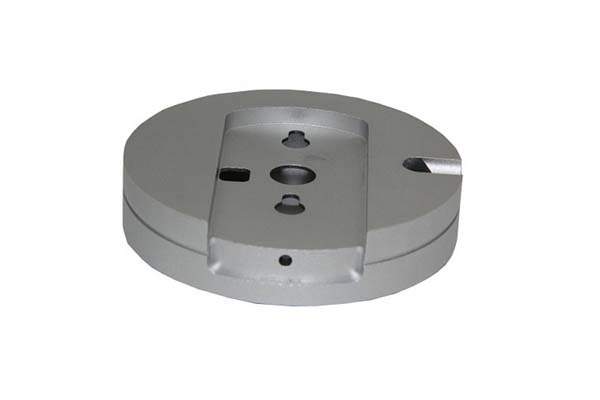
In sheet metal fabrication, the cutting method you choose affects everything. Part quality. Production speed. Post-processing time. Material options. Waterjet cutting has become a game-changer for good reason. It cuts almost any metal without heat, delivers exceptional precision, and leaves clean edges ready for assembly.
What Is Waterjet Cutting in Sheet Metal Fabrication?
The basic principle
Waterjet cutting uses ultra-high-pressure water to slice through sheet metal. A pump pressurizes water to 60,000–90,000 psi—that’s 20× stronger than a car wash. The water speeds through a tiny nozzle, reaching 900 meters per second (faster than sound). This focused stream hits the metal with concentrated force, eroding a narrow kerf as it passes through.
CNC control for precision
The cutting head moves under computer numerical control (CNC) guidance. The software reads your CAD file and directs the nozzle along exact paths. Complex curves, tight corners, and intricate details all follow the programmed geometry. No manual guidance needed.
Cold process advantage
Unlike laser or plasma, waterjet cutting generates no heat. The metal stays at room temperature throughout. This matters because heat changes material properties. No heat-affected zone. No warping. No micro-cracks. The part emerges with the same metallurgical structure as the raw sheet.
What Are the Two Main Types of Waterjet Cutting?
Pure waterjet for soft materials
Pure waterjet uses only water—no abrasives. The high-pressure stream alone cuts through soft materials.
Best applications:
- Thin aluminum under 6mm
- Copper and brass (soft metals)
- Rubber gaskets
- Plastics and composites
- Foam and insulation
Real example: An electronics manufacturer cuts 0.8mm aluminum laptop cases with pure waterjet. The thin material stays flat with no warping. Edges come out clean enough for immediate anodizing.
Abrasive waterjet for hard metals
Abrasive waterjet adds garnet or other particles to the water stream. The abrasives do the actual cutting—the water just carries them at high speed.
Best applications:
- Stainless steel over 6mm
- Thick aluminum plates
- Titanium and superalloys
- Tool steel
- Thick-section any metal
Real example: A food equipment manufacturer cuts 12mm stainless steel sheets for processing machinery. Abrasive waterjet delivers smooth edges that resist bacteria growth. No secondary finishing needed.
Type comparison
| Factor | Pure Waterjet | Abrasive Waterjet |
|---|---|---|
| Medium | Water only | Water + garnet |
| Max thickness | 6mm aluminum | 300mm steel |
| Cut quality | Excellent on soft | Excellent on hard |
| Operating cost | Lower | Higher (abrasive cost) |
| Best for | Thin metals, non-metals | Thick metals, hard materials |
What Materials Can Waterjet Cutting Handle?
Metals of all types
Waterjet cuts virtually every sheet metal used in fabrication.
| Material | Typical Thickness | Common Applications |
|---|---|---|
| Aluminum | 0.5mm–250mm | Aerospace parts, electronics enclosures |
| Stainless steel | 0.5mm–200mm | Medical tools, food equipment |
| Mild steel | 1mm–300mm | Structural brackets, machine frames |
| Copper | 0.5mm–100mm | Electrical components, heat sinks |
| Titanium | 0.5mm–150mm | Medical implants, aerospace components |
| Brass | 0.5mm–100mm | Decorative hardware, fittings |
Non-metals for mixed assemblies
Many sheet metal assemblies include non-metal components. Waterjet cuts them too.
- Rubber for gaskets and seals
- Plastics for covers and insulators
- Composites for lightweight panels
- Foam for cushioning and packaging
Thickness capabilities
Maximum cut thickness depends on pump power and material. A standard 60,000 psi system cuts 150mm steel or 200mm aluminum. High-pressure systems (90,000 psi) reach 300mm steel. For most sheet metal work (under 10mm), standard systems handle easily.
How Does Waterjet Compare to Laser and Plasma?
Precision comparison
Waterjet tolerance: ±0.05mm to ±0.1mm
Laser tolerance: ±0.1mm (thin materials)
Plasma tolerance: ±0.5mm or looser
For parts that must fit together precisely, waterjet wins. A aerospace bracket cut at ±0.05mm assembles without filing or adjustment. The same bracket plasma-cut at ±0.5mm might need rework.
Heat effects comparison
Waterjet: No heat-affected zone (HAZ). Material properties unchanged.
Laser: Small HAZ (0.1–0.5mm). Can harden edges.
Plasma: Large HAZ (1–5mm). Can warp thin materials.
Real example: A shipbuilder cut 20mm steel brackets with plasma. The heat caused distortion—brackets wouldn’t line up during assembly. Switching to waterjet eliminated distortion. Assembly time dropped 30%.
Edge quality comparison
Waterjet: Smooth, square edges. Often ready for use as-cut.
Laser: Clean but may have dross (re-solidified metal) on bottom edge.
Plasma: Rougher edges with slag. Almost always needs grinding.
Material versatility
Waterjet: Cuts anything—metals, plastics, composites, glass, stone.
Laser: Limited to metals and some plastics. Reflectives (copper, brass) difficult.
Plasma: Only conductive metals.
Comparison summary
| Factor | Waterjet | Laser | Plasma |
|---|---|---|---|
| Tolerance | ±0.05mm | ±0.1mm | ±0.5mm |
| Heat effect | None | Small | Large |
| Edge quality | Excellent | Good | Fair |
| Material range | Unlimited | Limited | Conductive only |
| Thickness range | 0.5–300mm | 0.5–25mm | 1–150mm |
| Speed (thin) | Medium | Fast | Very fast |
| Speed (thick) | Slow | Not possible | Fast |
What Real Savings Does Waterjet Deliver?
Case study: Automotive brake components
The situation: An automotive supplier cut 8mm stainless steel brake calipers with plasma.
Problems:
- Rough edges required 2 hours grinding per part
- Heat warped 5% of parts beyond repair
- Rework cost: $15,000 monthly
Solution: Switched to abrasive waterjet.
Results:
- Post-processing dropped to 10 minutes per part
- Rejection rate fell below 1%
- Annual savings: $90,000 in labor + $18,000 in material
Case study: Architectural metal panels
The situation: A fabrication shop cut decorative aluminum panels for building facades.
Challenge: Intricate patterns with thin webs between cutouts. Laser cutting overheated thin sections, causing distortion.
Solution: Pure waterjet cutting.
Results:
- No heat distortion—panels stayed flat
- Complex patterns cut in single pass
- Installation fit perfectly on-site
Hidden savings: No tooling changes
Waterjet cuts any shape without tooling changes. Compare to punching, where each hole size needs a different tool. For parts with many hole sizes or custom shapes, waterjet eliminates hours of setup time and thousands in tooling inventory.
What Are the Operational Considerations?
Cutting speed factors
Speed depends on:
- Material type: Aluminum cuts faster than steel
- Thickness: Thicker cuts slower
- Quality required: Rougher cuts faster
- Abrasive flow: More abrasive cuts faster (costs more)
Typical speeds for 100mm × 100mm square:
- 5mm aluminum: 1–2 minutes
- 10mm stainless: 3–4 minutes
- 20mm steel: 5–8 minutes
Operating costs
Main cost components:
- Abrasives: Garnet costs $0.30–$0.50 per pound. A typical cut uses 0.5–1 lb per minute.
- Electricity: High-pressure pumps draw significant power—50–100 kW.
- Nozzles: Wear parts need replacement every 50–200 hours.
- Water: Minimal cost, especially with recycling systems.
Typical cost per part: $2–$10 for common sheet metal parts, depending on size and thickness.
Environmental factors
Waterjet is the greenest cutting method:
- No fumes or hazardous gases
- Water recycles through filtration systems
- Abrasives (garnet) are non-toxic, often landfilled safely
- No HAZ means no degraded material to scrap
Most shops recycle 95%+ of their water. The small amount of abrasive sludge can be filtered and disposed as solid waste.
When Does Waterjet Make the Most Sense?
Ideal applications
Complex shapes with tight tolerances
Parts with intricate curves, small features, or precise fit requirements. Waterjet delivers without heat distortion.
Mixed material assemblies
When you cut metal and non-metal components for the same product. One machine does both.
Heat-sensitive materials
Aluminum that might warp. Titanium that shouldn’t change properties. Stainless that must stay corrosion-resistant.
Thick materials
Over 10mm thick, waterjet often beats laser (which can’t cut thick) and plasma (which cuts roughly).
Short runs with many variations
No tooling means each part can be different without penalty. Perfect for custom work and prototypes.
Less ideal applications
High-volume simple shapes
If you need 100,000 identical washers, stamping or punching is faster and cheaper per part.
Extremely thin materials under 0.3mm
Very thin sheets may deflect from water pressure. Laser sometimes works better here.
When speed is the only priority
For thick steel where edge quality doesn’t matter, plasma cuts faster.
What’s New in Waterjet Technology?
Dynamic waterjet
Modern systems adjust cutting angle in real-time to compensate for stream taper. The result: perfectly square edges even on thick materials. Older systems left a slight angle—wider at top than bottom. Dynamic control eliminates this.
Higher pressures
New pumps reach 90,000–100,000 psi. Higher pressure means:
- Faster cutting speeds (30–50% faster)
- Smoother edges
- Ability to cut thicker materials
Automated abrasive delivery
Sensors monitor abrasive flow and adjust feed rates automatically. This maintains consistent cut quality while minimizing abrasive use. Savings: 10–20% on abrasive costs.
5-axis cutting
Advanced waterjets cut bevels and angles, not just straight-through. Useful for weld prep, countersinks, and tapered edges.
Waterjet cutting delivers unique advantages in sheet metal fabrication. It cuts any material without heat, preserving original properties. It holds tight tolerances—±0.05mm for precision parts. It leaves clean edges that often need no secondary work. It handles everything from 0.5mm aluminum to 300mm steel. Compared to laser and plasma, waterjet wins on versatility, edge quality, and zero heat effects. For complex shapes, mixed materials, heat-sensitive metals, or thick sections, it’s often the best choice. While not the fastest for simple high-volume work, its combination of precision and flexibility makes it indispensable for custom fabrication, prototyping, and demanding applications.
How to write a spec that gets priced correctly
A drawing is a contract. If it leaves a number open, the shop fills that number in with its own default. The default is rarely the one you had in mind. Put these five lines on every RFQ and most of the back-and-forth disappears before it starts.
- Flat pattern or STEP file plus a dimensioned drawing
- Material grade and thickness with the standard number
- Bend radii, K-factor and the direction of the grain
- Finish, masking and which faces stay bare
- Quantity and the assembly sequence
The point is not paperwork. Each line removes a decision the shop would otherwise make for you. A complete RFQ comes back priced. An incomplete one comes back guessed.
What actually drives the price
Buyers usually push on material because it is the line they can see. In practice the material is rarely the biggest number on a quote. These five lines decide most of it:
- blank size and nesting efficiency
- number of bends and weld joints
- material grade and thickness
- finish and masking
- batch quantity
Ask for the quote split by line. A supplier who cannot break it down is guessing, and you will pay for the guess. The line you can usually renegotiate is the tolerance band, not the raw material.
Problems you will meet, and the fix
Every process has a failure mode it prefers. The same four show up again and again on this kind of work, and none of them are mysteries once you know what to look for.
- Stretching at a bend that is tighter than the material allows
- Hole distortion when a hole sits too close to a bend line
- Weld draw on a visible face
- Springback that pulls a formed angle out of tolerance
Catch the fault on the first part, not the hundredth. A first-article check costs an hour. A bad batch costs the whole order. Write the check into the purchase order so nobody has to remember it.
What to check on the first article
The first article is the cheapest inspection you will ever buy. Use it properly and the rest of the run becomes boring, which is exactly what you want.
- Every dimension on the drawing, with the measured value written beside it.
- The material certificate, matched to the heat or lot number on the parts.
- The finish against the sample you approved, under the same light.
- Fit against the mating part, assembled rather than measured.
- Packaging, because parts that arrive damaged were never in tolerance.
Check in this order: datums, then mating features, then cosmetic faces. If the datums are wrong, every number after them is noise. Keep the report on file. When a problem shows up in month six, that document is the only thing that tells you what changed.
How to compare two quotes fairly
Two numbers are not comparable unless the scope matches. Line them up before you decide, because a low number with three gaps is not a low number.
Same drawing, same material, same finish, same inspection. Anything else is a different job wearing the same part number. Then look at what each quote leaves out. Freight, packaging, certificates and tooling are the usual gaps.
Ask each supplier to state their assumptions in writing. The one who does is usually the one who has run the process before.
FAQ About Waterjet Cutting for Sheet Metal
Can waterjet cut very thin sheet metal like 0.3mm aluminum?
Yes, with proper technique. Use pure waterjet (no abrasive) at lower pressure—around 30,000–40,000 psi. Support the sheet on a thin grid to prevent deflection. A electronics manufacturer cuts 0.3mm aluminum shields this way for circuit boards, achieving clean edges with no burrs.
How thick can waterjet cut stainless steel?
Standard 60,000 psi systems cut 150mm stainless steel. High-pressure 90,000 psi systems reach 250mm. For most sheet metal work (under 10mm), thickness is no limitation. An industrial pump manufacturer cuts 200mm stainless valve plates regularly with their waterjet.
Is waterjet cutting expensive to operate?
Operating costs range from $15–$30 per hour for abrasives, power, and wear parts. For a typical 5mm aluminum part costing $3–$5, this is competitive with other methods. The savings come from eliminated secondary operations—grinding, deburring, straightening—that other methods require.
Does waterjet cutting rust the edges?
Not immediately. Water evaporates quickly, and most shops blow parts dry with compressed air. For carbon steel that rusts easily, some users apply light oil after cutting. Stainless and aluminum don’t rust. A marine parts supplier cuts carbon steel brackets daily and stores them indoors with no rust issues.
Can waterjet cut stacked sheets at once?
Yes—this is a common productivity trick. Stack 5–10 sheets of thin material, clamp firmly, and cut through the entire stack. Each part comes out identical. A gasket maker stacks 10 layers of 1mm rubber and cuts all at once, multiplying throughput by 10×.
What surface finish does waterjet leave?
Cut edges have a characteristic “waterjet finish”—smooth but slightly matte, with fine striations. Roughness averages 3–6 μm Ra for most metals. This is acceptable for many applications as-is. For sealing surfaces or cosmetic edges, a light sanding or machining pass can improve finish.
Our solution for Waterjet Cutting
YiguProto runs sheet metal fabrication in house, from a single prototype to a production batch. We quote the process, the material and the finish as separate lines, so you can see where the money goes instead of arguing with one number.
Send a STEP file or a drawing and you get a DFM report in one to two business days. It flags the features that add cost and the features that will not hold tolerance on the process you picked.
Every order ships with an inspection report on the features you call out. If a part misses, we make it again. Ready to price a part? Start with a free quote and DFM review, or read more about our sheet metal fabrication. You can also talk to an engineer before you commit to a drawing.
FAQ about Waterjet Cutting
What is Waterjet Cutting used for?
Waterjet Cutting turns up wherever the part has to do a real job at a predictable cost: brackets, housings, fixtures, covers and the fittings that hold them together. The honest test is whether the properties match the load and the environment, not whether the material is fashionable.
What files do you need in order to quote?
A STEP file plus a PDF drawing that carries the same revision letter. The model carries the geometry and the drawing carries the intent. When the two disagree, the shop picks one, and it is never the one you meant.
How long does a first article take?
Usually a few business days once the drawing is frozen, and longer if tooling is involved. The date we give you is the date we confirm in writing, not the date we hope for.
Can Waterjet Cutting be made in small quantities?
Yes, and small quantities are where a good supplier earns the next order. Setup dominates the price at low volume, so the cheapest route is usually the one with the fewest operations, not the cheapest material.
What happens if a part is out of specification?
We measure it against the same drawing you approved and, if it misses, we make it again. What matters is that the report exists, because a disagreement without data is just an opinion.
What material should I specify?
Specify by standard, not by trade name. A trade name can change under you between two orders; a standard number cannot. Then add the one property that actually decides the part, whether that is strength, heat resistance or chemical exposure.
The short version
Waterjet Cutting rewards the buyer who reads the data sheet and the drawing together. Pick the option for the property that matters, not for the price per kilo.
Tighten only what mates. Test a sample before the run. Then let the process do the rest.