
Sheet Metal
What Is Sheet Metal Fabrication Technology? A Complete Guide
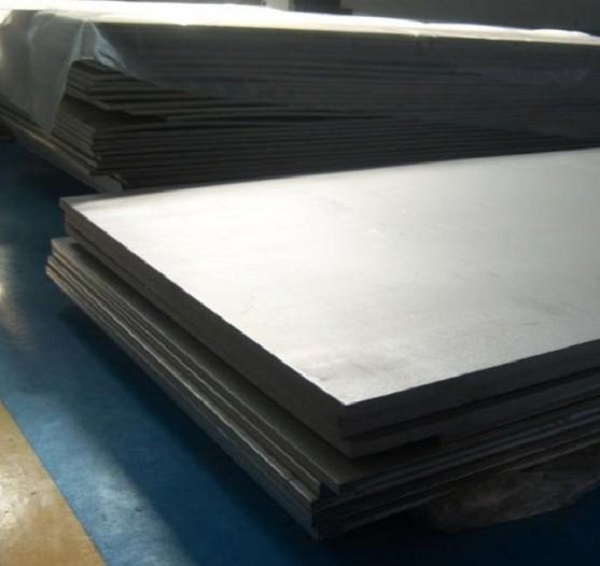
You interact with sheet metal parts daily. The computer case on your desk. The HVAC ducts in your walls. The metal brackets inside your car doors. But how do flat metal sheets become these functional, durable components? Sheet metal fabrication technology provides the answer. It’s a set of manufacturing processes that shape flat metal—typically 0.15mm to 10mm thick—into three-dimensional parts.
How Does Sheet Metal Fabrication Work?
The basic flow
Sheet metal fabrication follows a logical sequence. First, cut the flat sheet into the basic part outline. Next, bend or form it into a 3D shape. Finally, assemble multiple pieces if needed. Each step uses specialized equipment designed for precision and repeatability.
Why fabrication matters
Fabrication offers unique advantages. It works with solid metal—not melted or powdered material—so parts inherit the full strength of the original sheet. It scales from one-off prototypes to millions of units. And it delivers consistent quality through computer-controlled processes.
What Cutting Methods Are Used in Fabrication?
Laser cutting: Precision for thin materials
Laser cutting uses a focused beam of light to melt or vaporize metal. It’s the go-to method for thin materials requiring clean edges and tight tolerances.
Key specifications:
- Maximum thickness: 15mm aluminum, 6mm steel
- Typical tolerance: ±0.1mm
- Compatible materials: Aluminum, steel, stainless, copper
Real example: A smartphone case manufacturer uses CO₂ laser cutting for 2mm aluminum phone frames. Each frame has clean edges ready for anodizing. No secondary deburring needed. Production runs at 500 cases per hour with zero variation.
Waterjet cutting: Cold process for sensitive materials
Waterjet cutting blasts a high-pressure stream of water mixed with abrasive particles through the material. It generates no heat, so the metal’s properties remain unchanged.
Key specifications:
- Maximum thickness: 100mm+ for steel
- Typical tolerance: ±0.05mm to ±0.1mm
- Compatible materials: Metals, plastics, composites, glass
Real example: A medical device company cuts titanium surgical instruments with waterjet. Heat from laser cutting would alter the metal’s microstructure. Waterjet preserves the material properties required for FDA approval.
Plasma cutting: Speed for thick metals
Plasma cutting converts gas into plasma using electricity, then blasts the plasma stream through conductive metal. It’s the fastest way to cut thick plates.
Key specifications:
- Maximum thickness: 300mm aluminum, 200mm steel
- Typical tolerance: ±0.2mm
- Compatible materials: Any conductive metal
Real example: An electric vehicle manufacturer cuts 200mm aluminum chassis plates with plasma cutting. The process is 3× faster than waterjet for these thick sections, keeping production lines moving.
Cutting method comparison
| Method | Best Thickness | Tolerance | Speed | Heat Affected Zone |
|---|---|---|---|---|
| Laser | Under 15mm | ±0.1mm | Fast | Small |
| Waterjet | Any | ±0.05mm | Medium | None |
| Plasma | Over 10mm | ±0.2mm | Very fast | Large |
How Is Sheet Metal Bent Into Shape?
CNC press brake bending
After cutting, most parts need bending. The standard tool is a CNC press brake—a machine that clamps the metal between a punch and die, then applies force to create precise angles.
How it works:
- The backgauge positions the sheet accurately
- The punch descends, pushing metal into the die
- The metal bends to the die angle, then springs back slightly
- CNC controls compensate for springback automatically
Typical capabilities:
- Bend accuracy: ±0.5°
- Maximum length: Up to 3 meters
- Thickness range: 0.2mm to 10mm
Real example: A furniture manufacturer bends 1mm steel sheets into chair frames. Each chair leg requires four 90° bends. The press brake produces 200 frames per hour with every leg angle identical. No wobbling chairs reach customers.
Other forming processes
Stamping uses dies to press patterns into metal—think decorative grilles or embossed logos. Drawing stretches metal into hollow shapes like sink bowls or fuel tanks. Roll forming gradually bends long strips into consistent profiles like roof panels or shelf brackets.
How Are Sheet Metal Parts Assembled?
Welding: Permanent strong joints
Welding melts the base metals together, often adding filler material. It creates joints as strong as the original metal.
Common welding methods:
- MIG welding: Fast, good for thicker materials
- TIG welding: Precise, excellent for thin or exotic metals
- Spot welding: Quick for overlapping sheets
Real example: An industrial robot manufacturer welds 5mm steel brackets to aluminum plates for robot arms. The welded joints handle 500kg lifting loads without failure.
Mechanical fastening: Rivets and screws
Riveting uses metal fasteners to clamp parts together. It’s common in aerospace where welding heat might weaken the metal.
Self-clinching fasteners press into sheets, creating strong threaded attachment points. A single press installs them in seconds.
Adhesive bonding: Clean and light
Industrial adhesives join parts where welding isn’t practical—dissimilar metals, heat-sensitive components, or when appearance matters. Modern structural adhesives achieve impressive strength.
Real example: A medical device maker bonds aluminum brackets to plastic housings with epoxy. The joint is stronger than the plastic itself and leaves no visible fasteners.
What Materials Work Best for Sheet Metal Fabrication?
Common material options
| Material | Grades | Key Properties | Typical Uses |
|---|---|---|---|
| Aluminum | 5052, 6061, 6082 | Lightweight, corrosion-resistant | Electronics enclosures, aircraft parts |
| Steel | Q235, Q345 | Strong, affordable, weldable | Construction brackets, machinery frames |
| Stainless Steel | 304, 316 | Rust-proof, easy to clean | Medical tools, food equipment |
| Copper | C110, C122 | Excellent conductivity | Electrical components, heat sinks |
| Galvanized Steel | SECC, DX51D | Rust-resistant coating | HVAC ducts, outdoor enclosures |
Material selection factors
Strength needs: Steel for high loads, aluminum for moderate loads with light weight.
Environment: Stainless for wet or chemical exposure. Aluminum for outdoor use without painting. Steel needs coating to prevent rust.
Formability: Aluminum 5052 bends easily. Aluminum 6061 is stronger but may crack at tight radii. Know your alloy.
Cost: Steel is cheapest. Stainless costs 3–4× more. Aluminum falls in between. Copper and specialty alloys cost more.
Real example: A surgical tray manufacturer chose 316 stainless steel. It withstands repeated sterilization with harsh chemicals. Trays have lasted 8 years in hospital use with zero corrosion.
What Post-Processing Finishes Improve Parts?
Anodizing for aluminum
Anodizing creates a thick oxide layer on aluminum. It hardens the surface, prevents corrosion, and accepts dyes for color.
Typical uses: Electronics enclosures, outdoor parts, consumer goods. A laptop case gets scratch-resistant black anodizing that lasts the product’s lifetime.
Powder coating for durable color
Powder coating sprays dry pigment onto the part, then bakes it into a tough finish. It resists chips, UV rays, and chemicals better than liquid paint.
Real example: An outdoor grill manufacturer powder coats steel frames. The finish survives 5+ years of rain and sun without fading or rusting.
Other finishing options
Painting costs less than powder coating but wears faster. Good for indoor parts.
Shot peening blasts small media at the surface, creating compressive stress that prevents fatigue cracks. Used on suspension parts and aircraft components.
Heat treatment relieves stress from welding or forming. Prevents parts from warping over time.
Finish comparison
| Finish | Durability | Cost | Appearance | Best For |
|---|---|---|---|---|
| Anodizing | High | Medium | Metallic | Aluminum parts |
| Powder coating | Very high | Medium | Smooth color | Outdoor products |
| Liquid paint | Medium | Low | Any color | Indoor use |
| As-is mill finish | Low | None | Industrial | Hidden components |
What Industries Rely on Sheet Metal Fabrication?
Electronics
Thin aluminum or steel enclosures protect circuit boards, power supplies, and displays. Laser cutting creates precise openings for ports and buttons.
Example: Server racks use 1.5mm steel for strength, with ventilated panels punched during fabrication.
Automotive
Body panels, chassis brackets, engine shields—all sheet metal. High-strength steels reduce weight while maintaining crash performance.
Example: Door inner panels start as flat sheets, get stamped into complex shapes, then welded into assemblies.
Medical
Stainless steel surgical trays, equipment enclosures, wheelchair frames. Cleanability and corrosion resistance drive material choices.
Example: MRI machine housings use non-magnetic stainless steel to avoid interfering with imaging.
Construction
HVAC ducts, roof panels, structural brackets, flashing. Galvanized steel dominates for corrosion resistance.
Example: Commercial building ducts start as flat galvanized sheets, get cut and folded into rectangular sections, then assembled on-site.
Aerospace
Lightweight aluminum alloys for interior components, titanium for high-temperature areas. Every gram matters.
Example: Seat tracks for commercial aircraft are roll-formed from aluminum, then cut to length and machined for attachment points.
Sheet metal fabrication technology transforms flat sheets into the durable metal products we use daily. The process follows clear steps: cut the outline with laser, waterjet, or plasma; bend to shape with CNC press brakes; assemble through welding, fasteners, or adhesives. Material selection depends on strength needs, environment, and budget—steel for economy, aluminum for light weight, stainless for corrosion resistance. Finishes like anodizing and powder coating add durability and color. From electronics to aerospace, fabrication delivers precision, scalability, and proven performance. Understanding these fundamentals helps you choose the right approach for your next project.
How to write a spec that gets priced correctly
A drawing is a contract. If it leaves a number open, the shop fills that number in with its own default. The default is rarely the one you had in mind. Put these five lines on every RFQ and most of the back-and-forth disappears before it starts.
- Flat pattern or STEP file plus a dimensioned drawing
- Material grade and thickness with the standard number
- Bend radii, K-factor and the direction of the grain
- Finish, masking and which faces stay bare
- Quantity and the assembly sequence
The point is not paperwork. Each line removes a decision the shop would otherwise make for you. A complete RFQ comes back priced. An incomplete one comes back guessed.
What actually drives the price
Buyers usually push on material because it is the line they can see. In practice the material is rarely the biggest number on a quote. These five lines decide most of it:
- blank size and nesting efficiency
- number of bends and weld joints
- material grade and thickness
- finish and masking
- batch quantity
Ask for the quote split by line. A supplier who cannot break it down is guessing, and you will pay for the guess. The line you can usually renegotiate is the tolerance band, not the raw material.
Problems you will meet, and the fix
Every process has a failure mode it prefers. The same four show up again and again on this kind of work, and none of them are mysteries once you know what to look for.
- Stretching at a bend that is tighter than the material allows
- Hole distortion when a hole sits too close to a bend line
- Weld draw on a visible face
- Springback that pulls a formed angle out of tolerance
Catch the fault on the first part, not the hundredth. A first-article check costs an hour. A bad batch costs the whole order. Write the check into the purchase order so nobody has to remember it.
What to check on the first article
The first article is the cheapest inspection you will ever buy. Use it properly and the rest of the run becomes boring, which is exactly what you want.
- Every dimension on the drawing, with the measured value written beside it.
- The material certificate, matched to the heat or lot number on the parts.
- The finish against the sample you approved, under the same light.
- Fit against the mating part, assembled rather than measured.
- Packaging, because parts that arrive damaged were never in tolerance.
Check in this order: datums, then mating features, then cosmetic faces. If the datums are wrong, every number after them is noise. Keep the report on file. When a problem shows up in month six, that document is the only thing that tells you what changed.
How to compare two quotes fairly
Two numbers are not comparable unless the scope matches. Line them up before you decide, because a low number with three gaps is not a low number.
Same drawing, same material, same finish, same inspection. Anything else is a different job wearing the same part number. Then look at what each quote leaves out. Freight, packaging, certificates and tooling are the usual gaps.
Ask each supplier to state their assumptions in writing. The one who does is usually the one who has run the process before.
Scaling from one part to a batch
The first part teaches you the process. The hundredth teaches you the process cost.
Watch three things as volume grows: setup amortisation, tool wear, and how much hand work the finish still needs. If the unit price barely moves between ten and a hundred, the cost sits in material or in hand work, not in setup. Ask which, because only one of them is negotiable.
Lead time behaves the same way. A one-off is scheduled around other jobs. A repeat order is scheduled around your forecast. Give the shop a forecast and the lead time gets shorter, not longer.
FAQ About Sheet Metal Fabrication
Can sheet metal fabrication create complex curved shapes?
Yes. Processes like drawing create deep curved shapes (sink bowls, fuel tanks). Roll forming produces long curved profiles. For gentle curves, press brakes with special tooling bend gradual radii. Complex curves may need custom dies, which add upfront cost but deliver consistent results.
What’s the minimum and maximum thickness for fabrication?
Most shops handle 0.15mm to 10mm comfortably. Below 0.15mm, material handling becomes difficult—foil requires specialized equipment. Above 10mm, cutting and bending require heavy machinery. For thicknesses beyond 25mm, consider plate fabrication or alternative processes like machining.
Is fabrication cheaper than 3D printing for small batches?
For 1–10 parts, 3D printing often wins—no tooling cost. For 50+ parts, fabrication becomes cheaper. For 10 aluminum brackets, 3D printing might cost €80; laser cutting and bending the same brackets runs €40. The crossover point varies by part complexity and material.
How accurate is sheet metal fabrication?
Laser cutting holds ±0.1mm typically, waterjet ±0.05mm, plasma ±0.2mm. Bending holds ±0.5°. This meets requirements for most applications—electronics enclosures, brackets, panels. For tighter tolerances (under ±0.02mm), add machining after fabrication or use different processes.
What’s the strongest material for sheet metal parts?
For strength-to-weight ratio, high-strength steel alloys win. For absolute strength regardless of weight, thick steel plates. For corrosion resistance with good strength, stainless steel. For lightweight applications, aluminum 6061-T6 offers good strength at one-third steel’s weight.
Can fabrication work with pre-finished materials?
Yes. Shops routinely cut and bend pre-painted, pre-anodized, or galvanized sheets. The key is protecting the finish during processing—using protective films, soft tooling, and careful handling. This eliminates secondary finishing operations and speeds production.
Our solution for Sheet Metal Fabrication Technology
YiguProto runs sheet metal fabrication in house, from a single prototype to a production batch. We quote the process, the material and the finish as separate lines, so you can see where the money goes instead of arguing with one number.
Send a STEP file or a drawing and you get a DFM report in one to two business days. It flags the features that add cost and the features that will not hold tolerance on the process you picked.
Every order ships with an inspection report on the features you call out. If a part misses, we make it again. Ready to price a part? Start with a free quote and DFM review, or read more about our sheet metal fabrication. You can also talk to an engineer before you commit to a drawing.
FAQ about Sheet Metal Fabrication Technology
What should I check before approving the parts?
Datums first, then the features that mate, then the cosmetic faces. Ask for a dimensional report, a material certificate and a finish sample. A part can be inside every tolerance and still not fit, so assemble one before you sign.
Does the process work for prototypes as well as production?
Yes, and that is usually the point. Running the prototype on the production process removes a whole class of surprises, because the part you test is made the same way as the part you sell.
Can Sheet Metal Fabrication Technology be made in small quantities?
Yes, and small quantities are where a good supplier earns the next order. Setup dominates the price at low volume, so the cheapest route is usually the one with the fewest operations, not the cheapest material.
How long does a first article take?
Usually a few business days once the drawing is frozen, and longer if tooling is involved. The date we give you is the date we confirm in writing, not the date we hope for.
Is there a minimum order quantity?
No hard minimum. One part is fine. What changes with volume is which costs dominate, so a single unit is priced mostly on setup and a thousand units are priced mostly on cycle time and material.
What tolerance can you hold on Sheet Metal Fabrication Technology?
The working default is ±0.2 mm on formed features, ±0.1 mm on laser-cut holes. Tighter than that the process changes and so does the price, because every step tighter adds inspection time. Call out only the faces that mate with something else and leave the rest on the general tolerance.
The short version
Sheet Metal Fabrication Technology rewards the buyer who reads the data sheet and the drawing together. Pick the option for the property that matters, not for the price per kilo.
Tighten only what mates. Test a sample before the run. Then let the process do the rest.