
3D Printing
Why Choose SLM for Your Aluminum Alloy Prototype?
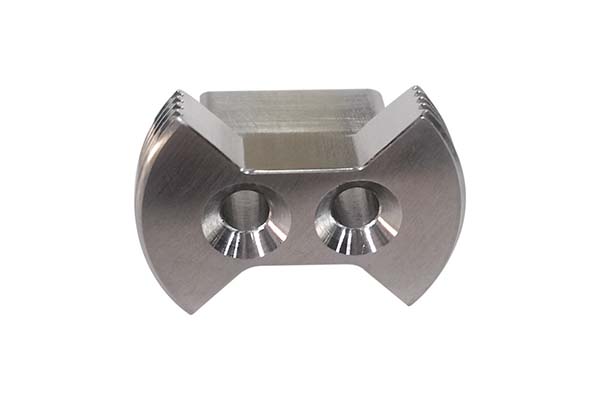
Selective Laser Melting (SLM) of aluminum alloys enables the creation of complex, lightweight, and high-strength prototypes that are functionally equivalent to final production parts, overcoming the design and lead-time limitations of traditional methods like casting and CNC machining.
Key takeaways
- Aluminum alloys have long been the workhorse of lightweight engineering, but traditional manufacturing constraints their geometric potential.
- Not all aluminum alloys are created equal for additive manufacturing. SLM-compatible powders are specifically engineered for the process.
- SLM aluminum prototyping delivers value across multiple dimensions of product development.
- A successful prototype requires navigating a defined and interrelated process chain.
Introduction: The Aluminum Advantage in Additive Manufacturing
Aluminum alloys have long been the workhorse of lightweight engineering, but traditional manufacturing constraints their geometric potential. SLM, a laser-based powder bed fusion technology, liberates aluminum design. It builds parts layer by layer from fine alloy powder, achieving densities over 99.5% and material properties that meet or exceed cast equivalents. This guide provides a technical yet practical deep dive for engineers designing parts and buyers sourcing them, covering the unique benefits of aluminum alloys in SLM, the detailed process workflow, critical design considerations, and a clear framework for evaluating its economic and technical feasibility for your project.
What Makes Aluminum Alloys Unique for SLM Prototyping?
Not all aluminum alloys are created equal for additive manufacturing. SLM-compatible powders are specifically engineered for the process.
- Common SLM Aluminum Alloys: AlSi10Mg: This is the de facto standard. The silicon and magnesium content provides excellent castability, good strength, and high thermal conductivity. It offers the best overall combination of printability, mechanical properties, and cost for most prototyping applications. AlSi7Mg / A356.0: Similar to AlSi10Mg but with slightly lower silicon, often used where improved ductility is needed. Scalmalloy®: An advanced, proprietary aluminum-magnesium-scandium alloy developed by Airbus. It offers exceptional strength-to-weight ratio and good ductility, approaching the performance of some titanium alloys, but at a significantly higher material cost.
- Key Material Properties & Post-Processing: As-printed SLM aluminum parts have a fine, cellular microstructure that confers good strength but can be brittle. Heat treatment (like T6 – solution heat treatment and aging) is almost always applied to relieve internal stresses, enhance ductility, and achieve peak tensile strength. Understanding this required post-processing is key for scheduling and cost estimation.
What Are the Compelling Advantages for Engineers and Buyers?
SLM aluminum prototyping delivers value across multiple dimensions of product development.
- Geometric Freedom for Lightweighting and Function Integration: This is the core advantage. Engineers can use topology optimization algorithms to create organic, minimum-mass structures that maintain stiffness. SLM can realize these designs, along with internal lattice structures and conformal cooling channels. For example, a heat sink can be designed with cooling fins that follow the airflow pattern, not just straight lines, dramatically improving thermal performance in the same envelope.
- Rapid Iteration and Accelerated Development Cycles: The direct digital manufacturing path eliminates hard tooling. A design change requires only a modified CAD file, not a new mold or fixture. This enables agile, iterative testing of form, fit, and function. Lead times are typically 5-15 days, compared to 4-8 weeks for tooled casting.
- Part Consolidation and Assembly Simplification: Multiple components can be combined into a single, monolithic SLM part. This reduces assembly time, inventory, potential failure points (fasteners, seals), and overall system weight. A complex manifold with multiple brazed or welded connections can be printed as one piece.
- Material Efficiency for High-Value Designs: While aluminum is less expensive than titanium, waste is still a factor. SLM’s additive nature and high powder recyclability rates (often >95% for unused powder) make it far more efficient than machining a part from a solid block, which can waste over 70% of the material as chips.
How Does the SLM Process for Aluminum Work? (A Detailed Walkthrough)
A successful prototype requires navigating a defined and interrelated process chain.
- Design for Additive Manufacturing (DfAM): This is the most critical engineering phase. Support Strategy: Aluminum’s high thermal conductivity and reflectivity make support design crucial. Supports anchor overhangs, conduct heat, and prevent warping. Their placement and design (e.g., block vs. lattice) impact surface finish and post-processing effort. Orientation: Part orientation affects support needs, surface quality on critical faces, and build time. A 45-degree angle often minimizes stresses and support volume. Critical Design Rules: Maintain minimum wall thicknesses (~0.8-1.0 mm), design self-supporting angles (> 45°), and add escape holes for powder removal from hollow sections.
- File Preparation and Build Simulation: The oriented and supported CAD model is sliced. Advanced software is used to simulate the thermal process, predicting distortions to apply compensation algorithms to the file, ensuring dimensional accuracy.
- Machine Setup and Printing: The build chamber is filled with inert gas (Argon) to prevent oxidation. The process runs at elevated bed temperatures (~150-200°C) to reduce residual stress. Aluminum’s high reflectivity requires careful laser parameter tuning (power, speed, hatch spacing) to ensure full melting.
- Post-Processing Sequence: This is multi-stage: Stress Relief & Heat Treatment: Parts undergo thermal treatment to relieve stresses and achieve desired mechanical properties (e.g., T6). Support Removal & Detaching: Parts are cut from the build plate via Wire EDM. Supports are removed via machining or careful breaking. Surface Finishing: As-printed surface roughness (Ra ~10-25 µm) is often improved via CNC machining of critical interfaces, vibratory finishing, shot peening, or electropolishing.
- Inspection and Validation: Final parts are inspected with CMM for dimensional accuracy, CT scanning for internal defect detection (porosity, cracks), and mechanical testing (tensile, fatigue) to validate properties against design specs.
When Should You Choose SLM Over Traditional Methods? (Decision Matrix)
The choice depends on part complexity, volume, and timeline. The following table provides a comparative framework:
| Decision Factor | SLM Aluminum Prototyping | CNC Machining (from billet) | Aluminum Casting (e.g., Investment) |
|---|---|---|---|
| Ideal Application | Highly complex, lightweight, optimized structures; internal channels; part consolidation. | Simple to moderately complex geometries; parts with primarily prismatic features. | Medium complexity parts with lower detail; when material properties of a specific casting alloy are required. |
| Lead Time (1-5 pcs) | Fast (5-15 days). No tooling. | Medium (1-3 weeks). Programming & fixturing required. | Slow (4-8+ weeks). Mold/tooling fabrication dominates timeline. |
| Cost Driver | Part volume & height (print time), post-processing. Less sensitive to complexity. | Part volume & complexity (machine time, programming). High waste factor. | High NRE (tooling cost). Low per-part cost after tooling is made. |
| Geometric Freedom | Exceptional. No constraints from tool access or draft angles. | Limited by tool access and fixturing. | Moderate. Constrained by mold design and need for draft. |
| Best For | Functional prototypes, jigs & fixtures, low-volume production of complex parts. | Functional prototypes of machinable designs, pre-production validation parts. | Higher-volume production after design is finalized; prototypes requiring exact casting material. |
What Are the Current Challenges and Limitations?
A pragmatic view is essential for successful adoption.
- Surface Finish and Feature Resolution: As-printed surfaces are rough and may show “stair-stepping.” Fine features (< 0.5 mm) and small threads often require post-machining. Dimensional accuracy is typically ± 0.1% of dimension (with a ± 0.1 mm lower limit).
- Porosity and Process Monitoring: Despite high densities, micro-porosity can occur and affect fatigue performance. In-process monitoring systems (e.g., photodiodes, cameras) are used in advanced setups to detect anomalies.
- Thermal Stress and Distortion: Aluminum’s high thermal conductivity combined with rapid melting/cooling can induce residual stress, leading to part distortion or cracking. This is managed through optimal support design, pre-heating the build plate, and stress-relief heat treatment.
- Powder Handling and Safety: Aluminum powder is flammable and explosive. Handling requires strict safety protocols (inert atmosphere, anti-static equipment), which adds to operational complexity and cost.
How to write a spec that gets priced correctly
A drawing is a contract. If it leaves a number open, the shop fills that number in with its own default. The default is rarely the one you had in mind. Put these five lines on every RFQ and most of the back-and-forth disappears before it starts.
- File format and units, with the model exported in millimetres
- Process and material grade, not a trade name
- Critical features and the tolerance each one needs
- Surface finish and the faces it applies to
- Quantity for the pilot build and for the year
The point is not paperwork. Each line removes a decision the shop would otherwise make for you. A complete RFQ comes back priced. An incomplete one comes back guessed.
What actually drives the price
Buyers usually push on material because it is the line they can see. In practice the material is rarely the biggest number on a quote. These five lines decide most of it:
- build volume and orientation
- layer height and support structure
- material grade and colour
- post-processing and hand finishing
- quantity per build plate
Ask for the quote split by line. A supplier who cannot break it down is guessing, and you will pay for the guess. The line you can usually renegotiate is the tolerance band, not the raw material.
Problems you will meet, and the fix
Every process has a failure mode it prefers. The same four show up again and again on this kind of work, and none of them are mysteries once you know what to look for.
- Warping on long flat faces where the part lifts off the plate
- Layer lines showing through a cosmetic surface
- Support scars on a mating face nobody flagged
- Dimensional drift on thin walls after cooling
Catch the fault on the first part, not the hundredth. A first-article check costs an hour. A bad batch costs the whole order. Write the check into the purchase order so nobody has to remember it.
What to check on the first article
The first article is the cheapest inspection you will ever buy. Use it properly and the rest of the run becomes boring, which is exactly what you want.
- Every dimension on the drawing, with the measured value written beside it.
- The material certificate, matched to the heat or lot number on the parts.
- The finish against the sample you approved, under the same light.
- Fit against the mating part, assembled rather than measured.
- Packaging, because parts that arrive damaged were never in tolerance.
Check in this order: datums, then mating features, then cosmetic faces. If the datums are wrong, every number after them is noise. Keep the report on file. When a problem shows up in month six, that document is the only thing that tells you what changed.
How to compare two quotes fairly
Two numbers are not comparable unless the scope matches. Line them up before you decide, because a low number with three gaps is not a low number.
Same drawing, same material, same finish, same inspection. Anything else is a different job wearing the same part number. Then look at what each quote leaves out. Freight, packaging, certificates and tooling are the usual gaps.
Ask each supplier to state their assumptions in writing. The one who does is usually the one who has run the process before.
Scaling from one part to a batch
The first part teaches you the process. The hundredth teaches you the process cost.
Watch three things as volume grows: setup amortisation, tool wear, and how much hand work the finish still needs. If the unit price barely moves between ten and a hundred, the cost sits in material or in hand work, not in setup. Ask which, because only one of them is negotiable.
Lead time behaves the same way. A one-off is scheduled around other jobs. A repeat order is scheduled around your forecast. Give the shop a forecast and the lead time gets shorter, not longer.
How to read a supplier's quote
A quote is a short document with a long shadow. Four things in it decide whether the job runs smoothly, and only one of them is the price.
- The scope line. It should name the process, the material and the finish, not just the part.
- The tolerance basis. General tolerance or the drawing, and which standard it follows.
- The exclusions. Tooling, freight, certificates and inspection are the usual omissions.
- The validity date. Material prices move, and an open-ended quote is a promise nobody can keep.
Read the exclusions before you read the total. A quote that leaves out tooling is not cheaper. It is a quote for a different job.
What to send with the first order
The first order sets the pattern for every order after it. Send a complete package once and the shop files it, and the second order takes a fraction of the time.
- A STEP or native model plus a PDF drawing carrying the same revision letter.
- The material callout by standard number, not by trade name.
- The finish and the exact faces it applies to.
- Any test the part must pass: fit, seal, drop, salt spray, dielectric.
- A contact who can answer a question inside one working day.
Then write down what was agreed. An email that confirms the material, the finish and the date is worth more than a longer purchase order that leaves them open.
When this is the wrong choice
A good supplier tells you when the process does not fit. These are the cases where we say so.
- The volume is so low that setup costs more than the parts are worth.
- The tolerance is tighter than the process can hold without a second operation.
- The geometry cannot be made without a tool feature that will not pay back.
- The material you need is not available in the form the process requires.
- The schedule is shorter than the tooling or setup time, and nobody has said so yet.
None of these are refusals. They are reasons to look at a different route, and the earlier that conversation happens the cheaper it is. The most expensive mistake in manufacturing is a process chosen before the question was understood.
Conclusion: SLM Aluminum as a Catalyst for Innovation
SLM for aluminum alloy prototyping is more than a novel manufacturing method; it is a capability multiplier. It allows engineering teams to validate not just the concept, but the performance of a design in its most optimized, lightweight, and integrated form. For procurement, it represents a shift towards digital inventory and on-demand fabrication of complex parts. While challenges in surface finish, cost at scale, and process expertise remain, the strategic benefits for accelerating innovation, enabling breakthrough designs, and reducing weight in critical applications are undeniable. The question for forward-thinking teams is not if to use SLM aluminum prototyping, but which project will benefit from it first.
Our solution for Choose SLM
YiguProto runs 3D printing in house, from a single prototype to a production batch. We quote the process, the material and the finish as separate lines, so you can see where the money goes instead of arguing with one number.
Send a STEP file or a drawing and you get a DFM report in one to two business days. It flags the features that add cost and the features that will not hold tolerance on the process you picked.
Every order ships with an inspection report on the features you call out. If a part misses, we make it again. Ready to price a part? Start with a free quote and DFM review, or read more about our 3D printing. You can also talk to an engineer before you commit to a drawing.
FAQ about Choose SLM
What happens if a part is out of specification?
We measure it against the same drawing you approved and, if it misses, we make it again. What matters is that the report exists, because a disagreement without data is just an opinion.
What files do you need in order to quote?
A STEP file plus a PDF drawing that carries the same revision letter. The model carries the geometry and the drawing carries the intent. When the two disagree, the shop picks one, and it is never the one you meant.
Is there a minimum order quantity?
No hard minimum. One part is fine. What changes with volume is which costs dominate, so a single unit is priced mostly on setup and a thousand units are priced mostly on cycle time and material.
How long does a first article take?
Usually a few business days once the drawing is frozen, and longer if tooling is involved. The date we give you is the date we confirm in writing, not the date we hope for.
Does the process work for prototypes as well as production?
Yes, and that is usually the point. Running the prototype on the production process removes a whole class of surprises, because the part you test is made the same way as the part you sell.
What material should I specify?
Specify by standard, not by trade name. A trade name can change under you between two orders; a standard number cannot. Then add the one property that actually decides the part, whether that is strength, heat resistance or chemical exposure.
The short version
Choose SLM rewards the buyer who reads the data sheet and the drawing together. Pick the option for the property that matters, not for the price per kilo.
Tighten only what mates. Test a sample before the run. Then let the process do the rest.