
CNC Machining
SPHC & SPCC Steel: Understanding the Differences for Optimal Selection
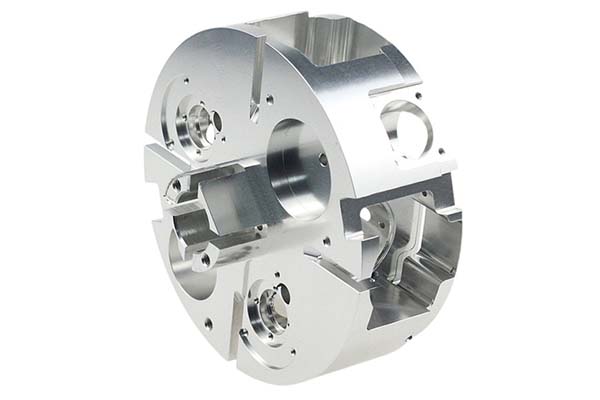
Everything we know about Sphc Spcc Steel Understanding, written the way we would explain it across a table: what it is good at, what it costs you, and the design rules that keep the part out of the scrap bin.
What Sphc Spcc Steel Understanding is, in plain terms
Sphc Spcc Steel Understanding is a material you meet in a lot of drawings and a lot of quotes. It has a clear job, and it has clear limits. This page covers both.
Most buyers start with one question. Can this material do the job at a price that works? The answer depends on four things. Load, environment, tolerance and volume. We walk through each one below.
Everything here comes from parts we have run. Real cutters, real cycle times, real scrap rates. Where a number is a range, the range is what our shop holds across a normal week.
What goes into Sphc Spcc Steel Understanding
The mix decides the behaviour. Small additions change strength, corrosion and how the material cuts.
Read the composition table before you argue about price. Two grades that look the same on a drawing can machine very differently.
| Element | Content Range |
|---|---|
| Carbon (C) | Up to 0.15% |
| Manganese (Mn) | Up to 0.60% |
| Phosphorous (P) | Up to 0.050% |
| Sulfur (S) | Up to 0.050% |
Percentages move between mills and between heats. If your part is sensitive to one element, put a limit on the purchase order.
The numbers that decide the job
Four numbers settle most arguments about Sphc Spcc Steel Understanding. Strength, hardness, density and how much it moves when it heats up. Read them together, never alone.
A high strength figure with low elongation means a brittle part. A low hardness figure means the part will wear where it rubs. Pick the pair of numbers that matches your failure mode.
| Property | SPHC | SPCC |
|---|---|---|
| Hardness | Soft due to hot - rolling; has a relatively low hardness level, which makes it easy to work with in processes like bending. For example, it can be bent with less force compared to SPCC. | Hardens due to cold - rolling. The cold - working process increases its hardness, making it more difficult to bend compared to SPHC but suitable for applications where a certain level of hardness is required, such as in some mechanical parts. |
| Tensile Strength | Lower tensile strength, with a minimum requirement of 270MPa or higher. This limits its use in applications that demand high - strength materials, like high - stress structural components in large - scale industrial machinery. | Tensile strength increases with cold - working. It has a higher tensile strength than SPHC, which makes it suitable for applications that require better resistance to stretching forces, such as in the manufacturing of automobile body panels where it needs to withstand various mechanical stresses during normal use and in case of minor collisions. |
| Ductility | High ductility as it is processed at high temperatures. This allows it to be easily deformed into various shapes, making it ideal for applications like forming automobile frames where complex shapes need to be created through bending and shaping processes. | Lower ductility compared to SPHC due to cold - rolling hardening. Although it can still be formed, the degree of deformation it can withstand without cracking is relatively lower. For example, in deep - drawing processes, the ductility of SPCC needs to be carefully considered to avoid material failure during the forming operation. |
| Surface Finish | The surface may be rougher due to hot - rolling. The high - temperature rolling process can cause the formation of an oxide film (scale) on the surface, and the surface texture is coarser. This rough surface may require additional surface treatment if a smooth finish is desired, such as in applications where appearance matters, like the exterior of consumer products. | Generally has a smooth and clean surface. The cold - rolling process gives SPCC a high - quality surface finish, which is suitable for applications that require a good aesthetic appearance, such as home appliance exteriors. It can be directly painted or plated without extensive pre - treatment in many cases. |
| Dimensional Accuracy | Low dimensional accuracy due to the temperature changes during hot - rolling. The material expansion and contraction during the high - temperature process make it difficult to achieve tight tolerances in thickness and shape. For example, when used in the construction of simple steel structures, the dimensional variations may be acceptable, but not for precision manufacturing. | Achieves high dimensional accuracy through cold - rolling. The cold - rolling process allows for precise control of the thickness and shape of the steel sheet, making it suitable for applications where exact dimensions are crucial, such as in the production of precision - sized parts for machinery and electronics. |
| Weldability | Softer material makes it easier to weld than SPCC. The low - carbon content and soft nature of SPHC facilitate the welding process, reducing the risk of cracking during welding. It is often used in applications where welding is a key part of the manufacturing process, such as in the construction of steel pipelines. | Increased hardness may make welding more difficult compared to SPHC. The cold - working hardening of SPCC can cause some challenges during welding, and special welding techniques or pre - and post - welding treatments may be required to ensure a strong and reliable weld, especially in applications where the integrity of the welded joint is critical, like in the manufacturing of pressure vessels. |
Values like these come from a mill certificate, not from a sales sheet. Ask for the certificate with the first shipment. Then check the heat number against the parts you keep.
If your drawing needs a value tighter than the table, say so in writing. A tolerance with no stated basis is a guess on both sides.
How Sphc Spcc Steel Understanding behaves when you work it
Cutting Sphc Spcc Steel Understanding is a balance between speed and heat. Push the feed and the tool wears. Ease off and the part work-hardens or burns.
The first sign of trouble is usually sound. A clean cut has a steady note. A dull tool starts to sing.
Chip shape tells you the truth. Short, curled chips mean the feed is right. Long ribbons mean you are rubbing, not cutting.
Hold the setup rigid and the rest gets easier. Most finish problems on this material start in the fixture, not the cutter.
Parameters that work
Start from the numbers below, then tune to the machine in front of you. Every press and every spindle has its own temper.
Change one variable at a time. Two changes at once and you learn nothing from the result.
Tolerance and finish you can actually hold
A drawing asks for a number. A shop delivers a range. The gap between the two is where quotes go wrong.
±0.1 mm is the working default for most features on this material. Below ±0.05 mm the process changes, and so does the price.
| Feature | Normal | Tight | Notes |
|---|---|---|---|
| Milled profile | ±0.1 mm | ±0.02 mm | Holds on rigid walls |
| Bored hole | ±0.05 mm | ±0.01 mm | Ream or bore, not drill |
| Hole position | ±0.1 mm | ±0.02 mm | Use position, not plus/minus on X and Y |
| Flatness | 0.05 mm | 0.01 mm | Check after stress relief |
| Surface finish | Ra 1.6 | Ra 0.4 | Ra 0.4 needs a finishing pass |
| Thread | 6H | 6H modified | Go/no-go gauge on every batch |
Call out the faces that mate with something else. Leave the rest on the general tolerance. That one habit cuts cost more than any negotiation.
If you need a number we cannot hold on the machine, we will say so before the run, not after.
Tooling, coolant and setup
Tool choice sets the ceiling on everything else. A sharp, coated cutter on a rigid holder does more for Sphc Spcc Steel Understanding than a fancy program.
Coolant does two jobs. It carries heat away, and it clears chips. Skip either and the finish shows it.
- Roughing: heavier depth, moderate feed, ignore the finish for now.
- Finishing: light depth, higher speed, sharp edge, plenty of coolant.
- Fixturing: support under the cut. Any ring or chatter marks come from the setup.
- Inspection: check the first part against the drawing, then every twentieth.
Setup time is the line item nobody wants to pay. It is also the one that decides whether a small order is profitable.
A good fixture turns a two-hour setup into twenty minutes. That saving shows up in every part after the first.
What drives the price
Price on Sphc Spcc Steel Understanding parts comes from five lines. Material, machine time, setup, finishing and inspection. Only one of them is the metal itself.
Buyers usually push on material. The real money sits in setup and in the tolerance callouts. Loosen one tolerance and you can move the price more than a material swap.
- Stock removal. A part cut from a block costs more than the same part cut from bar.
- Feature count. Every pocket, hole and thread adds a tool change.
- Tolerance band. Each step tighter adds inspection time.
- Surface finish. A cosmetic face needs a separate pass and often hand work.
- Quantity. Setup spreads across the run, so ten parts cost far less each than one.
Ask for the quote broken down by line. A supplier who cannot split it is guessing, and you will pay for the guess.
Problems you will meet, and the fix
Every material has a failure mode it likes best. On Sphc Spcc Steel Understanding it usually shows up in the same three places.
None of these are mysteries. Each one has a cause you can name and a fix you can test.
Catch the fault on the first part, not the hundredth. A first-article check costs an hour. A bad batch costs the whole order.
Where Sphc Spcc Steel Understanding earns its place
The right question is not what Sphc Spcc Steel Understanding can do. It is where it beats the alternatives by enough to matter.
In our work it shows up most in four places. Each one trades something to get something.
- Brackets and mounts: flat parts with holes and pockets, where stiffness matters more than weight
- Housings and covers: pockets, bosses and sealing faces cut from one block
- Shafts and bushings: turned parts that run against a bearing or a seal
- Fixtures and tooling: low volume, tight tolerance, fast turnaround
If your part sits outside these four, that is not a no. It is a reason to test a sample before you commit to a run.
One prototype is cheaper than one wrong production order.
Design rules for Sphc Spcc Steel Understanding parts
Good parts are designed, not rescued. These rules catch most of the cost before it reaches a machine.
- Design the load path first. Put material where the stress runs, then shape around it.
- Keep walls even. A thick section next to a thin one moves at a different rate and pulls the part out of flat.
- Give every pocket a radius. Square internal corners need a tool that cannot reach them.
- Leave a datum you can hold. Without one, two inspectors measure two different parts.
- Call out only what mates. Every extra tight tolerance is money spent on nothing.
- Think about the finish early. A cosmetic face needs a separate pass, and that pass needs room.
- Add a chamfer, not a sharp edge. Sharp edges chip in handling and cut the people who pack the box.
- Ask for a DFM review. Two days of review can remove a week of rework.
None of this is exotic. It is the list we walk through on every quote, and it is why some parts come in 30% cheaper than the drawing suggests.
What to check before you accept the parts
Inspection is not a formality. It is the step that turns a shipment into a decision you can defend.
Check in this order. Datums, then mating features, then cosmetic faces. If the datums are wrong, every number after them is noise.
- Dimensional report. Every callout on the drawing, with the measured value beside it.
- Material certificate. Matched to the heat or lot number on the parts.
- Finish sample. Compared against the piece you approved, under the same light.
- Function check. Assembled, not just measured. A part can be in tolerance and still not fit.
- Packaging. Parts that arrive damaged were never in tolerance.
Keep the first-article report on file. When a problem shows up in month six, that document is the only thing that tells you what changed.
Our solution for Sphc Spcc Steel Understanding parts
YiguProto runs CNC machining in house, from one-off prototypes to production batches. We quote the process, the material and the finish as separate lines, so you can see where the money goes.
Send a STEP file or a drawing and you get a DFM report in one to two business days. It flags the features that add cost and the ones that will not hold tolerance.
Every order ships with an inspection report on the features you call out. If a part misses, we make it again.
Ready to price a part? Start with a free quote and DFM review, or read more about our CNC machining service. You can also talk to an engineer before you commit to a drawing.
FAQ about Sphc Spcc Steel Understanding
What is Sphc Spcc Steel Understanding used for?
Sphc Spcc Steel Understanding shows up in structural parts, brackets, housings and fittings. It suits work where strength and a predictable cut matter more than the lowest price per kilo.
Is Sphc Spcc Steel Understanding hard to machine?
Not hard, but not free. It cuts cleanly with sharp tools and the right feed. The traps are heat, chatter on thin walls, and tools that have gone dull without anyone noticing.
What tolerance can you hold on Sphc Spcc Steel Understanding?
±0.1 mm is a normal default. ±0.05 mm is routine on critical features. Below ±0.02 mm expect a separate finishing operation and a metrology report.
How much does a Sphc Spcc Steel Understanding part cost?
Price comes from stock removal, feature count, tolerance and quantity. The material itself is usually the smallest line. Send a drawing and we will split the quote so you can see it.
What is the lead time for Sphc Spcc Steel Understanding parts?
Prototypes usually ship in 3 to 5 business days after drawing release. Production runs depend on material stock. We confirm the date in writing before we start.
Can Sphc Spcc Steel Understanding be welded or coated?
Usually yes, but check the grade first. Some grades weld cleanly and some crack at the seam. Anodizing and plating also vary by alloy, so name the finish on the drawing.
The short version
Sphc Spcc Steel Understanding rewards the buyer who reads the data sheet and the drawing together. Pick it for the property that matters, not for the price per kilo.
Tighten only what mates. Test a sample before the run. Then let the process do the rest.