
3D Printing
What Makes Stainless Steel Ideal for Metal 3D Printing?
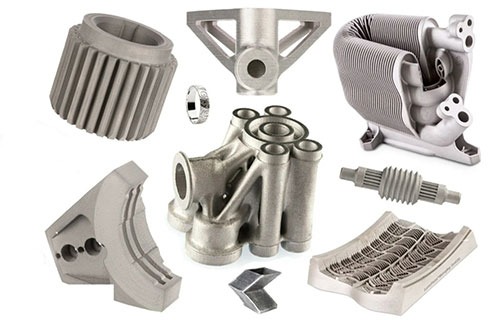
Stainless steel has emerged as a cornerstone material in industrial additive manufacturing, prized for its unique blend of strength, corrosion resistance, and processability. This guide explains why grades like 316L and 17-4PH are perfectly suited for the 3D printing process, detailing their superior mechanical properties and how they enable complex, high-performance parts.
Key takeaways
- Producing a flight-ready stainless steel part is a multi-stage digital-physical pipeline, where decisions at the start dictate quality at the finish.
- The technology shines where complexity, customization, and performance intersect.
- Stainless steel metal 3D printing represents a fundamental shift from constrained, traditional manufacturing to liberated, digital production.
Why Are Certain Stainless Steels Perfect for AM?
Not all stainless steels are created equal for additive manufacturing. The process favors alloys with specific weldability, thermal stability, and powder characteristics. Two grades dominate the industry for good reason.
- 316L: The Corrosion-Resistant Workhorse: This low-carbon variant of the classic “surgical stainless” is the most common AM stainless steel. Its excellent weldability is crucial, as 3D printing is essentially micro-welding thousands of layers. 316L resists hot cracking during the rapid melt-and-solidify cycle. It offers superb corrosion resistance and is biocompatible, making it a default choice for marine hardware, chemical processing parts, and medical implants. Printed 316L typically achieves tensile strength around 550-650 MPa and can be further work-hardened.
- 17-4PH: The High-Strength Performer: This is a precipitation-hardening martensitic stainless steel. Its superpower is achieving very high strength through a specific heat treatment after printing. In the “as-printed” condition, it is relatively soft and easy to machine. After a solution treatment and aging (H900 condition), its tensile strength can exceed 1100 MPa—rivaling many steels. This makes it ideal for aerospace brackets, high-stress automotive components, and mold tooling that requires both hardness and corrosion resistance.
A Critical Distinction: Porosity vs. Density
A key metric in AM stainless steel is density. A fully dense part (over 99.5%) is essential for mechanical performance and corrosion resistance. Laser Powder Bed Fusion (L-PBF) processes, with proper parameters, achieve this near-full density. Binder Jetting produces a “green part” that is only about 60% dense and must be sintered in a furnace to reach 95-98% density, which results in predictable part shrinkage of 15-20%.
What Does the Complete AM Workflow Look Like?
Producing a flight-ready stainless steel part is a multi-stage digital-physical pipeline, where decisions at the start dictate quality at the finish.
1. Design for Additive Manufacturing (DfAM)
This is the most critical phase. Engineers must design to leverage AM’s strengths and mitigate its constraints.
- Consolidate Assemblies: Combine multiple parts into one. A fuel nozzle that was 20 machined pieces can become a single, leak-free printed unit.
- Integrate Conformal Features: Design cooling channels that follow the shape of a mold or heat exchanger, impossible to drill.
- Optimize Orientation & Supports: Part orientation on the build plate affects surface finish, support needs, and mechanical anisotropy. Supports are necessary but damage surfaces; they must be strategically placed on non-critical areas.
2. Printing and In-Process Monitoring
The L-PBF process uses a high-power laser (often 400W or more) to fuse 20-60 micron layers of powder. Advanced systems now include in-situ melt pool monitoring and layer-wise optical inspection. These systems detect anomalies like spatter or lack-of-fusion in real-time, allowing for quality assurance during the build itself, which is a leap over traditional “test-after” methods.
3. Essential Post-Processing
The part is not ready when the print job ends. Post-processing is mandatory and resource-intensive.
- Support Removal: Parts are cut from the build plate via wire EDM or sawing. Supports are removed manually or via machining.
- Stress Relief & Thermal Treatment: All printed metal parts have residual stress. Stress relief heat treatment is required to prevent distortion. For 17-4PH, this is followed by the precise precipitation hardening cycle to achieve its high strength.
- Hot Isostatic Pressing (HIP): For critical, high-integrity parts (e.g., aerospace), HIP is used. The part is subjected to high temperature and isostatic gas pressure, which closes internal micro-porosity and further increases density and fatigue life.
- Final Machining & Finishing: Any critical mating surfaces or threads are finished via CNC machining to achieve tight tolerances (±0.025 mm or better). Surfaces can be polished, bead blasted, or electropolished for aesthetics and improved corrosion resistance.
Where Does Stainless Steel AM Deliver the Most Value?
The technology shines where complexity, customization, and performance intersect.
Aerospace & Defense
Here, the driver is weight reduction and part consolidation. An aircraft manufacturer replaced a traditionally assembled engine mount bracket with a single 316L printed part. By using a topology-optimized, organic lattice design, they reduced weight by 40% while meeting all load requirements, directly improving fuel efficiency.
Medical & Dental
This field leverages biocompatibility and mass customization. A leading hospital uses 17-4PH to print patient-specific bone fixation plates. The plate is designed from a patient’s CT scan to perfectly contour the bone, reducing surgery time and improving healing outcomes. The high strength allows for a thinner, less intrusive plate design.
Industrial Tooling & Molds
The benefit is performance enhancement. A maker of plastic bottles printed a conformal cooling insert in tool steel-grade stainless steel for an injection mold. The cooling channels followed the shape of the mold cavity, cutting cooling cycle time by 30%. This led to a higher production rate and eliminated part warpage, saving millions in rejected parts.
Consumer Goods & Luxury
The value is in design freedom and personalization. High-end watchmakers and jewelers use 316L to create intricate, hollow structures and personalized designs that are impossible to cast or machine, creating unique products with short lead times.
How Do You Decide if Stainless Steel AM is Right for Your Part?
Use this decision framework to evaluate suitability.
| Decision Factor | Favors Traditional Manufacturing | Favors Stainless Steel AM |
|---|---|---|
| Production Volume | High volumes (10,000+ units). | Low to medium volumes (1 – 1,000 units), prototypes. |
| Part Complexity | Simple, prismatic geometries. | High complexity (internal features, lattices, organic shapes). |
| Lead Time for First Part | Long (weeks to months for tooling). | Very short (days to weeks from CAD to part). |
| Customization Need | Standardized parts. | High customization (patient-specific, on-demand variations). |
| Material Waste | High waste from subtractive machining. | Minimal waste (unused powder is recycled). |
Conduct a Total Cost Analysis
Don’t just compare piece-part cost. Consider the Total Cost of Ownership (TCO):
- AM Costs: Machine time, powder, post-processing (HIP, machining), design/scanning.
- Traditional Costs: Tooling/mold cost, material billet cost, machining time/scrap, assembly labor.
- System-Level Savings: For an aerospace bracket, the $2,000 printed part might be more expensive than a $500 machined one. But if it saves 5 kg of weight, the fuel savings over the aircraft’s life can be $50,000. This system-level value defines the business case.
How to write a spec that gets priced correctly
A drawing is a contract. If it leaves a number open, the shop fills that number in with its own default. The default is rarely the one you had in mind. Put these five lines on every RFQ and most of the back-and-forth disappears before it starts.
- File format and units, with the model exported in millimetres
- Process and material grade, not a trade name
- Critical features and the tolerance each one needs
- Surface finish and the faces it applies to
- Quantity for the pilot build and for the year
The point is not paperwork. Each line removes a decision the shop would otherwise make for you. A complete RFQ comes back priced. An incomplete one comes back guessed.
What actually drives the price
Buyers usually push on material because it is the line they can see. In practice the material is rarely the biggest number on a quote. These five lines decide most of it:
- build volume and orientation
- layer height and support structure
- material grade and colour
- post-processing and hand finishing
- quantity per build plate
Ask for the quote split by line. A supplier who cannot break it down is guessing, and you will pay for the guess. The line you can usually renegotiate is the tolerance band, not the raw material.
Problems you will meet, and the fix
Every process has a failure mode it prefers. The same four show up again and again on this kind of work, and none of them are mysteries once you know what to look for.
- Warping on long flat faces where the part lifts off the plate
- Layer lines showing through a cosmetic surface
- Support scars on a mating face nobody flagged
- Dimensional drift on thin walls after cooling
Catch the fault on the first part, not the hundredth. A first-article check costs an hour. A bad batch costs the whole order. Write the check into the purchase order so nobody has to remember it.
What to check on the first article
The first article is the cheapest inspection you will ever buy. Use it properly and the rest of the run becomes boring, which is exactly what you want.
- Every dimension on the drawing, with the measured value written beside it.
- The material certificate, matched to the heat or lot number on the parts.
- The finish against the sample you approved, under the same light.
- Fit against the mating part, assembled rather than measured.
- Packaging, because parts that arrive damaged were never in tolerance.
Check in this order: datums, then mating features, then cosmetic faces. If the datums are wrong, every number after them is noise. Keep the report on file. When a problem shows up in month six, that document is the only thing that tells you what changed.
How to compare two quotes fairly
Two numbers are not comparable unless the scope matches. Line them up before you decide, because a low number with three gaps is not a low number.
Same drawing, same material, same finish, same inspection. Anything else is a different job wearing the same part number. Then look at what each quote leaves out. Freight, packaging, certificates and tooling are the usual gaps.
Ask each supplier to state their assumptions in writing. The one who does is usually the one who has run the process before.
Scaling from one part to a batch
The first part teaches you the process. The hundredth teaches you the process cost.
Watch three things as volume grows: setup amortisation, tool wear, and how much hand work the finish still needs. If the unit price barely moves between ten and a hundred, the cost sits in material or in hand work, not in setup. Ask which, because only one of them is negotiable.
Lead time behaves the same way. A one-off is scheduled around other jobs. A repeat order is scheduled around your forecast. Give the shop a forecast and the lead time gets shorter, not longer.
How to read a supplier's quote
A quote is a short document with a long shadow. Four things in it decide whether the job runs smoothly, and only one of them is the price.
- The scope line. It should name the process, the material and the finish, not just the part.
- The tolerance basis. General tolerance or the drawing, and which standard it follows.
- The exclusions. Tooling, freight, certificates and inspection are the usual omissions.
- The validity date. Material prices move, and an open-ended quote is a promise nobody can keep.
Read the exclusions before you read the total. A quote that leaves out tooling is not cheaper. It is a quote for a different job.
What to send with the first order
The first order sets the pattern for every order after it. Send a complete package once and the shop files it, and the second order takes a fraction of the time.
- A STEP or native model plus a PDF drawing carrying the same revision letter.
- The material callout by standard number, not by trade name.
- The finish and the exact faces it applies to.
- Any test the part must pass: fit, seal, drop, salt spray, dielectric.
- A contact who can answer a question inside one working day.
Then write down what was agreed. An email that confirms the material, the finish and the date is worth more than a longer purchase order that leaves them open.
When this is the wrong choice
A good supplier tells you when the process does not fit. These are the cases where we say so.
- The volume is so low that setup costs more than the parts are worth.
- The tolerance is tighter than the process can hold without a second operation.
- The geometry cannot be made without a tool feature that will not pay back.
- The material you need is not available in the form the process requires.
- The schedule is shorter than the tooling or setup time, and nobody has said so yet.
None of these are refusals. They are reasons to look at a different route, and the earlier that conversation happens the cheaper it is. The most expensive mistake in manufacturing is a process chosen before the question was understood.
What Are the Current Challenges and Future Trends?
While powerful, the technology has frontiers it is still pushing.
- Surface Finish and Internal Defects: As-printed surfaces are rough (Ra 10-25 µm). Internal lack-of-fusion pores or keyhole porosity can occur with poor parameters. This necessitates robust process qualification and post-processing.
- Powder Cost and Handling: High-quality, spherical gas-atomized powder is expensive. Handling requires careful control for safety (combustion risk) and to prevent moisture absorption.
- The Future: AI and Advanced Alloys: The next wave involves AI-driven build simulation to predict and compensate for distortion before printing. New high-strength, crack-resistant stainless steel alloys are being developed specifically for AM’s thermal cycles. Multi-laser, large-format printers are bringing down the cost-per-part for bigger components.
Stainless steel metal 3D printing represents a fundamental shift from constrained, traditional manufacturing to liberated, digital production. Its power lies not in simply making the same parts differently, but in enabling entirely new designs that consolidate functions, reduce weight, and optimize performance. Success requires a deep partnership between material science (choosing 316L vs. 17-4PH), digital engineering (mastering DfAM), and precision post-processing. By understanding this integrated workflow and applying a rigorous decision framework, engineers and manufacturers can strategically deploy stainless steel AM to solve their most challenging problems, creating components that are stronger, lighter, and smarter than what was previously possible.
Our solution for Makes Stainless Steel Ideal
YiguProto runs 3D printing in house, from a single prototype to a production batch. We quote the process, the material and the finish as separate lines, so you can see where the money goes instead of arguing with one number.
Send a STEP file or a drawing and you get a DFM report in one to two business days. It flags the features that add cost and the features that will not hold tolerance on the process you picked.
Every order ships with an inspection report on the features you call out. If a part misses, we make it again. Ready to price a part? Start with a free quote and DFM review, or read more about our 3D printing. You can also talk to an engineer before you commit to a drawing.
FAQ about Makes Stainless Steel Ideal
Can Makes Stainless Steel Ideal be made in small quantities?
Yes, and small quantities are where a good supplier earns the next order. Setup dominates the price at low volume, so the cheapest route is usually the one with the fewest operations, not the cheapest material.
What material should I specify?
Specify by standard, not by trade name. A trade name can change under you between two orders; a standard number cannot. Then add the one property that actually decides the part, whether that is strength, heat resistance or chemical exposure.
How much does Makes Stainless Steel Ideal cost?
Price comes from five lines: material, machine or tool time, setup, finishing and inspection. The material itself is usually the smallest of them. Send a drawing and we will split the quote so you can see which line is doing the damage.
How long does a first article take?
Usually a few business days once the drawing is frozen, and longer if tooling is involved. The date we give you is the date we confirm in writing, not the date we hope for.
What is the lead time for Makes Stainless Steel Ideal?
Expect 2 to 5 business days for a first batch. Tooling, material stock and the finishing queue all move that number, so we confirm the date in writing before the run starts rather than after.
What files do you need in order to quote?
A STEP file plus a PDF drawing that carries the same revision letter. The model carries the geometry and the drawing carries the intent. When the two disagree, the shop picks one, and it is never the one you meant.
The short version
Makes Stainless Steel Ideal rewards the buyer who reads the data sheet and the drawing together. Pick the option for the property that matters, not for the price per kilo.
Tighten only what mates. Test a sample before the run. Then let the process do the rest.