
Metal Materials
T10 Tool Steel: Properties, Applications, and Manufacturing Guide
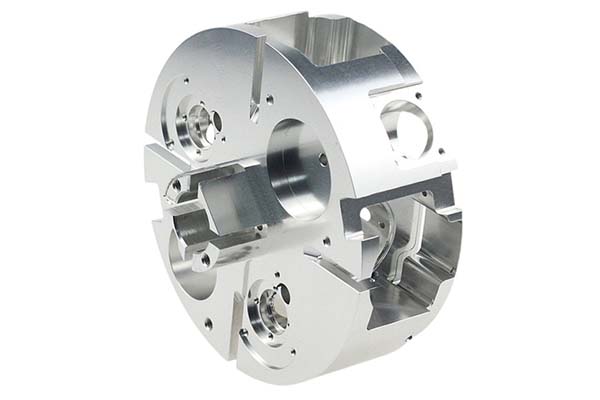
When your tooling project demands high hardness and wear resistance without the premium cost of complex alloy steels, T10 tool steel offers a practical solution. As a high-carbon, low-alloy tool steel, it achieves exceptional hardness through its carefully controlled carbon content while maintaining affordability for medium-duty applications.
What Defines T10 Tool Steel?
The performance of T10 tool steel is driven by its high carbon content and controlled alloy additions. Understanding its composition and resulting properties explains why this material performs so well in medium-stress applications.
Chemical Composition
T10 achieves its properties through a high carbon content with minimal alloying, focusing on hardness and wear resistance without unnecessary complexity.
| Element | Content Range (%) | Functional Role |
|---|---|---|
| Carbon (C) | 0.95–1.05 | The primary driver of hardness and wear resistance. Forms hard iron carbides that resist abrasion during cutting and forming operations. |
| Manganese (Mn) | 0.30–0.60 | Enhances hardenability and tensile strength without compromising toughness. |
| Silicon (Si) | 0.15–0.35 | Aids deoxidation during steelmaking and stabilizes mechanical properties across production batches. |
| Chromium (Cr) | 0.10–0.30 | Trace addition that improves hardenability and provides mild corrosion resistance. |
| Vanadium (V) | 0.05–0.15 | Optional grain refiner that improves impact toughness and reduces carbide segregation. |
| Sulfur (S) | ≤ 0.030 | Ultra-low to maintain toughness and avoid cracking during heat treatment or use. |
| Phosphorus (P) | ≤ 0.030 | Strictly controlled to prevent cold brittleness, essential for tools used in low-temperature environments. |
Mechanical Properties
After proper heat treatment, T10 delivers mechanical properties that make it suitable for a wide range of medium-duty tooling applications.
| Property | Typical Value | Practical Significance |
|---|---|---|
| Hardness | 58–62 HRC | Achieves excellent wear resistance for cutting tools, punches, and dies. Adjustable via tempering: 58–59 HRC for toughness, 61–62 HRC for maximum wear resistance. |
| Tensile Strength | 1,800–2,000 MPa | Handles moderate cutting forces in machining mild steel, wood, and non-ferrous metals. |
| Yield Strength | 1,600–1,800 MPa | Resists permanent deformation under normal operating loads, ensuring tool accuracy. |
| Impact Toughness | 15–25 J/cm² | Sufficient for medium-stress applications like punches and small dies, though lower than high-speed steels. |
| Elongation | 6–10% | Provides enough ductility for shaping into tool blanks without cracking during hot working. |
| Fatigue Resistance | 700–800 MPa | Withstands repeated stress cycles in high-volume production tools like punches and reamers. |
| Red Hardness | Moderate (≈50 HRC at 300°C) | Retains hardness at moderate temperatures, suitable for medium-speed cutting (200–300 m/min for mild steel). |
Physical Properties
The physical characteristics of T10 are consistent with most carbon tool steels, simplifying design and fabrication.
| Property | Typical Value | Practical Significance |
|---|---|---|
| Density | ~7.85 g/cm³ | Standard for tool steels, no weight penalty for tool designs. |
| Thermal Conductivity | ~40 W/(m·K) at 20°C | Higher than high-speed steels, enabling better heat dissipation in medium-speed cutting operations. |
| Magnetic Properties | Ferromagnetic | Simplifies non-destructive testing for tool defects and quality inspection. |
| Melting Point | ~1,430–1,480°C | Suitable for hot working and standard heat treatment processes. |
Why Is It Cost-Effective for Medium-Duty Tools?
T10 tool steel has become a standard choice for small shops and medium-volume production because its properties align well with practical tooling needs while keeping costs manageable.
Exceptional Wear Resistance at Low Cost
The high carbon content creates a dense network of iron carbides that resist abrasion effectively. In practical applications, T10 tools typically last 2–3 times longer than low-carbon steel alternatives, reducing replacement frequency and downtime. This wear resistance comes at a material cost significantly lower than high-speed or alloy tool steels.
Straightforward Heat Treatment
Unlike complex alloy steels that require controlled atmosphere furnaces and precise temperature ramping, T10 can be heat treated with basic equipment. The quenching process uses water or oil, and tempering is performed in standard ovens. This simplicity makes T10 accessible to small shops without specialized heat treatment facilities.
Good Machinability in Annealed State
In its annealed condition (180–220 HB), T10 machines readily with high-speed steel or carbide tooling. Tool blanks can be shaped to near-final dimensions before heat treatment, minimizing the need for expensive post-hardening grinding operations.
Moderate Red Hardness for General Use
While T10 cannot match the red hardness of high-speed steels, its ability to retain approximately 50 HRC at 300°C makes it suitable for medium-speed cutting operations. For machining mild steel, aluminum, brass, and wood, this thermal stability is entirely adequate.
Where Is T10 Tool Steel Commonly Used?
The combination of hardness, wear resistance, and affordability makes T10 suitable for a wide range of medium-duty tooling applications.
- Cutting Tools: Lathe tools for turning brass, copper, aluminum, and mild steel components. Milling cutters for light-duty milling operations in small machine shops. Reamers for medium-tolerance holes (±0.005 mm) in metalworking applications. Woodworking tools such as chisels, hand planes, and small cutter blades.
- Punches and Dies: Small punches for stamping thin metal sheets (1–3 mm thickness) in high-volume production. Cold-heading dies for manufacturing small fasteners like screws and rivets. Forming dies for plastic parts in small-batch mold applications (5,000+ cycles).
- Mechanical Components: Small shafts for household appliances such as blender blades and vacuum cleaner rollers. Low-torque gears for office equipment, conveyor systems, and small machinery. Bearing races for small electric motors requiring wear resistance.
- Automotive Components: Oil pump gears for small engines where high temperatures are not a factor. Small transmission gears for light vehicles, scooters, and electric bikes. Axles for lightweight vehicles like golf carts and utility vehicles.
- Agricultural and Industrial Equipment: Cutter blades for small harvesters and pruning tools. Paper and cardboard cutting blades for packaging and printing operations.
How Is T10 Tool Steel Manufactured?
The manufacturing process for T10 is straightforward, focusing on carbon control and proper heat treatment to develop its hardness characteristics.
Steelmaking
T10 is produced in an Electric Arc Furnace (EAF) at temperatures between 1,550°C and 1,650°C. Scrap steel is combined with carbon and trace alloys, with real-time monitoring to maintain carbon content within the 0.95–1.05% range—critical for achieving the target hardness. For large-scale production, the Basic Oxygen Furnace (BOF) process may be used, with alloys added after oxygen blowing to prevent oxidation.
Hot Working
After casting, the steel undergoes hot rolling at 1,050–1,100°C to form bars, plates, and tool blanks. This process refines the grain structure and shapes the material into standard forms. For complex shapes, hot forging at 1,000–1,050°C improves material density and aligns grain structure for enhanced toughness.
Annealing
Following hot working, the steel is annealed at 750–800°C for 2–4 hours and slow-cooled to 500°C. This reduces hardness to 180–220 HB, making the material machinable and relieving internal stresses from rolling and forging.
Heat Treatment
Heat treatment is the critical step that unlocks T10’s hardness potential:
| Process | Temperature Range | Purpose |
|---|---|---|
| Austenitizing | 780–820°C, 20–40 minutes | Prepares the steel for hardening. Shorter times than high-speed steels due to faster carbon dissolution. |
| Quenching | Water or oil quench | Water quenching achieves maximum hardness (63–65 HRC) but increases distortion risk. Oil quenching reduces distortion (60–62 HRC) for precision tools. |
| Tempering | 180–220°C, 1–2 hours | Balances hardness and toughness. Lower tempering preserves wear resistance; higher tempering (250–300°C) reduces hardness to 58–60 HRC for tools needing extra toughness. |
| Stress Relief Annealing | 550–600°C, 1 hour | Applied after machining to reduce residual stress and prevent warping during quenching. |
Finishing and Surface Treatment
After heat treatment, tools are ground with aluminum oxide wheels to achieve final dimensions and sharp edges, with tolerances as tight as ±0.005 mm. For corrosion protection, oiling is sufficient for indoor tools, while painting provides mild protection for outdoor applications like agricultural blades.
How Does It Compare to Other Tool Steels?
Understanding where T10 fits relative to other tool steels helps clarify its value for specific applications.
| Material | Hardness (HRC) | Wear Resistance | Red Hardness | Impact Toughness | Relative Cost | Best Applications |
|---|---|---|---|---|---|---|
| T10 | 58–62 | Very Good | Moderate (300°C) | Moderate | 100% | Medium-duty cutting tools, punches, dies |
| T1 (HSS) | 62–65 | Excellent | High (600°C) | Good | 150–200% | High-speed cutting, production machining |
| O1 | 57–60 | Good | Low | Moderate | 120% | Oil-hardening tools, woodworking |
| D2 | 58–62 | Excellent | Moderate | Moderate | 180% | High-wear applications, long-run stamping |
| Carbon Steel (1080) | 55–60 | Moderate | Low | Moderate | 70% | Low-cost tools, non-critical applications |
| Stainless (440C) | 56–58 | Good | Moderate | Moderate | 200% | Corrosion-resistant tools |
Key takeaways:
- T10 offers wear resistance comparable to D2 at approximately half the material cost, making it an excellent value for medium-duty applications.
- Compared to T1 high-speed steel, T10 is significantly less expensive and adequate for applications where red hardness is not critical.
- For basic carbon steels like 1080, T10 provides superior wear resistance and hardness consistency at a modest cost premium.
- While O1 offers better oil-hardening characteristics with less distortion, T10 achieves higher maximum hardness for applications where wear resistance is the primary concern.
Case Study: T10 Tool Steel in Small-Batch Punch Production
A small hardware manufacturer was producing small screw punches for stamping 2 mm steel sheets. Using a low-alloy steel, the punches were wearing out after 50,000 stampings, causing frequent production stoppages for tool changes. The replacement punches themselves were also costly due to the alloy content. The manufacturer switched to T10 tool steel punches with optimized heat treatment (oil quenched, tempered to 60–61 HRC). The results were significant:
- Tool Life Extension: The T10 punches lasted 150,000 stampings—three times longer than the previous material—reducing punch replacement frequency by 67% and saving $8,000 annually in tool costs.
- Material Cost Savings: T10’s material cost was 30% lower than the previous low-alloy steel, and the simpler heat treatment process reduced production time by 20%, saving an additional $4,000 annually.
- Quality Improvement: The consistent hardness of T10 reduced stamping defects (burrs and dimensional variations) by 80%, lowering quality control rejects and improving customer satisfaction.
T10 tool steel offers a practical balance of high hardness, excellent wear resistance, and cost-effectiveness for medium-duty tooling applications. Its high carbon content creates durable carbides that resist abrasion, while its simple alloy composition makes heat treatment and fabrication straightforward. For small machine shops, tool manufacturers, and production environments where red hardness and corrosion resistance are not critical, T10 delivers reliable performance at a fraction of the cost of high-speed or alloy tool steels. From lathe tools and milling cutters to punches and small dies, this versatile material continues to serve as a workhorse for applications where durability and affordability are equally important.
FAQ About T10 Tool Steel
Is T10 tool steel suitable for high-speed cutting operations?
T10 has moderate red hardness and begins to lose hardness above 300°C. It is suitable for medium-speed cutting of mild steel, aluminum, brass, and wood at speeds up to 200–300 m/min. For high-speed machining operations generating significant heat at the cutting edge, high-speed steels like T1 or M2 are better choices.
Can T10 be welded?
T10 has poor weldability due to its high carbon content. Welding creates hard, brittle zones in the heat-affected area that are prone to cracking. If welding is unavoidable, preheating to 300–400°C and post-weld tempering are mandatory. For most applications, it is more practical to machine T10 tools from solid stock rather than attempting weld repairs.
How does T10 compare to O1 tool steel?
T10 achieves higher maximum hardness (62 HRC vs. 60 HRC) and slightly better wear resistance than O1. However, O1 has superior oil-hardening characteristics with less distortion during heat treatment and better impact toughness. Choose T10 for applications where maximum wear resistance is the priority and distortion can be managed. Choose O1 for precision tools where dimensional stability during heat treatment is critical.
What surface treatment works best for T10 tools?
For most indoor applications, simple oiling is sufficient to prevent rust. For cutting tools, no additional coating is needed beyond proper tempering. For outdoor or agricultural applications, painting provides adequate corrosion protection. For extreme wear applications, low-temperature nitriding (500–550°C) can create a 3–5 μm hard surface layer, boosting wear resistance by approximately 25% for cutting tools and die edges.
How to write a spec that gets priced correctly
A drawing is a contract. If it leaves a number open, the shop fills that number in with its own default. The default is rarely the one you had in mind. Put these five lines on every RFQ and most of the back-and-forth disappears before it starts.
- Alloy designation and the standard behind it
- Temper or heat treatment condition
- Mechanical properties you actually need
- Mill certificate and traceability requirement
- Finish and the faces it applies to
The point is not paperwork. Each line removes a decision the shop would otherwise make for you. A complete RFQ comes back priced. An incomplete one comes back guessed.
What actually drives the price
Buyers usually push on material because it is the line they can see. In practice the material is rarely the biggest number on a quote. These five lines decide most of it:
- alloy grade and mill availability
- stock size versus finished size
- heat treatment and testing
- machinability
- certification
Ask for the quote split by line. A supplier who cannot break it down is guessing, and you will pay for the guess. The line you can usually renegotiate is the tolerance band, not the raw material.
Problems you will meet, and the fix
Every process has a failure mode it prefers. The same four show up again and again on this kind of work, and none of them are mysteries once you know what to look for.
- Substituting a similar grade without telling anyone
- Hardness that varies across a single bar
- Corrosion in a weld heat-affected zone
- Distortion after heat treatment on a thin part
Catch the fault on the first part, not the hundredth. A first-article check costs an hour. A bad batch costs the whole order. Write the check into the purchase order so nobody has to remember it.
What to check on the first article
The first article is the cheapest inspection you will ever buy. Use it properly and the rest of the run becomes boring, which is exactly what you want.
- Every dimension on the drawing, with the measured value written beside it.
- The material certificate, matched to the heat or lot number on the parts.
- The finish against the sample you approved, under the same light.
- Fit against the mating part, assembled rather than measured.
- Packaging, because parts that arrive damaged were never in tolerance.
Check in this order: datums, then mating features, then cosmetic faces. If the datums are wrong, every number after them is noise. Keep the report on file. When a problem shows up in month six, that document is the only thing that tells you what changed.
Our solution for T10 Tool Steel: Properties, Applications
YiguProto runs metal sourcing and machining in house, from a single prototype to a production batch. We quote the process, the material and the finish as separate lines, so you can see where the money goes instead of arguing with one number.
Send a STEP file or a drawing and you get a DFM report in one to two business days. It flags the features that add cost and the features that will not hold tolerance on the process you picked.
Every order ships with an inspection report on the features you call out. If a part misses, we make it again. Ready to price a part? Start with a free quote and DFM review, or read more about our metal sourcing and machining. You can also talk to an engineer before you commit to a drawing.
FAQ about T10 Tool Steel: Properties, Applications
What should I check before approving the parts?
Datums first, then the features that mate, then the cosmetic faces. Ask for a dimensional report, a material certificate and a finish sample. A part can be inside every tolerance and still not fit, so assemble one before you sign.
Does the process work for prototypes as well as production?
Yes, and that is usually the point. Running the prototype on the production process removes a whole class of surprises, because the part you test is made the same way as the part you sell.
What is T10 Tool Steel: Properties, Applications used for?
T10 Tool Steel: Properties, Applications turns up wherever the part has to do a real job at a predictable cost: brackets, housings, fixtures, covers and the fittings that hold them together. The honest test is whether the properties match the load and the environment, not whether the material is fashionable.
What is the lead time for T10 Tool Steel: Properties, Applications?
Expect 5 to 12 business days depending on mill stock. Tooling, material stock and the finishing queue all move that number, so we confirm the date in writing before the run starts rather than after.
What happens if a part is out of specification?
We measure it against the same drawing you approved and, if it misses, we make it again. What matters is that the report exists, because a disagreement without data is just an opinion.
Can T10 Tool Steel: Properties, Applications be made in small quantities?
Yes, and small quantities are where a good supplier earns the next order. Setup dominates the price at low volume, so the cheapest route is usually the one with the fewest operations, not the cheapest material.
The short version
T10 Tool Steel: Properties, Applications rewards the buyer who reads the data sheet and the drawing together. Pick the option for the property that matters, not for the price per kilo.
Tighten only what mates. Test a sample before the run. Then let the process do the rest.