
Plastic Materials
What Is Thermo Moldable Plastic and How Does It Work?
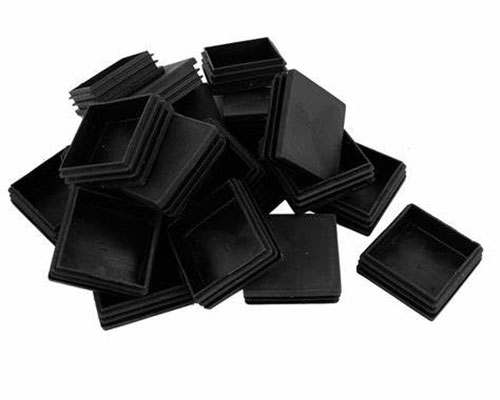
If you’re designing a custom part—whether for automotive, medical, or consumer products—you’ve likely heard the term thermo moldable plastic. But what does it actually mean? And why does it matter for manufacturing? Simply put, thermo moldable plastic (also called thermoplastics) is a type of polymer that softens when heated and hardens when cooled.
Key takeaways
- Choosing the right material is critical. Each type offers a different balance of strength, heat resistance, chemical resistance, and cost.
- The process you choose depends on your part design, production volume, and budget. Here are the four most common methods used by manufacturers today.
- Why do engineers and product designers keep coming back to these materials? Here are the biggest benefits.
- Thermo moldable plastics are powerful tools, but they come with a few hurdles. Here’s how to handle them.
What Exactly Is Thermo Moldable Plastic?
The Simple Definition
Thermo moldable plastic refers to plastics that become pliable or moldable at a certain temperature and return to a solid state when cooled. Unlike thermosetting plastics, which undergo a permanent chemical change when heated, thermo moldable plastics can be reheated and reshaped multiple times. Think of it like chocolate: melt it, pour it into a mold, let it cool, and you have a solid shape. Heat it again, and you can start over.
Why This Matters for Manufacturing
This unique behavior gives manufacturers huge flexibility. You can:
- Prototype quickly: Test a design, tweak it, and test again using the same material.
- Recycle scrap: Grind up waste parts and reuse them in new products.
- Create complex shapes: Fill intricate mold details because the material flows when hot.
Real-world example: A medical device company needed to test five different handle designs for a surgical tool. Using polypropylene (PP) —a common thermo moldable plastic—they injection-molded samples, evaluated ergonomics, and refined the design. The final version went into production with the same material, saving months of development time.
What Are the Most Popular Thermo Moldable Plastic Materials?
Choosing the right material is critical. Each type offers a different balance of strength, heat resistance, chemical resistance, and cost. Here’s a breakdown of the most common ones you’ll encounter.
| Material | Key Properties | Typical Applications | Common Industries |
|---|---|---|---|
| HDPE (High-Density Polyethylene) | High strength-to-weight ratio, impact resistant, weather resistant | Milk jugs, water pipes, cutting boards, outdoor furniture | Packaging, construction, consumer goods |
| Polypropylene (PP) | Chemical resistant, food safe, good heat resistance (melts at ~160–170°C) | Automotive bumpers, syringes, food containers, disposable cutlery | Medical, automotive, packaging |
| PVC (Polyvinyl Chloride) | Chemical resistant, good electrical insulation, rigid or flexible options | Plumbing pipes, electrical cable insulation, window frames | Construction, electrical, healthcare |
| ABS (Acrylonitrile Butadiene Styrene) | Impact resistant, tough, smooth surface finish | Electronic housings (e.g., computer monitors), Lego bricks, automotive trim | Consumer electronics, automotive, toys |
| Acetal (POM) | Low friction, high stiffness, excellent dimensional stability | Gears, bearings, bushings, zippers | Industrial machinery, automotive, consumer goods |
| Nylon 6/66 (Polyamide) | High tensile strength, abrasion resistant, good chemical resistance | Automotive engine components, textiles, industrial gears | Automotive, industrial, textiles |
| Polycarbonate (PC) | Optical clarity, extremely impact resistant, heat resistant up to ~130°C | Eyewear lenses, bulletproof glass, medical devices, LED lenses | Medical, aerospace, electronics |
Quick insight: If you need a part that must be transparent and tough, go with polycarbonate. If you’re making a food container that goes in the microwave, polypropylene is your best bet.
How Are Thermo Moldable Plastics Shaped into Parts?
The process you choose depends on your part design, production volume, and budget. Here are the four most common methods used by manufacturers today.
Plastic Injection Molding: Best for High Volume
Injection molding is the workhorse of the plastics industry. Here’s how it works:
- Plastic pellets are fed into a heated barrel and melted.
- The molten plastic is injected under high pressure (50–150 MPa) into a steel or aluminum mold.
- The plastic cools and solidifies inside the mold.
- The mold opens, and the part is ejected.
Why use it?
- Speed: Cycles can be as short as 15–30 seconds, producing hundreds or thousands of parts per hour.
- Precision: Tolerances as tight as ±0.005 inches are achievable.
- Surface finish: Parts come out smooth, often ready to use.
Best for: High-volume production of complex parts like gears, housings, and containers.
Case study: A consumer electronics company needed 100,000 smartphone cases. Using ABS in an injection molding process, they achieved consistent quality, fast production, and a per-unit cost low enough to meet their retail price target.
Blow Molding: Best for Hollow Parts
Blow molding is designed for hollow objects. The process:
- A tube of molten plastic (called a parison) is extruded.
- The parison is clamped inside a mold.
- Air is blown into the parison, inflating it until it presses against the mold walls.
- The plastic cools and the mold opens, releasing the hollow part.
Why use it?
- Efficient: Creates lightweight, hollow parts in one step.
- Cost-effective: Low tooling cost compared to injection molding for simple shapes.
Best for: Bottles, containers, automotive fluid reservoirs, and toys.
Plastic Extrusion: Best for Continuous Profiles
Extrusion creates parts with a constant cross-section, like pipes or window seals.
- Plastic pellets are melted and forced through a die (a shaped opening).
- The continuous profile emerges and is cooled, usually by water or air.
- The profile is cut to length.
Why use it?
- Continuous production: Makes long lengths of material efficiently.
- Versatile: Can produce simple (tubes) or complex (multi-chamber) profiles.
Best for: Pipes, tubing, weatherstripping, plastic sheets, and films.
Thermoforming: Best for Low-Volume or Large Parts
Thermoforming starts with a pre-extruded plastic sheet.
- A plastic sheet is clamped and heated until soft.
- A vacuum draws the sheet down onto a mold, or air pressure pushes it against the mold.
- The formed part cools and is trimmed from the sheet.
Why use it?
- Low tooling cost: Molds can be made from wood or aluminum, saving money.
- Fast turnaround: Ideal for prototypes or short production runs.
- Large parts: Can form parts several feet across, like bathtubs or signage.
Best for: Packaging trays, medical device enclosures, vehicle dashboards, and refrigerator liners.
What Are the Main Advantages of Using Thermo Moldable Plastic?
Why do engineers and product designers keep coming back to these materials? Here are the biggest benefits.
Design Freedom and Customization
You’re not stuck with off-the-shelf shapes. With thermo moldable plastics, you can create parts that fit your exact needs—whether that’s a complex internal lattice or a specific ergonomic curve. Processes like injection molding can reproduce intricate details like threads, logos, and snap-fit features directly in the part.
Cost-Effectiveness at Scale
While molds for injection molding cost money upfront ($5,000–$100,000+), the per-part cost drops dramatically as volume increases. For a run of 10,000 parts, injection molding is almost always cheaper than machining from solid plastic. For lower volumes, thermoforming offers a lower-cost entry point.
Faster Lead Times
Modern manufacturing, combined with rapid prototyping, means you can go from design to production part in weeks, not months. Services like 3D printing can produce prototype parts in the same material (or a close match) so you can test fit and function before cutting a production mold.
Durability and Wear Resistance
Many thermo moldable plastics are engineered for tough environments. Acetal handles continuous sliding wear in gears. Nylon resists abrasion in textile machinery. Polycarbonate survives impacts that would shatter glass.
Repeatability and Consistency
Once a mold is made, injection molding can produce thousands of identical parts. This is critical in industries like medical and aerospace, where every part must meet strict specifications.
Sustainability Through Recyclability
Because thermoplastics can be remelted, scrap from manufacturing (sprue, runners, rejected parts) can be ground up and reused. This reduces waste and lowers material costs.
What Challenges Should You Watch Out For?
Thermo moldable plastics are powerful tools, but they come with a few hurdles. Here’s how to handle them.
High Initial Tooling Costs
The challenge: Injection molds are expensive, especially for complex parts with tight tolerances.
The solution: Start with prototyping. Use 3D printing or urethane casting to test your design. Once you’re confident, invest in a production mold. Some suppliers also offer bridge tooling—lower-cost molds for short production runs.
Longer Lead Times for Complex Projects
The challenge: Designing, fabricating, and testing a mold takes time—typically 4–12 weeks.
The solution: Plan ahead. Involve your manufacturer early. They can spot potential issues (like parts that are hard to eject or areas that might warp) before the mold is cut, saving weeks of rework later.
Design Limitations
The challenge: Not every shape is moldable. Features like undercuts or very thin walls can be difficult or impossible to create.
The solution: Follow design for manufacturability (DFM) guidelines. Work with an experienced engineer who can adjust your design to fit the process while preserving its function. For example, they might add a slight draft angle to help the part release from the mold.
Which Industries Rely on Thermo Moldable Plastics?
You’ll find thermo moldable plastics in almost every manufactured product. Here are a few standout examples.
- Automotive: Dashboard components, bumpers, fuel systems, connectors. Materials like nylon and PP handle heat, vibration, and chemical exposure under the hood.
- Medical: Syringes, surgical instruments, diagnostic device housings, implants. PP and PC offer sterilizability, chemical resistance, and clarity.
- Consumer Electronics: Smartphone cases, laptop shells, remote controls, headphones. ABS and PC/ABS blends provide toughness and a good surface finish.
- Aerospace: Interior panels, ducting, seating components. Lightweight materials like polyetherimide (PEI) meet strict fire and smoke regulations.
- Packaging: Bottles, containers, films, trays. HDPE, PP, and PET are chosen for their barrier properties, strength, and recyclability.
Example: An aerospace supplier needed lightweight, fire-resistant ducting for a new aircraft cabin. They chose polyetherimide (PEI) —a high-performance thermo moldable plastic—and used extrusion to create the complex profile. The parts met flammability standards and saved weight compared to metal.
How to write a spec that gets priced correctly
A drawing is a contract. If it leaves a number open, the shop fills that number in with its own default. The default is rarely the one you had in mind. Put these five lines on every RFQ and most of the back-and-forth disappears before it starts.
- Resin grade with the standard number
- The property that actually decides the part
- Colour, texture and the face they apply to
- Environmental exposure: UV, chemical, temperature
- Any flame, food or medical rating required
The point is not paperwork. Each line removes a decision the shop would otherwise make for you. A complete RFQ comes back priced. An incomplete one comes back guessed.
What actually drives the price
Buyers usually push on material because it is the line they can see. In practice the material is rarely the biggest number on a quote. These five lines decide most of it:
- resin grade and additive package
- part weight
- tooling
- colour and texture
- certification and testing
Ask for the quote split by line. A supplier who cannot break it down is guessing, and you will pay for the guess. The line you can usually renegotiate is the tolerance band, not the raw material.
Problems you will meet, and the fix
Every process has a failure mode it prefers. The same four show up again and again on this kind of work, and none of them are mysteries once you know what to look for.
- Stress cracking at a moulded-in insert
- UV yellowing on an outdoor part
- Creep under a sustained load at temperature
- Warp on a glass-filled grade with the wrong gate
Catch the fault on the first part, not the hundredth. A first-article check costs an hour. A bad batch costs the whole order. Write the check into the purchase order so nobody has to remember it.
What to check on the first article
The first article is the cheapest inspection you will ever buy. Use it properly and the rest of the run becomes boring, which is exactly what you want.
- Every dimension on the drawing, with the measured value written beside it.
- The material certificate, matched to the heat or lot number on the parts.
- The finish against the sample you approved, under the same light.
- Fit against the mating part, assembled rather than measured.
- Packaging, because parts that arrive damaged were never in tolerance.
Check in this order: datums, then mating features, then cosmetic faces. If the datums are wrong, every number after them is noise. Keep the report on file. When a problem shows up in month six, that document is the only thing that tells you what changed.
How to compare two quotes fairly
Two numbers are not comparable unless the scope matches. Line them up before you decide, because a low number with three gaps is not a low number.
Same drawing, same material, same finish, same inspection. Anything else is a different job wearing the same part number. Then look at what each quote leaves out. Freight, packaging, certificates and tooling are the usual gaps.
Ask each supplier to state their assumptions in writing. The one who does is usually the one who has run the process before.
How Do Manufacturers Ensure Quality?
When a part needs to perform reliably, quality assurance is non-negotiable. Reputable manufacturers follow strict protocols.
- Material Certification: They verify that incoming plastic pellets meet specifications for properties like melt flow index, tensile strength, and impact resistance.
- Process Control: Injection molding machines monitor temperature, pressure, and cycle time in real-time to ensure every part is identical.
- Dimensional Inspection: Parts are checked against CAD models using tools like CMM (coordinate measuring machines) or optical scanners.
- Testing: Depending on the application, parts may undergo stress tests, chemical exposure tests, or thermal cycling.
- ISO Standards: Look for certifications like ISO 9001 (general quality), ISO 13485 (medical), or AS9100 (aerospace). These confirm the manufacturer follows industry best practices.
Thermo moldable plastics are the foundation of modern custom manufacturing. Their ability to soften when heated and harden when cooled gives designers and engineers incredible freedom to create parts that are strong, precise, and cost-effective. From the polypropylene in your food container to the polycarbonate in your safety glasses, these materials are everywhere. The key to success is matching the right material and process to your project’s needs—whether that’s injection molding for high volume, thermoforming for large parts, or extrusion for continuous profiles. By understanding the options and working with experienced partners, you can turn your ideas into reliable, real-world products.
Our solution for Thermo Moldable Plastic
YiguProto runs plastic part production in house, from a single prototype to a production batch. We quote the process, the material and the finish as separate lines, so you can see where the money goes instead of arguing with one number.
Send a STEP file or a drawing and you get a DFM report in one to two business days. It flags the features that add cost and the features that will not hold tolerance on the process you picked.
Every order ships with an inspection report on the features you call out. If a part misses, we make it again. Ready to price a part? Start with a free quote and DFM review, or read more about our plastic part production. You can also talk to an engineer before you commit to a drawing.
FAQ about Thermo Moldable Plastic
How long does a first article take?
Usually a few business days once the drawing is frozen, and longer if tooling is involved. The date we give you is the date we confirm in writing, not the date we hope for.
What tolerance can you hold on Thermo Moldable Plastic?
The working default is ±0.1 mm on molded features, ±0.05 mm after machining. Tighter than that the process changes and so does the price, because every step tighter adds inspection time. Call out only the faces that mate with something else and leave the rest on the general tolerance.
What files do you need in order to quote?
A STEP file plus a PDF drawing that carries the same revision letter. The model carries the geometry and the drawing carries the intent. When the two disagree, the shop picks one, and it is never the one you meant.
What happens if a part is out of specification?
We measure it against the same drawing you approved and, if it misses, we make it again. What matters is that the report exists, because a disagreement without data is just an opinion.
How do I compare two quotes fairly?
Match the scope first: same drawing, same material, same finish, same inspection. Then read the exclusions. Freight, tooling and certificates are the usual gaps, and a low number with three gaps is not a low number.
What is the lead time for Thermo Moldable Plastic?
Expect 7 to 20 business days depending on process. Tooling, material stock and the finishing queue all move that number, so we confirm the date in writing before the run starts rather than after.
The short version
Thermo Moldable Plastic rewards the buyer who reads the data sheet and the drawing together. Pick the option for the property that matters, not for the price per kilo.
Tighten only what mates. Test a sample before the run. Then let the process do the rest.