
Surface Treatment
Can You Stop Corrosion on 17 Common Metal Parts?
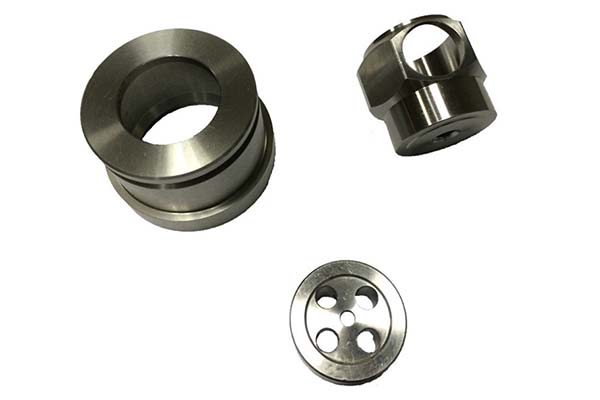
Corrosion quietly destroys metal parts every day. That shiny steel bracket under your car? It starts rusting within weeks of exposure. The aluminum boat hull sitting in saltwater? It’s fighting a constant battle against chemical attack. But here’s the good news: matching the right post-treatment to your specific part can double or even triple its useful life.
Why Post-Treatment Matters for Metal Parts
Understanding the Corrosion Threat
Metal parts face constant attack from their environment. Steel reacts with oxygen and water to form rust. Aluminum develops white oxides when exposed to salts. Copper turns green as it oxidizes. These reactions start immediately after manufacturing.
The speed of corrosion depends on where parts live:
- Marine environments accelerate attack by 5x compared to dry indoor conditions
- Chemical exposure in labs or factories eats through unprotected metals
- High-heat areas like engine compartments break down protective films faster
The Financial Case for Protection
The World Corrosion Organization’s 2023 study revealed that proper post-treatment reduces replacement costs by 60%. For a $10,000 batch of parts, that’s $6,000 saved over their lifetime. Treatment adds upfront cost but eliminates frequent replacements, downtime, and failure risks.
Automotive Parts: Fighting Oil, Heat, and Water
Engine Brackets: Steel’s Constant Battle
What they do: Engine brackets hold components in place while facing oil spray, road water, and temperatures up to 150°C.
Why they corrode: Oil breaks down protective films over time. Water from road spray seeps into any gap, starting rust that spreads under paint.
Best solution: Powder coating applies a dry polyester or epoxy layer baked onto the surface at 200°C. The resulting 50-100μm thick coating resists chips and blocks moisture completely.
Real case: A car manufacturer powder-coated 10,000 steel engine brackets. The brackets lasted 7 years instead of 3. Warranty claims dropped by 45%, saving millions across their vehicle fleet.
Exhaust Pipes: Stainless Steel Under Fire
What they do: Exhaust pipes carry hot gases at temperatures hitting 600°C while facing rain and road spray.
Why they corrode: Extreme heat degrades most coatings. Exhaust chemicals mix with moisture to form acids that attack stainless steel.
Best solution: Passivation uses nitric acid to thicken the natural chromium oxide layer on stainless steel 316L. This enhancement makes the layer 2-3x thicker and more stable at high temperatures.
Real case: A trucking company passivated 500 exhaust pipes. The pipes resisted rust for 5 years compared to 2 years untreated, saving $20,000 in premature replacements.
Aerospace Parts: Extreme Conditions Demand Precision
Wing Fasteners: Titanium’s UV Vulnerability
What they do: Wing fasteners secure panels through temperature swings from -50°C at altitude to +80°C on the ground.
Why they corrode: Titanium’s natural oxide layer is thin. UV radiation at high altitude slowly breaks down this protection over years.
Best solution: Type II anodizing uses electrical current to grow the oxide layer to 5-20μm thickness. This added layer blocks UV damage while maintaining the fastener’s precise dimensions.
Real case: An aerospace firm anodized 10,000 titanium fasteners. After 8 years of flight service, inspectors found no corrosion. Untreated fasteners showed pitting at 3 years.
Fuel Lines: Nickel Alloys vs. Sulfur
What they do: Fuel lines transport jet fuel under high pressure through tight spaces in the wing structure.
Why they corrode: Jet fuel contains sulfur compounds that slowly attack metal surfaces. Inconel 718 resists well but needs extra protection for decades of service.
Best solution: Nickel electroplating adds a 10-15μm pure nickel layer that sulfur cannot penetrate. Nickel’s natural resistance makes it ideal for fuel contact.
Real case: A military contractor plated 200 Inconel fuel lines for fighter aircraft. The lines achieved 10-year service life versus 4 years unplated, eliminating mid-mission fuel leak risks.
Medical Parts: Biocompatibility and Sterilization
Surgical Scalpels: Steam and Salts
What they do: Scalpels cut tissue while facing blood salts and repeated steam sterilization at 134°C.
Why they corrode: Blood contains chlorides that attack stainless steel. Steam sterilization’s heat and moisture accelerate this attack between uses.
Best solution: Electropolishing uses electric current to remove microscopic surface peaks and valleys. The resulting mirror finish has fewer sites for corrosion to start, while the oxide layer thickens naturally.
Real case: A medical supplier electropolished 5,000 scalpels. They remained rust-free through 200 sterilization cycles compared to 50 cycles untreated. Replacement costs dropped by 75%.
Dental Implants: Living Tissue Contact
What they do: Implants fuse with jawbone while exposed to saliva’s acids and oral bacteria.
Why they corrode: Saliva contains enzymes and salts that slowly attack titanium Grade 5. Bacterial colonies create acidic micro-environments on the surface.
Best solution: Hydrogen peroxide passivation treats implants with 30% hydrogen peroxide to create a dense oxide layer. This layer is biocompatible—safe for direct contact with living tissue.
Real case: A dental lab passivated 1,000 titanium implants. Five-year patient follow-ups showed 0% corrosion compared to 15% in untreated implants from earlier years.
Marine Parts: Constant Saltwater Assault
Boat Hulls: Aluminum in the Ocean
What they do: Hulls float boats while facing continuous saltwater exposure at varying temperatures.
Why they corrode: Saltwater’s chloride ions penetrate aluminum’s natural oxide layer. Aluminum 5052 resists well but needs help for long-term immersion.
Best solution: Type III hard anodizing creates a 25-50μm oxide layer that’s harder than the base aluminum. This dense layer blocks chloride ions completely.
Real case: A boat builder hard-anodized 50 aluminum hulls for commercial fishing boats. The hulls resisted corrosion for 8 years versus 3 years untreated, saving $50,000 in hull repairs.
Anchor Chains: Steel Meets Sand and Salt
What they do: Anchor chains secure boats while grinding against sand and sitting in saltwater.
Why they corrode: Sand abrasion wears away protective coatings. Exposed steel rusts rapidly in saltwater.
Best solution: Hot-dip galvanizing immerses chains in molten zinc at 450°C. The zinc layer reaches 50-100μm thickness and acts as a sacrificial anode—zinc corrodes instead of steel.
Real case: A marina galvanized 100 anchor chains for rental boats. The chains lasted 10 years compared to 2 years ungalvanized, cutting replacement costs by 80%.
Industrial Parts: Factories and Chemical Exposure
Pipe Fittings: Brass Dezincification
What they do: Fittings connect pipes carrying water, chemicals, or air throughout facilities.
Why they corrode: Water minerals and factory chemicals cause dezincification—zinc leaches from brass, leaving weak, porous copper behind.
Best solution: Chromate conversion coating applies a 1-2μm layer that stops zinc leaching and repels chemicals. The coating bonds chemically with the brass surface.
Real case: A plumbing company coated 10,000 brass fittings for commercial buildings. The fittings lasted 15 years versus 5 years uncoated, reducing call-backs by 60%.
Gearboxes: Cast Iron Protection
What they do: Gearboxes transmit power while sealed with oil but exposed to dust and occasional moisture.
Why they corrode: Dust on external surfaces traps moisture. This moisture mixes with oil residue to form corrosive sludge that attacks cast iron.
Best solution: Epoxy painting applies two coats totaling 80-100μm thickness. Epoxy’s chemical resistance seals against both moisture and oil breakdown.
Real case: A factory painted 200 cast iron gearboxes in a humid textile mill. After 7 years, inspectors found no rust. Unpainted gearboxes failed at 2 years, causing $100,000 in downtime.
How to write a spec that gets priced correctly
A drawing is a contract. If it leaves a number open, the shop fills that number in with its own default. The default is rarely the one you had in mind. Put these five lines on every RFQ and most of the back-and-forth disappears before it starts.
- The finish by its standard, not by a colour name
- Which faces are cosmetic and which are functional
- Masking: threads, bores, electrical contacts
- Colour target and the light it will be judged under
- Any salt spray or adhesion test required
The point is not paperwork. Each line removes a decision the shop would otherwise make for you. A complete RFQ comes back priced. An incomplete one comes back guessed.
What actually drives the price
Buyers usually push on material because it is the line they can see. In practice the material is rarely the biggest number on a quote. These five lines decide most of it:
- finish type and specification
- surface area
- masking complexity
- colour matching
- rework risk
Ask for the quote split by line. A supplier who cannot break it down is guessing, and you will pay for the guess. The line you can usually renegotiate is the tolerance band, not the raw material.
Problems you will meet, and the fix
Every process has a failure mode it prefers. The same four show up again and again on this kind of work, and none of them are mysteries once you know what to look for.
- Colour drift between two anodising lots
- Threads that no longer gauge after plating
- Poor adhesion on a surface that was not prepped
- Orange peel on a coat that was sprayed too dry
Catch the fault on the first part, not the hundredth. A first-article check costs an hour. A bad batch costs the whole order. Write the check into the purchase order so nobody has to remember it.
What to check on the first article
The first article is the cheapest inspection you will ever buy. Use it properly and the rest of the run becomes boring, which is exactly what you want.
- Every dimension on the drawing, with the measured value written beside it.
- The material certificate, matched to the heat or lot number on the parts.
- The finish against the sample you approved, under the same light.
- Fit against the mating part, assembled rather than measured.
- Packaging, because parts that arrive damaged were never in tolerance.
Check in this order: datums, then mating features, then cosmetic faces. If the datums are wrong, every number after them is noise. Keep the report on file. When a problem shows up in month six, that document is the only thing that tells you what changed.
How to compare two quotes fairly
Two numbers are not comparable unless the scope matches. Line them up before you decide, because a low number with three gaps is not a low number.
Same drawing, same material, same finish, same inspection. Anything else is a different job wearing the same part number. Then look at what each quote leaves out. Freight, packaging, certificates and tooling are the usual gaps.
Ask each supplier to state their assumptions in writing. The one who does is usually the one who has run the process before.
Scaling from one part to a batch
The first part teaches you the process. The hundredth teaches you the process cost.
Watch three things as volume grows: setup amortisation, tool wear, and how much hand work the finish still needs. If the unit price barely moves between ten and a hundred, the cost sits in material or in hand work, not in setup. Ask which, because only one of them is negotiable.
Lead time behaves the same way. A one-off is scheduled around other jobs. A repeat order is scheduled around your forecast. Give the shop a forecast and the lead time gets shorter, not longer.
How to read a supplier's quote
A quote is a short document with a long shadow. Four things in it decide whether the job runs smoothly, and only one of them is the price.
- The scope line. It should name the process, the material and the finish, not just the part.
- The tolerance basis. General tolerance or the drawing, and which standard it follows.
- The exclusions. Tooling, freight, certificates and inspection are the usual omissions.
- The validity date. Material prices move, and an open-ended quote is a promise nobody can keep.
Read the exclusions before you read the total. A quote that leaves out tooling is not cheaper. It is a quote for a different job.
What to send with the first order
The first order sets the pattern for every order after it. Send a complete package once and the shop files it, and the second order takes a fraction of the time.
- A STEP or native model plus a PDF drawing carrying the same revision letter.
- The material callout by standard number, not by trade name.
- The finish and the exact faces it applies to.
- Any test the part must pass: fit, seal, drop, salt spray, dielectric.
- A contact who can answer a question inside one working day.
Then write down what was agreed. An email that confirms the material, the finish and the date is worth more than a longer purchase order that leaves them open.
How to Choose the Right Anti-Corrosion Solution
Comparison Table: Options and Outcomes
| Treatment | Cost Per Part | Lifespan Increase | Best Applications |
|---|---|---|---|
| Type II Anodizing | $2–$25 | 2–3x | Aluminum: cookware, bike frames, consumer goods |
| Type III Hard Anodizing | $4–$50 | 3–4x | Aluminum: boat hulls, marine parts |
| Powder Coating | $5–$50 | 2–3x | Steel: brackets, frames, automotive |
| Nickel/Tin Plating | $1–$30 | 2–5x | Chemical exposure: fuel lines, heat sinks |
| Passivation | $5–$40 | 2–4x | Stainless steel, titanium: exhaust, implants |
| Electropolishing | $10–$15 | 3–4x | Medical: scalpels, surgical tools |
| Hot-Dip Galvanizing | $15–$25/meter | 4–5x | Steel: anchor chains, marine hardware |
| PVDF Coating | $1–$2/sq ft | 2–3x | Roofing: architectural aluminum |
Decision Factors to Consider
Material matters most. Aluminum responds to anodizing. Steel needs zinc or paint. Stainless steel benefits from passivation. Choose treatments compatible with your base metal.
Environment drives selection. Marine parts need maximum barrier protection. Medical devices require biocompatibility. Automotive components balance cost with durability.
Budget affects options. Powder coating costs more than paint but lasts longer. Hot-dip galvanizing costs upfront but eliminates decade of replacements.
Corrosion stops when you match the right post-treatment to each metal part. Engine brackets benefit from powder coating’s chip resistance. Boat hulls need hard anodizing’s saltwater barrier. Surgical scalpels require electropolishing’s smooth, sterile surface. The 17 parts covered here represent common challenges across industries, and each has proven solutions backed by real-world data. By investing in appropriate treatment—whether galvanizing for marine chains or gold plating for electrical connectors—you extend part life 2-5 times while cutting long-term costs. The choice isn’t whether to treat, but which treatment fits your specific part’s material, environment, and performance requirements.
Our solution for Stop Corrosion
YiguProto runs surface finishing in house, from a single prototype to a production batch. We quote the process, the material and the finish as separate lines, so you can see where the money goes instead of arguing with one number.
Send a STEP file or a drawing and you get a DFM report in one to two business days. It flags the features that add cost and the features that will not hold tolerance on the process you picked.
Every order ships with an inspection report on the features you call out. If a part misses, we make it again. Ready to price a part? Start with a free quote and DFM review, or read more about our surface finishing. You can also talk to an engineer before you commit to a drawing.
FAQ about Stop Corrosion
Is there a minimum order quantity?
No hard minimum. One part is fine. What changes with volume is which costs dominate, so a single unit is priced mostly on setup and a thousand units are priced mostly on cycle time and material.
What files do you need in order to quote?
A STEP file plus a PDF drawing that carries the same revision letter. The model carries the geometry and the drawing carries the intent. When the two disagree, the shop picks one, and it is never the one you meant.
How do I compare two quotes fairly?
Match the scope first: same drawing, same material, same finish, same inspection. Then read the exclusions. Freight, tooling and certificates are the usual gaps, and a low number with three gaps is not a low number.
What happens if a part is out of specification?
We measure it against the same drawing you approved and, if it misses, we make it again. What matters is that the report exists, because a disagreement without data is just an opinion.
What material should I specify?
Specify by standard, not by trade name. A trade name can change under you between two orders; a standard number cannot. Then add the one property that actually decides the part, whether that is strength, heat resistance or chemical exposure.
What should I check before approving the parts?
Datums first, then the features that mate, then the cosmetic faces. Ask for a dimensional report, a material certificate and a finish sample. A part can be inside every tolerance and still not fit, so assemble one before you sign.
The short version
Stop Corrosion rewards the buyer who reads the data sheet and the drawing together. Pick the option for the property that matters, not for the price per kilo.
Tighten only what mates. Test a sample before the run. Then let the process do the rest.