
3D Printing
How Is 3D Printing Changing the World?
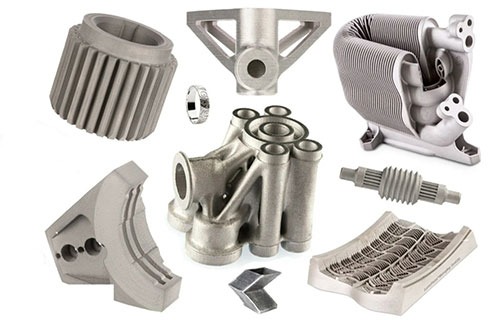
Introduction3D printing is a quiet revolution in how we make things. It builds objects layer by layer, from the ground up. This breaks the old rules of cutting, molding, and assembling. From custom medical implants to lightweight rocket parts, its reach is vast. It is not a gadget for hobbyists alone. It is a core tool reshaping engineering, medicine, design, and art.
Key takeaways
- Here, 3D printing is not just useful; it’s life-changing. It enables personalized care.
- Architecture is about vision. 3D printing turns vision into tangible, complex models and even full-scale structures.
- These industries need the ultimate in performance, weight savings, and reliability. 3D printing delivers.
- 3D printing’s versatility is its greatest strength. It is not one tool for one job. It is a new way of thinking about making things.
How Is 3D Printing Used in Engineering?
For engineers, it’s a superpower for speed and complexity.
Can It Really Speed Up Prototyping?
Yes, dramatically. The old way: send a design out for CNC machining or a mold. Wait weeks and pay thousands. The 3D printing way: send a file to the printer in the office. Have a part in hours for the cost of material.
- Real Impact: A car maker tests a new air vent design. A machined prototype takes 10 days and $2,000. A 3D printed one takes 2 days and $90. This lets them test five designs in the time it took to make one before.
- Key Benefit: Iterate fast, fail cheap, and perfect the design before any expensive tooling is made.
Does It Make Better Final Parts?
For certain parts, absolutely. It excels where traditional methods fail.
- Part Consolidation: Turn an assembly of 10 metal parts into 1 printed piece. This cuts weight, reduces points of failure, and slashes assembly time.
- Lightweighting: Use generative design software to create organic, lattice-filled structures that are stronger and 40-60% lighter. This is critical for aerospace and automotive efficiency.
- On-Demand Spares: Factories keep digital files of old machine parts. When a 30-year-old machine breaks, they print the spare part in days instead of waiting months for a supplier.
Case Study: Airbus uses 3D printed brackets and cabin parts. One printed partition is 55% lighter than the old version. For an airline, less weight means massive fuel savings.
What Is Its Role in Medicine?
Here, 3D printing is not just useful; it’s life-changing. It enables personalized care.
Can It Create Custom Implants and Guides?
This is now routine. Surgeons use patient CT scans to print exact replicas of bones or organs for practice. They also print custom surgical guides that fit only that patient, making surgeries faster and more precise.
- Example: A patient needs a complex skull implant after an injury. A traditional implant is a generic shape, needing adjustment during surgery. A 3D printed titanium implant is designed to fit the exact defect. Surgery time is cut by 30%, and the outcome is better.
Are Prosthetics and Aids Better?
Yes. Traditional prosthetics are expensive and generic. 3D printing allows for low-cost, custom-fitted devices.
- For Children: A child with a limb difference can get a colorful, custom-fitted prosthetic arm. As they grow, a new one can be printed affordably.
- For Everyone: Hearing aid shells and dental aligners are now almost entirely 3D printed. They fit perfectly because they are made from a digital scan of the patient.
Trend: Bioprinting is the frontier. Researchers are printing living tissues using “bio-inks” made of human cells. The goal is to eventually print functional organs for transplant.
How Do Architects and Builders Use It?
Architecture is about vision. 3D printing turns vision into tangible, complex models and even full-scale structures.
Does It Improve Models and Concepts?
Before 3D printing, making a detailed model of a complex building was a hand-crafted, expensive nightmare. Now, architects print highly detailed scale models overnight.
- Benefit: Clients can see and feel the design. Intricate facades, sweeping curves, and interior layouts are clear. This leads to better feedback and fewer costly changes later.
Can We Really Print Houses?
Yes, and it’s happening. Large-scale concrete 3D printers lay down layers of special mortar to build walls.
- Advantages: Speed (a basic house shell in 24 hours), design freedom (curved walls are easy), and reduced labor costs.
- Use Case: For building low-cost housing quickly in underserved areas or creating unique, custom homes.
How Is It Used in Education?
In schools and universities, 3D printing is a powerful hands-on tool.
What Do Students Learn?
They move from abstract theory to physical creation.
- Engineering Students: Design a gear, print it, and test it. They learn about tolerances, strength, and failure firsthand.
- Biology Students: Print a detailed model of a virus or a heart. Holding it helps understanding.
- Art and History Students: Print historical artifacts or sculptures for close study.
Outcome: Students gain critical thinking, design skills, and confidence. They learn by making and iterating, just like real engineers and designers.
Can 3D Printing Help the Environment?
It has the potential to be a more sustainable way to make things.
Does It Reduce Waste?
Traditional machining is subtractive: you cut away most of a block to get a part. Up to 70% of the material becomes waste. 3D printing is additive: you use only the material needed for the part. Waste is minimal.
Does It Enable New Recycling?
Yes. There are projects that grind up plastic waste (like bottles) and turn it into 3D printer filament. This creates a local circular economy.
Consideration: The energy use of 3D printers can be high. The true environmental benefit comes from optimized designs (lighter parts that save fuel in vehicles) and localized production (cutting shipping emissions).
What About Aerospace and Defense?
These industries need the ultimate in performance, weight savings, and reliability. 3D printing delivers.
Why Is It Perfect for Aerospace?
- Weight is Everything: Every gram saved on a plane or rocket means less fuel burned. 3D printed lattice and hollow structures are incredibly light and strong.
- Complex Cooling: Rocket nozzles and turbine blades need intricate internal cooling channels to survive extreme heat. These are impossible to machine but easy to 3D print.
- Supply Chain Simplicity: Instead of sourcing 100 parts from 10 suppliers, a company can print a complex assembly in one piece.
Iconic Example: SpaceX uses 3D printed SuperDraco engine chambers in its Crew Dragon spacecraft. They are stronger and faster to produce than the traditional version.
How Does It Affect Art and Entertainment?
Here, 3D printing unleashes pure creativity.
What Do Artists Create?
Artists are no longer limited by what they can carve or mold.
- They design impossible geometries in software and bring them to life in resin, metal, or plastic.
- They combine multiple materials and colors in a single print.
- They make limited edition sculptures or custom jewelry that would be too costly by hand.
How Is It Used in Film and Fashion?
- Movies: Studios print detailed props, costumes, and animatronic parts. A hero prop (like a superhero’s armor) can be printed, fitted to the actor, and duplicated perfectly.
- Fashion: Designers print intricate shoes, dresses, and accessories that defy traditional weaving or sewing. It allows for mass customization in footwear.
How to write a spec that gets priced correctly
A drawing is a contract. If it leaves a number open, the shop fills that number in with its own default. The default is rarely the one you had in mind. Put these five lines on every RFQ and most of the back-and-forth disappears before it starts.
- File format and units, with the model exported in millimetres
- Process and material grade, not a trade name
- Critical features and the tolerance each one needs
- Surface finish and the faces it applies to
- Quantity for the pilot build and for the year
The point is not paperwork. Each line removes a decision the shop would otherwise make for you. A complete RFQ comes back priced. An incomplete one comes back guessed.
What actually drives the price
Buyers usually push on material because it is the line they can see. In practice the material is rarely the biggest number on a quote. These five lines decide most of it:
- build volume and orientation
- layer height and support structure
- material grade and colour
- post-processing and hand finishing
- quantity per build plate
Ask for the quote split by line. A supplier who cannot break it down is guessing, and you will pay for the guess. The line you can usually renegotiate is the tolerance band, not the raw material.
Problems you will meet, and the fix
Every process has a failure mode it prefers. The same four show up again and again on this kind of work, and none of them are mysteries once you know what to look for.
- Warping on long flat faces where the part lifts off the plate
- Layer lines showing through a cosmetic surface
- Support scars on a mating face nobody flagged
- Dimensional drift on thin walls after cooling
Catch the fault on the first part, not the hundredth. A first-article check costs an hour. A bad batch costs the whole order. Write the check into the purchase order so nobody has to remember it.
What to check on the first article
The first article is the cheapest inspection you will ever buy. Use it properly and the rest of the run becomes boring, which is exactly what you want.
- Every dimension on the drawing, with the measured value written beside it.
- The material certificate, matched to the heat or lot number on the parts.
- The finish against the sample you approved, under the same light.
- Fit against the mating part, assembled rather than measured.
- Packaging, because parts that arrive damaged were never in tolerance.
Check in this order: datums, then mating features, then cosmetic faces. If the datums are wrong, every number after them is noise. Keep the report on file. When a problem shows up in month six, that document is the only thing that tells you what changed.
How to compare two quotes fairly
Two numbers are not comparable unless the scope matches. Line them up before you decide, because a low number with three gaps is not a low number.
Same drawing, same material, same finish, same inspection. Anything else is a different job wearing the same part number. Then look at what each quote leaves out. Freight, packaging, certificates and tooling are the usual gaps.
Ask each supplier to state their assumptions in writing. The one who does is usually the one who has run the process before.
Scaling from one part to a batch
The first part teaches you the process. The hundredth teaches you the process cost.
Watch three things as volume grows: setup amortisation, tool wear, and how much hand work the finish still needs. If the unit price barely moves between ten and a hundred, the cost sits in material or in hand work, not in setup. Ask which, because only one of them is negotiable.
Lead time behaves the same way. A one-off is scheduled around other jobs. A repeat order is scheduled around your forecast. Give the shop a forecast and the lead time gets shorter, not longer.
How to read a supplier's quote
A quote is a short document with a long shadow. Four things in it decide whether the job runs smoothly, and only one of them is the price.
- The scope line. It should name the process, the material and the finish, not just the part.
- The tolerance basis. General tolerance or the drawing, and which standard it follows.
- The exclusions. Tooling, freight, certificates and inspection are the usual omissions.
- The validity date. Material prices move, and an open-ended quote is a promise nobody can keep.
Read the exclusions before you read the total. A quote that leaves out tooling is not cheaper. It is a quote for a different job.
What to send with the first order
The first order sets the pattern for every order after it. Send a complete package once and the shop files it, and the second order takes a fraction of the time.
- A STEP or native model plus a PDF drawing carrying the same revision letter.
- The material callout by standard number, not by trade name.
- The finish and the exact faces it applies to.
- Any test the part must pass: fit, seal, drop, salt spray, dielectric.
- A contact who can answer a question inside one working day.
Then write down what was agreed. An email that confirms the material, the finish and the date is worth more than a longer purchase order that leaves them open.
When this is the wrong choice
A good supplier tells you when the process does not fit. These are the cases where we say so.
- The volume is so low that setup costs more than the parts are worth.
- The tolerance is tighter than the process can hold without a second operation.
- The geometry cannot be made without a tool feature that will not pay back.
- The material you need is not available in the form the process requires.
- The schedule is shorter than the tooling or setup time, and nobody has said so yet.
None of these are refusals. They are reasons to look at a different route, and the earlier that conversation happens the cheaper it is. The most expensive mistake in manufacturing is a process chosen before the question was understood.
What Does the Future Hold?
The technology keeps evolving. Key trends include:
- Faster Printing Speeds: New technologies like CLIP/DLS can print objects in minutes instead of hours.
- New Materials: More high-strength composites, flexible electronics, and sustainable biomaterials.
- Hybrid Manufacturing: Machines that 3D print a part and then machine its surface in one setup for perfect finish and accuracy.
- Digital Inventory: Companies will store CAD files, not physical parts, printing what they need, where they need it.
3D printing’s versatility is its greatest strength. It is not one tool for one job. It is a new way of thinking about making things. It brings agility to engineering, personalization to medicine, creativity to art, and efficiency to construction. Its impact is already profound and is only growing. The common thread across all industries is freedom: freedom from the limits of old tools, freedom to customize, and freedom to innovate. As materials and machines improve, its role in transforming industries worldwide will only deepen.
Our solution for 3D Printing Changing
YiguProto runs 3D printing in house, from a single prototype to a production batch. We quote the process, the material and the finish as separate lines, so you can see where the money goes instead of arguing with one number.
Send a STEP file or a drawing and you get a DFM report in one to two business days. It flags the features that add cost and the features that will not hold tolerance on the process you picked.
Every order ships with an inspection report on the features you call out. If a part misses, we make it again. Ready to price a part? Start with a free quote and DFM review, or read more about our 3D printing. You can also talk to an engineer before you commit to a drawing.
FAQ about 3D Printing Changing
What tolerance can you hold on 3D Printing Changing?
The working default is ±0.1 mm on small features, ±0.3% on long spans. Tighter than that the process changes and so does the price, because every step tighter adds inspection time. Call out only the faces that mate with something else and leave the rest on the general tolerance.
What material should I specify?
Specify by standard, not by trade name. A trade name can change under you between two orders; a standard number cannot. Then add the one property that actually decides the part, whether that is strength, heat resistance or chemical exposure.
What should I check before approving the parts?
Datums first, then the features that mate, then the cosmetic faces. Ask for a dimensional report, a material certificate and a finish sample. A part can be inside every tolerance and still not fit, so assemble one before you sign.
Can 3D Printing Changing be made in small quantities?
Yes, and small quantities are where a good supplier earns the next order. Setup dominates the price at low volume, so the cheapest route is usually the one with the fewest operations, not the cheapest material.
What happens if a part is out of specification?
We measure it against the same drawing you approved and, if it misses, we make it again. What matters is that the report exists, because a disagreement without data is just an opinion.
What files do you need in order to quote?
A STEP file plus a PDF drawing that carries the same revision letter. The model carries the geometry and the drawing carries the intent. When the two disagree, the shop picks one, and it is never the one you meant.
The short version
3D Printing Changing rewards the buyer who reads the data sheet and the drawing together. Pick the option for the property that matters, not for the price per kilo.
Tighten only what mates. Test a sample before the run. Then let the process do the rest.