
Industry Applications
Why Choose Vacuum Casting in China? A Complete Guide for Smart Product Development
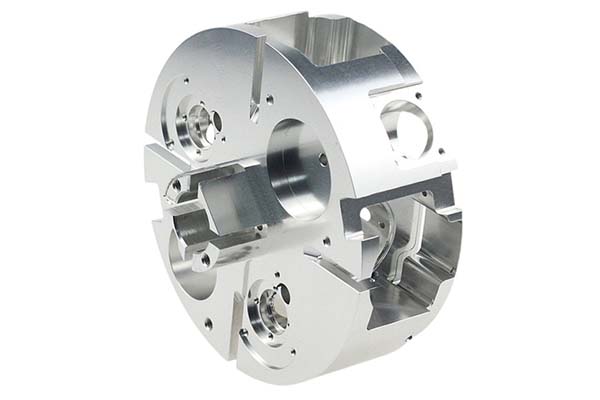
If you’re searching for “Vacuum Casting China,” chances are you need high-quality prototypes or small batch production parts without breaking the bank. Maybe you’re a product developer tired of waiting weeks for injection molding tooling, or an engineer looking for cost-effective ways to test designs before mass production. The real question on your mind?
Key takeaways
- The industry keeps evolving. More factories now combine vacuum casting with CNC machining for hybrid parts that balance quality and cost.
- Vacuum casting in China offers a sweet spot for product developers, engineers, and business owners: quality parts, fast turnaround, and reasonable costs that beat Western suppliers hands down.
- What’s the minimum order quantity for vacuum casting in China?Most suppliers have no strict MOQ—you can order just 1 part.
What Is Vacuum Casting, Really?
Breaking Down the Basics
Vacuum casting (also called urethane casting) is a smart manufacturing process for creating high-fidelity prototypes or low-volume production parts. Think of it as a bridge between 3D printing and injection molding.
Here’s how it works: You start with a master model (usually 3D-printed from resin), use it to make a silicone mold, then pour liquid polyurethane into that mold inside a vacuum chamber. The vacuum removes air bubbles, so your final parts come out with fine details, smooth surfaces, and material properties close to real plastics like ABS, PC, or even rubber.
Why Has China Become the Go-To Place?
China didn’t become a vacuum casting powerhouse by accident. Over the past 15 years, the country has poured serious money into prototyping tech. Here’s what makes it stand out:
- Cost efficiency: Labor and materials cost 30-50% less than in North America or Europe. A silicone mold good for 50-100 parts might run you $300-$800 in China, compared to $800-$1,500 back home.
- Speed: Most Chinese shops offer 5-10 day turnaround for small batches. Western suppliers? You’re looking at 2-3 weeks.
- Scale and know-how: Thousands of specialized prototyping factories cluster in places like Shenzhen, Guangzhou, and Shanghai. Many hold ISO 9001 certs and use pro equipment like CNC trimmers and precision vacuum chambers.
Real example: A US startup needed 20 prototype enclosures for a new smart thermostat. A US supplier quoted $2,500 and 3 weeks. They switched to a Chinese vacuum casting provider, paid $1,200, and got parts in 7 days—same dimensional accuracy (±0.1mm) and a perfect matte finish.
How Does Vacuum Casting Work in Chinese Factories?
Step 1: Create the Master Model
Everything starts with a master model, typically 3D-printed using SLA or SLS resin. Chinese factories love high-resolution SLA printers (50-100 microns) to capture tiny details—logos, small holes, you name it. A phone case master model? That’s 1-2 days to print and cure.
Step 2: Build the Silicone Mold
The master goes into a mold frame. Liquid silicone (usually platinum-cure for durability) gets poured around it. Then the whole thing goes into a vacuum chamber to suck out air bubbles—skip this and you’ll get defects. The silicone cures at room temp (or faster in an oven) for 8-12 hours. One mold typically handles 20-50 parts before wearing out.
Step 3: Prepare the Casting Resin
Your supplier picks a polyurethane resin that matches what you need. Popular options include:
- ABS-like resin: Rigid parts, good impact resistance
- PC-like resin: Heat-resistant stuff (think automotive)
- Silicone resin: Flexible parts like gaskets
- Transparent resin: Lenses or display covers
They mix resins with hardeners (ratios vary) and add pigments if you want color.
Step 4: Vacuum Casting
Liquid resin goes into the silicone mold. Back into the vacuum chamber it goes (typically -0.095 MPa pressure) for 5-10 minutes—more bubble removal. Then curing: either 24 hours at room temp or 2-4 hours in a 60°C oven for speed.
Step 5: Demold and Trim
Pop the part out carefully. Trim excess resin (called “flash”) using CNC machines or hand tools. For batches over 50 parts, factories often use automated trimming for consistency.
Step 6: Post-Processing
This is where parts get really good. Common options:
- Sanding or polishing for smooth surfaces
- Painting to match Pantone colors
- CNC machining for precise holes or threads
- Assembly (gluing multiple parts together)
Pro tip: Ask for a “process timeline” upfront. Good factories will give you a day-by-day breakdown—like Day 1-2: Master model; Day 3-4: Silicone mold; Day 5-6: Casting; Day 7: Post-processing.
What Materials Can You Get from Chinese Suppliers?
Choosing the Right One Matters
Pick wrong, and your part fails. Here’s a comparison table to help you decide:
| Material Type | Key Properties | Typical Uses | Lead Time | Cost (Per Part, 100-Piece Batch) |
|---|---|---|---|---|
| ABS-Like Polyurethane | Rigid, good impact resistance, easy to paint | Electronic housings, toys, consumer goods | 5-7 days | $5-$15 |
| PC-Like Polyurethane | Heat-resistant (up to 120°C), high strength | Automotive parts, LED housings, medical tools | 5-7 days | $8-$20 |
| Silicone Resin | Flexible (Shore A 30-80), waterproof | Gaskets, seals, grips, medical devices | 6-8 days | $10-$25 |
| Transparent Resin | Clear (90% light transmission), scratch-resistant | Lenses, display covers, light fixtures | 7-9 days | $12-$30 |
| Flame-Retardant Resin | Meets UL94 V-0 standard | Electrical components, aerospace parts | 7-10 days | $15-$35 |
Expert insight: For parts facing temperature swings (like automotive sensors), grab a PC-like resin with glass transition temperature (Tg) above 120°C. Most Chinese suppliers can provide material data sheets to prove compliance with RoHS or FDA standards.
How to Pick a Reliable Vacuum Casting Supplier in China
Step 1: Check Experience and Certifications
Look for suppliers with 5+ years under their belt and certs like ISO 9001 or ISO 13485 (for medical). Ask for case studies or client references in your industry. A factory that works with Tesla or Apple? Way more reliable than a newcomer.
Step 2: Inspect Equipment and Quality Control
Reputable shops use:
- High-resolution SLA printers (Formlabs Form 3+ or UnionTech)
- Digital vacuum chambers with pressure monitoring
- CNC trimming machines for precision
Their QC process should include:
- Dimensional testing with calipers or 3D scanners (±0.05mm accuracy)
- Visual inspections for defects—no bubbles, scratches, uneven color
- Material testing (impact resistance, heat tolerance) for critical parts
Red flag: If they won’t share factory photos or QC details, run. They’re probably a middleman with zero quality control.
Step 3: Evaluate Communication
Language barriers are real. Pick a factory with English-speaking project managers who reply within 24 hours. They should ask smart questions—like “What’s the part’s intended use?”—not just fire off generic quotes.
Step 4: Get a Sample First
Never order big without a sample. Most Chinese suppliers charge $50-$200 for a sample (refundable if you proceed). Check for:
- Dimensional accuracy (compare to your 3D model)
- Material feel (rigidity or flexibility on point?)
- Surface finish (smooth edges, no flash)
Real example: A European robotics company ordered 100 vacuum-cast gripper parts from China. First sample had a rough surface—they asked for better sanding, and the final batch was perfect. Saved themselves a costly mistake.
Step 5: Compare Pricing and Lead Times Wisely
Prices depend on size, complexity, and material. A small 5cm bracket might cost $3-$8 per unit for 50 pieces. A big 30cm automotive housing? $20-$50 per unit.
Warning: Avoid suppliers priced 30% below market. They’ll cut corners—like using cheap silicone molds that last 10 parts instead of 50. Balance cost with lead time: reliable shops offer 5-12 day delivery for 10-500 parts.
What Problems Might You Face with Chinese Vacuum Casting?
Challenge 1: Long Shipping Times
Parts from China to North America or Europe take 7-14 days by air (pricey) or 30-40 days by sea (slow). Solution: Ask for trusted logistics partners like DHL or FedEx with door-to-door service. Pick suppliers near major ports (Shenzhen, Shanghai) to cut transit time.
Challenge 2: Material Mismatches
Sometimes the final part feels wrong—too flexible, maybe. Solution: Send a physical sample if you have one, or specify exact properties (e.g., “Shore D 80 hardness”). Ask for material swatches before production.
Challenge 3: Dimensional Errors
Bad master model = bad final parts. Solution: Share your 3D model in STEP or STL format with clear tolerances (like ±0.1mm). Have them send a 3D scan of the master model for approval before mold-making.
Challenge 4: Language Barriers
Technical details can get lost. Solution: Use simple, specific language. “Paint the part Pantone 2945C, matte finish” works better than “Make it blue.” Add diagrams or photos.
What’s the Current State of Vacuum Casting in China?
The industry keeps evolving. More factories now combine vacuum casting with CNC machining for hybrid parts that balance quality and cost. For small-batch production (10-500 parts), vacuum casting in China remains the smart choice—especially when time and budget are tight.
Quality standards have jumped too. Many suppliers now offer ISO-compliant processes and advanced post-processing. Some even provide FDA-approved resins for medical devices. The key is finding partners who invest in good equipment and training.
Vacuum casting in China offers a sweet spot for product developers, engineers, and business owners: quality parts, fast turnaround, and reasonable costs that beat Western suppliers hands down. Success comes down to choosing the right partner—someone with solid experience, proper certifications, and clear communication.
Start by understanding your material needs. Get samples before committing to large orders. And don’t chase the cheapest quote—reliable suppliers charge fair prices for good work. With the right approach, you can get high-fidelity prototypes or low-volume production parts that meet your specs and help you move faster.
How to write a spec that gets priced correctly
A drawing is a contract. If it leaves a number open, the shop fills that number in with its own default. The default is rarely the one you had in mind. Put these five lines on every RFQ and most of the back-and-forth disappears before it starts.
- The application and the environment it runs in
- The standard the part must meet
- Process and material that can meet it
- Inspection and documentation package
- Volume and ramp schedule
The point is not paperwork. Each line removes a decision the shop would otherwise make for you. A complete RFQ comes back priced. An incomplete one comes back guessed.
What actually drives the price
Buyers usually push on material because it is the line they can see. In practice the material is rarely the biggest number on a quote. These five lines decide most of it:
- process selection
- material and certification
- tolerance band
- inspection and documentation
- volume
Ask for the quote split by line. A supplier who cannot break it down is guessing, and you will pay for the guess. The line you can usually renegotiate is the tolerance band, not the raw material.
Problems you will meet, and the fix
Every process has a failure mode it prefers. The same four show up again and again on this kind of work, and none of them are mysteries once you know what to look for.
- A consumer-grade process chosen for an industrial duty
- Documentation that arrives after the parts
- A tolerance tighter than the application needs
- No plan for the second source
Catch the fault on the first part, not the hundredth. A first-article check costs an hour. A bad batch costs the whole order. Write the check into the purchase order so nobody has to remember it.
What to check on the first article
The first article is the cheapest inspection you will ever buy. Use it properly and the rest of the run becomes boring, which is exactly what you want.
- Every dimension on the drawing, with the measured value written beside it.
- The material certificate, matched to the heat or lot number on the parts.
- The finish against the sample you approved, under the same light.
- Fit against the mating part, assembled rather than measured.
- Packaging, because parts that arrive damaged were never in tolerance.
Check in this order: datums, then mating features, then cosmetic faces. If the datums are wrong, every number after them is noise. Keep the report on file. When a problem shows up in month six, that document is the only thing that tells you what changed.
How to compare two quotes fairly
Two numbers are not comparable unless the scope matches. Line them up before you decide, because a low number with three gaps is not a low number.
Same drawing, same material, same finish, same inspection. Anything else is a different job wearing the same part number. Then look at what each quote leaves out. Freight, packaging, certificates and tooling are the usual gaps.
Ask each supplier to state their assumptions in writing. The one who does is usually the one who has run the process before.
Scaling from one part to a batch
The first part teaches you the process. The hundredth teaches you the process cost.
Watch three things as volume grows: setup amortisation, tool wear, and how much hand work the finish still needs. If the unit price barely moves between ten and a hundred, the cost sits in material or in hand work, not in setup. Ask which, because only one of them is negotiable.
Lead time behaves the same way. A one-off is scheduled around other jobs. A repeat order is scheduled around your forecast. Give the shop a forecast and the lead time gets shorter, not longer.
How to read a supplier's quote
A quote is a short document with a long shadow. Four things in it decide whether the job runs smoothly, and only one of them is the price.
- The scope line. It should name the process, the material and the finish, not just the part.
- The tolerance basis. General tolerance or the drawing, and which standard it follows.
- The exclusions. Tooling, freight, certificates and inspection are the usual omissions.
- The validity date. Material prices move, and an open-ended quote is a promise nobody can keep.
Read the exclusions before you read the total. A quote that leaves out tooling is not cheaper. It is a quote for a different job.
FAQ About Vacuum Casting China
What’s the minimum order quantity for vacuum casting in China?
Most suppliers have no strict MOQ—you can order just 1 part. But per-unit costs drop with bigger batches (e.g., $15 each for 10 units vs. $8 each for 100).
Can Chinese suppliers make parts that meet RoHS or FDA standards?
Yes. Many offer RoHS-compliant resins. Some with ISO 13485 certification provide FDA-approved resins for medical parts. Always ask for certification docs.
How long does it take to get vacuum-cast parts from China?
For 10-50 simple parts, total time (production + shipping) runs 10-20 days: 5-10 days production, 5-10 days air freight. Sea shipping adds 2-3 weeks but costs less for large batches.
What if I’m unhappy with the final parts?
Good suppliers offer rework or refund guarantees. Check their return policy before ordering—look for “We’ll re-produce for free if parts don’t meet specs.”
Is vacuum casting good for final production parts or just prototypes?
It’s perfect for low-volume final production (up to 500 parts). For 1,000+, injection molding becomes cheaper—but vacuum casting lets you test market demand first without big tooling investments.
Our solution for Choose Vacuum Casting
YiguProto runs contract manufacturing in house, from a single prototype to a production batch. We quote the process, the material and the finish as separate lines, so you can see where the money goes instead of arguing with one number.
Send a STEP file or a drawing and you get a DFM report in one to two business days. It flags the features that add cost and the features that will not hold tolerance on the process you picked.
Every order ships with an inspection report on the features you call out. If a part misses, we make it again. Ready to price a part? Start with a free quote and DFM review, or read more about our contract manufacturing. You can also talk to an engineer before you commit to a drawing.
FAQ about Choose Vacuum Casting
What tolerance can you hold on Choose Vacuum Casting?
The working default is ±0.05 mm to ±0.1 mm depending on process. Tighter than that the process changes and so does the price, because every step tighter adds inspection time. Call out only the faces that mate with something else and leave the rest on the general tolerance.
Is there a minimum order quantity?
No hard minimum. One part is fine. What changes with volume is which costs dominate, so a single unit is priced mostly on setup and a thousand units are priced mostly on cycle time and material.
What should I check before approving the parts?
Datums first, then the features that mate, then the cosmetic faces. Ask for a dimensional report, a material certificate and a finish sample. A part can be inside every tolerance and still not fit, so assemble one before you sign.
What happens if a part is out of specification?
We measure it against the same drawing you approved and, if it misses, we make it again. What matters is that the report exists, because a disagreement without data is just an opinion.
What files do you need in order to quote?
A STEP file plus a PDF drawing that carries the same revision letter. The model carries the geometry and the drawing carries the intent. When the two disagree, the shop picks one, and it is never the one you meant.
How much does Choose Vacuum Casting cost?
Price comes from five lines: material, machine or tool time, setup, finishing and inspection. The material itself is usually the smallest of them. Send a drawing and we will split the quote so you can see which line is doing the damage.
The short version
Choose Vacuum Casting rewards the buyer who reads the data sheet and the drawing together. Pick the option for the property that matters, not for the price per kilo.
Tighten only what mates. Test a sample before the run. Then let the process do the rest.