
3D Printing
What Are Additive Engineering Solutions and How Benefit Your Business?
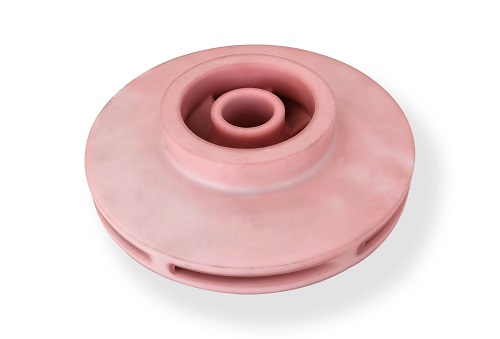
If you run a business, work in manufacturing, or want to cut costs, you’ve likely heard of 3D printing. But additive engineering solutions are more than just printing parts. They’re a full set of tools, skills, and steps that turn 3D printing into real value for your business. Unlike old “cut-and-waste” manufacturing, additive builds parts layer by layer.
What Are Additive Engineering Solutions?
Not Just 3D Printing?
Additive engineering solutions are more than basic 3D printing. Anyone can buy a small 3D printer to make a prototype. But these solutions are industrial-grade and made to solve your business problems.
They have three core parts that work together:
- Technical Expertise: Engineers trained to design parts for 3D printing. They use tools like topology optimization to cut waste while keeping strength. They also know which materials work best for your part.
- End-to-End Management: They handle every step. This includes designing the part, testing if it works, printing it, finishing it, and checking quality. They make sure everything meets industry standards.
- Scalability: They grow with your business. Whether you need 10 prototypes or 10,000 parts, they keep quality high and costs low.
Think of it this way: 3D printing is the hammer. Additive engineering solutions are the blueprint, the builder, and the quality check that makes sure you build the right thing.
Key Components of These Solutions
Design Optimization?
Parts designed for old manufacturing don’t always work for 3D printing. They might be too heavy or need extra supports that waste material.
Additive engineering solutions fix this with three key steps:
- Topology Optimization: Software redesigns parts to use only needed material. This cuts weight by 30–50%. It’s perfect for industries where weight matters, like aerospace or cars.
- Lattice Structures: Light, honeycomb shapes that stay strong. They’re great for medical implants, like hip replacements that need to fit human bone.
- Less Supports: Engineers design parts to print without extra supports. This cuts waste and finishing time by up to 25%.
For example, a bike company used topology optimization to redesign a frame. The new frame was 40% lighter but just as strong. It also cost 20% less to make.
Material Selection?
Picking the right material makes or breaks your 3D printed part. Additive engineering solutions give you access to industrial materials and help you choose the best one.
| Material Type | Common Uses | Key Benefits |
|---|---|---|
| Thermoplastics (ABS, Nylon) | Car brackets, consumer goods | Cheap, strong, easy to finish |
| Metals (Titanium, Aluminum) | Aerospace parts, medical implants | Strong, light, safe for humans |
| Composites (Carbon Fiber) | Sports gear, industrial tools | Super strong, resists rust |
A medical company needed a knee implant. Engineers picked a biocompatible titanium alloy. This made sure the implant was safe for the patient and met FDA rules.
Quality Control?
Industrial 3D printing needs consistency. Every part must be the same and meet your specs. Additive engineering solutions use strict quality checks:
- First Article Inspection (FAI): Test the first printed part against your design. Use 3D scanning to make sure it’s perfect.
- In-Process Monitoring: Sensors track temperature and material flow while printing. They catch defects early, before ruining the part.
- Industry Standards: For regulated industries (like medical or aerospace), parts meet ISO 13485 or AS9100 standards.
An aerospace company used these checks for turbine parts. They had zero defects in 1,000 parts—down from 5% with old manufacturing.
Post-Processing?
Most 3D printed parts need finishing to look and work right. Additive engineering solutions handle this step:
- Heat Treatment: Reduce stress in metal parts so they don’t break.
- Sanding/Polishing: Make parts smooth for consumer products or medical use.
- Assembly: Put multiple 3D printed parts together into a final product.
A toy company printed plastic figures. Post-processing made their surfaces smooth, so kids wouldn’t get hurt by rough edges.
Which Industries Benefit Most?
Aerospace & Defense?
Aerospace companies face big challenges: heavy parts increase fuel costs. Additive engineering solutions fix this with light, complex parts.
Case Study: GE Aviation used these solutions to redesign a fuel nozzle for its LEAP engine. The old nozzle had 20 parts. The new one had 1.
Results:
- Weight cut by 25%.
- Fuel efficiency up by 15%.
- Costs down by 30%.
Fuel makes up 20–30% of airline costs. Lighter parts save airlines millions per year.
Medical & Dental?
Healthcare needs custom parts. Additive engineering solutions excel at this, while meeting strict rules.
Key uses:
- Custom Implants: Dental crowns or hip replacements made for a patient’s unique body. 3D scan the patient to get the perfect fit.
- Surgical Guides: 3D printed tools that help surgeons make precise cuts. Surgery time drops by up to 40%.
- Regulatory Help: Solutions make sure parts meet FDA and CE rules. This avoids delays getting products to market.
A dental clinic used these solutions for crowns. Patients got crowns in 2 days instead of 2 weeks. The fit was better, so fewer adjustments were needed.
Automotive?
Car makers use additive engineering solutions for two main goals: fast prototyping and low-volume parts.
- Rapid Prototyping: Old prototypes take 4–6 weeks. Additive solutions make one in 2–3 days. This speeds up design changes.
- Low-Volume Parts: For race cars or vintage replacements, 3D printing avoids expensive tooling. Tooling for old methods can cost $50,000+.
Ford used these solutions to prototype Mach-E EV parts. They tested 5 designs in the time it once took to test 1. The Mach-E hit the market 6 months early.
Industrial Manufacturing?
Manufacturers want to cut downtime and costs. Additive engineering solutions help with this:
- On-Demand Spare Parts: Print parts when you need them. Don’t store hundreds of parts in warehouses. This cuts inventory costs by 30–50%.
- Better Tooling: 3D printed jigs and fixtures are lighter and stronger. Workers are more efficient, and tooling costs drop by 90%.
A factory used on-demand parts for its machines. When a part broke, they printed a new one in 24 hours. Downtime dropped from 3 days to 1 day.
How to Choose a Provider?
Industry Experience?
Pick a provider with experience in your industry. A medical AM provider knows FDA rules. A generalist may not.
Ask these questions:
- Can you show case studies from my industry?
- Do your engineers have industry certifications (like AS9100 for aerospace)?
A food packaging company chose a provider with experience in food-grade materials. This ensured their 3D printed parts were safe for food contact.
Full-Service Capabilities?
Avoid providers that only print parts. Choose one that handles every step: design, material pick, printing, finishing, and quality check.
This reduces miscommunication between vendors. It also keeps quality consistent. A furniture company used a full-service provider. They got perfect parts without managing multiple teams.
Scalability?
Your business needs will change. Pick a provider that can grow with you.
Ask:
- Can you go from 50 prototypes to 5,000 production parts?
- Do you offer multiple AM techs (FDM, SLA, metal AM) for different projects?
A startup went from 100 custom parts to 10,000. Their provider scaled easily, keeping costs low and quality high.
Transparent Quality?
Ask about quality processes upfront. A good provider will:
- Share how they inspect parts (3D scanning, X-ray for metal).
- Give you reports to prove parts meet your specs.
- Reprint parts for free if they fail inspection.
A electronics company asked for these details. They got FAI reports for every batch, so they knew parts were perfect.
Real-World Case Studies
Aerospace Component Maker
Challenge: A leading aerospace company needed a jet bracket. The old bracket was heavy (adding fuel costs) and had 10 parts (slow to assemble).
Solution: The provider used topology optimization to make it one part. They picked lightweight aluminum and met AS9100 standards.
Results:
- Weight down 40% (saving airlines $10,000+ per plane yearly).
- Assembly time cut 70% (from 2 hours to 35 minutes).
- Defects down to 0.5% (from 5%).
Medical Device Startup
Challenge: A startup made custom spinal implants. They needed to get to market fast and meet FDA rules. They had no in-house AM expertise.
Solution: The provider handled everything. They scanned patient data to design implants, picked biocompatible titanium, printed prototypes, and did regulatory docs.
Results:
- Time to market cut 6 months (critical for a startup).
- FDA approval on first try (no costly reworks).
- 98% of patients had better mobility in 3 months.
Additive engineering solutions are more than 3D printing—they’re a way to solve real business problems. They help you design better parts, pick the right materials, and make consistent, high-quality products.
Aerospace, medical, automotive, and industrial companies all get big value from them. They cut costs, speed up production, and let you make parts old methods can’t.
Choosing the right provider is key. Look for industry experience, full-service support, scalability, and transparent quality. With the right partner, additive engineering solutions can take your business to the next level.
How to write a spec that gets priced correctly
A drawing is a contract. If it leaves a number open, the shop fills that number in with its own default. The default is rarely the one you had in mind. Put these five lines on every RFQ and most of the back-and-forth disappears before it starts.
- File format and units, with the model exported in millimetres
- Process and material grade, not a trade name
- Critical features and the tolerance each one needs
- Surface finish and the faces it applies to
- Quantity for the pilot build and for the year
The point is not paperwork. Each line removes a decision the shop would otherwise make for you. A complete RFQ comes back priced. An incomplete one comes back guessed.
What actually drives the price
Buyers usually push on material because it is the line they can see. In practice the material is rarely the biggest number on a quote. These five lines decide most of it:
- build volume and orientation
- layer height and support structure
- material grade and colour
- post-processing and hand finishing
- quantity per build plate
Ask for the quote split by line. A supplier who cannot break it down is guessing, and you will pay for the guess. The line you can usually renegotiate is the tolerance band, not the raw material.
Problems you will meet, and the fix
Every process has a failure mode it prefers. The same four show up again and again on this kind of work, and none of them are mysteries once you know what to look for.
- Warping on long flat faces where the part lifts off the plate
- Layer lines showing through a cosmetic surface
- Support scars on a mating face nobody flagged
- Dimensional drift on thin walls after cooling
Catch the fault on the first part, not the hundredth. A first-article check costs an hour. A bad batch costs the whole order. Write the check into the purchase order so nobody has to remember it.
What to check on the first article
The first article is the cheapest inspection you will ever buy. Use it properly and the rest of the run becomes boring, which is exactly what you want.
- Every dimension on the drawing, with the measured value written beside it.
- The material certificate, matched to the heat or lot number on the parts.
- The finish against the sample you approved, under the same light.
- Fit against the mating part, assembled rather than measured.
- Packaging, because parts that arrive damaged were never in tolerance.
Check in this order: datums, then mating features, then cosmetic faces. If the datums are wrong, every number after them is noise. Keep the report on file. When a problem shows up in month six, that document is the only thing that tells you what changed.
How to compare two quotes fairly
Two numbers are not comparable unless the scope matches. Line them up before you decide, because a low number with three gaps is not a low number.
Same drawing, same material, same finish, same inspection. Anything else is a different job wearing the same part number. Then look at what each quote leaves out. Freight, packaging, certificates and tooling are the usual gaps.
Ask each supplier to state their assumptions in writing. The one who does is usually the one who has run the process before.
Scaling from one part to a batch
The first part teaches you the process. The hundredth teaches you the process cost.
Watch three things as volume grows: setup amortisation, tool wear, and how much hand work the finish still needs. If the unit price barely moves between ten and a hundred, the cost sits in material or in hand work, not in setup. Ask which, because only one of them is negotiable.
Lead time behaves the same way. A one-off is scheduled around other jobs. A repeat order is scheduled around your forecast. Give the shop a forecast and the lead time gets shorter, not longer.
FAQ: Common Questions
How much do these solutions cost vs. traditional manufacturing? Costs depend on your project. For 10–10,000 parts or complex designs, additive is cheaper. Traditional tooling can cost $10,000–$100,000+. For 100,000+ parts, traditional may be cheaper—but additive is catching up.
Are they only for large companies? No—SMBs benefit a lot. Many providers offer pay-per-part pricing and no long contracts. A small auto shop can print custom parts without buying expensive inventory.
How long does implementation take? Simple prototypes take 2–5 days. Complex projects (like medical implants) take 4–8 weeks (including testing and docs). A good provider gives a clear timeline.
Are parts as strong as traditional ones? Yes—when done right. Metal parts printed with powder bed fusion are as strong as machined parts (or stronger) with heat treatment. Providers test parts to meet standards.
What if my design isn’t AM-friendly? A good provider does a design review. They’ll redesign your part to work with 3D printing—cutting weight, improving strength, or lowering costs. Most traditional designs can be adapted easily.
Our solution for Additive Engineering Solutions
YiguProto runs 3D printing in house, from a single prototype to a production batch. We quote the process, the material and the finish as separate lines, so you can see where the money goes instead of arguing with one number.
Send a STEP file or a drawing and you get a DFM report in one to two business days. It flags the features that add cost and the features that will not hold tolerance on the process you picked.
Every order ships with an inspection report on the features you call out. If a part misses, we make it again. Ready to price a part? Start with a free quote and DFM review, or read more about our 3D printing. You can also talk to an engineer before you commit to a drawing.
FAQ about Additive Engineering Solutions
What tolerance can you hold on Additive Engineering Solutions?
The working default is ±0.1 mm on small features, ±0.3% on long spans. Tighter than that the process changes and so does the price, because every step tighter adds inspection time. Call out only the faces that mate with something else and leave the rest on the general tolerance.
How long does a first article take?
Usually a few business days once the drawing is frozen, and longer if tooling is involved. The date we give you is the date we confirm in writing, not the date we hope for.
What should I check before approving the parts?
Datums first, then the features that mate, then the cosmetic faces. Ask for a dimensional report, a material certificate and a finish sample. A part can be inside every tolerance and still not fit, so assemble one before you sign.
Does the process work for prototypes as well as production?
Yes, and that is usually the point. Running the prototype on the production process removes a whole class of surprises, because the part you test is made the same way as the part you sell.
What happens if a part is out of specification?
We measure it against the same drawing you approved and, if it misses, we make it again. What matters is that the report exists, because a disagreement without data is just an opinion.
What material should I specify?
Specify by standard, not by trade name. A trade name can change under you between two orders; a standard number cannot. Then add the one property that actually decides the part, whether that is strength, heat resistance or chemical exposure.
The short version
Additive Engineering Solutions rewards the buyer who reads the data sheet and the drawing together. Pick the option for the property that matters, not for the price per kilo.
Tighten only what mates. Test a sample before the run. Then let the process do the rest.